HIPAA compliant texting: What you can send patients & how to communicate securely
HIPAA compliant texting is possible when a text holds no protected health inform...

Last Updated: Oct 16, 2026

Patient care management coordinates healthcare services across settings to optimize patient health outcomes and experiences.
Effective patient care management improves patient outcomes, satisfaction, and lowers operating costs for practices.
Healthcare professionals, patients, and families must collaborate to enhance communication and enable shared decision-making.
Patient care management includes medication adherence support, identifying high-risk patients, and ensuring seamless transitions between settings.
Patient-centered strategies tailored to individual needs are essential for addressing diverse medical conditions effectively.
Patient care management is the process of ensuring every individual receives personalized and appropriate care within the healthcare system.
In today’s world, where the increasing demands on healthcare services, and rise of chronic diseases pose a great challenge for modern healthcare, effective patient care management improves patient outcomes, satisfaction, and lowers operating costs.
By integrating techniques such as patient education, technology and effective communication, it addresses the diverse needs of patients with various medical conditions.
If you want to know about the essential techniques for managing patient care, plus the key benefits, this blog is exactly what you need.
Patient care management involves coordinating and controlling healthcare services provided to patients across various settings. Its aim is to optimize their health outcomes and experiences.
This means making sure that doctors, nurses, specialists, and other healthcare professionals work together smoothly to provide the best care possible.
Patient care management also involves collaboration among healthcare professionals, patients, and their families to enhance communication, promote shared decision-making, and facilitate comprehensive support throughout the patient’s healthcare journey.
The goal of care coordination is to personalize healthcare to address the specific needs of each patient. Healthcare systems that put patients at the center and focus on achieving positive outcomes are well-suited to excel in this area.
Here’s what’s involved:
Most practices run patient care management as a repeatable five-step cycle. Following the same sequence for every patient keeps care consistent and makes it obvious where someone is slipping through the cracks.
The steps rarely change. What changes is how much of the tracking and follow-up your team does by hand versus what the software handles automatically.
Patient care management involves several key components that work together to ensure patients receive comprehensive and effective care.
When you implement systematic patient care management—including medication adherence tracking, high-risk patient identification, and seamless care coordination between settings—you can reduce operating costs while improving patient satisfaction and health outcomes simultaneously.
Let’s explore them in detail:
Assessment and care planning are fundamental steps in patient care management, and they’re akin to laying a strong foundation for building a house.
It involves taking thorough patient history and evaluation, making a precise diagnosis — whether of a common illness or a condition such as post-traumatic thumb osteoarthritis (M18.30) — and developing personalized treatment plans.
After evaluating these assessments, detailed care plans are created. Clinicians also use risk assessments and proactive steps, such as regular check-ins with patients, to help patients stay well by predicting and dealing with possible problems.
Good patient care depends on clear and simple communication between doctors, specialists, and patients.
This means sharing information to keep treatment consistent and avoid confusion. It’s important to explain medical terms in a way that patients can grasp.
When patients have easy-to-read materials, like charts or infographics, they’re more likely to stick to their treatment plans.
This kind of communication helps make sure everyone is on the same page about treatment goals and how to achieve them, leading to better health results for patients.
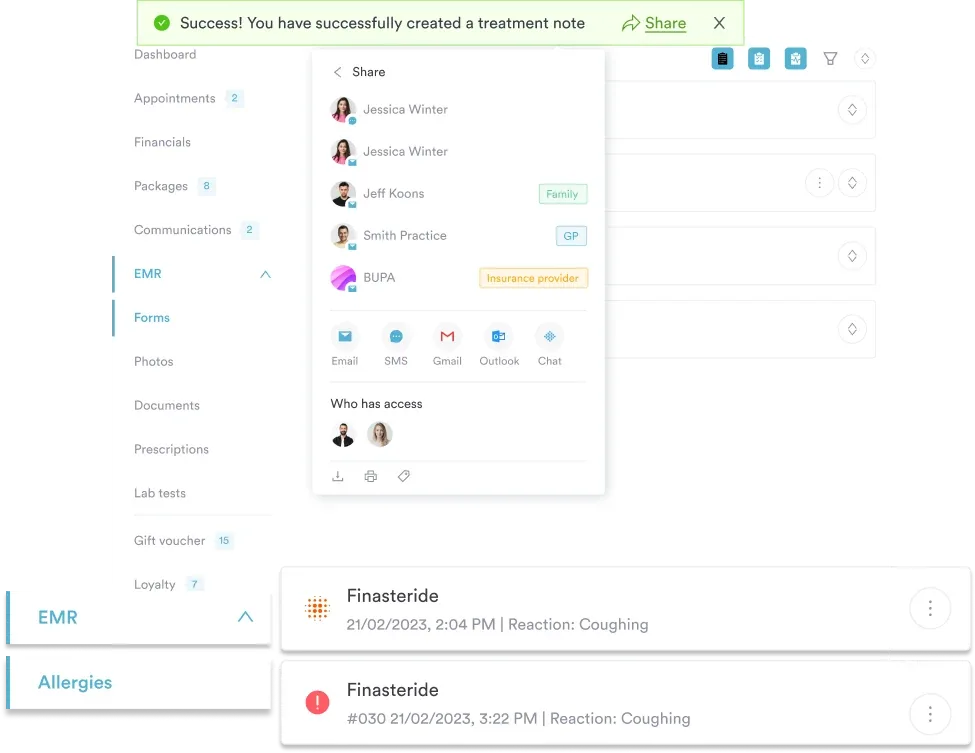
Comprehensive EMR & patient record management.
As the record above shows, with Pabau a practitioner can pull up a patient’s full history in seconds — notes, medical alerts, past treatments and documents — instead of piecing it together from separate systems or paper files.
Effective care management relies on the efficient use of resources such as time, money, personnel, and equipment, as well as active patient engagement. These elements are essential for achieving successful outcomes in patient care.
This involves educating patients about their conditions, treatment options, mental health and self-management practices.
Taking care of emotional needs and creating a supportive environment helps patients feel happier with their care and more likely to follow their treatment plans. When patients feel involved and supported, they’ll be more confident participating in their care.
Implementing quality improvement initiatives involves proactively identifying areas to improve and use evidence-based methods to fill gaps in care.
Monitoring key performance metrics can help you easily identify areas for improvement.
It’s important to monitor patient wait times, appointment scheduling, and attendance rates — improved by letting patients book online through patient self scheduling software — to ensure efficient operations and timely access to care.
Checking how productive providers are and how quickly patients move through the practice helps improve efficiency and reduce wait times.
Also, monitoring how patients’ health improves and how well the practice is doing financially helps make sure care is effective and sustainable. By paying attention to these metrics, practices can find ways to improve care quality and effectiveness.
To add to that, by actively seeking and incorporating patient feedback, practices gather insights into areas where care delivery may fall short of expectations or where there are opportunities to enhance patient satisfaction and engagement.
A structured patient experience survey collects that feedback consistently, so you can compare scores across visits and spot where care slips.
Patient care management upholds ethical standards (doing good, doing no harm, respecting patient’s choices, and fairness in distribution of care) and legal obligations (laws and regulations such as HIPAA in the US) in healthcare delivery.
These components emphasize the importance of maintaining patient confidentiality, respecting privacy rights, and obtaining informed consent.
At the end of the day, patients rely on clinicians to protect their privacy and honor their treatment choices through informed consent. This allows them to understand their options and engage in decision-making, promoting trust, and respectful care.
An effective patient care management program relies on a handful of proven care management strategies and principles that keep care tailored to each patient’s needs and circumstances. These are the techniques that make the biggest difference day to day.
Develop personalized care plans based on each patient’s unique needs, considering their medical history, current health, and preferences.
For example, a diabetic patient may need a plan that includes dietary changes, medication management, and regular blood sugar monitoring.
These plans should be regularly reviewed and updated to ensure that they evolve alongside the patient’s health and circumstances in order for them to receive the most effective and tailored care possible.
By tailoring the plan to each person, you help them stay on top of their health game and feel more satisfied with the care they’re receiving.
Actively involve patients in their own care by educating them about their conditions, treatment options, and preventive measures.
When patients understand all aspects of their health issues and treatment, they become partners in their healthcare journey. Empowered patients are more likely to follow treatment plans, make healthier choices, and communicate effectively with their healthcare providers.
For instance, educating patients about the importance of regular exercise and healthy eating can help them manage chronic conditions like hypertension or obesity more effectively.
You can do this by providing them with easy-to-understand information that is readily accessible in digital formats.
By offering educational content in various forms such as videos, interactive modules, and user-friendly digital platforms, practices make it convenient for patients to learn at their own pace and on demand.
The use of Electronic Health Records (EHRs) and technology in healthcare offers immense benefits, and the right patient management tool gives healthcare professionals secure access to patient records from anywhere, even during home visits.
You can also help patients safely manage their care by using a patient portal, where they can access patient information, promoting collaboration and continuity of care.
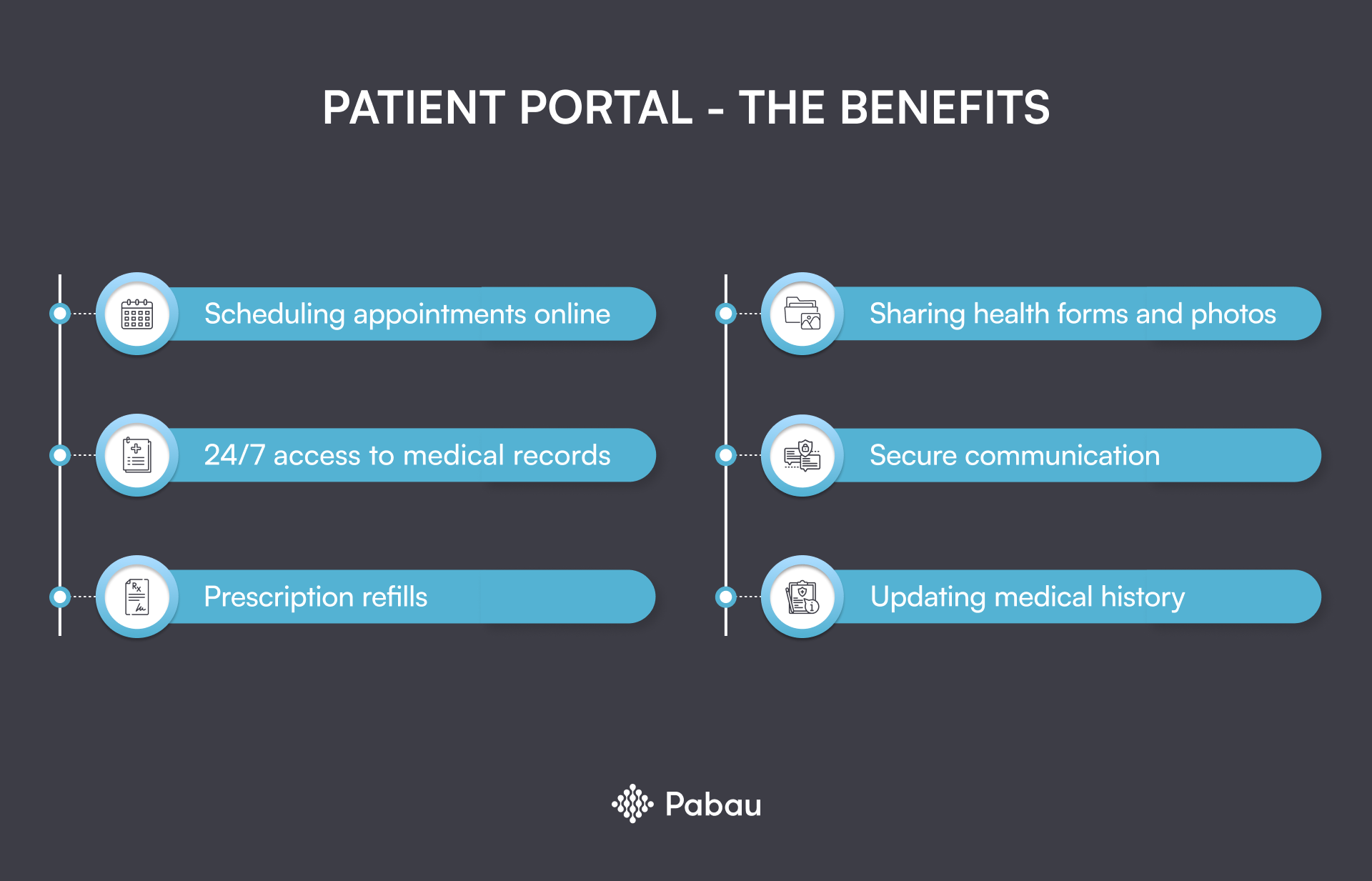
It further simplifies the process by providing patients with an online platform where they can securely access their health information and communicate with healthcare providers at any time.
Plus, since the pandemic, telehealth services tend to revolutionize healthcare even further. With telemedicine, patients can consult with healthcare professionals remotely, without the need for in-person visits. This makes it easier for doctors to monitor their health and provide timely interventions.
For example, a patient living in a rural area may be able to consult with a specialist via video conferencing, eliminating the need for long-distance travel.
Maintain clear and open communication channels with patients and among healthcare providers.
Practices comparing purpose-built care tools with general email platforms can see how Pabau vs MailChimp for client communication stacks up on secure messaging and reminders.
Patients should have convenient access to their lab results and treatment plans to facilitate informed decision-making and active participation in their healthcare journey.
Transparent communication fosters trust, enables informed decision-making, and strengthens the patient-provider relationship.
For instance, a patient receiving chemotherapy for a cancer such as a nasopharyngeal tumor (C11.1) should feel comfortable discussing any side effects or concerns with their oncologist to ensure the best possible care and outcomes.
Regularly monitor patients’ health status, especially those with chronic conditions, and follow up on treatments and medications to prevent complications.
Regular monitoring of patients’ health status allows healthcare providers to detect potential issues before they become serious, while timely follow-up on treatments and medications help patients stay on track and make sure complications are identified early.
For example, a patient with heart disease may need regular check-ups to monitor their blood pressure, cholesterol levels, and medication adherence to prevent complications such as heart attacks or strokes.
By focusing on prevention and early detection, healthcare teams can address risk factors and intervene promptly to prevent health issues from escalating.
Investing in preventive care not only improves patients’ quality of life but also reduces healthcare costs in the long run.
Routine screenings for conditions like breast cancer or diabetes can help detect problems early when they’re easier to treat and manage, potentially saving lives and reducing healthcare expenses.
Done well, patient care management pays off on both sides of the front desk. Patients get steadier, better-coordinated care, and the practice sees the operational rewards that follow. That payoff is the real importance of patient care management, and it shows up in a handful of measurable places.
For patients:
For your practice:
These outcomes are why care management now sits at the center of value-based contracts. The practices that track them turn good intentions into numbers they can report.
Pabau is an all-in-one practice management software designed to streamline and enhance patient care management in your practice.
Pabau revolutionizes patient care management in practices by offering telehealth integration for remote consultations and a secure patient portal for accessing medical records and lab reports.
Its automated appointment reminders reduce no-show rates, while EHR management streamlines documentation and treatment tracking. For mental health teams, a behavioral health practice management EHR adds DAP and BIRP note formats and 42 CFR Part 2 controls on top of that foundation. Simplifying billing and payment processing, Pabau ensures efficient revenue management.
Furthermore, robust communication tools foster stronger patient-provider relationships, and data analytics provide insights for optimizing practice performance.
By leveraging Pabau’s comprehensive features, practices enhance operational efficiency, improve patient satisfaction, and elevate the quality of care.
Ready to transform your practice’s patient care? Book a demo with Pabau today!

Wondering why patients drift to competitors? what shapes patient experience breaks down the wait times, paperwork, and follow-ups that determine whether patients return.
Need your client records audit-ready? keeping client records accurate shows how to track treatments, consents, reactions, and photos safely in one place.
How do automated workflows improve patient care coordination? Automated Workflows Software Coordinate care between healthcare professionals automatically to ensure seamless patient transitions and continuity.
In healthcare, the four P’s are predictive, preventive, personalized, and participatory. Applied to managing patient care, that means anticipating risks, acting before problems escalate, tailoring each care plan to the individual, and involving patients in their own care.
The five steps mirror the care management cycle: identifying and assessing the patient, planning their care, coordinating it across providers, monitoring progress, and following up to adjust the plan as their health changes.
Both coordinate a patient’s care, but the scope differs. Care management is the broader, ongoing work of improving health outcomes across a group of patients, while case management usually guides one patient through a specific episode or complex situation until it is resolved.