ICD-10 Code S42.444P: Medial epicondyle fracture, right humerus
ICD-10 Code S42.444P: full descriptor and code validity ICD-10 Code S42.444P car...

Last Updated: Oct 13, 2026
Billable Code Specific Code
S92.042G is the billable ICD-10-CM code for displaced other fracture of tuberosity of left calcaneus, subsequent encounter for fracture with delayed healing.
Let Pabau's smart automation suggest the right codes, reduce claim denials, and keep your practice compliant—effortlessly.
Automate repetitive tasks and focus on what matters most—your patients.
Reduce coding errors and ensure compliance with the latest regulations.
Clean claims, fewer denials, and faster reimbursements.
Powerful insights and reporting to help your practice thrive.
HIPAA compliant SOC 2 certified GDPR-compliant Trusted by 4,000+ clinics worldwide

ICD-10 Code S92.042G describes a displaced other fracture of the tuberosity of the left calcaneus, subsequent encounter for fracture with delayed healing.
The 7th character G means the fracture is in the subsequent-encounter healing phase and progressing more slowly than expected, distinct from nonunion (K) or routine healing (D).
Accurate coding requires documented evidence of delayed healing, such as imaging showing incomplete callus formation beyond the expected timeline.
Practice management software like Pabau helps practices consistently document encounter type, laterality, and healing status for codes like S92.042G, creating audit-ready records at every follow-up visit.
ICD-10 Code S92.042G is a billable, specific diagnosis code used for reimbursement and documentation purposes. Its full official description reads: Displaced other fracture of tuberosity of left calcaneus, subsequent encounter for fracture with delayed healing. It is valid for claims submitted between October 1, 2025 and September 30, 2026 under the ICD-10-CM FY2026 code set, as confirmed by the CMS ICD-10-CM FY2026 release.
This code applies to adult patients (15 years and older) and falls under the S90-S99 block (Injuries to the ankle and foot) within Chapter 19 of ICD-10-CM. It is assigned during a subsequent encounter, meaning the fracture’s initial active-treatment phase has ended and the patient is now in the healing and recovery phase, progressing more slowly than clinically expected. Structured documentation templates in practice management software can prompt clinicians to record the encounter type and healing status at each visit, reducing the risk of miscoded claims.

The table below summarizes the key reference data coders and billers need when working with this code.
Coders working in osteopathy practices and occupational therapy practices encounter S92.042G regularly, particularly during follow-up care for patients whose calcaneal fractures are not resolving on the expected timeline. Confirming the code’s billable status against the CDC/NCHS ICD-10-CM web tool before submission is a straightforward verification step.
The 7th character is the most consequential element of ICD-10 Code S92.042G for coding accuracy. It determines the encounter type and the healing status of the fracture, and getting it wrong is one of the leading causes of claim denial in orthopedic and musculoskeletal billing.
Delayed healing vs. nonunion: These two are the most commonly confused. Delayed healing (G) means the fracture is still in the healing process but progressing more slowly than normal. By contrast, nonunion (K) means healing has stopped entirely and the fracture will not unite without intervention. The Tabular List instructional notes under the S92 fracture category define these as distinct clinical entities, and the distinction must be supported by clinical documentation, typically imaging.
Delayed healing vs. routine healing: D applies when the fracture is healing within expected parameters. G applies when the clinician documents that healing is taking longer than expected, whether due to patient comorbidities, inadequate immobilization, vascular insufficiency, or other factors. The two codes cannot be assigned simultaneously to the same fracture.
Document the specific clinical basis for delayed healing in the encounter note, including imaging findings and the expected vs. actual healing timeline. Generic notes that simply state ‘fracture not healed’ may not satisfy payer requirements for the G character. Specific language such as ‘minimal callus formation at 10 weeks, expected at 6 weeks’ provides the audit trail payers look for.
A physical therapy platform turns an injury diagnosis into a structured program of sessions, exercises, and outcome measures.
The calcaneus is the largest bone in the foot, forming the heel. Its tuberosity is the posterior projection that serves as the attachment point for the Achilles tendon and the plantar fascia. A fracture in this region typically results from high-energy trauma such as a fall from height or a direct blow to the heel.
What makes it displaced? A displaced fracture means the bone fragments have shifted from their original anatomical position. In calcaneal tuberosity fractures, displacement can involve the Achilles tendon insertion, which complicates both surgical and conservative management. When the fragments stay in alignment and the record names no side, the same delayed-healing encounter codes to S92.046G.
Patients with delayed calcaneal healing present for multiple subsequent encounters involving imaging review, wound assessment if surgical, and adjustment of weight-bearing protocols. Each of those encounters may appropriately carry ICD-10 Code S92.042G as the principal or secondary diagnosis, provided documentation supports the delayed healing status.
The S92.042 subcategory covers displaced other fractures of the tuberosity of the left calcaneus across all encounter types and healing outcomes. That is, each sibling code differs only by the 7th character extension. Therefore, coders must select the character that reflects the current encounter and healing status, not the character used at the initial visit.
For a broader view of the S92 category, the AAPC ICD-10-CM code lookup allows coders to navigate the full S92 hierarchy and identify parallel codes for the right calcaneus (S92.041 subcategory) and non-displaced fractures. Maintaining accurate client records with encounter-specific documentation helps practices select the correct sibling code at each visit.
A separate subcategory, S92.05, covers extraarticular calcaneal fractures outside the tuberosity. A displaced one with no side documented takes S92.053A at the initial encounter for a closed fracture.
The four subsequent-encounter codes in the S92.042 family (D, G, K, P) are the most frequently confused in practice. This comparison table covers the clinical and documentation criteria that distinguish each.
A practical tip from the coding guidelines: G and K cannot be used for the same fracture at the same encounter. Once a fracture is confirmed as nonunion, the G character no longer applies. If imaging shows active callus formation, even if slow, K is not yet appropriate. The transition from G to K reflects a clinical determination, not a time threshold, and must be documented explicitly by the treating clinician.
Clinics that use compliance management tools integrated with their billing workflows can create rule-based flags that prompt coders to verify the correct 7th character before submission. This is especially valuable for practices managing high volumes of orthopedic aftercare visits.
The ICD-10-CM Official Guidelines for Coding and Reporting (Section I.C.19) provide the authoritative framework for fracture aftercare coding. Key rules that apply directly to ICD-10 Code S92.042G include the following.
These same subsequent-encounter principles apply across other injury codes with 7th-character extensions.
The S92 parent category carries a key Excludes2 note: fracture of ankle (S82.-). This means fractures of the ankle and fractures of the foot can be coded together when both are present, but they are anatomically distinct and should not be confused. Importantly, the calcaneus sits below the ankle joint; a calcaneal fracture is correctly classified under S92, not S82.
There are no Excludes1 notes that directly prohibit S92.042G from being used with other injury codes in the same block. Coders should review the full tabular entry in the CDC/NCHS ICD-10-CM web tool to confirm current-year excludes notes, as these can change with annual updates. The WHO ICD-10 browser provides the international framework from which the US ICD-10-CM is adapted, useful for cross-referencing clinical entity definitions.
For practices that regularly handle foot and ankle coding. The ResDAC ICD coding resources provide additional guidance on how ICD-10-CM codes appear in Medicare claims data and what research applications those records serve.
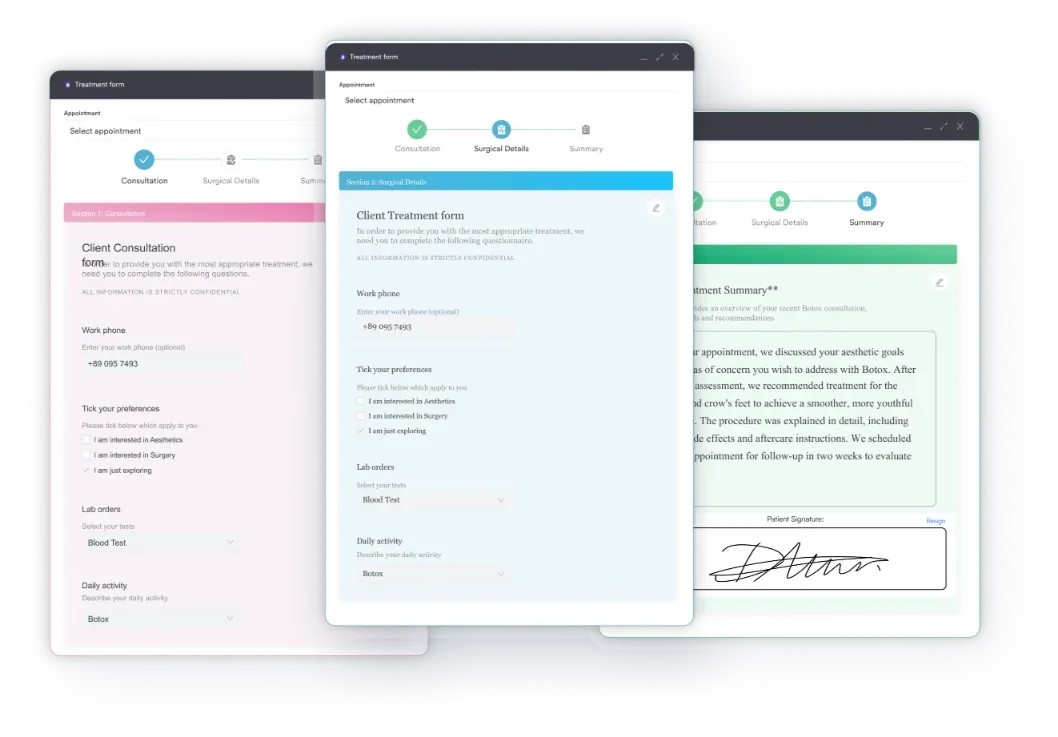

Pabau’s structured documentation tools help your team apply the right ICD-10 code at every visit, keeping encounter type, laterality, and healing status consistent across fracture aftercare visits.

S92.042G falls within the CMS MS-DRG classification system. Calcaneal fracture codes in the S92 category group into DRGs related to lower extremity orthopedic conditions. The specific DRG assignment for any claim depends on the principal diagnosis, secondary diagnoses, and whether a procedure was performed. CMS publishes the annual MS-DRG definitions manual, and coders should verify the current version for up-to-date grouping logic.
Age edits: S92.042G carries an adult diagnosis designation (15+ years per available reference data). Medicare NCCI edits should be reviewed at the time of claim to confirm any additional bundling or age-specific restrictions. These edits are updated quarterly and payer-specific variations may apply beyond the base CMS rules.
Medical necessity documentation: For delayed healing encounters, payers increasingly require clinical documentation that establishes why healing has not progressed as expected. A note that simply states “fracture follow-up” will not support S92.042G. Instead, the record must reflect the clinician’s assessment of healing status and the clinical reasoning behind the delayed healing determination.
Practices with high orthopedic claim volumes benefit from HIPAA-compliant documentation workflows that capture this level of clinical specificity at the point of care rather than during retrospective coding. Structured note-taking helps clinicians capture the key indicators for delayed healing accurately and consistently, so the coded claim reflects the clinician’s actual assessment.
When a calcaneal fracture transitions from delayed healing to nonunion, the coder must update the 7th character to K. This change should be driven by a clinician note explicitly documenting the nonunion determination, ideally supported by CT or X-ray findings. Never change the 7th character based on elapsed time alone without a clinical determination in the record.
Coding ICD-10 Code S92.042G correctly across multiple follow-up encounters requires consistent documentation at every touchpoint. Most coding errors at this specificity level stem not from ignorance of the code but from incomplete clinical notes that do not capture the encounter type, the healing status assessment, or the laterality clearly enough to satisfy audit requirements.
Pabau addresses this at the documentation layer. Structured note templates help clinicians document musculoskeletal diagnoses. The AI-powered documentation scribe helps translate verbal clinical assessments into structured notes that include the relevant detail automatically.
For practices managing orthopedic aftercare alongside other specialties, Pabau’s multi-specialty architecture means ICD-10 coding workflows for foot and ankle cases sit within the same platform as scheduling, intake, and billing, giving coders and clinicians a single source of truth for every patient encounter.
Delayed healing in a calcaneal tuberosity fracture is a clinically meaningful distinction that ICD-10 Code S92.042G captures precisely. Getting the 7th character right at every subsequent encounter reduces denials, supports audit trails, and reflects the clinical picture in the patient record.
Pabau’s structured documentation tools help practices apply codes like S92.042G with the specificity and consistency payers require. To see how Pabau supports your musculoskeletal documentation workflow, book a demo.

Need anesthesia coding for a related lower-leg procedure? CPT code 01474 covers anesthesia for gastrocnemius recession, a common calf-region surgical intervention.
Coding another high-acuity injury? ICD-10 code T31.94 covers burns involving 90% or more of total body surface area.
Need a procedure code for image-guided fracture site work? CPT code 10035 covers soft tissue localization device placement.
S92.042G is a billable ICD-10-CM code for a displaced other fracture of the tuberosity of the left calcaneus, assigned at a subsequent encounter for a fracture with delayed healing. It is valid for FY2026 (October 1, 2025 through September 30, 2026).
The 7th character G denotes a subsequent encounter for a fracture with delayed healing, i.e. healing more slowly than expected. It differs from D (routine healing), K (nonunion), and P (malunion).
S92.042D applies when the displaced left calcaneal tuberosity fracture heals as expected during a subsequent encounter; S92.042G applies when it heals more slowly than anticipated, supported by imaging showing incomplete callus formation for the elapsed time since injury.
Use subsequent encounter codes (D, G, K, P, or S) once active treatment is complete and the patient is in the healing or recovery phase, covering cast changes, hardware monitoring, physical therapy, and follow-up. Treatment phase, not visit number, determines this.
Delayed healing (G) means the fracture is still progressing toward union, only more slowly than expected; nonunion (K) means healing has stopped and won’t unite without intervention. Moving from G to K requires explicit documentation of nonunion, usually with imaging.
Common CPT codes vary by intervention: 28400 (closed treatment without manipulation), 28405 (closed treatment with manipulation), and 28415 (open treatment with or without internal fixation). Office-visit codes (99211-99215) may also apply during subsequent encounters coded S92.042G, depending on the services performed.