ICD-10 Code S42.444P: Medial epicondyle fracture, right humerus
ICD-10 Code S42.444P: full descriptor and code validity ICD-10 Code S42.444P car...

Last Updated: Oct 13, 2026
Billable Code Specific Code
S06.2X2D is the billable ICD-10-CM code for diffuse traumatic brain injury with loss of consciousness of 31 minutes to 59 minutes, subsequent encounter.
Let Pabau's smart automation suggest the right codes, reduce claim denials, and keep your practice compliant—effortlessly.
Automate repetitive tasks and focus on what matters most—your patients.
Reduce coding errors and ensure compliance with the latest regulations.
Clean claims, fewer denials, and faster reimbursements.
Powerful insights and reporting to help your practice thrive.
HIPAA compliant SOC 2 certified GDPR-compliant Trusted by 4,000+ clinics worldwide

ICD-10 code S06.2X2D covers diffuse traumatic brain injury with loss of consciousness of 31 to 59 minutes. It is billable at a subsequent encounter.
The 7th character D means active treatment is finished and the patient is in routine follow-up care, not that this is the second visit.
S06.2X2 is not billable on its own. Only S06.2X2A, S06.2X2D, and S06.2X2S can go on a claim.
Practice management software like Pabau keeps encounter type and loss of consciousness duration in the medical record, so coders are not guessing.
ICD-10 code S06.2X2D describes diffuse traumatic brain injury (TBI) with a documented loss of consciousness of 31 to 59 minutes, at a subsequent encounter. It is billable, so a claim can carry it once the record documents the injury type, the duration, and the encounter context. Diagnosis pointers on the claim form link each service line to the diagnosis that justifies it.
Accurate use rests on two characters. The 6th character 2 sets the loss of consciousness (LOC) duration at 31 to 59 minutes. The 7th character D sets the encounter as routine follow-up rather than active treatment. Miss either one and a clean claim turns into a rejected one.
Every row above has to be traceable to the medical record. The code also stays valid for FY 2026, and CMS republishes the code files each October. Check the current release before you bill a date of service from an earlier year.
Diffuse traumatic brain injury means widespread neuronal damage spread across both cerebral hemispheres rather than concentrated in one spot. It is clinically synonymous with diffuse axonal injury (DAI), and the ICD-10-CM tabular list uses both terms inside the S06.2X family.
DAI usually follows rapid acceleration-deceleration forces acting on the brain inside the skull. Motor vehicle collisions, falls, and blunt force trauma all produce it. The shearing forces stretch and tear axons across several brain regions at once, which gives a diffuse pattern rather than a focal contusion or hematoma.
From a coding standpoint, the distinction matters. ICD-10-CM codes diffuse and focal TBI separately. S06.2X captures diffuse injury, while focal injuries sit in other S06 subcategories. Coding one as the other is a documentation mismatch that can trigger a payer audit.
Rehabilitation teams see most of these patients after discharge. If you run TBI follow-up in occupational therapy software, confirm the notes name the injury as diffuse before anyone codes the visit.
The 7th character is the billability gate for every S06.2X code. Without it, the code is incomplete and cannot be submitted. S06.2X2 has three valid options.
Three options is unusually few. Other injury chapters run a longer set, and fracture codes like fracture codes like S62.202P add characters for healing status on top of encounter type. S06 keeps it to A, D, and S.
A common misconception is that “subsequent encounter” means the second visit for the same injury. It does not. The ICD-10-CM Official Guidelines define it as any visit where the patient is getting routine care during healing or recovery, after active treatment has finished.
Active treatment covers surgery, emergency department care, and physician visits to evaluate and treat the injury. Once the patient moves into rehabilitation, monitoring, or routine follow-up, the encounter character changes from A to D.
A single patient can accumulate dozens of subsequent-encounter visits for the same injury.
The difference between A and D has direct reimbursement consequences. Payers expect the encounter type to match the clinical context in the record. Using A on a rehabilitation visit months after active treatment ended is an inconsistency that invites claim review.
The 6th character of the S06.2X subcode carries the LOC duration, and the digit 2 means 31 to 59 minutes. This is a clinician-documented value, so coders cannot estimate it from surrounding clinical detail. A note reading “approximately 45 minutes” qualifies. When no duration appears anywhere, the code is S06.2X0 for no loss of consciousness or S06.2X9 for unspecified duration.
The first documented duration often comes from the pre-hospital record rather than the hospital chart. Reading the EMT patient assessment is frequently what settles which side of the 30-minute line a patient falls on.
The full LOC duration ladder for diffuse TBI under S06.2X shows how the 6th character moves across subcodes. It is worth reading in full before you audit a multi-visit TBI record. Diffuse TBI also arrives alongside other injuries that need their own codes, such as S01.341A.
Characters 7 and 8 only apply where the patient died before regaining consciousness, so they rarely appear on a subsequent-encounter claim. They matter when you are reconciling an inpatient record against the billed codes.
S06.2X2D sits at the bottom of a five-level hierarchy. Knowing which levels are billable prevents a common submission error, which is billing the parent code instead of the fully specified child.
The X in S06.2X is a required placeholder, not a variable. It holds the 5th character position so the 6th and 7th characters line up correctly. Omitting it, or swapping in another character, produces an invalid code. The CMS ICD-10-CM codes page carries the annual code files for checking validity and tabular notes.
S06.2X2D has two direct siblings. They share the injury type and the duration window, and differ only in encounter type. Coders also need the neighboring duration subcodes for records that do not land cleanly inside the 31-to-59-minute window. The rule is the same either way. Code to the highest level of specificity the documentation supports.
Before ICD-10-CM adoption in October 2015, diffuse TBI coding used ICD-9-CM. The approximate crosswalk for S06.2X2D lands in the 854.xx series, though ICD-10-CM is far more specific than anything ICD-9 captured. Crosswalks are approximate, and payers may want validation before they accept a converted code for legacy billing or audit work.
The ResDAC guide to ICD codes in Medicare files covers the transition in detail for research and billing contexts.
ICD-9-CM never separated diffuse from focal TBI with the precision ICD-10-CM offers, and the duration breakpoints do not line up exactly. Use crosswalk references for historical audit work, not for current billing.
Check the medical record for a specific LOC duration before you assign any S06.2X subcode. If the physician documented a range that straddles two subcodes, such as 30 to 45 minutes, query them for clarification. Defaulting to the shorter window understates the injury and misrepresents what the record actually says.
Three documentation elements have to be present to support S06.2X2D on a claim. If you cannot find all three in the record, query the physician before you submit.
Strong clinical documentation at every follow-up visit is the most effective defense against TBI coding denials. Practices using digital intake forms can build the encounter-type question into intake, so the clinician confirms whether the visit is active treatment or routine follow-up.
A structured comprehensive assessment at each visit helps too. It puts the recovery-phase narrative in writing while the clinician is still with the patient.
CMS guidance is consistent on this point. Assign the code that matches the most accurate documentation available at the encounter, not the code that is easiest to support. For TBI cases, documentation quality sets the ceiling on how precise the coding can be.
These are the mistakes that turn up repeatedly in payer audit findings and coder forum threads for diffuse axonal injury.
Practices running high volumes of TBI follow-up benefit from HIPAA-compliant software that flags incomplete documentation before a claim goes out. Teams handling concussion and TBI in sports medicine software should build the diffuse-versus-concussion question into their note templates. Both injuries arrive from the same collisions.
In most practices this work is split across two systems. The clinical note lives in one place, and the claim is assembled somewhere else from whatever the coder can find. Every missing detail becomes a physician query, and every query adds days to the payment cycle.
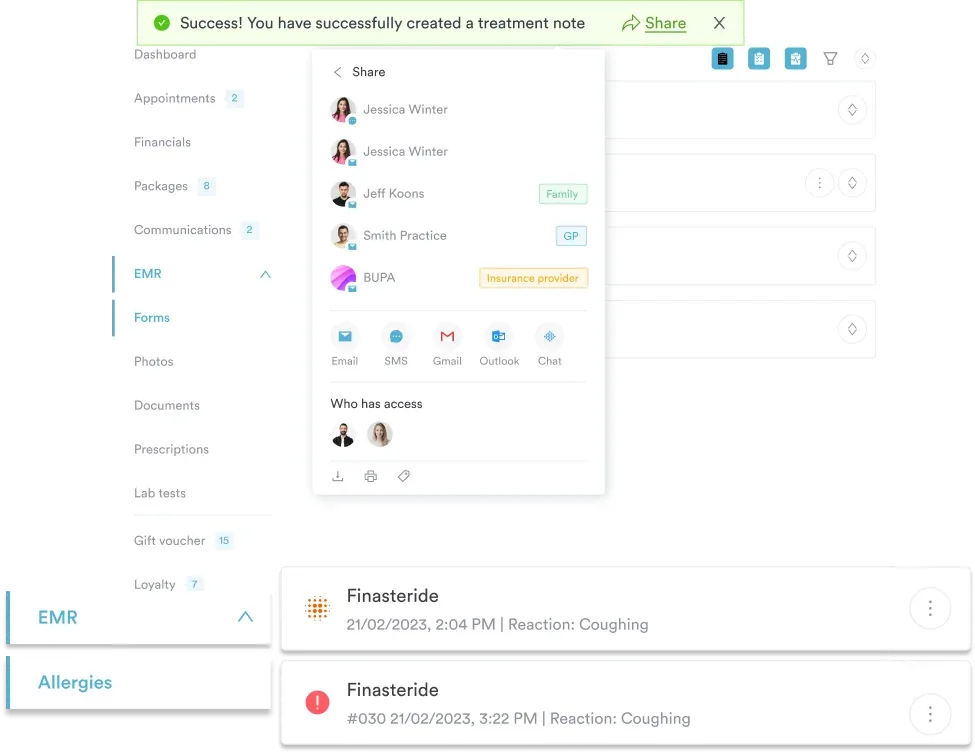
Pabau is an all-in-one practice management system, so the note and the claim sit in the same record. Intake forms and treatment notes capture the injury type, the documented LOC duration, and whether the visit is active treatment or follow-up. The coder reads the file the clinician wrote in, so encounter type stops being a judgment call.
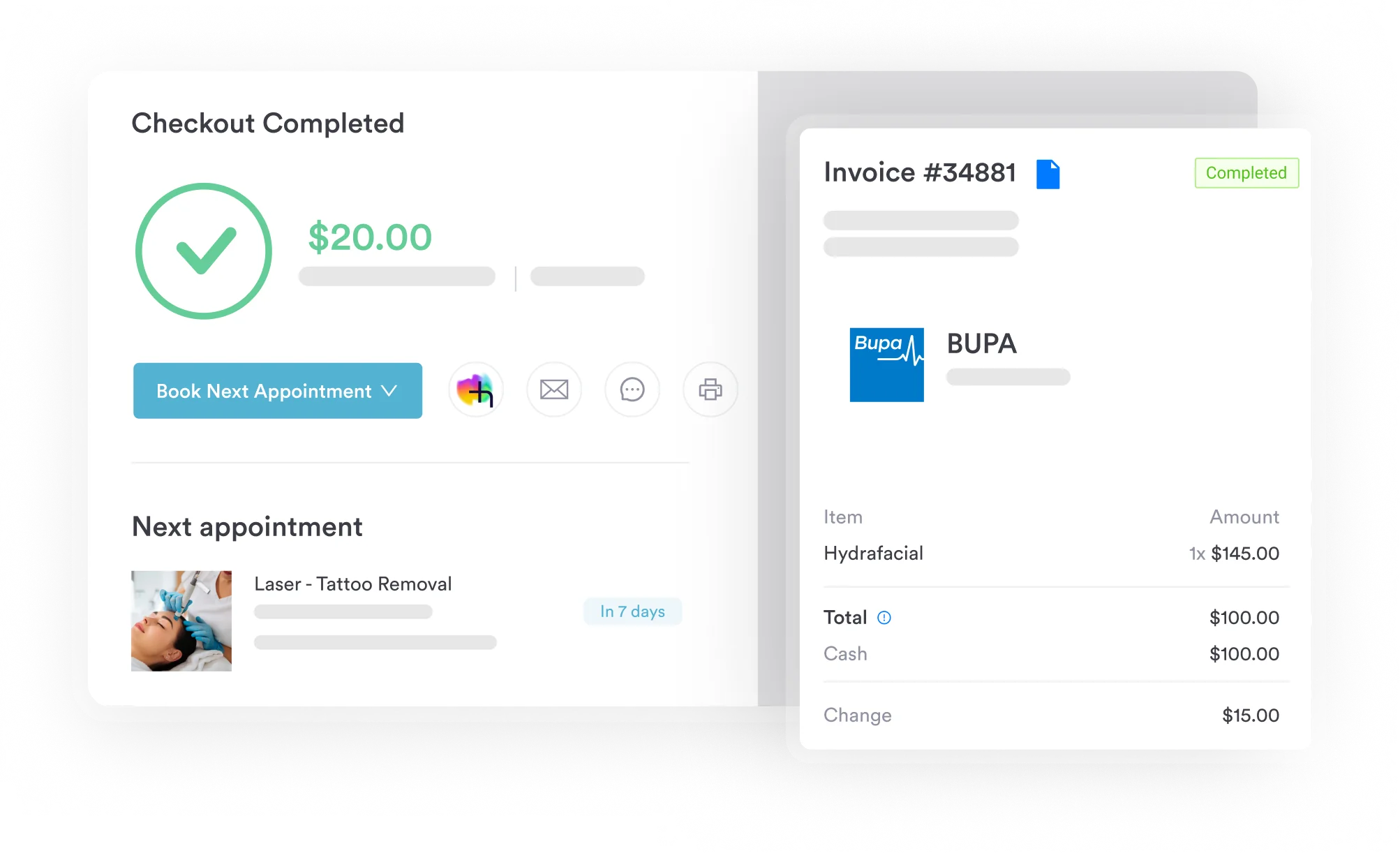
The result is fewer queries, fewer resubmissions, and a shorter path from the follow-up visit to a paid claim. Pabau’s claims management software carries that same detail through to submission, so nothing has to be retyped or reconstructed later.

Pabau keeps intake, treatment notes, and claims in one system, so encounter type and loss of consciousness duration are recorded at the visit. Your coders stop chasing the physician for missing detail.

S06.2X2D is easy to assign and harder to support. All three of its axes sit in someone else’s notes, so the code is only as good as the follow-up documentation behind it.
The practical work happens upstream of the claim. If the follow-up note names the injury as diffuse, states the LOC duration, and makes the recovery phase obvious, the code takes seconds. If it does not, query the physician instead of reaching for the nearest available code.
The trade-off worth remembering is time. A query costs a day. A denial costs a month, plus the rework that comes with it. Book a demo to see how Pabau ties follow-up documentation to the codes your billing team has to defend.

Billing a transjugular liver biopsy? Liver biopsy billing guide covers when this interventional radiology approach applies instead of a standard percutaneous biopsy.
Billing endovascular cerebral aneurysm treatment? Cerebral aneurysm treatment billing guide covers the CCSD code for coil embolization and related endovascular aneurysm procedures.
Coding a late effect long after the injury? S92.909S shows how the sequela character behaves on another injury code.
Still inside the active treatment phase? S44.42XA is a worked example of the initial encounter character in use.
ICD-10 code S06.2X2D is a billable ICD-10-CM diagnosis code for diffuse traumatic brain injury at a subsequent encounter. The record must show a loss of consciousness of 31 to 59 minutes. The D shows the patient has finished active treatment and is receiving routine follow-up or rehabilitation care.
Yes. S06.2X2D is a valid, billable ICD-10-CM code for FY 2026. Its parent code S06.2X2 is not billable without a 7th character. All three variants (A, D, and S) are individually billable when the documentation supports that encounter type.
Both codes describe diffuse TBI with 31 to 59 minutes of lost consciousness, and they differ only in encounter type. S06.2X2A covers the initial encounter, while the patient is still in active treatment. S06.2X2D covers the routine recovery or follow-up phase after active treatment ends. Most follow-up visits after discharge use the D variant.
The 7th character D marks a subsequent encounter. It means the patient has finished active treatment and is now receiving routine care during healing or recovery. It does not mean the second visit, only that the care context has moved from active treatment to follow-up.
The S06.2X family replaced the approximate ICD-9-CM 854.xx intracranial injury codes when ICD-10-CM was adopted in October 2015. ICD-10-CM added far more specificity, including separate codes for diffuse and focal TBI plus detailed loss of consciousness duration windows.
Assign the S06 subcode that matches the injury type and the loss of consciousness duration. Then append the subsequent-encounter character, giving S06.2X2D for a 31-to-59-minute window. Check first that the record names the injury as diffuse, states the duration, and shows active treatment is complete.