ICD-10 Code S42.444P: Medial epicondyle fracture, right humerus
ICD-10 Code S42.444P: full descriptor and code validity ICD-10 Code S42.444P car...

Last Updated: Oct 13, 2026
Billable Code Specific Code
O74.2 is the billable ICD-10-CM code for cardiac complications of anesthesia during labor and delivery.
Let Pabau's smart automation suggest the right codes, reduce claim denials, and keep your practice compliant—effortlessly.
Automate repetitive tasks and focus on what matters most—your patients.
Reduce coding errors and ensure compliance with the latest regulations.
Clean claims, fewer denials, and faster reimbursements.
Powerful insights and reporting to help your practice thrive.
HIPAA compliant SOC 2 certified GDPR-compliant Trusted by 4,000+ clinics worldwide

ICD-10 Code O74.2 is the billable diagnosis code for cardiac complications of anesthesia during labor and delivery
O74.2 applies only when anesthesia causes the cardiac event, not a pre-existing heart condition
Physician documentation must explicitly link the cardiac complication to the anesthetic agent to support accurate code assignment
Pabau’s claims management software and structured patient records help obstetric teams capture the documentation needed to assign O74.2 without audit risk
ICD-10 Code O74.2 is an active, billable ICD-10-CM diagnosis code with the official descriptor: Cardiac complications of anesthesia during labor and delivery. It sits in Chapter 15 (Pregnancy, Childbirth and the Puerperium) of the ICD-10-CM Tabular List and is maintained by the Centers for Medicare and Medicaid Services (CMS).
In plain clinical terms, O74.2 captures cases where anesthesia administered during active labor or delivery causes a cardiac complication, such as hypotension-induced arrhythmia, anesthesia-related cardiac arrest, or vasovagal cardiac events triggered by an epidural or spinal block. It does not apply to maternal cardiac conditions that exist before the anesthetic is given.
O74.2 is one of 10 codes in the O74 block. Understanding the sibling codes prevents miscoding and supports accurate obstetric anesthesia complication tracking. The CDC/NCHS ICD-10-CM web tool provides the current tabular list for all O74.x codes.
Coders working the same delivery record may also need O65.0 or O66.5 to capture other complications documented alongside the anesthesia-related cardiac event.
O74.9 (unspecified) should never be the default choice when documentation supports a more specific code. If the anesthesia complication type is documented, assign the specific code. The same logic applies earlier in the pregnancy record: document O21.2 separately rather than folding it into the O74.2 encounter.
Maternity care runs on a fixed visit schedule, so patient scheduling software keeps every antenatal appointment in sequence.
Not every cardiac event in a laboring patient triggers O74.2. The distinction hinges entirely on documented causation. Here are the clinical scenarios that support and exclude the code.
Scenarios that support O74.2:
Scenarios that exclude O74.2:
Flag any obstetric anesthesia incident report at the time of the event. Coders assigned to postpartum records often lack access to real-time anesthesia incident notes unless the obstetric team formally documents the complication in the delivery record.
The CMS ICD-10-CM Official Guidelines for Coding and Reporting govern how Chapter 15 codes are sequenced. Several rules apply directly to O74.2. Using claims management software that integrates ICD-10 search can reduce sequencing errors at the point of claim submission.
The O74 block shares clinical territory with several adjacent codes. Miscoding in this area can trigger denials or skew maternal morbidity reporting. Where the documented complication is pulmonary aspiration rather than a cardiac event, O74.0 is the correct code.
When LAST presents with both cardiac and CNS manifestations, assign O74.2 if cardiac involvement is the more clinically significant documented finding, and consider O74.3 as an additional code if CNS effects are also explicitly documented.
Claim denials for O74.2 almost always trace back to the same issue: the physician documented a cardiac event and documented that anesthesia was given, but never connected the two. Coders cannot infer causation — the attending anesthesiologist or obstetrician must make the link explicit. Revenue cycle management reporting separates claims that were denied from claims nobody submitted.
Facilities that maintain compliance management protocols for obstetric adverse events are better positioned to capture this documentation at the time of the event.

HIPAA requires accurate diagnosis coding on claims. Incomplete records create both compliance risk and coding errors.
That timing check matters because the O74 block stops at delivery. An anesthesia complication documented after delivery belongs in the O89 block, where O89.8 covers other complications of anesthesia during the puerperium.
Build a facility-level checklist for obstetric anesthesia adverse events that prompts anesthesiologists to document the cardiac event, its causal link to anesthesia, and the anesthetic technique used. Attaching this to the anesthesia record at the time of the event prevents missing documentation from blocking accurate ICD-10 coding weeks later.
For obstetric and pelvic health practices, the documentation workflow around anesthesia complications can be strengthened through practice management software like Pabau.
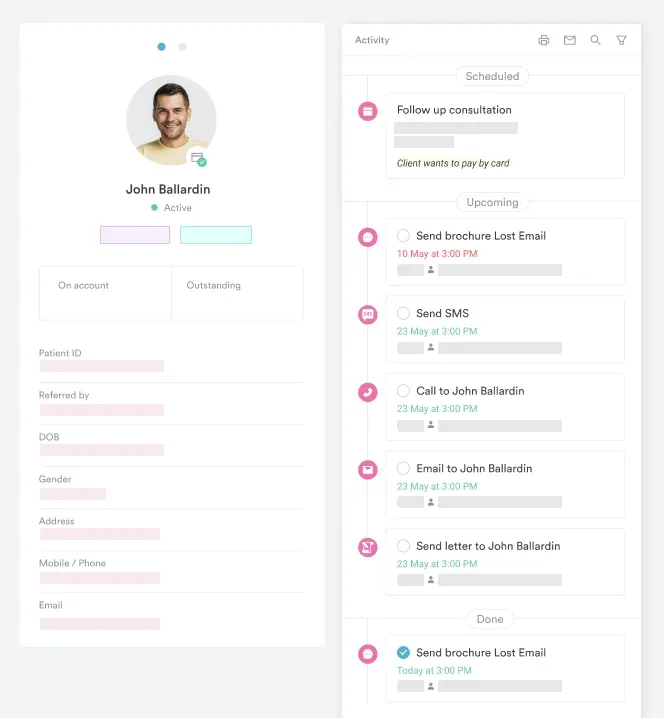
Pabau’s structured patient records allow obstetric teams to log anesthesia-related clinical events with structured fields rather than free-text notes, making it easier for coders to identify the documentation needed to assign O74.2 accurately.
The digital intake forms and anesthesia documentation templates can be configured to capture the causation language coders need. Combined with clinical documentation forms built around ICD-10 coding requirements, the result is a record that travels cleanly from the delivery room to the coding team.

Pabau helps obstetric and maternal care practices build structured clinical records that support accurate ICD-10 coding, reduce audit risk, and keep compliance teams confident.

ICD-10 Code O74.2 applies only when a cardiac complication arises from anesthesia given during labor or delivery, and only when the physician explicitly documents that causal link. Missing documented causation is the top cause of O74.2 claim denials — the complication type itself is rarely in question.
Facilities that build anesthesia adverse event documentation into their clinical workflows get O74.2 assigned cleanly and consistently.
If your obstetric practice needs tighter clinical documentation workflows, structured templates can reduce the errors that lead to miscoding.
See how Pabau supports this kind of structured documentation firsthand — book a demo.

Coding a former smoker’s history? personal history of nicotine dependence code covers how to code a chart note of quit smoking without recording active dependence.
Coding a different anesthesia complication? O74.7 covers failed or difficult intubation during labor, a sibling code in the same O74 block as O74.2.
Need another obstetric coding reference? O03.1 is a separate O-chapter code frequently referenced alongside maternal care claims.
ICD-10 Code O74.2 is the billable ICD-10-CM diagnosis code for cardiac complications of anesthesia during labor and delivery. It falls under Chapter 15 (Pregnancy, Childbirth and the Puerperium) and applies when anesthesia administered intrapartum directly causes a cardiac complication such as arrhythmia, hemodynamic instability, or cardiac arrest.
The O74 block covers 10 codes spanning aspiration pneumonitis (O74.0), other pulmonary complications (O74.1), cardiac complications (O74.2), CNS complications (O74.3), toxic reaction to local anesthesia (O74.4), spinal/epidural headache (O74.5), other spinal/epidural complications (O74.6), failed or difficult intubation (O74.7), other complications (O74.8), and unspecified complication (O74.9). Always assign the most specific code supported by documentation rather than defaulting to O74.9.
O74.1 covers other pulmonary complications of anesthesia during labor, a respiratory complication. O74.2 covers cardiac complications of anesthesia during the same period. Assign based on the organ system affected: respiratory involvement goes to O74.1, cardiac involvement to O74.2. Both can be assigned together if both are documented.
Yes, O74.2 is valid for both inpatient and outpatient claims. Inpatient claims require a Present on Admission (POA) indicator, which is typically “N” since the cardiac complication arises during labor rather than before admission. Outpatient use is rare given the clinical context but technically valid.
The physician’s record must explicitly document that the cardiac complication was caused by anesthesia administered during labor or delivery. A statement that cardiac events and anesthesia were both present is not sufficient. The anesthesiologist or obstetrician must link the two with causation language, name the type of cardiac complication, and specify the anesthetic technique used.
For spinal/epidural headache, use O74.5. For other complications specific to spinal and epidural anesthesia during labor, use O74.6. If the spinal or epidural block causes a cardiac complication, O74.2 is the correct code regardless of the anesthetic technique, since O74.2 covers cardiac effects across all anesthesia types administered intrapartum.