ICD-10 code S61.201A: Open wound of left index finger without nail damage
ICD-10 code S61.201A covers a left index finger wound of unstated type ICD-10 co...

Last Updated: Oct 16, 2026
Billable Code Specific Code
N74 is the billable ICD-10-CM code for female pelvic inflammatory disorders in diseases classified elsewhere.
The tabular list requires a Code first instruction for the underlying disease. Leave N74 on a claim with no etiology code, and it raises a compliance flag right away.
The opposite mistake happens too. Coders sometimes reach for N74 when the true cause is gonorrhea, chlamydia, syphilis, tuberculosis, herpes, or trichomoniasis. Each of those already has its own dedicated code, and none of them ever pairs with N74.
This page reflects the 2026 ICD-10-CM edition, effective October 1, 2025 through September 30, 2026. CMS's ICD-10 codes program and the CDC National Center for Health Statistics maintain it.
Let Pabau's smart automation suggest the right codes, reduce claim denials, and keep your practice compliant—effortlessly.
Automate repetitive tasks and focus on what matters most—your patients.
Reduce coding errors and ensure compliance with the latest regulations.
Clean claims, fewer denials, and faster reimbursements.
Powerful insights and reporting to help your practice thrive.
HIPAA compliant SOC 2 certified GDPR-compliant Trusted by 4,000+ clinics worldwide

ICD-10 code N74 is a single, billable ICD-10-CM code for female pelvic inflammatory disorders documented as a manifestation of an underlying disease classified elsewhere – it has no N74.0-N74.4 subcodes in the US classification.
N74 carries a generic Code first instruction: sequence the underlying disease first, then N74, whenever that disease does not already have its own dedicated combination code.
N74’s Excludes1 note rules out ten specific conditions, including gonococcal, chlamydial, syphilitic, tuberculous, herpesviral, and trichomonal pelvic inflammatory disease and cervicitis – each already has its own standalone combination code and is never paired with N74.
N74 differs from N73 (other female pelvic inflammatory diseases) in that N73 is used when no code-first-eligible underlying disease is documented, while N74 always requires that documented etiology.
Pabau’s claims management software validates insurer-submission fields and gates claim sending, while structured client records and Echo AI help clinicians document the underlying disease driving N74 at the point of care.
ICD-10 code N74 is a billable, specific ICD-10-CM diagnosis code, reported as a single three-character code with no further subdivisions. It is valid for use on claims submitted for reimbursement in the FY2026 coding cycle. The official full description is Female pelvic inflammatory disorders in diseases classified elsewhere.
The code belongs to Chapter 14 (Diseases of the genitourinary system, N00-N99), within the block N70-N77 (Inflammatory diseases of female pelvic organs).
The key clinical meaning: the pelvic inflammatory presentation is a manifestation of another disease, documented and coded elsewhere in the record. It isn’t a primary gynecologic infection with its own combination code.
Unlike a header code, N74 is reportable as a stand-alone diagnosis code. The ICD-10-CM classification simply doesn’t split it into organism-specific subcodes the way some coders expect.
That expectation comes from the WHO international classification, which lays the same trap at N33, the code for bladder disorders in diseases classified elsewhere. The N33.0 and N33.8 subcodes exist only in the WHO version, so neither is valid on a US claim.
Always verify the current year’s code status against CMS’s ICD-10-CM releases, as descriptions and instructional notes update annually.
N74 carries a Code first instruction, and it’s a generic one: “Code first underlying disease.” Unlike some manifestation codes, the ICD-10-CM tabular list does not attach a named list of qualifying diseases to N74. That makes documentation review, not a lookup table, the coder’s main tool here.
Under the ICD-10-CM Official Guidelines for coding and reporting, the etiology-manifestation convention requires the underlying disease to be sequenced first, followed by the manifestation. Reverse that order, or omit the etiology code entirely, and the claim is likely to be rejected or flagged on audit.
Three things the documentation must establish before N74 can be assigned:
Take pelvic actinomycosis, sometimes linked to prolonged IUD use. It isn’t on N74’s Excludes1 list. When a clinician documents “pelvic inflammatory disease secondary to actinomycosis,” the sequencing runs A42- first, then N74 second.
That’s the etiology-manifestation pair working the way the tabular list intends. The underlying disease keeps its own code, and N74 captures the pelvic manifestation.
Before assigning N74, check the documented underlying disease against the Excludes1 list below. If the cause is gonorrhea, chlamydia, syphilis, tuberculosis, herpes, or trichomoniasis, don’t code N74 at all. Use that disease’s own standalone combination code instead. N74 is reserved for causes that don’t already have that dedicated pairing.
Excludes1 is a hard restriction. It means the listed condition can never be coded at the same time as N74. That’s because the condition already has its own dedicated combination code for that exact presentation.
This is the opposite of a pairing instruction. It’s a list of conditions N74 must never sit alongside.
Here’s the practical rule. Each of these ten conditions is reported with its own code, alone, on its own line. None of them ever pairs with N74 plus an etiology code. If the documented cause is gonorrhea, chlamydia, syphilis, tuberculosis, herpes, or trichomoniasis, N74 does not belong on the claim at all.
Sexual health and women’s health practices managing STI-related pelvic infections should verify these exclusions against the current CMS tabular list every fiscal year.
Practices relying on OB/GYN EMR software to drive claim generation need this distinction built into the diagnosis picklist, not just the coder’s memory.
Good software for managing patients links each N-code to the visit, test, and follow-up plan behind it.
Choosing the right code from the N70-N77 block depends on whether the inflammation has its own confirmed cause. It also depends on whether that cause already carries a dedicated combination code.
N74 and N73 (other female pelvic inflammatory diseases) are the two most frequently confused codes in this block.
Decision rule: if no underlying disease is documented, or the cause is gonorrhea, chlamydia, syphilis, tuberculosis, herpes, or trichomoniasis, skip N74. Unspecified or non-STI-related PID goes to N73. The ten Excludes1 conditions each get their own standalone combination code, used alone. N74 is reserved for the remaining case. It needs a confirmed, documented underlying disease that isn’t one of those ten and doesn’t already have its own combination code for the pelvic manifestation. Some payers require prior authorization for this service, and a claim without it is denied regardless of coding. A coding error surfaces as a cash flow problem weeks later, which is why the healthcare revenue cycle is measured end to end.
These examples show how documentation drives code selection, including the cases where N74 shouldn’t be used at all. Each scenario starts with what the clinician wrote and ends with the correct code assignment.
Chart note: “Patient presents with pelvic pain and cervical motion tenderness. NAAT positive for Neisseria gonorrhoeae. Pelvic inflammatory disease secondary to gonococcal infection confirmed.”
Code assignment: A54.24 alone (gonococcal female pelvic inflammatory disease). Gonococcal PID is on N74’s Excludes1 list, so N74 is never added alongside it.
Chart note: “NAAT positive for Chlamydia trachomatis. Clinical findings consistent with chlamydial PID, salpingitis confirmed on ultrasound. Chlamydial pelvic inflammatory disease.”
Code assignment: A56.11 alone (chlamydial female pelvic inflammatory disease). Same rule as Scenario 1. This is an Excludes1 condition, so it is never paired with N74.
Chart note: “Pelvic inflammatory disease, acute. Organism not identified.”
Code assignment: N73.9 (female pelvic inflammatory disease, unspecified). With no documented underlying disease, there is nothing to code first, so N74 does not apply.
Chart note: “Long-standing IUD in place. Pelvic actinomycosis confirmed on culture. Pelvic inflammatory disease secondary to actinomycosis.”
Code assignment: A42.1 or A42.9 (actinomycosis, first), then N74 (second). Actinomycosis is not one of N74’s ten Excludes1 conditions, so this is the genuine Code first pairing the tabular list is describing.
Scenario 4 is the one pelvic health practices and gynecology coders miss most often. It runs against the instinct built up from Scenarios 1 and 2. The reflex to reach for an etiology-plus-N74 pair is correct only when that etiology isn’t already excluded.
One documentation checklist question prevents both mistakes. Ask whether the underlying cause is one of the ten Excludes1 conditions, or something else entirely. Many pelvic health practices build that question straight into their intake forms.
Accurate N74 coding depends on what the treating clinician documents, not just the diagnosis. These are the elements coders and clinical documentation specialists need confirmed in the chart before selecting N74.
Practices using digital clinical forms can structure encounter templates to prompt clinicians for these elements at the point of documentation. That cuts the need for retrospective queries that delay claim submission.
Well-structured patient records that capture the underlying disease and the causal relationship make N74 selection straightforward for coders.
Practices concerned with HIPAA-compliant documentation workflows can review options for HIPAA compliance software.
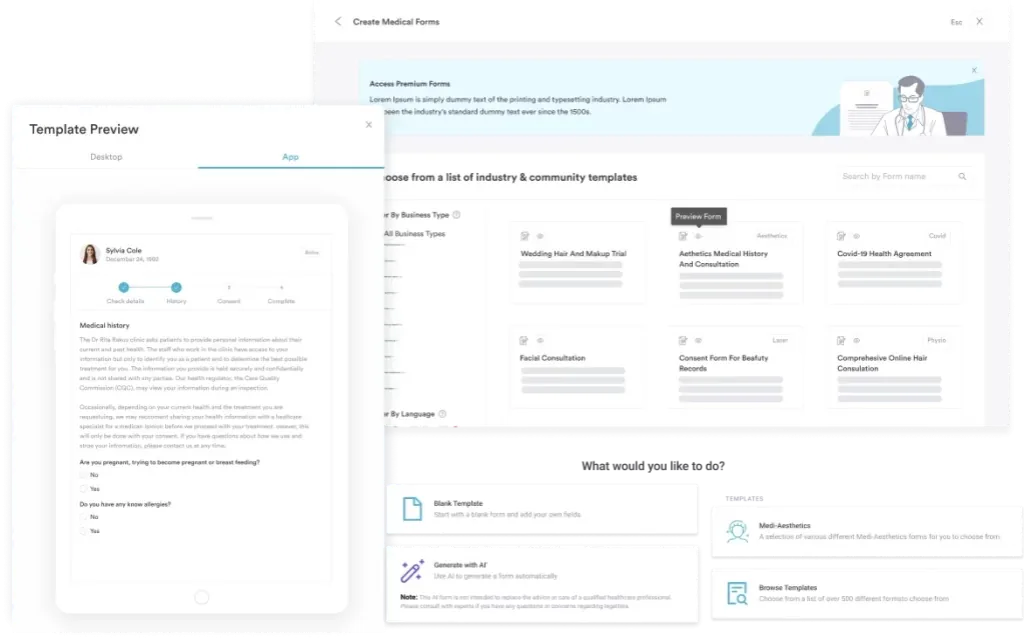
Coding failures for N74 almost always start in the documentation, not the billing system. A clinician who writes “pelvic inflammatory disease” without naming the cause, or without ruling out the ten Excludes1 conditions, leaves the coder guessing.
Practice management software like Pabau addresses this directly. Its structured client record system captures the diagnosis relationship at the point of care, so the coder isn’t reconstructing it later at billing.
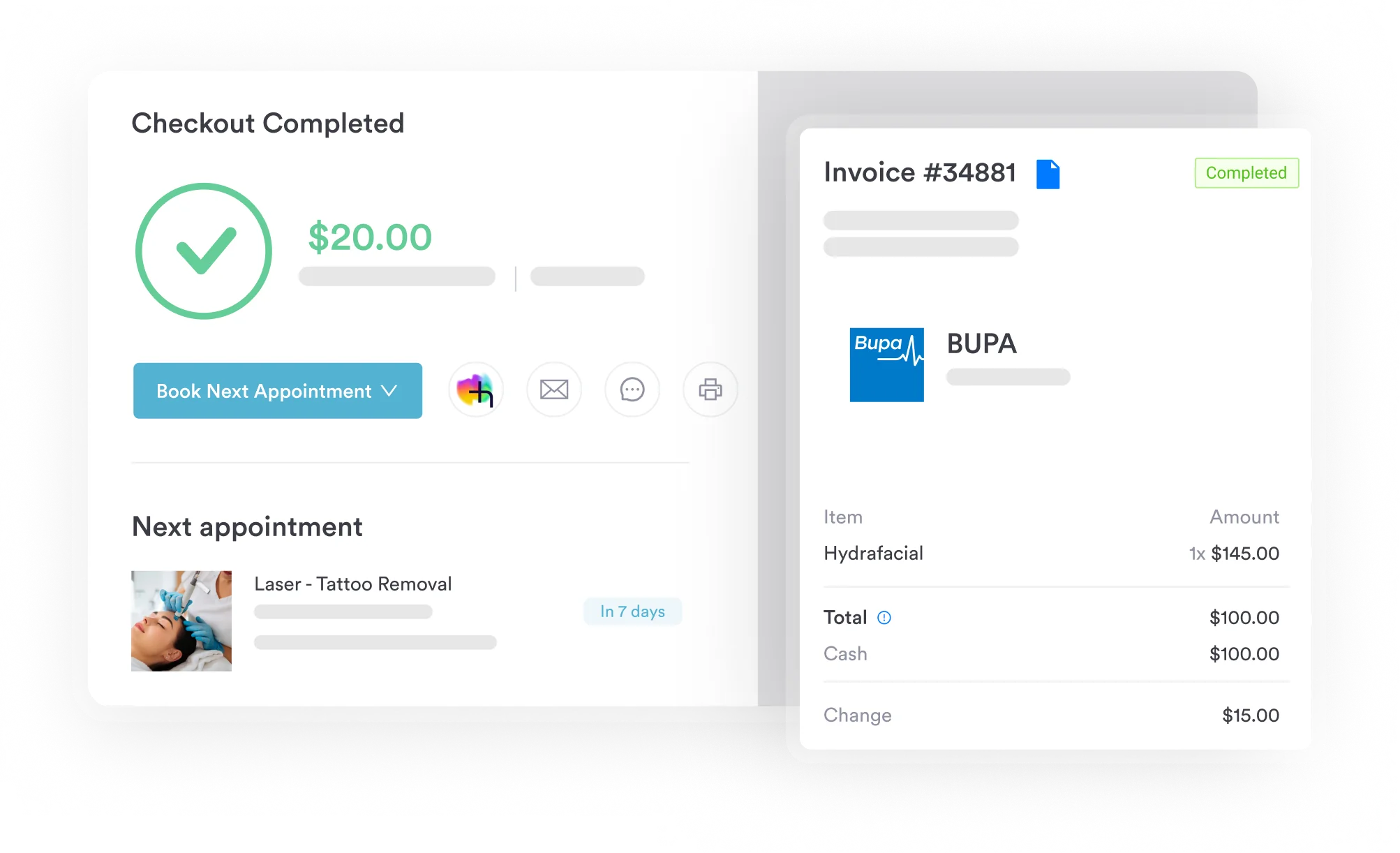
Pabau’s claims management software doesn’t check ICD-10 code-pairing logic itself. It does validate the insurer-submission fields a claim needs, and it gates the Send action until those fields are complete. A claim-status dashboard then tracks what’s been submitted and what’s still outstanding.
For gynecology, sexual health, and pelvic health practices, this catches the administrative slip-ups. A missing field or an incomplete submission gets stopped before it leaves the building.
The coder still owns the clinical call. Confirming N74’s Code first partner, and ruling out an Excludes1 condition, stays a documentation task, not a system check.
Echo AI, Pabau’s AI scribe, records and structures clinical notes during the encounter. That supports the documentation specificity N74 coding requires:
Gynecology and women’s health practices often track these billing workflows across multiple providers or locations. Multi-location reporting through Pabau gives practice managers that visibility, across every site, in one place.
Run a quarterly audit of claims submitted with N74. If you find it paired with a gonorrhea, chlamydia, syphilis, tuberculosis, herpes, or trichomoniasis code, that’s an Excludes1 conflict and the claim needs correction, not just a documentation query. If you find N74 with no etiology code at all, that encounter needs a documentation query before resubmission.

Pabau’s claims management software checks that every required field is filled in before a claim can be sent, and flags what’s missing. That keeps incomplete pelvic inflammatory disease claims from stalling at the payer.

N74 rewards the coder who treats it as one half of a pair, not a stand-alone diagnosis. Check that pair against the Excludes1 list before it goes anywhere near a claim.
The habit worth building is asking two questions in order: what caused the pelvic inflammatory finding, and does that cause already have its own dedicated code? Get that sequence right, and most of the denials and audit flags tied to this code disappear.
Pabau’s clinical documentation tools help practices capture the etiology at the encounter level. Claims management keeps the submission fields in check before the claim goes out.
Book a demo to see how Pabau supports accurate, audit-ready ICD-10 coding for pelvic inflammatory disease claims.

Coding cervix-specific inflammation instead? N72 covers inflammatory disease of the cervix uteri, one of the conditions N74’s Excludes1 list carves out.
Coding narrowing in a peripheral vascular stent? T82.856A stent stenosis code covers stenosis of a peripheral vascular stent at the initial encounter, during active treatment for the narrowing.
Billing for durable medical equipment too? A4608 walks through the billing rules for transtracheal oxygen catheters.
Handling procedure billing alongside your diagnosis codes? 12053 is a CPT code guide for intermediate face repair billing.
ICD-10 code N74 is a single, billable code for female pelvic inflammatory disorders that occur as a manifestation of an underlying disease. The tabular list requires a Code first instruction: the underlying disease is sequenced first, then N74.
No. In the US ICD-10-CM system used for billing, N74 is reported as a single three-character code with no decimal subcodes. That breakdown exists only in the World Health Organization’s international classification.
N73 applies when no code-first-eligible underlying disease is documented. Its subcodes are standalone and billable alone. N74 applies only when a confirmed underlying disease, outside its ten Excludes1 conditions, is documented and sequenced first.
No. Gonococcal PID (A54.24) and chlamydial PID (A56.11) are both on N74’s Excludes1 list, so they’re never coded with N74. Each stands alone, as a complete combination code.
N74’s Excludes1 note lists ten conditions, each with its own standalone combination code: gonococcal, chlamydial, syphilitic, tuberculous, herpesviral, and trichomonal pelvic inflammatory disease and cervicitis. The full list with codes appears in the table above.
No. N74 is billed as a complete three-character code with no further extension. That’s different from many injury and obstetric codes, which need a 7th character for encounter type or laterality.
N74 falls under MDC 13 (Diseases and Disorders of the Female Reproductive System) in the CMS MS-DRG system. It commonly groups to the Infections, Female Reproductive System DRGs, though the exact assignment depends on CC/MCC and the full diagnosis list.