ICD-10 Code S42.444P: Medial epicondyle fracture, right humerus
ICD-10 Code S42.444P: full descriptor and code validity ICD-10 Code S42.444P car...

Last Updated: Oct 13, 2026
Billable Code Specific Code
M61.9 is the billable ICD-10-CM code for calcification and ossification of muscle, unspecified.
That's a problem for payers scanning claims for medical necessity. An unspecified code with no rationale in the notes is one of the fastest ways to trigger a query. The M61 family has six more specific sub-codes for exactly this reason. Here's how to tell when M61.9 is the right call, and when a sharper code fits better.
Let Pabau's smart automation suggest the right codes, reduce claim denials, and keep your practice compliant—effortlessly.
Automate repetitive tasks and focus on what matters most—your patients.
Reduce coding errors and ensure compliance with the latest regulations.
Clean claims, fewer denials, and faster reimbursements.
Powerful insights and reporting to help your practice thrive.
HIPAA compliant SOC 2 certified GDPR-compliant Trusted by 4,000+ clinics worldwide

ICD-10 code M61.9 represents calcification and ossification of muscle, unspecified, under the M61 parent category in the musculoskeletal chapter.
M61.9 is a billable ICD-10-CM code valid for FY2026 (effective October 1, 2025) and accepted for HIPAA-covered electronic transactions.
Use M61.9 only when the body site and type of calcification or ossification are not documented; more specific M61 sub-codes take priority when site and etiology are known.
Pabau’s claims management software and clinical documentation features help practices code accurately, attach supporting notes, and reduce claim queries on unspecified codes.
ICD-10 code M61.9 is a billable ICD-10-CM diagnosis code representing calcification and ossification of muscle, unspecified. It is valid for the fiscal year 2026, effective October 1, 2025, and accepted for HIPAA-covered electronic transactions under CMS ICD-10-CM guidelines.
Coders reach for this code when documentation confirms a calcification or ossification process in muscle tissue. The record just doesn’t specify the affected body site or the underlying etiology.
Payers treating physical therapy EMR claims routinely audit unspecified codes. Submitting M61.9 without adequate chart documentation is one of the faster ways to trigger a medical-necessity query. The code is legitimate and billable, but it demands a clear clinical rationale in the record.
Calcification and ossification are related but distinct processes. Calcium salts deposit in soft tissue during calcification, without forming true bone. Actual bone tissue forms within the muscle during ossification, a process called heterotopic ossification or, in its myositis form, myositis ossificans.
The WHO ICD-10 classification groups both processes under M61 because they share a common clinical presentation. Abnormal mineral deposits or bone tissue form in or around skeletal muscle, limiting movement and causing pain. Clinicians working in sports medicine software-supported settings encounter these conditions most often following blunt trauma, burns, prolonged immobilization, or neurological injury.
The “unspecified” designation in M61.9 applies when the record does not name the affected muscle group, body region, or underlying cause. That distinction matters for coding accuracy and for payer review.
Several clinical terms map to ICD-10 code M61.9 in the alphabetic index. Knowing these synonyms helps coders confirm the correct code when working from a provider’s narrative note rather than a code number.
For practices managing physical therapy practice requirements, recognizing these synonym pathways matters. It cuts the risk of landing on a non-billable or incorrect code when a provider uses informal shorthand in the chart.
Osteopaths treating these conditions can document diagnoses and sessions in osteopathy practice software.
M61.9 sits at the end of the M61 code family, which itself sits within the musculoskeletal disorders chapter. The full hierarchy path is shown below.
The parent code M61 is not itself billable. It acts as a header grouping all calcification and ossification conditions affecting muscle. Coders must always select a sub-code, and M61.9 is the fallback when documentation does not support a more specific choice.
The neighboring M62.9 code follows this same hierarchy pattern, one level up from its own unspecified sub-code.
Always verify the M61 ICD-10 category code by checking both the alphabetic index and the tabular list. Index entries can point to M61.9 through multiple synonym pathways; the tabular list confirms the official code description and any instructional notes before submission.
The M61 category contains six main sub-categories before the unspecified catch-all. Each sub-category further branches by body site. Understanding the full family prevents under-coding when documentation supports a more specific choice.
Each sub-code from M61.0 through M61.5 further branches by body site (shoulder, upper arm, forearm, hand, thigh, lower leg, ankle and foot, and other sites). Reviewing the CDC/NCHS ICD-10-CM web tool for the full child-code listing before coding ensures the most specific available code is selected.
ICD-10-CM’s specificity-first rule means M61.9 is appropriate only as a last resort. Before assigning this code, apply these decision steps.
Note: myositis ossificans progressiva (M61.1) is a distinct, serious heritable condition. Never substitute M61.9 for it when progressiva is documented. The two conditions have completely different clinical trajectories and should never be conflated in the record.

Practice management software like Pabau helps musculoskeletal and physical therapy practices capture the site, laterality, and etiology detail that coders need to avoid unspecified codes and payer queries. See how the platform supports precise documentation from the consult forward.

Coders working from a provider’s narrative reach M61.9 through several alphabetic index pathways. Knowing these entry points prevents accidental misfiling into adjacent code families.
Always cross-reference the index result against the tabular list before finalizing. The tabular entry for M61.9 carries no Excludes1 or Excludes2 notes that would block its use alongside other musculoskeletal codes, but confirming this step in the tabular list is standard practice. Coders who build this cross-check into their workflow catch a mistaken index pathway before it reaches a claim, not after a denial. Claim scrubbing catches the mismatches that would otherwise come back as a denial two weeks later. A billing workflow that separates coding from submission creates a handoff where claims stall.

Several adjacent codes are frequently confused with ICD-10 code M61.9 or arise in the same clinical context. The table below helps coders distinguish them quickly.
Coders handling multiple musculoskeletal conditions benefit from a quick-reference crosswalk like this one. It reduces the risk of landing on a neighboring code.
Most M61.9 claim queries trace back to missing details in the chart, the kind a short provider note would close. The following checklist addresses the most common deficiencies.
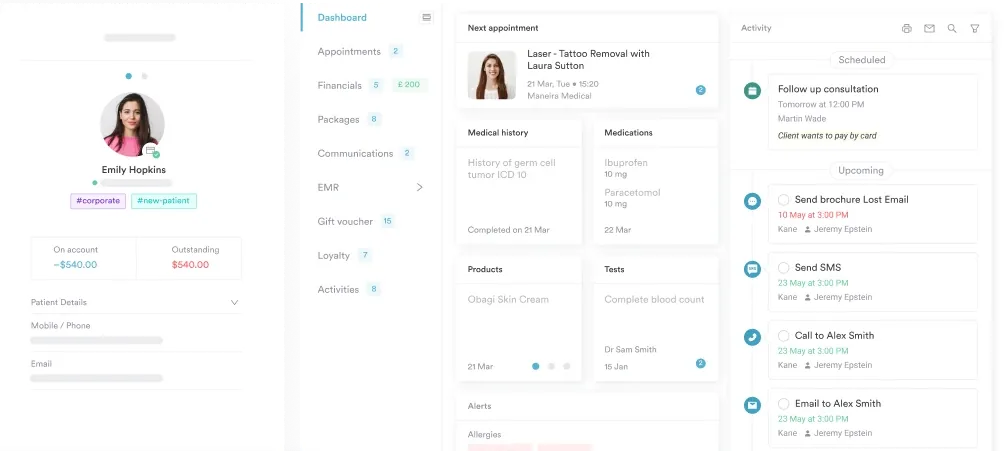
Practices using Pabau’s clinical documentation features can structure encounter notes to capture site, laterality, and etiology as discrete fields rather than buried free-text. That makes the coder’s job significantly faster. The same specificity-first logic applies to M79.9, another unspecified code that draws its own share of payer queries.
Flag M61.9 claims for secondary review before submission. A 30-second check confirming the record contains an imaging reference, a documented rationale for unspecified site, and a clinical query note where applicable is faster than managing a denial 45 days later.
ICD-10 code M61.9 is a valid, billable code, but its unspecified status puts it under closer payer review. Specificity-first coding means checking the M61 family for a site- and etiology-specific sub-code before reaching for M61.9. When M61.9 is the right choice, the record needs to show clearly why more detail wasn’t available.
Pabau’s claims management software helps practices attach the imaging report, laterality, and cause to an encounter before a claim goes out. That way, unspecified codes carry the rationale payers expect. Book a demo to see how it fits into a musculoskeletal or physical therapy coding workflow.

Coding back pain alongside a muscle disorder? M51.9 covers unspecified intervertebral disc disorder, a frequent neighbor on musculoskeletal claims.
Seeing muscle spasm without calcification? M62.830 walks through documenting back muscle spasm on its own.
Coding a healing thigh strain? S76.202D covers a subsequent encounter for thigh muscle strain.
Charting generalized muscle weakness? M62.81 explains when this code fits better than a site-specific diagnosis.
The 5th character of each M61.0-M61.5 code identifies body site, such as shoulder, forearm, thigh, or lower leg. The 6th character, where the code has one, records laterality: right, left, or unspecified side. Mixing these up leads to a code that names the wrong site.
The approximate ICD-9 match is 728.10, unspecified disorder of muscle, ligament, and fascia. This crosswalk only matters for reprocessing claims dated before October 1, 2015, when ICD-10-CM took effect. New claims use M61.9 directly.
Orthopedics and sports medicine code it after blunt trauma. Physical therapy and rehab practices see it with paralytic or post-surgical cases. Burn units use it when documentation hasn’t yet confirmed a specific muscle group.
Check the chart for a site or cause that supports a sharper M61 sub-code and resubmit with that code if one exists. If the record still can’t support more detail, attach the imaging report and a short provider note explaining why, then appeal.