ICD-10 Code Y76.0: Diagnostic obstetric and gynecological devices
ICD-10 Code Y76.0: Definition and billable status ICD-10 Code Y76.0 is a valid, ...

Last Updated: Oct 23, 2026
Billable Code Specific Code
M27.9 is the billable ICD-10-CM code for disease of jaws, unspecified.
Payers read unspecified codes as an invitation to check the note. So the safest use of M27.9 is a deliberate one, backed by a query the coder actually made. Practices running their own EMR and billing workflows can build that check in before the claim leaves. A service billed to Australian Medicare needs the matching schedule item and the documentation the descriptor asks for. Accounts receivable aging shows which codes are slow to pay long before anyone calls it a denial problem.
Let Pabau's smart automation suggest the right codes, reduce claim denials, and keep your practice compliant—effortlessly.
Automate repetitive tasks and focus on what matters most—your patients.
Reduce coding errors and ensure compliance with the latest regulations.
Clean claims, fewer denials, and faster reimbursements.
Powerful insights and reporting to help your practice thrive.
HIPAA compliant SOC 2 certified GDPR-compliant Trusted by 4,000+ clinics worldwide

ICD-10 code M27.9 is the billable code for disease of jaws, unspecified, valid from October 1, 2025.
Reach for M27.9 only when the record cannot support a more specific code in the M27 category.
M27.8 is the right code when the jaw condition is named but has no subcode of its own.
Drug-induced osteonecrosis of the jaw is an Excludes2 under M27.2 and codes to M87.180 instead.
Practice management software like Pabau keeps the jaw finding, the code, and the claim in one record.
The quick-reference table below gives you every core fact about M27.9 in one place. Confirm these values against the CDC/NCHS ICD-10-CM web tool before you submit.
The official ICD-10-CM description for M27.9 is disease of jaws, unspecified. It closes the M27 category, which collects diseases of the jaw bones that are not dentofacial anomalies or malocclusion. Those belong in M26.
Clinically, M27.9 fits an encounter where the clinician has documented a pathological process in the jaw without naming the type. It is a residual code, and a thin workup is not a reason to reach for it.
These alternate terms map to M27.9 in the ICD-10-CM index, and coders meet them in provider notes:
A note using any of these terms without a type points to M27.9, provided nothing more specific is documented.
The ICD-10-CM Official Guidelines for Coding and Reporting are approved by four cooperating parties. Those are CMS, NCHS, the American Hospital Association, and AHIMA. They set a hierarchy of specificity. Unspecified codes are valid where the record genuinely stops short, and they are not a shortcut.
Reporting M27.9 while the record clearly supports an M27 subcode is a specificity error. Common triggers are an imaging report confirming a jaw cyst, an operative note documenting osteoradionecrosis, and a note naming cherubism or an exostosis. Each of those has its own code.
Alveolitis after an extraction is a common example. Where the note records a dry socket, M27.3 is the code, not M27.9.
Before you assign M27.9, run one query against the note. Does it name a jaw condition type? Cysts, inflammatory conditions, periradicular pathology, implant failures, and developmental disorders each carry their own M27 subcode. Keep M27.9 for encounters where that specificity is genuinely absent.
Sports medicine software helps teams link each injury code to treatment progress and return-to-play timelines.
Knowing where M27.9 sits makes the neighboring codes quicker to find. The path from chapter to code runs like this:
M27 sits next to M26, which holds the dentofacial anomalies, including malocclusion. If the problem is tooth alignment, bite mechanics, or jaw development, M26 applies instead. M27 is for disease processes in the jaw bones themselves. That boundary catches out primary care practices that see the complaint before the referral.
Two neighbors are worth memorizing. Temporomandibular joint disorders live in M26.6-, so joint dysfunction never codes to M27. Jaw pain on its own is R68.84, which is an Excludes1 under M27.8. Manual therapy teams in osteopathy practices meet both of those far more often than true jaw disease.
The table below lists every billable code under M27 alongside M27.9, arranged for a quick differential check. Work down it before you settle on the unspecified code.
Three of these are parents, not codes. M27.4, M27.5, and M27.6 are subcategory headings, so none of them can go on a claim. Each needs its fifth character first, which is why the table lists the children instead.
Notice how M27 splits inflammatory, cystic, developmental, periradicular, and implant conditions into separate codes. That granularity is the reason M27.9 should be a last resort. The same ladder runs through the rest of the chapter.
The most common selection error inside M27 is picking between these two. Both are fallbacks, and they answer different questions.
The practical rule is short. If you can name the condition, code M27.8. If you genuinely cannot, M27.9 is correct. Query the provider before you default either way, and keep the query in the chart.
M27.9 took effect for FY2026 on October 1, 2025. Nothing changed in the code itself, its description, or its billable status. Four points are still worth checking in your annual review:
Put a recurring reminder in the calendar for September. CMS and NCHS usually post the new fiscal year files in June or July. That gives your team two to three months to update code lists in the EMR and on the superbill before October 1.
When M27.9 reaches a claim, the payer expects the note to explain why nothing more precise was reported. Three elements do most of that work:
HIPAA adopts ICD-10-CM as the standard diagnosis code set, and the official guidelines come with it. Reporting M27.9 where the record supports M27.2 or M27.40 is a compliance problem as well as a billing one. Structured digital intake forms that ask for jaw-specific detail often produce enough to code precisely at the first encounter.

That habit also shortens the audit trail. A jaw complaint recorded in structured fields is easier to defend a year later than a free-text line.
A specificity problem usually surfaces after the denial arrives. The coder assigns M27.9, the claim goes out, and the payer asks why nothing more precise was reported. By then the encounter is weeks old, and the detail is harder to recover.
Practice management software like Pabau keeps the clinical note, the diagnosis code, and the claim in one patient record. The jaw finding captured on an intake or treatment form sits beside the code the biller picks. So a query takes seconds instead of a chart hunt, and the answer lands back on the same record.
Pabau’s claims management submits claims electronically and follows them through to remittance. Denials group by diagnosis, so you can see what M27.9 is costing you across a quarter. That turns a coding argument into a documentation fix.
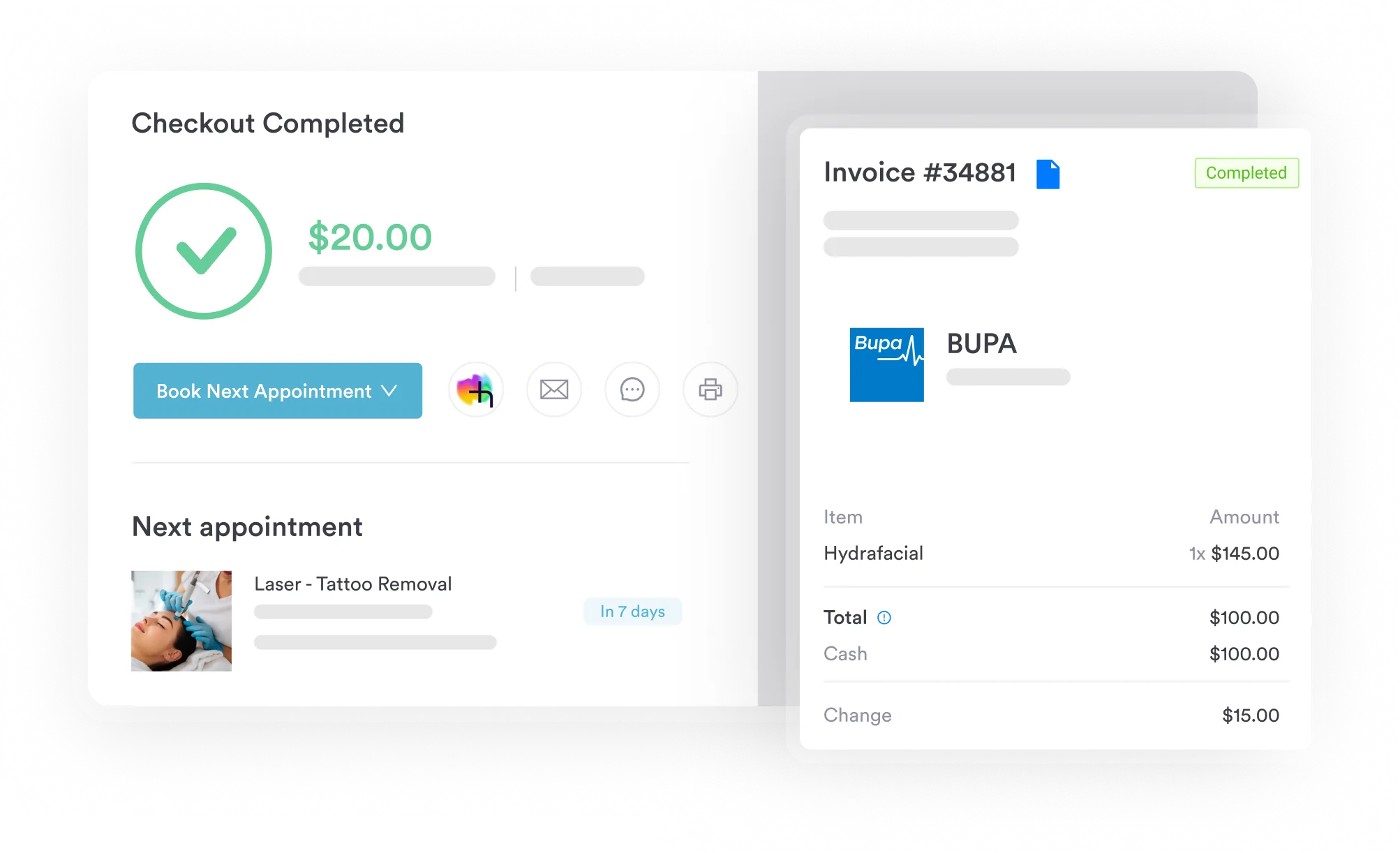

Pabau keeps the jaw finding, the diagnosis code, and the claim on one patient record, and tracks every denial by diagnosis. Your team fixes the documentation upstream instead of reworking claims.

M27.9 earns its place in a narrow set of encounters. Assign it because the record genuinely stops short of a type, and the code holds up under review. Assign it because the note was thin and nobody asked, and the payer will find it.
The work that protects the claim happens at the encounter, not at submission. One provider query, logged in the chart, is usually the difference between M27.9 and a code that clears without comment. Book a demo to see how Pabau keeps jaw disease documentation and coding on the same record.

Need the billing side of a diagnosis code? Superbills explained shows how a diagnosis code travels from the chart onto the claim.
Coding a congenital nose malformation? fissured, notched and cleft nose code is the billable FY2026 code, and the article covers its index term, synonyms, and Excludes1 note.
Coding another musculoskeletal diagnosis? M18.4 shows how laterality and specificity behave in the same chapter.
Handling a systemic diagnosis instead? M31.0 walks through documentation for a vasculitis diagnosis.
M27.9 is a billable ICD-10-CM diagnosis code for disease of jaws, unspecified. It sits in category M27, other diseases of jaws, inside the musculoskeletal chapter M00-M99. Use it when a jaw disease is documented but no more specific M27 code is supported.
Yes. M27.9 is a billable and specific code at four characters, valid for dates of service from October 1, 2025. It can be reported on a claim when the documentation stops short of a more specific M27 code.
M27 covers developmental disorders, central giant cell granuloma, inflammatory conditions, alveolitis, and jaw cysts. It also covers periradicular pathology after endodontic treatment, endosseous dental implant failure, other specified jaw diseases, and unspecified jaw disease. The billable codes run from M27.0 to M27.9.
No. M27.2 carries an Excludes2 note for osteonecrosis of jaw due to drug, which codes to M87.180 instead. M27.2 covers osteoradionecrosis, and a radiation-induced case takes an added external cause code from W88-W90 or X39.0.