ICD-10 Code Y76.0: Diagnostic obstetric and gynecological devices
ICD-10 Code Y76.0: Definition and billable status ICD-10 Code Y76.0 is a valid, ...

Last Updated: Oct 23, 2026
Billable Code Specific Code
M18.4 is the billable ICD-10-CM code for other bilateral secondary osteoarthritis of first carpometacarpal joints.
Let Pabau's smart automation suggest the right codes, reduce claim denials, and keep your practice compliant—effortlessly.
Automate repetitive tasks and focus on what matters most—your patients.
Reduce coding errors and ensure compliance with the latest regulations.
Clean claims, fewer denials, and faster reimbursements.
Powerful insights and reporting to help your practice thrive.
HIPAA compliant SOC 2 certified GDPR-compliant Trusted by 4,000+ clinics worldwide

ICD-10 code M18.4 covers other bilateral secondary osteoarthritis of the first carpometacarpal joints, and it is billable for FY2026.
Secondary thumb base osteoarthritis stems from an underlying disease rather than wear and tear, which separates M18.4 from M18.0 and M18.1x.
Documentation must state that both first CMC joints are involved and name the secondary cause.
Practice management software like Pabau keeps the note, the diagnosis, and the invoice on one client record, so audit requests are quick to answer.
ICD-10 code M18.4 is a billable, specific ICD-10-CM code for other bilateral secondary osteoarthritis of the first carpometacarpal joints. It is valid for the FY2026 edition, effective October 1, 2025. The official descriptor per the CMS ICD-10-CM code files is Other bilateral secondary osteoarthritis of first carpometacarpal joints.
It sits in the M18 category, osteoarthritis of the first carpometacarpal joint, within Chapter 13 of ICD-10-CM. Bilateral thumb base arthritis that is neither post-traumatic nor primary lands here. Coders meet it most often in patients whose rheumatoid arthritis, gout, or another systemic disease has damaged both thumb base joints.
Practices managing musculoskeletal patients include physical therapy practices and rheumatology offices. They use M18.4 when the note confirms a secondary, non-traumatic process in both thumb base joints.
Secondary osteoarthritis of the first CMC joint is thumb base arthritis caused by an identifiable disease process rather than idiopathic wear. The joint, also called the CMC-1 or basal thumb joint, connects the trapezium to the base of the first metacarpal. It is one of the most mobile joints in the hand, which also leaves it exposed to arthritic damage.
Primary osteoarthritis of the CMC-1 joint develops without an identifiable cause. It is coded M18.0 when bilateral and M18.1x when unilateral. Secondary osteoarthritis arises from a specific pathological process, and M18.4 covers the bilateral non-traumatic form.
Common underlying conditions that produce secondary CMC-1 osteoarthritis and support M18.4 include:
The “other” qualifier in the descriptor distinguishes M18.4 from M18.2 (bilateral post-traumatic secondary OA), which requires a documented prior injury. Both are secondary codes, but the etiology determines which subcode applies. When documentation identifies trauma history, route to M18.2. When it identifies systemic or metabolic disease, route to M18.4. Payment posting from a remittance file is faster than manual entry and keeps the adjustment reasons attached.
Document the specific underlying condition driving secondary OA in every clinical note. A diagnosis of ‘bilateral thumb OA secondary to rheumatoid arthritis’ directly supports M18.4. A note that simply states ‘bilateral thumb OA’ may prompt a coding query and delay claim processing.
The M18 category covers osteoarthritis of the first carpometacarpal joint only, split by etiology and laterality. The same grid repeats in the neighboring joint categories, from M16.6 at the hip to M17.4 at the knee. Choosing the wrong subcode is a common musculoskeletal coding error in claim audits. Keeping a code lookup within reach cuts the guesswork out of picking the correct subcode.
M18.9 should only appear when the record genuinely cannot support laterality or etiology. In osteopathy practices and orthopedic offices, hand and wrist complaints are routine. A standard documentation prompt covering etiology and laterality removes most M18 ambiguity at the point of care.
An EMR built for physical therapy ties these codes to exercise programs and measurable progress.
The decision for bilateral CMC joint osteoarthritis runs through two questions. Answer both before assigning a code.
A patient with bilateral thumb base OA and rheumatoid arthritis. Bilateral thumb base OA following occupational repetitive trauma maps to M18.2 instead, because trauma is the identified cause.
Some providers code a bilateral condition with two unilateral codes, M18.51 and M18.52, when the single bilateral code is available and more precise. The ICD-10-CM Official Guidelines state that a bilateral code takes precedence when one exists and both sides are affected. Use M18.4 for a bilateral presentation.
Payers auditing M18.4 claims look for two things. The note must confirm that both first CMC joints are involved, and it must identify the secondary, non-traumatic cause. Missing either element invites a coding query or a denial on post-payment review.
The following elements should appear in the clinical note to support an M18.4 diagnosis code:
The FY2026 tabular list carries no “code first” note at M18 or M18.4. The underlying condition therefore does not have to be sequenced ahead of the OA code. Sequencing follows the reason for the encounter, and the CDC/NCHS ICD-10-CM tool shows the current tabular wording.
Practices treating musculoskeletal conditions are audited often for specificity in hand and wrist OA coding.
M18.4 groups within the musculoskeletal Major Diagnostic Category, MDC 8, under the FY2026 CMS MS-DRG Definitions Manual, version 43.0. CMS issued version 43.1 of the grouper effective April 1, 2026.
The DRG assignment depends on whether the admission carries a complicating condition or a major complicating condition. M18.4 alone, without a CC or MCC, maps to a lower-weighted DRG than the same admission with a documented comorbidity.
Because M18.4 codes secondary OA, the underlying condition may itself qualify as a CC when it is documented and coded. Facilities that capture the secondary etiology benefit from the higher DRG weight. Facilities that code M18.4 alone leave reimbursement on the table.
The AAPC ICD-10-CM code lookup shows DRG previews alongside the M18.4 code detail, so a reimbursement check takes seconds before you finalize the claim.
Before the ICD-10-CM transition in October 2015, bilateral secondary osteoarthritis of the thumb base sat in the ICD-9-CM 715.xx series. The General Equivalence Mappings provide an approximate forward translation, and the ResDAC coding resources stress that these are approximate equivalences rather than one-to-one conversions.
GEM crosswalks are useful for historical data analysis and payer legacy reconciliation, but they should not drive current-year coding. Verify the M18.4 subcode against the current FY2026 tabular list before you bill.
Clinicians and coders often use different language for the same condition. The following terms all map to M18.4 when bilateral involvement and a non-traumatic secondary cause are documented.
The anatomical terms “thumb base,” “basal thumb,” “CMC-1,” and “first carpometacarpal” are used interchangeably in clinical practice. Any of these phrasings in a provider note is clinically equivalent, provided the secondary etiology and bilateral qualifier are also present.
Providers treating hand and wrist complaints should check that “thumb base OA” in their note templates captures laterality and etiology. Those two elements decide whether the code is M18.0, M18.2, M18.4, or M18.9.
Run a search in your EHR for any open encounters coded M18.9 (osteoarthritis of first CMC joint, unspecified) within the past six months. These are candidates to query back to the provider. Most will have enough documentation to support a specific M18 subcode, including M18.4 where bilateral secondary OA fits.
M18.4 has stayed valid and unchanged since the ICD-10-CM transition. It appears in the FY2026 edition effective October 1, 2025, with no descriptor change and no validity restriction. CMS publishes the full tabular list and its annual updates each October.
M18.4 carries no “new,” “revised,” or “deleted” flag in the FY2026 tabular list. It is a stable, long-standing code.
Practices that keep a structured client record with a dedicated diagnosis field can schedule a code review each October. That is when CMS releases the new fiscal year tabular list. Automated reminders to revalidate active diagnoses stop a retired code from sitting in a problem list.
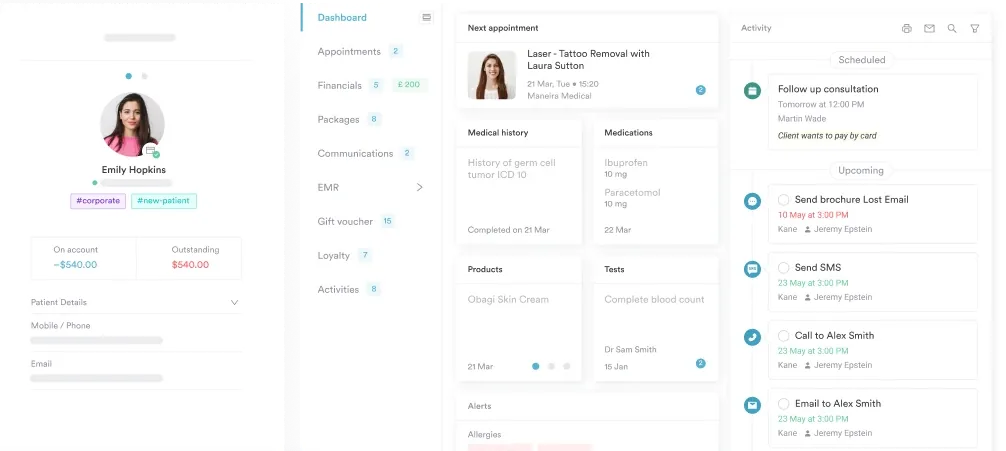
Most practices split this work across three places. The diagnosis sits in the EHR, the laterality detail sits in a paper note, and the invoice sits in the billing system. When a payer asks for support, someone has to reassemble all three.
Pabau holds all of it on one client record. Treatment notes, consent forms, photographs, and invoices sit against the same patient file, so the M18.4 entry always has the note that supports it.
Custom form fields can hold the two elements M18.4 depends on. One field records bilateral involvement, and the other records the named secondary cause. Reporting then surfaces every open M18.9 encounter worth a query, so specificity work happens before the bill goes out.
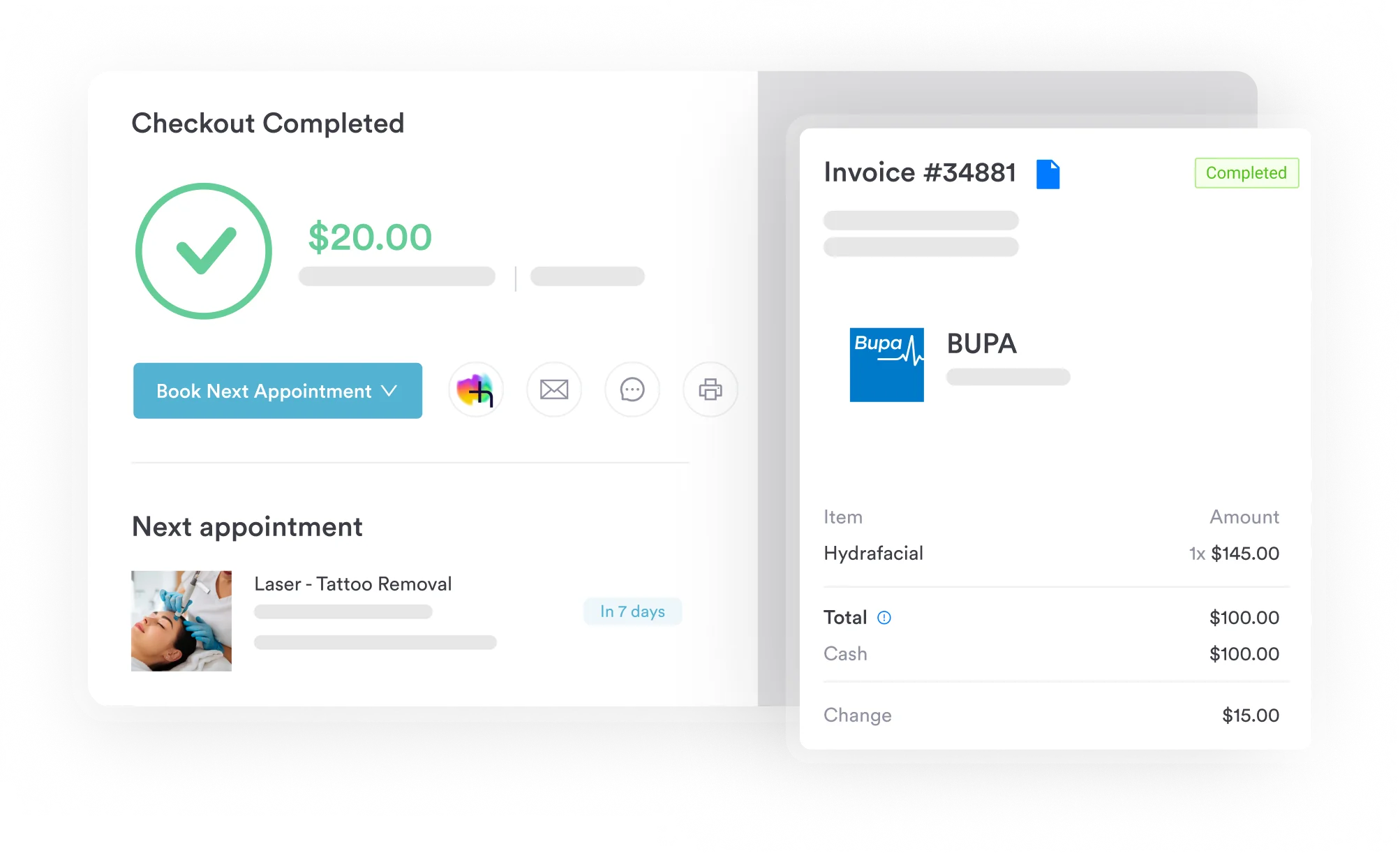

Pabau keeps treatment notes, diagnoses, and invoices on one client record, so the documentation supporting M18.4 is ready when a payer asks for it.

Coding M18.4 correctly comes down to two documentation elements. The note must show bilateral involvement, and it must name the secondary, non-traumatic cause. With both in place, the code is specific and defensible for FY2026.
The trade-off worth remembering is that M18.9 is always available and always weaker. Reaching for it costs specificity the same encounter could have supported, and it invites the query you were trying to avoid.
Build the laterality and etiology prompts into your note template once, and the M18 family stops being a judgment call. Book a demo to see how Pabau keeps that documentation on the patient record.

Coding secondary OA in a larger joint? M17.5 covers the unilateral secondary form at the knee, and the etiology test is the same.
Working with crystal deposition disease? M11.2 walks through chondrocalcinosis and pseudogout documentation.
Need the underlying inflammatory diagnosis? M31.0 covers hypersensitivity angiitis, one systemic driver of secondary joint damage.
Stuck with an unspecified code? M27.9 shows what to document when the record will not support more detail.
Coding neck pain alongside hand complaints? M54.2 sets out the documentation that keeps a cervicalgia claim clean.
ICD-10 code M18.4 is the diagnosis code for other bilateral secondary osteoarthritis of the first carpometacarpal joints. It covers arthritis in both thumb base joints caused by an underlying disease such as rheumatoid arthritis, gout, or metabolic disease. Prior trauma and idiopathic wear point to other M18 subcodes.
Yes. M18.4 is a billable, specific ICD-10-CM code valid for FY2026 (effective October 1, 2025). It can be used as a principal or secondary diagnosis on HIPAA-compliant claims without requiring a more specific subcode.
M18.0 codes bilateral primary (idiopathic) osteoarthritis of the first carpometacarpal joints, where no underlying cause can be identified. M18.4 codes bilateral secondary osteoarthritis, where an identifiable systemic or metabolic condition (not prior trauma) is driving the joint destruction. The etiology documented in the clinical note determines which code applies.
M18.4 maps approximately from ICD-9-CM codes in the 715.x4 series (osteoarthrosis of the hand), particularly 715.24 (secondary localized osteoarthrosis, hand). GEM mappings are approximate only. Verify using CMS GEM files rather than treating any ICD-9 equivalence as exact.
Yes. M18.4 is the bilateral code specifically designed for patients with secondary non-traumatic osteoarthritis affecting both first CMC joints. You do not need to code two separate unilateral codes (M18.51 and M18.52) when both joints are involved and a single bilateral code exists.
The note must state that both first CMC joints are involved and name the secondary non-traumatic cause. It must also carry the provider’s own diagnosis, not the coder’s reading of imaging alone. Both elements must be present to defend the code on post-payment audit.