ICD-10 code S61.201A: Open wound of left index finger without nail damage
ICD-10 code S61.201A covers a left index finger wound of unstated type ICD-10 co...

Last Updated: Oct 16, 2026
Billable Code Specific Code
L52 is the billable ICD-10-CM code for erythema nodosum.
The code carries an Excludes1 note. When tuberculosis is the underlying cause, A18.4 applies instead, and the two codes can never be billed together. Here's how to code L52 correctly, document it defensibly, and avoid the mismatch that gets claims kicked back.
Let Pabau's smart automation suggest the right codes, reduce claim denials, and keep your practice compliant—effortlessly.
Automate repetitive tasks and focus on what matters most—your patients.
Reduce coding errors and ensure compliance with the latest regulations.
Clean claims, fewer denials, and faster reimbursements.
Powerful insights and reporting to help your practice thrive.
HIPAA compliant SOC 2 certified GDPR-compliant Trusted by 4,000+ clinics worldwide

ICD-10 Code L52 is a billable ICD-10-CM code for erythema nodosum, a panniculitis presenting as tender erythematous nodules on the anterior shins
L52 is valid for HIPAA-covered transactions from October 1, 2025 through September 30, 2026 under the FY2026 release
An Excludes1 note means tuberculosis erythema nodosum (A18.4) must never be coded alongside L52; miscoding this is a common denial trigger
Pabau’s claims management software and digital intake forms help dermatology and skin practices assign and audit codes like L52 with HIPAA-compliant documentation
ICD-10 Code L52 is a billable, specific ICD-10-CM code with no further sub-codes. It applies to erythema nodosum without a confirmed tuberculous cause. For practices using HIPAA-compliant practice software, accurate code assignment feeds directly into cleaner claims and fewer audit flags.
The table below summarizes the core metadata for L52 as published in the FY2026 ICD-10-CM Tabular List, effective October 1, 2025 through September 30, 2026.
Per the ICD-10-CM web tool, L52 carries no sub-codes. It is a terminal, specific code with no further specificity breakdowns within the L52 category itself.
Erythema nodosum is a delayed hypersensitivity reaction of the dermis and subcutaneous fat, classified formally as a panniculitis. It presents as tender, erythematous nodules, most commonly on the anterior shins, though lesions can also appear on the calves, thighs, and forearms.
The nodules typically range from 1 to 5 cm in diameter. They start as bright red, raised lesions, then evolve over one to two weeks through a bruise-like color progression from purple to yellow-green before resolving. This color shift is what separates erythema nodosum from M79.3.
The absence of ulceration is a clinically important negative finding to document. Ulcerating nodules suggest a different diagnosis and a different ICD-10 code assignment.
Erythema nodosum is rarely idiopathic in adults. An underlying trigger is identified in roughly 50% of cases, and ICD-10-CM Official Guidelines Section I.C requires dual-coding that condition alongside L52 once it’s established and documented.
Practices using skin clinic software that supports multi-code entries avoid the manual workarounds that undercode claims.
Our comparison of EMRs for aesthetic practices shows which platforms handle dermatology documentation well.
The single most important rule for L52 is its Excludes1 note. Under ICD-10-CM conventions, an Excludes1 note means the excluded condition is mutually exclusive with the code bearing the note. These two codes should never appear together on the same claim.
ICD-10 Code L52 applies only when erythema nodosum has no documented tuberculous cause. If confirmed mycobacterial disease is the underlying trigger, A18.4 is the correct code instead, and L52 is excluded entirely.
The exclusion isn’t unique to dermatology. ICD-10-CM treats tuberculosis as a code-changing detail across chapters, not only in skin conditions.
Three common miscoding scenarios to avoid:
Dermatology and primary care practices billing L52 need documentation that supports both the clinical diagnosis and the code’s billable status. Vague chart entries like “skin nodules” or “rash on legs” will not support L52 on audit. The CMS ICD-10 codes page sets the expectation that the medical record supports the coded diagnosis with sufficient clinical detail.
When the presentation is atypical, a physician may confirm the diagnosis with a tangential skin biopsy, billed separately using CPT code 11102. Structured digital intake forms that capture morphology, anatomical site, associated symptoms, and prior diagnostic workup give coders the raw material they need to assign L52 confidently.
The checklist below reflects what the medical record must contain before L52 assignment is defensible.

ICD-10-CM guidelines require that documentation support the coded diagnosis directly in the medical record, not just inferred from the code itself.
Flag the TB exclusion at intake. When a patient presents with nodular lower-leg lesions, add a structured field to your clinical note template asking for TB history and screening result. This takes 20 seconds at documentation time and prevents a denial that takes 3 hours to appeal.
Several conditions mimic erythema nodosum clinically, particularly in early presentations before lesions evolve. Coding the differential accurately when the diagnosis is not yet confirmed requires using the “probable” or “suspected” diagnosis conventions of ICD-10-CM, which differ from inpatient to outpatient settings. For outpatient encounters, code the presenting sign or symptom, not an unconfirmed diagnosis. Coding names the service; medical billing gets it submitted, adjudicated and paid. A superbill form is not a claim form, but it carries the same data the patient insurer will ask for.
When the diagnosis is confirmed, the table below helps coders distinguish L52 from the most common mimics, each with its own specific code, including L54.
ICD-10 Code L52 sits within block L49-L54 (Urticaria and erythema) in Chapter 12. Understanding the adjacent codes helps coders navigate the block when the presenting diagnosis is uncertain or when multiple skin conditions are documented.
For crosswalk purposes, the AAPC ICD-10-CM code lookup provides adjacent code navigation with notes on related categories within the L49-L54 block.
For inpatient hospital encounters where erythema nodosum is the principal diagnosis or a significant comorbidity, ICD-10 Code L52 maps to Medicare Severity Diagnosis Related Groups (MS-DRGs). The DRG split is a two-tier structure: assignment depends on whether a major complication or comorbidity (MCC) is documented alongside the case.
DRG weights and reimbursement rates change annually with CMS updates. The figures above reflect the FY2026 grouper. Verify current weights against CMS’s published IPPS final rule. Practices managing inpatient coding workflows should use claims management software to track DRG assignments and flag when a documented MCC may support the higher-weight DRG.
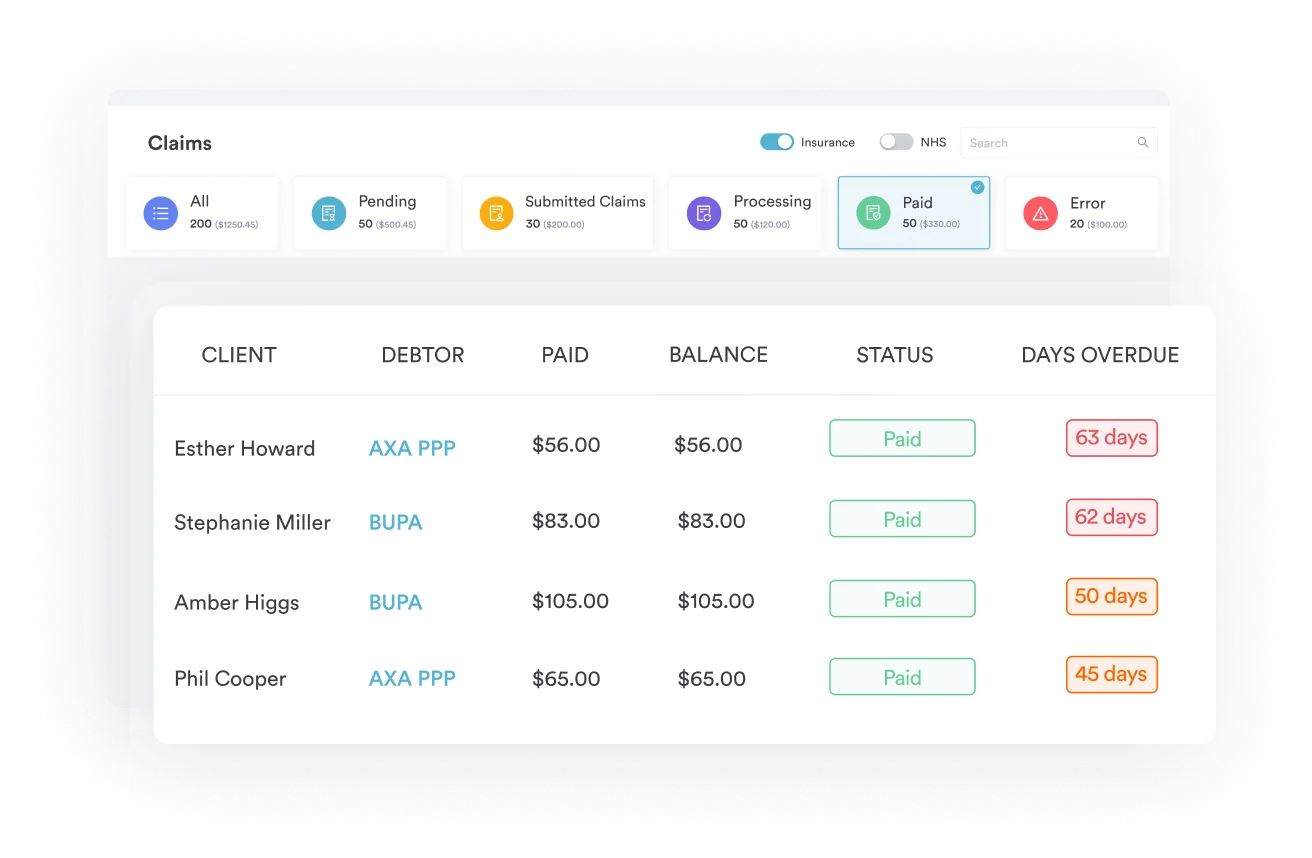
Dermatology and skin practices coding conditions like erythema nodosum need documentation with enough specificity to support the code, captured at the point of care rather than reconstructed from memory during billing.
Pabau’s patient records module supports structured clinical notes with configurable templates, allowing clinicians to document lesion morphology, location, color stage, and differential diagnosis work-up in a consistent format. Combined with before-and-after photo tracking that logs lesion history over time, practices keep what was observed in sync with what gets billed.
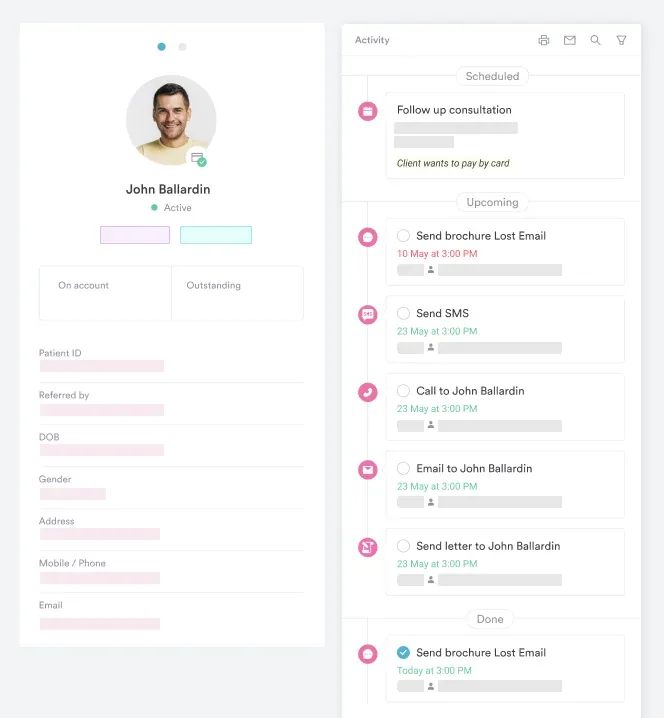
For practices managing billing across multiple skin conditions, Pabau’s workflow tools help flag missing documentation before claims are submitted. Book a demo to see how Pabau supports dermatology coding workflows: pabau.com/book-demo.

Pabau helps skin and dermatology practices structure clinical notes, capture intake data, and manage claims with HIPAA-compliant records built for ICD-10 workflows.

ICD-10 Code L52 is a specific, billable code with a narrow scope. It covers non-tuberculosis erythema nodosum only. The Excludes1 note is the single highest-risk coding point. Conflating L52 with A18.4 produces a claim error that is both a denial trigger and an audit flag. When the underlying condition is documented, dual-coding is required.
Dermatology and skin practices that structure their documentation around the clinical criteria L52 demands will code it cleanly and defend it confidently. Pabau’s client record and claims management tools make that structure part of the clinical workflow rather than a billing afterthought.

Coding an unnamed spinal deformity? Unspecified deforming dorsopathy code applies when the record documents a structural spinal deformity without naming which one.
Coding ankylosing spondylitis at multiple sites? Ankylosing spondylitis, multiple sites code requires documentation confirming involvement across more than one vertebral region before the claim is submitted.
Coding ankylosing spondylitis at C1-C2? Upper cervical ankylosing spondylitis code applies only when the note names the occipito-atlanto-axial region, not a general diagnosis.
ICD-10 Code L52 is a billable ICD-10-CM diagnosis code for erythema nodosum, a panniculitis presenting as tender, erythematous nodules on the anterior shins. It is valid for HIPAA-covered transactions from October 1, 2025 through September 30, 2026 under the FY2026 release. The code sits in block L49-L54 (Urticaria and erythema) within Chapter 12 of ICD-10-CM.
Yes, L52 is a billable and specific ICD-10-CM code valid for HIPAA-covered transactions. It is a terminal code with no subcategory, meaning it requires no additional specificity digits. CMS confirms it as valid for submission in the FY2026 Tabular List effective October 1, 2025.
Tuberculosis erythema nodosum, coded as A18.4, is excluded from L52 via an Excludes1 note. This means L52 and A18.4 must never be reported together on the same claim. When tuberculosis is the confirmed underlying cause of the skin presentation, use A18.4 exclusively.
L52 covers idiopathic or non-tuberculosis erythema nodosum, while A18.4 covers tuberculosis of the skin and subcutaneous tissue, including tuberculosis-related erythema nodosum. The Excludes1 relationship means they describe mutually exclusive conditions. If TB is documented, A18.4 is correct; if TB is ruled out or not the cause, L52 applies.
Sarcoidosis is coded as D86.9 (Sarcoidosis, unspecified) when no specific organ involvement is documented, or with a more specific D86 sub-code when site involvement is confirmed. When sarcoidosis is the documented underlying cause of erythema nodosum, code both D86.9 and L52 per ICD-10-CM dual-coding guidelines for etiology and manifestation.
L52 maps to MS-DRG 606 (Minor skin disorders with MCC) or 607 (Minor skin disorders without MCC), depending on whether a major complication or comorbidity is documented. DRG weights change annually; always verify against the current CMS IPPS final rule or a live DRG grouper for the applicable fiscal year.