ICD-10 Code S42.444P: Medial epicondyle fracture, right humerus
ICD-10 Code S42.444P: full descriptor and code validity ICD-10 Code S42.444P car...

Last Updated: Oct 13, 2026
Billable Code Specific Code
H90.5 is the billable ICD-10-CM code for unspecified sensorineural hearing loss.
It applies when documentation confirms the loss is sensorineural but does not record laterality - bilateral, left-only, or right-only. It covers what coders often see labeled sensorineural deafness NOS (not otherwise specified), and it is valid for HIPAA-covered transactions in the 2026 ICD-10-CM edition, effective October 1, 2025.
Let Pabau's smart automation suggest the right codes, reduce claim denials, and keep your practice compliant—effortlessly.
Automate repetitive tasks and focus on what matters most—your patients.
Reduce coding errors and ensure compliance with the latest regulations.
Clean claims, fewer denials, and faster reimbursements.
Powerful insights and reporting to help your practice thrive.
HIPAA compliant SOC 2 certified GDPR-compliant Trusted by 4,000+ clinics worldwide

ICD-10 Code H90.5 describes unspecified sensorineural hearing loss and is a billable ICD-10-CM code valid for HIPAA-covered transactions in the 2026 edition (effective October 1, 2025).
H90.5 applies only when laterality is NOT documented. If the record specifies bilateral loss, use H90.3; for unilateral loss, use H90.41/H90.42 or H90.A21/H90.A22 depending on the ear affected – H90.4 and H90.A2 are non-billable header codes on their own.
Excludes1 notes remove noise-induced (H83.3), ototoxic (H91.0), sudden idiopathic (H91.2), psychogenic (F44.6), and abnormal auditory perception (H93.2) diagnoses from H90.5 – coding any of those under H90.5 is a claim-level error.
Pabau’s claims management software and AI-powered clinical documentation tools help audiology and ENT practices attach the correct ICD-10 code at the point of care, reducing denials before submission.
The sensorineural hearing loss ICD 10 code family – H90.3, H90.4, H90.5, and H90.A2 – splits on laterality alone, so the documented ear decides the code. This reference covers the three areas responsible for most H90.5 coding errors: laterality, Excludes1 notes, and CPT pairing.
The code is maintained under the CMS ICD-10-CM update process, jointly administered by the National Center for Health Statistics (NCHS) and CMS. Use it when the clinical documentation confirms the loss is sensorineural in origin but does not specify laterality.
The H90 category has no Includes note. Instead, it carries its own Excludes1 note, and H90.5 carries a further Excludes1 note specific to that sub-code. Both are stricter than an Includes note and carry compliance weight.
Per the CDC/NCHS ICD-10-CM tabular list, the H90 category excludes these terms, which belong to H91 instead:
These terms do not map to H90.5. A chart documented only as “deafness NOS” or “hearing loss NOS,” with no mention of type, points to H91.3 or H91.9 – not to any code in the H90 family. H90.5 requires the sensorineural type to be confirmed in the record; it’s the laterality that’s left unspecified, not the type.
Excludes1 means the condition listed cannot be coded at the same time as H90.5. These are the most common source of audit flags in ENT and audiology billing. Per the CDC/NCHS ICD-10-CM tool, the following are excluded from the H90 category:
The practical rule: if the clinician has documented why the hearing loss occurred, a more specific code almost always exists. H90.5 serves cases where the type is established but the cause and laterality remain unspecified in the record.
For supporting your documentation process.
Sensorineural hearing loss (SNHL) results from damage to the inner ear (cochlea) or to the nerve pathways from the inner ear to the brain. It is distinct from conductive hearing loss, which involves the outer or middle ear. Coders searching SNHL ICD-10 land on this H90.3 to H90.5 range, where H90.5 is the unspecified member.
Coders do not diagnose – but understanding the clinical distinction helps select the right H90 sub-code when the documentation uses shorthand like “nerve deafness” or “cochlear loss.”
Common underlying causes documented alongside H90.5 include age-related changes (which should instead be coded as presbycusis, H91.1), noise exposure (H83.3), and post-infectious damage. When none of these causes are recorded and no laterality is specified, H90.5 is the correct choice.
The same specificity-first logic applies to H91.91: code to the highest documented detail, and reserve the “unspecified” variant for charts that genuinely lack it.
Good practice management software for medical teams keeps hearing and vision follow-ups booked and coded correctly.
Laterality is the most frequent coding decision point in the H90 family. The ICD-10-CM Official Guidelines for Coding and Reporting require coders to select the most specific code supported by the documentation.
For bilateral sensorineural hearing loss, ICD-10 requires H90.3 rather than H90.5; a unilateral loss maps to H90.41 or H90.42 depending on which ear is affected, since H90.4 itself is a non-billable header code. When an audiologist or ENT documents which ear is affected, H90.5 is incorrect – a laterality-specific code is required.
H90.4 is a non-billable header code – only its 6th-character children, H90.41 (right) and H90.42 (left), can be submitted on a claim, each used when one ear is affected and the other hears normally. H90.A2 is a more recent ICD-10-CM addition for asymmetrical sensorineural hearing loss – both ears carry some loss, but one is more severely affected – and it is also a non-billable header, splitting the same way into H90.A21 (right) and H90.A22 (left). Front-desk data entry and back-office coding both feed cash collection, so errors compound downstream. Practices treating medical billing as a back-office task find errors at the front desk instead.
The key documentation requirement for H90.A2 is a note addressing hearing in the contralateral ear. For practices using clinical record documentation software, building laterality as a required field in audiology templates reduces retrospective queries.
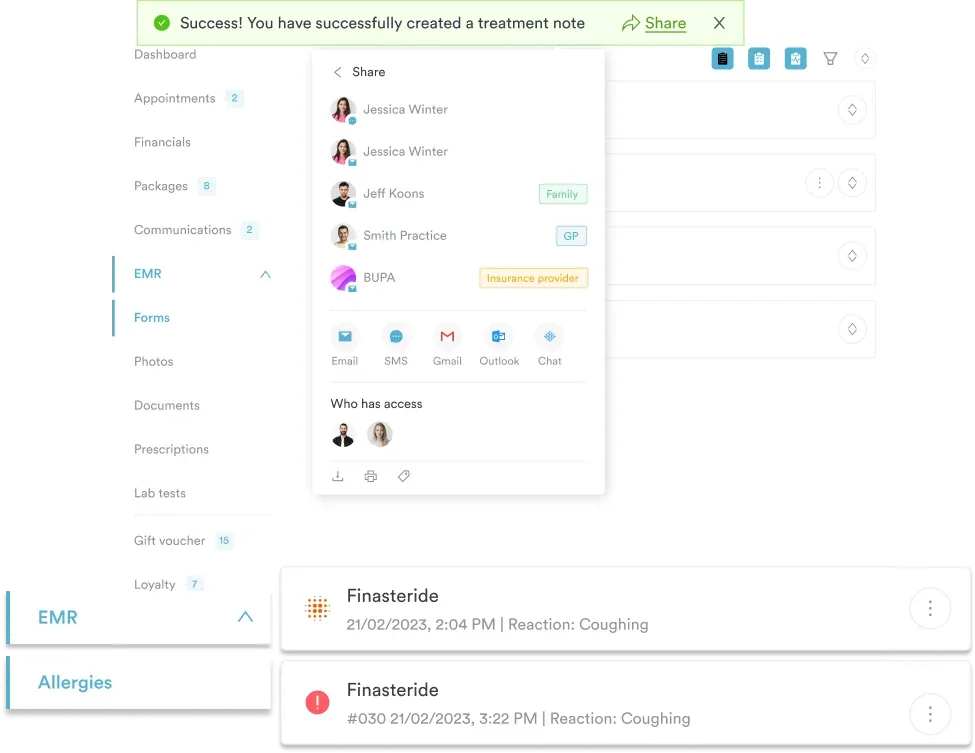
A complete patient record keeps the audiogram, the laterality note, and any prior H90 history in one place, so coders can confirm the right sub-code before a claim leaves the practice. The reference table below maps every H90 combination to its billable code.
The H90 category covers all three hearing loss types across three laterality options. Whether the chart shows bilateral hearing loss, a conductive loss in one ear, or a mixed picture, the code sits in this table – a single lookup covering all ICD-10 hearing loss codes in the H90 family for any combination documented in the chart.
Coders working across ENT and audiology should bookmark the AAPC ICD-10-CM code lookup for the full H90 range, which includes synonyms and crosswalk information for each sub-code. The same laterality logic extends to H90.8, the unspecified code for mixed conductive and sensorineural hearing loss.
Review the laterality field in every audiology chart before submitting a claim. If the audiogram report specifies “right ear,” “left ear,” or “bilateral” and your claim shows H90.5, the encounter supports a more specific code. Flag these for provider query rather than defaulting to unspecified – specificity reduces denial risk and strengthens documentation accuracy.
Several conditions are frequently documented alongside unspecified sensorineural hearing loss. Each has its own ICD-10-CM code and should not be assumed to be covered by H90.5.
Tinnitus (H93.1) is the one condition in this list that coders can report with H90.5 in the same encounter when both are documented. The others represent more specific coding pathways – some are formal Excludes1 notes, others simply describe a distinct condition – but each replaces H90.5 rather than accompanies it.
For practices tracking tinnitus severity over time.
The H90.5 diagnosis code sits on the claim as the reason for the service; claims submissions pair it with procedure codes for audiometric evaluation and hearing device fitting.
The CPT codes most commonly paired with this diagnosis come from the 92000 audiology range. The AAPC code detail page lists CPT crosswalk associations for H90.5 – verify each pairing against your payer’s Local Coverage Determination (LCD) before submission, as coverage criteria vary.
CPT-to-ICD-10 pairings for hearing services carry specific Medicare LCD requirements. Coverage and reimbursement rates depend on the payer and the specific LCD in effect for your MAC (Medicare Administrative Contractor).
Review the applicable CMS ICD-10 codes page and your LCD before assuming coverage. Practices using integrated claims management software can attach diagnosis codes directly to encounter records, reducing the lag between audiogram completion and claim submission.

Attaching the H90.5 diagnosis to the encounter as the claim is built keeps the code, the audiogram date, and the payer’s LCD requirements aligned in a single record. That alignment cuts the manual rework that often delays audiology and ENT reimbursement.

Pabau helps audiology and ENT practices attach ICD-10 codes at the point of care, validate documentation before claims go out, and reduce denials from missing laterality or excluded diagnoses.

H90.5 is a defensible code only when the chart confirms two things: the type of loss is sensorineural, and laterality is genuinely absent from the documentation. If the audiogram report is in the record and shows bilateral results, H90.5 is not supportable.
The American Speech-Language-Hearing Association (ASHA) advises clinicians and coders that laterality notation is a baseline requirement for the H90 family. These are the documentation elements that support an H90.5 submission:
Using digital intake forms that prompt for laterality at intake reduces the number of charts that arrive at coding without this field completed. When the form is tied to the clinical record, coders see the laterality response before selecting the H90 sub-code. Practices with strong EHR integration report fewer laterality-related queries because the field is captured before the encounter closes.

When intake and consent forms capture laterality and etiology up front, that detail reaches the chart before a coder ever opens it – the strongest safeguard against defaulting to H90.5 when a more specific code applies. The errors below show what tends to happen when that field is left blank.
Four errors account for most H90.5 claim problems. Each has a clear corrective action.
The audiogram is in the chart. It says “bilateral sensorineural hearing loss.” The coder selects H90.5. This is upcoding from a documentation standpoint – the record supports H90.3, and submitting the less specific code when a specific one is available is a coding guideline violation. Always review the audiogram before finalizing the diagnosis code.
Age-related hearing loss (presbycusis) coded as H90.5 is incorrect. The correct code is H91.1. Similarly, sudden-onset sensorineural loss – defined as a 30 dB or greater loss across three consecutive frequencies occurring within 72 hours – maps to H91.2, not H90.5. Coders should watch for clinical language like “age-appropriate hearing loss” or “sudden deafness” as triggers to move out of the H90 family entirely.
When a patient’s chart includes occupational history involving loud noise exposure, or a medication list featuring known ototoxic drugs (gentamicin, cisplatin, loop diuretics), the etiology is potentially specified. Coders should query the clinician before defaulting to H90.5. Submitting H90.5 when H83.3 or H91.0 is more accurate creates an audit vulnerability.
Pabau’s HIPAA compliance framework addresses how practice software should support accurate coding without adding blind spots.
“Sensorineural deafness NOS” is the exact ICD-10-CM inclusion term for H90.5, though “sensorineural hearing loss NOS” is commonly used for the same thing. Some coders interpret either phrase as permission to use H90.5 whenever the physician note is vague. It is not.
NOS means the documentation lacks specificity – the correct response is a provider query to capture laterality, not an automatic H90.5 submission. The code is appropriate when a query has been sent and laterality remains undocumented, or when the clinical context genuinely precludes laterality specification (rare).
Build a two-step audiology coding checklist: (1) Does the record confirm sensorineural type? (2) Does any documentation – audiogram, clinical note, or referral – specify laterality? If yes to both and laterality is present, you need H90.3 (bilateral), H90.41/H90.42 (unilateral), or H90.A21/H90.A22 (asymmetrical, restricted contralateral hearing). Only reach for H90.5 when the answer to the laterality question is a genuine no after reviewing the full chart.
Medicare does not broadly cover hearing aids or routine hearing exams under Part B. However, diagnostic audiological evaluations – billed with codes like 92557 – may be covered when ordered by a physician. The H90.5 diagnosis supports medical necessity for these evaluations when documentation confirms a clinical indication beyond routine hearing screening.
Payer-specific coverage depends on the LCD in effect for your MAC. Several MACs have active LCDs governing audiological services; these define which diagnosis codes (including H90.5) support covered evaluations. Key points for billing staff:
For practices managing audiology within a larger multi-specialty practice. The same discipline applies to related middle-ear diagnoses like H67.1, which carries its own separate LCD and coverage rules.
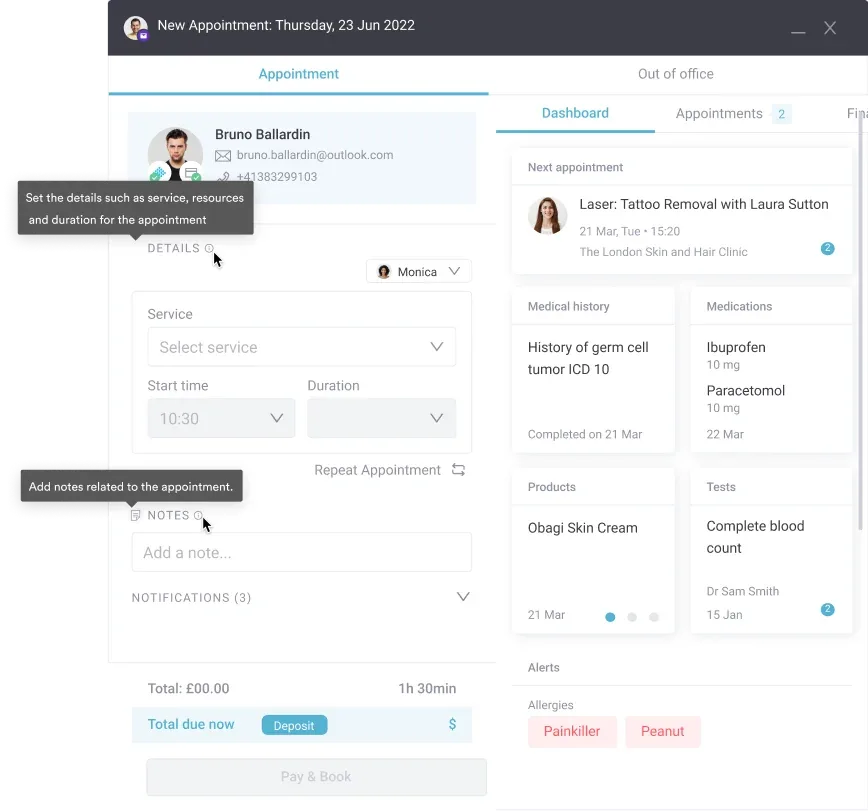
Tying payer pre-authorization checks to the scheduling step surfaces coverage gaps for H90.5 and related hearing-loss codes before the patient arrives, rather than after a claim is denied. The section below looks at how the rest of the coding workflow fits together.
Accurate ICD-10 Code H90.5 selection depends on what happens at documentation, not at coding. When laterality is captured in the clinical note and audiogram during the encounter, the coder’s job is straightforward. When it is not, the claim either holds for a query or goes out with a less specific code.
Practice management software like Pabau addresses this at the workflow level. Its AI-powered clinical documentation assists practitioners in structuring notes that capture the fields coders need, including laterality, etiology, and test references.
Digital forms triggered pre-appointment collect patient-reported hearing history, which the clinician can confirm or modify during the encounter. This front-loads the documentation specificity that supports accurate H90 code selection. For audiology and ENT practices specifically.
The practice management platform approach keeps billing accuracy aligned with clinical documentation by making code-relevant fields part of the clinical workflow, not an afterthought at the end of the day’s notes.

Need the coding rules for a related middle-ear diagnosis? ICD-10 Code H67.3 covers bilateral otitis media documentation and billing, with the same specificity-first approach applied to a different ear condition.
Coding a cochlear otosclerosis diagnosis? Cochlear otosclerosis coding guide covers when to use the unspecified-ear code and how it relates to other ear diagnoses.
Managing vertigo alongside sensorineural hearing loss? ICD-10 Code H82.2 covers vertiginous syndromes, left ear – a common co-occurring diagnosis in audiology and ENT practices.
H90.5 is a narrow-use code. It applies when sensorineural hearing loss is confirmed and laterality is genuinely absent from the documentation – not as a default when the chart is incomplete. The most common errors are using it when a laterality-specific code is available, applying it to presbycusis or sudden idiopathic loss, and treating the NOS synonym as blanket permission.
Pabau helps audiology and ENT practices build the documentation habits that prevent these errors at the source, keeping laterality and etiology fields in the clinical workflow so they reach the chart before coding begins. To see how Pabau supports accurate ICD-10 coding from intake to claim submission, book a demo.
ICD-10 Code H90.5 is a billable ICD-10-CM diagnosis code for unspecified sensorineural hearing loss. It applies when the clinical documentation confirms the loss is sensorineural in type but does not specify whether the affected ear is bilateral, left-only, or right-only. It is valid for HIPAA-covered transactions in the 2026 ICD-10-CM edition, effective October 1, 2025.
Yes, H90.5 is a billable (specific) ICD-10-CM code and is valid for submission on HIPAA-covered transactions. It is not a header or category code – it can be placed directly on a claim as the diagnosis code when documentation supports it.
H90.3 is sensorineural hearing loss, bilateral – used when documentation confirms both ears are affected. H90.5 is sensorineural hearing loss, unspecified – used when laterality is not documented at all. If your patient’s chart specifies bilateral loss, H90.3 is required; H90.5 would be incorrect and may constitute a coding guideline violation.
The most common CPT codes paired with H90.5 are 92553 (pure tone audiometry, air and bone), 92557 (comprehensive audiometric evaluation), and 92550 (tympanometry and acoustic reflex testing). Specific pairing depends on the services rendered and payer coverage rules; always verify against the applicable Medicare LCD or commercial plan benefit before submission.
Use H90.41 (right ear) or H90.42 (left ear) – the billable children of H90.4 – when documentation confirms unilateral sensorineural hearing loss with normal hearing on the contralateral side. Use H90.5 only when laterality is not documented anywhere in the record. If the audiogram or clinical note specifies which ear is affected, H90.5 is not the appropriate code choice.
Medicare Part B does not cover routine hearing exams or hearing aids. However, diagnostic audiological evaluations ordered by a physician to determine medical treatment necessity may be covered when H90.5 is the supporting diagnosis. Coverage depends on the applicable Local Coverage Determination (LCD) for your Medicare Administrative Contractor (MAC), so verify against your MAC’s LCD for audiology services before submitting.
The exact ICD-10-CM inclusion term for H90.5 is “sensorineural deafness NOS,” not “sensorineural hearing loss NOS” – though coders often use the two interchangeably since they describe the same clinical picture. Either way, NOS does not mean the code is always appropriate when documentation is vague. If a provider query or additional documentation can establish laterality, a more specific H90.x code should be used instead.
Bilateral sensorineural hearing loss is coded H90.3, not H90.5. H90.5 applies only when laterality is not documented. If the record confirms both ears are affected, H90.3 is the correct code, and using H90.5 instead would be less specific than the documentation supports.
Asymmetrical sensorineural hearing loss – both ears affected but one more severely – is reported with H90.A2, using H90.A21 for the right ear or H90.A22 for the left, as long as the note addresses hearing in the contralateral ear. When one ear shows loss and the other is normal, H90.41 or H90.42 applies instead, depending on which ear is affected.