ICD-10 Code S42.444P: Medial epicondyle fracture, right humerus
ICD-10 Code S42.444P: full descriptor and code validity ICD-10 Code S42.444P car...

Last Updated: Oct 13, 2026
Billable Code Specific Code
H54.7 is the billable ICD-10-CM code for unspecified visual loss.
Let Pabau's smart automation suggest the right codes, reduce claim denials, and keep your practice compliant—effortlessly.
Automate repetitive tasks and focus on what matters most—your patients.
Reduce coding errors and ensure compliance with the latest regulations.
Clean claims, fewer denials, and faster reimbursements.
Powerful insights and reporting to help your practice thrive.
HIPAA compliant SOC 2 certified GDPR-compliant Trusted by 4,000+ clinics worldwide

ICD-10 Code H54.7 is a billable diagnosis code for unspecified visual loss, effective October 1, 2025 for the 2026 code year.
Use H54.7 only when documentation does not specify laterality (which eye) or visual severity per WHO categories 0-5 (or 9 for unspecified).
Submitting H54.7 when laterality is documented may trigger payer denials; always code to the highest level of specificity the record supports.
Pabau’s claims management software helps ophthalmology and eye care practices capture the documentation needed to support specific H54 subcodes and reduce denials.
ICD-10 Code H54.7 is a billable diagnosis code for unspecified visual loss, used when the medical record does not document laterality or WHO-graded visual acuity.
Most other vision-related diagnoses in ICD-10-CM require the coder to specify which eye is affected and how severely; H54.7 exists for the cases where that information simply is not there, giving practices a valid code rather than leaving the claim without a diagnosis.
H54.7 sits at the end of the H54 category as the catch-all when documentation falls short of the specificity that more precise sibling codes require.
Coders in ophthalmology and optometry practices reach for it regularly, but using it incorrectly, or defaulting to it out of habit when better documentation exists, is one of the most common sources of H54-related claim denials. Accounts receivable aging shows which codes are slow to pay long before anyone calls it a denial problem.
This guide covers what the code means, when it applies, how it compares to the rest of the H54 family, and what documentation your record must contain to support it.
The table below contains the quick-reference facts coders and billers need before submitting a claim under ICD-10 Code H54.7.
The H54 ICD-10-CM category covers the full spectrum of vision impairment, from mild reductions in acuity to complete blindness. Every code in the category maps to a combination of eye affected (laterality) and severity graded against WHO visual impairment categories. H54.7 is the one code that sits outside that matrix, applying only when neither piece of information is documented.
Ophthalmology practices billing through claims management software need their EHR to surface the full H54 hierarchy at the point of coding, not just H54.7 as a default. The specificity difference between H54.7 and the laterality-coded subcategories is exactly where payers focus during audits.
Most of these presentations arrive in general practice first, where GP software handles triage, coding, and referral in one flow.
For any H54 code other than H54.7, the coder must know two things: which eye is affected and how severely.
Severity is graded using the WHO International Classification of Diseases visual impairment categories, which run from category 0 (mild or no impairment) through category 5 (no light perception), plus category 9 for cases where visual acuity was not assessed or cannot be classified.
Categories 1 and 2 correspond to low vision, and categories 3 through 5 correspond to blindness. These categories govern subcode selection throughout the H54.0-H54.6x range.
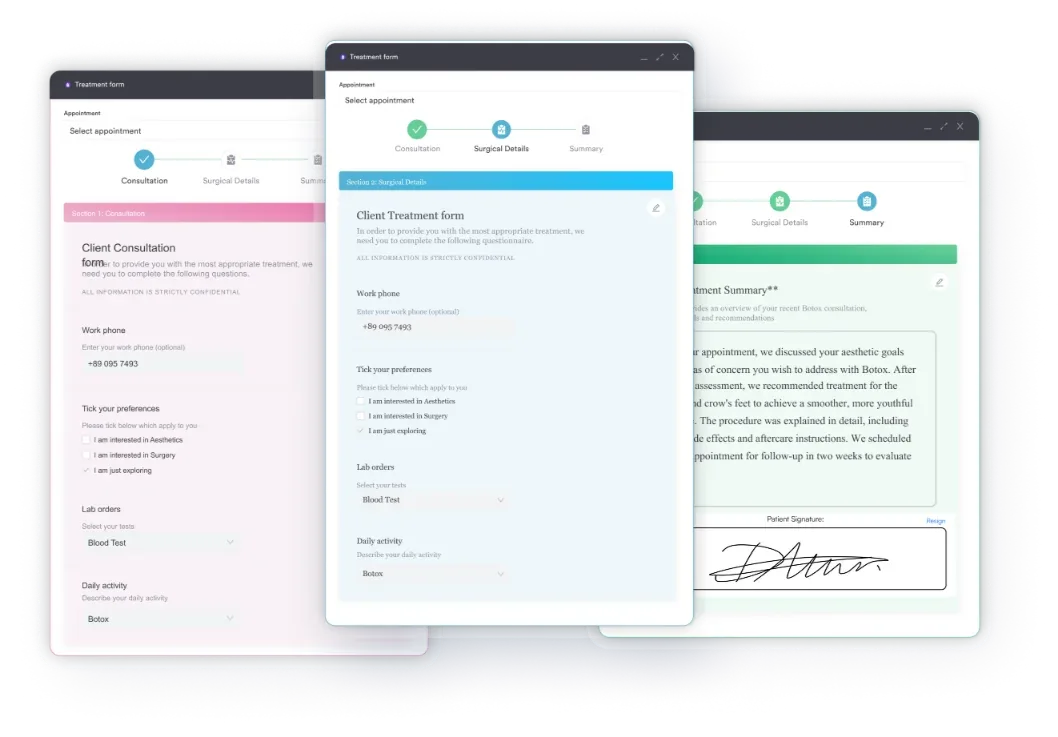
When acuity testing results appear in the record alongside a laterality note, H54.7 is the wrong code. Practices using digital intake and clinical documentation forms that prompt for both eye-specific acuity and laterality capture this data at the point of care, reducing the need to fall back on unspecified codes after the visit.
H54.7 is appropriate in a narrower set of circumstances than many coders assume. The CMS ICD-10-CM Official Guidelines for Coding and Reporting require coders to assign the most specific code supported by the documentation. H54.7 is only correct when both of the following are true.
Common clinical scenarios where H54.7 is genuinely correct include an emergency department encounter where vision screening was attempted but acuity was not formally measured, a patient who cannot complete acuity testing due to cognitive or language barriers, or an initial visit note that documents the complaint of vision loss without objective measurement.
Coders who work with other eye-specific diagnoses, such as H10.9 or H50.30, will recognize this same documentation pattern elsewhere in the eye and adnexa chapter.
Run a brief documentation check before coding any H54 claim. If the visit note has a vision field with acuity results and a laterality label, go to H54.0-H54.6x first. Reserve H54.7 for the cases where the record genuinely contains neither piece of data.
The most common coding mistake in the H54 family is using H54.7 as a default when a more specific code is warranted. The comparison below covers the codes coders confuse most often.
The H54.3 vs. H54.7 distinction trips up coders frequently. If the clinician wrote “bilateral vision loss” or “both eyes,” that is documented laterality. H54.3 applies, not H54.7.
The AAPC ICD-10-CM code lookup shows the includes and excludes notes that apply to each subcode, which is worth reviewing when the record is ambiguous. Practices managing a high volume of ophthalmology claims also benefit from checking the CDC/NCHS ICD-10-CM web tool for official code descriptions and tabular list context.
Payers auditing H54.7 claims look at the record from a simple angle: does anything in this note support a more specific code? If yes, H54.7 is the wrong choice and the claim may be denied or down-coded.
The documentation checklist below outlines what must and must not be present to properly support the code. Practices building EHR integration workflows for eye care apply the same rigor to related diagnoses such as H04.9, where laterality is equally essential.
Practices using structured clinical records that include a dedicated vision section reduce the risk of ambiguous documentation. A note that says “patient reports blurred vision” without any objective findings or laterality notation cleanly supports H54.7. A note that says “blurred right eye, vision 6/24” does not.
Most H54.7 claim problems trace back to one source: the code is used as a convenience pick rather than as a last resort. The errors below are the ones that healthcare compliance and coding audit teams flag most often in eye care billing reviews.
Practices wanting to reduce denial rates on visual-loss claims should review the Check ICD-10 database for code edits and consider whether their claim scrubbing workflow catches H54.7 assignments when laterality language appears elsewhere in the chart. The HIPAA compliance requirements for clinical documentation also intersect here: complete and accurate records are both a billing necessity and a patient safety obligation.

Pabau helps ophthalmology and eye care practices capture complete documentation at the point of care, so coders have the laterality and acuity data they need to assign the right H54 subcode every time. Fewer defaults to H54.7, fewer denials.

The highest-impact fix for H54.7 over-assignment happens at the point of care, not the billing desk. When a clinical note template prompts the clinician for laterality and acuity at the time of the visit, the coder receives complete data and can assign the correct H54 subcode without guesswork.
Fixing the over-assignment therefore requires a workflow change, not just a clearer code definition. Plastic surgery practices, which document paired-organ procedures under similarly strict laterality rules.
Practice management platforms that serve ophthalmology, optometry, and eye care practices need to handle several documentation workflows that directly affect H54 code selection. Practices exploring their options for dermatology and skin-specialty EMR software often have overlapping requirements with ophthalmology around structured visual assessment fields.
Similarly, practices that have implemented AI-assisted documentation through tools like Pabau’s AI documentation support report that structured clinical notes with consistent field labels make specificity coding significantly more reliable.
The key EHR features that reduce H54.7 over-assignment:
For practices using Pabau, claims management supports pre-submission review workflows. Connecting documentation completeness to the billing workflow is where eye care practices can make the biggest operational improvement on H54.7 accuracy. Practices interested in broader practice management software capabilities can also explore how integrated systems handle coding and documentation together.

Coding an eyelid disorder without a clearer diagnosis? ICD-10 code H02.9 guide covers the billable code for an unspecified eyelid disorder.
Need the procedure code for the visit itself? 92004 is the comprehensive ophthalmological service code many eye care encounters bill alongside a laterality-specific H54 diagnosis.
Need the claim form itself? The CMS-1500 form guide walks through the fields coders use to submit H54.7 and other ICD-10-CM diagnoses for reimbursement.
H54.7 has a specific, narrow role: it applies only when both laterality and WHO-graded visual acuity are genuinely absent from the record. Practices that default to it out of habit, or because the billing system auto-populates it, expose themselves to audit risk and preventable denials. The fix is upstream, in the clinical note itself.
Pabau’s structured documentation tools help eye care and multi-specialty practices capture the laterality and acuity data that supports specific H54 subcode assignment. To see how the platform handles ophthalmology documentation workflows, book a demo.
ICD-10 Code H54.7 is a billable diagnosis code for unspecified visual loss, used when the medical record does not document laterality (which eye is affected) or visual acuity severity per WHO classification. It is the least specific code in the H54 category and should only be assigned when more specific alternatives cannot be supported by the documentation.
Use H54.7 only when the record contains no laterality notation and no visual acuity measurement. If either piece of data is documented, a more specific H54 subcode applies. H54.7 is appropriate for encounters where acuity testing was not performed and the clinician did not specify which eye was affected.
H54.3 is used when both eyes are documented as affected but visual severity is not specified. H54.7 is used when neither laterality nor severity is documented. If the clinician wrote “bilateral vision loss,” that is documented laterality and H54.3 applies, not H54.7.
Yes, assigning H54.7 when laterality or acuity data exists in the record may trigger payer denials or audits. Payers expect coders to assign the most specific code the documentation supports. Using an unspecified code when a more specific one is available is a known audit trigger across Medicare and many commercial payers.
Yes. H54.7 is a billable and specific ICD-10-CM code valid for diagnosis reporting and reimbursement claims. The 2026 edition became effective October 1, 2025. H54.7 is on the CMS Medicare Code Editor (MCE) unacceptable-principal-diagnosis list, so it should be coded as a secondary or additional diagnosis, with the underlying condition causing the visual loss sequenced as the principal diagnosis.
The record must document a complaint or diagnosis of visual loss and must not contain any laterality notation or formal visual acuity test results. If any eye-specific language or Snellen measurement appears in the note, a more specific H54 subcode is required instead.