CPT code 68110: Conjunctival lesion excision billing guide
CPT code 68110: Official descriptor and clinical scope CPT code 68110 is defined...

Last Updated: Oct 16, 2026
Billable Code Specific Code
G90.A is the billable ICD-10-CM code for postural orthostatic tachycardia syndrome [POTS].
The ICD-10 code for POTS is G90.A, the specific, billable diagnosis code for Postural Orthostatic Tachycardia Syndrome.
It took effect on October 1, 2022, as part of the FY2023 ICD-10-CM update. As a result, the condition now has its own identifier, instead of the unspecified autonomic codes coders used before. Assigning it correctly, knowing what the record must contain, and pairing it with the right companion codes are the three keys. Together, they are what keeps POTS claims clean.
Let Pabau's smart automation suggest the right codes, reduce claim denials, and keep your practice compliant—effortlessly.
Automate repetitive tasks and focus on what matters most—your patients.
Reduce coding errors and ensure compliance with the latest regulations.
Clean claims, fewer denials, and faster reimbursements.
Powerful insights and reporting to help your practice thrive.
HIPAA compliant SOC 2 certified GDPR-compliant Trusted by 4,000+ clinics worldwide

The ICD-10 code for POTS is G90.A, the specific, billable diagnosis code for Postural Orthostatic Tachycardia Syndrome, effective October 1, 2022
Documentation must include orthostatic vitals showing a heart rate increase of at least 30 bpm on standing, sustained for 10 or more minutes
The most common coding mistake is using G90.9 (autonomic disorder, unspecified) when a confirmed POTS diagnosis has been established and G90.A is appropriate
Pabau’s claims management software supports accurate G90.A claim submission and CPT code pairing, reducing denial risk at the point of billing
G90.A is the official ICD-10 code for POTS, or Postural Orthostatic Tachycardia Syndrome.
It became effective on October 1, 2022, as part of the FY2023 ICD-10-CM update. As a result, it’s one of the more recent additions to the autonomic nervous system chapter. The CDC/NCHS ICD-10-CM web tool confirms G90.A as a billable, specific code. Specifically, it can be used for reimbursement purposes without any additional specificity required.
The addition of G90.A gave POTS its own place in the ICD-10-CM classification. POTS is a distinct clinical entity within the broader dysautonomia spectrum. As a result, a dedicated code enables more accurate population tracking and cleaner claims. It also supports better audit defense than the unspecified codes used before.
Coders managing ICD-10 diagnostic coding for complex neurological presentations will find G90.A is now the default choice. Specifically, that applies whenever POTS has been confirmed.
POTS is a form of dysautonomia, meaning it involves dysfunction of the autonomic nervous system. Specifically, POTS involves an abnormal heart-rate increase when a person moves from lying or sitting to standing. However.
The diagnostic threshold comes from clinical cardiology and neurology guidelines. It’s a sustained heart rate increase of at least 30 beats per minute (bpm) on standing, measured within 10 minutes. In adolescents, the threshold is at least 40 bpm. In practice, patients typically experience symptoms including palpitations, lightheadedness, fatigue, and near-syncope.
A tilt table test or active stand test with continuous heart rate monitoring is the standard method. This confirms the diagnosis. The consensus definition also calls for chronic symptoms of orthostatic intolerance, generally present for six months or more. Instead of a single abnormal reading, this reflects a sustained clinical pattern.
Clinical synonyms recognized in ICD-10-CM include postural tachycardia syndrome and orthostatic tachycardia. Whether the record calls it postural tachycardia syndrome, orthostatic tachycardia, or simply POTS, the billable entry is the same. Specifically, the ICD-10 code is G90.A.
Coders may encounter these terms in the physician’s documentation and should map them to G90.A when the diagnosis is confirmed. For example, any of the following should prompt the coder to look for a confirmed POTS diagnosis in the record:
G90.A sits within the G90 code block, which covers disorders of the autonomic nervous system. In practice, understanding where G90.A falls in the hierarchy helps coders navigate the parent codes and find the most specific option available. The CMS ICD-10 codes page contains the full tabular list and official code files for each fiscal year update.
Note that G90.3 (multi-system atrophy) was one of the codes historically used for POTS before G90.A existed. However, it describes a different, more severe neurodegenerative condition. As a result, using G90.3 for POTS is now an outright coding error.
Similarly, G90.9 — the unspecified dysautonomia, or autonomic dysfunction, ICD-10 code — should only appear in one situation. That’s when autonomic dysfunction is documented but no specific subtype has been identified. If a search for the autonomic dysfunction ICD-10 code led you here, note the distinction. G90.9 is the unspecified catch-all; by contrast, G90.A is the specific code to assign once POTS is confirmed.
Apply ICD-10 code G90.A when the treating physician has documented a confirmed diagnosis of POTS. Suspected or probable POTS does not meet the threshold. The physician’s note must either use the term POTS explicitly, or use a recognized clinical synonym: postural tachycardia syndrome or orthostatic tachycardia. In practice, objective findings in the record must support it either way.
Specific clinical scenarios where G90.A applies:
Do not use G90.A in three situations. First, avoid it for suspected autonomic dysfunction without a specific POTS diagnosis. Next, avoid it for syncope or presyncope as the primary presentation without a confirmed POTS diagnosis. Finally, avoid it for dizziness traced to a primary inner-ear cause, such as benign paroxysmal positional vertigo (H81.10), rather than autonomic dysfunction.
Practices managing patients through functional medicine practice management platforms will often see POTS alongside complex multi-system presentations. In practice, assign G90.A for the POTS component and code comorbidities separately.
The medical record must substantiate the POTS diagnosis before G90.A can be assigned. Insufficient documentation is the primary reason POTS claims are audited or denied. According to the AAPC ICD-10-CM coding resources, diagnosis codes must be supported by a physician’s stated diagnosis. That diagnosis, in turn, must be backed by clinical evidence. Specifically, for POTS, that means the following must be present:
Practices using clinical documentation workflows within an integrated platform can structure SOAP notes and vitals capture. This prompts for orthostatic measurements at each POTS management visit. As a result, this creates the audit trail coders need without requiring a separate documentation step. In addition.
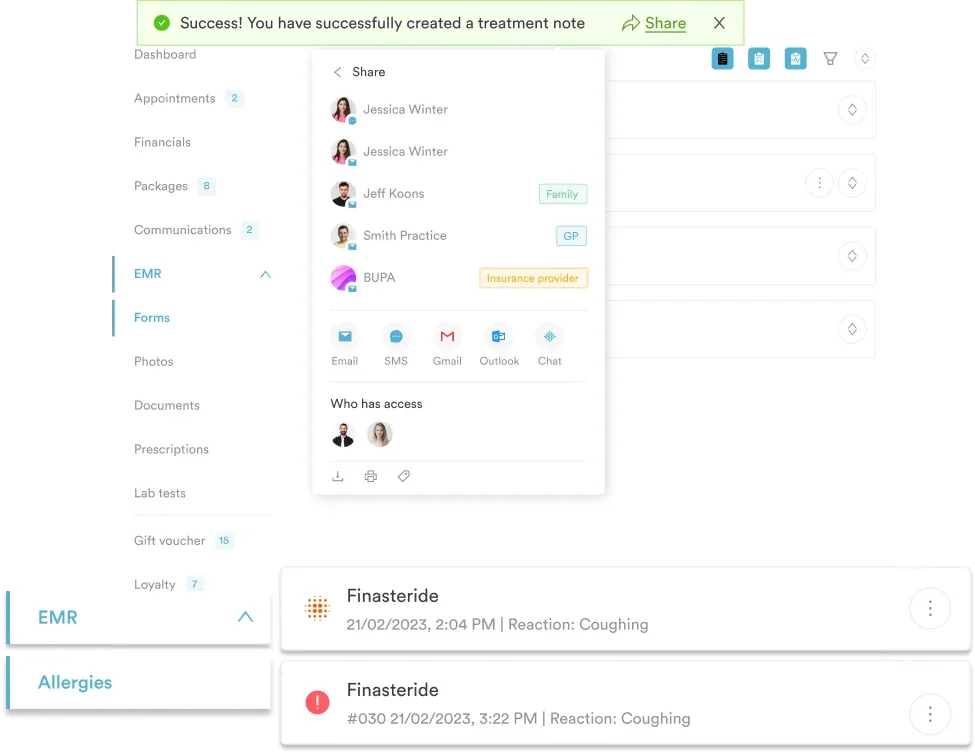
A complete record includes orthostatic vitals, an explicit POTS diagnosis statement, and the supporting test results. Together, these are what let a coder assign G90.A with confidence. That’s why capturing those elements in the note the first time avoids the queries and rework that slow POTS claims down.
Three errors account for the majority of G90.A-related claim problems. So, knowing them before the claim goes out is significantly cheaper than correcting them after denial.
Coders working in practices with high volumes of complex autonomic presentations benefit from query workflows. These workflows prompt for physician clarification before finalizing the claim. Reviewing anxiety-related ICD-10 codes alongside autonomic codes is also worthwhile. Because anxiety disorders are frequently documented as comorbidities in POTS patients, the symptom overlap can create confusion during coding review.
Several autonomic, cardiac, and symptom-level codes appear in the same clinical territory as G90.A. For example, the table below clarifies when each applies, including the most commonly confused codes.
When the medical record contains both syncope (R55) and POTS documentation in the same encounter, query the physician for clarification on the primary diagnosis before finalizing the claim. Syncope is a symptom that can occur in POTS patients, but coding both without physician guidance may trigger an audit. The confirmed diagnosis drives the primary code assignment.
Several procedure codes pair naturally with G90.A based on the diagnostic workup and ongoing management of POTS. Specifically, the tilt table test CPT code (93660) is the primary diagnostic procedure, with autonomic function testing codes billed alongside it. Therefore, verifying medical necessity linkage between the CPT code and G90.A is essential before submission.
Practices using claims management software can link G90.A directly to the relevant CPT codes at the point of claim creation. As a result, this reduces unbundling errors and supports medical necessity documentation before the claim leaves the practice. In practice, this is particularly valuable for autonomic function testing batteries where multiple CPT codes may appear on a single claim.

Linking G90.A to the correct CPT companion codes at the point of claim creation matters. It keeps autonomic function testing batteries from triggering unbundling denials. In addition, it leaves billing staff a clear medical necessity trail before the claim ever reaches the payer.

Pabau links diagnosis codes directly to CPT pairings at the point of claim creation. Fewer manual steps, fewer unbundling errors, and a complete audit trail when payers ask questions.

POTS emerged as one of the more consistently documented post-acute sequelae of SARS-CoV-2 (PASC), commonly called long COVID. Cardiology and autonomic medicine practices began seeing a significant volume of new POTS diagnoses in patients with prior COVID-19 infection. This trend started from 2021 onward. Therefore, coding these cases correctly requires understanding the sequela coding convention for post-COVID conditions.
When POTS has developed as a consequence of a prior COVID-19 infection, assign both codes:
The sequencing depends on the reason for the encounter. If the visit is for POTS management, G90.A is the principal or first-listed code. Next, U09.9 follows as an additional code to capture the post-COVID etiology. The physician’s documentation should explicitly state the relationship between the prior COVID-19 infection and the current POTS diagnosis. Otherwise, the sequela coding is not supported.
Practices managing complex long COVID presentations may benefit from structured documentation workflows that span multiple encounters and specialties. Note: verify specific sequencing guidance against the current AHA Coding Clinic edition. That’s because post-COVID sequela guidance has been updated multiple times since 2021.
POTS frequently co-occurs with other complex conditions, each of which requires its own diagnosis code when documented by the physician. Coders managing multi-diagnosis claims should be familiar with the relevant ICD-10-CM codes for each comorbidity. For example, that includes the EDS ICD-10 code (Q79.62 for the hypermobile type) and the MCAS ICD-10 range (D89.40 to D89.49). It also includes the codes for ME/CFS and small fiber neuropathy.
Each comorbidity code requires independent physician documentation. The coder cannot infer a comorbid diagnosis from symptoms alone. When the physician documents only POTS with associated fatigue and joint hypermobility, assign G90.A. Instead, additional codes for EDS or ME/CFS require an explicit diagnosis statement in the medical record.
G90.A is a billable code accepted by Medicare and most commercial payers. However, reimbursement for G90.A-linked services, particularly autonomic function testing, is subject to payer-specific Local Coverage Determinations (LCDs). Coverage policies vary by payer and change annually. So, verify current LCD status directly with the relevant payer before assuming coverage.
From a practice management perspective. This reduces manual steps at claim submission. Pair the diagnosis code with the correct CPT code at the point of documentation, instead of during a separate billing review. This significantly reduces the risk of code mismatch denials.
Neurology and cardiology practices with high POTS patient volumes should also evaluate their mental health EMR or autonomic medicine workflow tools. Specifically, check whether these tools support structured orthostatic vitals capture. Because inadequate documentation is the root cause of most G90.A-related billing problems, this step matters.
Build a G90.A documentation checklist into your POTS management note template: orthostatic vitals at 0, 2, 5, and 10 minutes post-standing, confirmation of blood pressure stability, and an explicit diagnosis statement. This single step reduces coder queries, supports medical necessity, and creates an audit-ready record without extra physician time.
Accurate use of ICD-10 code G90.A starts with the medical record. The code is straightforward to assign once the physician has documented a confirmed POTS diagnosis. In addition, the record must contain orthostatic vitals that meet the clinical criteria.
Most G90.A-related claim problems trace back to one of three issues. First, missing documentation. Next, using an unspecified code when a specific one is available. Finally, incorrect CPT pairing during claim submission.
Pabau’s claims management software links G90.A to CPT companion codes at the point of claim creation. As a result, this reduces the manual verification burden on billing staff.
For practices managing POTS patients at scale, structured documentation workflows built into the clinical note template matter. They are the most reliable way to ensure every claim goes out complete. To see how Pabau handles autonomic condition billing end-to-end, book a demo.

Coding joint hypermobility alongside POTS? M24.9 covers unspecified joint derangement, a common finding when EDS-related instability is documented but not yet subtyped.
Coding sideroblastic anemia caused by disease? secondary sideroblastic anemia coding guide ICD-10 code D64.1 covers secondary sideroblastic anemia due to disease, sequenced after the underlying condition.
Coding disseminated intravascular coagulation? DIC coding guide ICD-10 code D65 covers disseminated intravascular coagulation, always sequenced after the underlying trigger that caused it.
ICD-10 code G90.A is the specific, billable diagnosis code for Postural Orthostatic Tachycardia Syndrome (POTS), a disorder of the autonomic nervous system characterized by an abnormal heart rate increase of 30 or more beats per minute on standing. It is used to document a confirmed POTS diagnosis for reimbursement, population health tracking, and clinical audit purposes.
G90.A became effective on October 1, 2022, as part of the FY2023 ICD-10-CM update. It was introduced to provide a specific code for POTS, replacing the practice of using unspecified autonomic disorder codes such as G90.9 or the incorrect G90.3.
Yes. G90.A is a fully billable, specific ICD-10-CM code. No additional character or subcode is required. It can be used as a principal or additional diagnosis code depending on the reason for the encounter.
Before G90.A was introduced in FY2023, POTS was typically coded under G90.9 (disorder of the autonomic nervous system, unspecified) or, incorrectly, under G90.3 (multi-system degeneration). Neither code accurately represents the condition. G90.A should be used for all POTS claims from October 1, 2022 onward.
Yes. When POTS has developed as a sequela of a prior COVID-19 infection, assign G90.A alongside U09.9 (post-COVID-19 condition, unspecified). Sequence G90.A first when the encounter is for POTS management. The physician’s documentation must explicitly state the relationship between the prior COVID-19 infection and the POTS diagnosis.
Yes. Syncope (R55) represents a confirmed loss of consciousness or transient collapse and is a symptom-level code. POTS (G90.A) is a confirmed autonomic disorder diagnosis. When a patient with POTS experiences pre-syncope or near-fainting without loss of consciousness, G90.A is the appropriate code. R55 should only be used when true syncope is confirmed and POTS has not been established as the diagnosis.
The ICD-10 code for POTS is G90.A, a specific, billable code for Postural Orthostatic Tachycardia Syndrome that took effect on October 1, 2022. Assign it whenever the physician documents a confirmed POTS diagnosis supported by orthostatic heart rate findings.
No. There is no dedicated code for POTS in pregnancy. Assign G90.A for the POTS diagnosis alongside the billable child code that matches the episode of care: O99.891 for pregnancy, O99.892 for childbirth, or O99.893 for the puerperium, plus a Z3A code for weeks of gestation where the payer requires it.
Most POTS is chronic and continues to be reported with G90.A at each encounter. Only when the condition has fully resolved and is no longer treated would a personal-history code such as Z86.69 (personal history of other diseases of the nervous system) apply. The record should state whether POTS is active or resolved.