ICD-10 code S61.201A: Open wound of left index finger without nail damage
ICD-10 code S61.201A covers a left index finger wound of unstated type ICD-10 co...

Last Updated: Oct 16, 2026
Billable Code Specific Code
F88 is the billable ICD-10-CM code for other disorders of psychological development.
Let Pabau's smart automation suggest the right codes, reduce claim denials, and keep your practice compliant—effortlessly.
Automate repetitive tasks and focus on what matters most—your patients.
Reduce coding errors and ensure compliance with the latest regulations.
Clean claims, fewer denials, and faster reimbursements.
Powerful insights and reporting to help your practice thrive.
HIPAA compliant SOC 2 certified GDPR-compliant Trusted by 4,000+ clinics worldwide

ICD-10 Code F88 (Other disorders of psychological development) is a billable, specific ICD-10-CM diagnosis code valid for FY2026 claims, effective October 1, 2025.
F88 is a residual category in the F80-F89 block. Coders use it when a disorder is present but doesn’t meet criteria for a more specific code, like F80, F81, F82, or F84.
Global developmental delay and sensory processing disorder are commonly documented under F88 when no more specific ICD-10-CM code applies. Complete clinical documentation is essential to support the assignment.
Pabau’s claims management software and Claim.MD clearinghouse integration streamline F88 claim submission, eligibility verification, and denial management for behavioral health and developmental practices.
ICD-10 Code F88 is the designated code for Other disorders of psychological development within the International Classification of Diseases, Tenth Revision, Clinical Modification (ICD-10-CM). It sits inside the F80-F89 block, titled Pervasive and specific developmental disorders. That block spans from specific speech and language disorders (F80) through to unspecified disorders of psychological development (F89).
F88 is a billable and specific code. That means it can be reported directly on a claim for reimbursement without requiring an additional, more granular code beneath it. The 2026 edition became effective on October 1, 2025, and remains valid through the FY2026 billing cycle. According to the CDC/NCHS ICD-10-CM web tool, F88 carries no mandatory exclusion notes. That means it can be used alongside most other mental health or developmental codes.
Clinically, F88 functions as a residual category. Its purpose is to capture developmental disorders that a qualified clinician has assessed and confirmed. These disorders don’t satisfy the full diagnostic criteria for any other named code in the F80-F89 range. Assigning F88 requires affirmative clinical reasoning to support the residual classification, not incomplete documentation of a suspected disorder.
The table below summarizes the key metadata for ICD-10 Code F88 as it applies to FY2026 billing.
The CMS ICD-10 codes page publishes the annual FY2026 code files, including updates to the F80-F89 block. Practices should verify against the current tabular list before billing, particularly when payer contracts reference specific code validity windows.
F88 covers developmental disorders that a clinician has confirmed are present and impairing function. These disorders don’t satisfy the full criteria for a more specific F80-F89 code. The most frequently documented conditions under this code include the following.
Global developmental delay is the condition most commonly assigned to F88 in pediatric developmental practice. The clinical standard is delay of at least two standard deviations below the mean in two or more developmental domains. This is assessed in a child under five years of age. Because formal cognitive testing (such as the Bayley-III) is often unreliable in very young children, a definitive intellectual disability code (F70-F79) cannot yet be assigned. F88 is the appropriate code until testing can confirm a more specific diagnosis.
Documentation must include:
Autism and developmental speech delay guidance covers overlapping clinical features that often complicate the initial coding decision in young patients.
Sensory processing disorder remains absent from the ICD-10-CM tabular list as a standalone code. Occupational therapists, developmental pediatricians, and neuropsychologists confirm SPD as a primary diagnosis in these cases. They currently have no more specific option than F88 within the developmental disorder block.
This framing matters for payer conversations. Some insurers treat F88 as a legitimate primary code for SPD-driven occupational therapy. Others require documentation linking the sensory impairment to functional limitations in daily activities.
Using standardized sensory processing assessment tools strengthens the medical necessity argument for any F88 claim. Documenting the functional impact findings explicitly supports that case.
The F80-F89 block contains several specific codes that must be considered and excluded before assigning F88. Using F88 when a more specific code applies is one of the most common coding errors in developmental practices. The table below compares F88 against its closest neighbors.
The critical distinction between F88 and F89 is clinical specificity. F88 implies the clinician has assessed the patient sufficiently to know the disorder does not fit a more specific code. F89 implies assessment is still insufficient to make that determination. Using F89 as a permanent code when the record would support F88 is a documentation deficiency. The AAPC ICD-10-CM code lookup cross-references both codes with their inclusion and exclusion terms to help coders distinguish them.
Run a secondary review of any claim coded F89 that has been on the patient’s record for more than 90 days. If the evaluation is complete and a developmental disorder is confirmed, the code should be updated to F88 or a more specific F80-F84 code before the next claim cycle. Persistent F89 coding triggers higher scrutiny from payers and may signal incomplete documentation during audits.
A clean F88 claim requires more than a diagnosis code. It needs a record that affirmatively justifies the residual category assignment. Payers reviewing F88 claims look for evidence that the clinician conducted a thorough evaluation and concluded that no more specific code applied. Missing any element below is the fastest route to a denial.
A structured psychiatric evaluation template captures most of these elements systematically, reducing the risk of missing documentation that surfaces during payer audits. The same rule-out reasoning strengthens secondary codes for co-occurring conditions like anxiety.
F88 generates a specific pattern of coding errors. The three most common ones account for the majority of denials and audit flags on F88 claims.
Build a coding checklist into your F88 encounter template: (1) Is a more specific F80-F89 code supported by the record? (2) Is the differential reasoning documented? (3) Is the functional impact statement present? (4) Has the diagnosing provider attested? Four yes answers mean the claim is ready to submit. Any no requires a documentation addendum before billing.
F88 is a billable code accepted by Medicare, Medicaid, and most commercial payers for FY2026. Reimbursement is not guaranteed by code validity alone. Payer-specific coverage policies, medical necessity criteria, and documentation quality all determine whether a claim clears. Three billing considerations are worth flagging for F88 specifically.
Practices submitting F88 claims electronically through a clearinghouse benefit from pre-submission validation that catches common format errors before claims reach payers. Pabau integrates with Claim.MD’s clearinghouse to submit CMS-1500 and 837P claims, verify real-time eligibility, and manage electronic remittance advice (835 files) for developmental disorder encounters.
The integration supports secondary claims and corrected claims with CARC denial reason codes, which is particularly useful when F88 claims return with medical necessity denials. For practices managing denial patterns across their F80-F89 case mix, denial management strategies in healthcare cover the systematic workflows that reduce write-offs.
Pabau’s claims management software keeps the full billing lifecycle, from eligibility check to ERA reconciliation, inside one system.
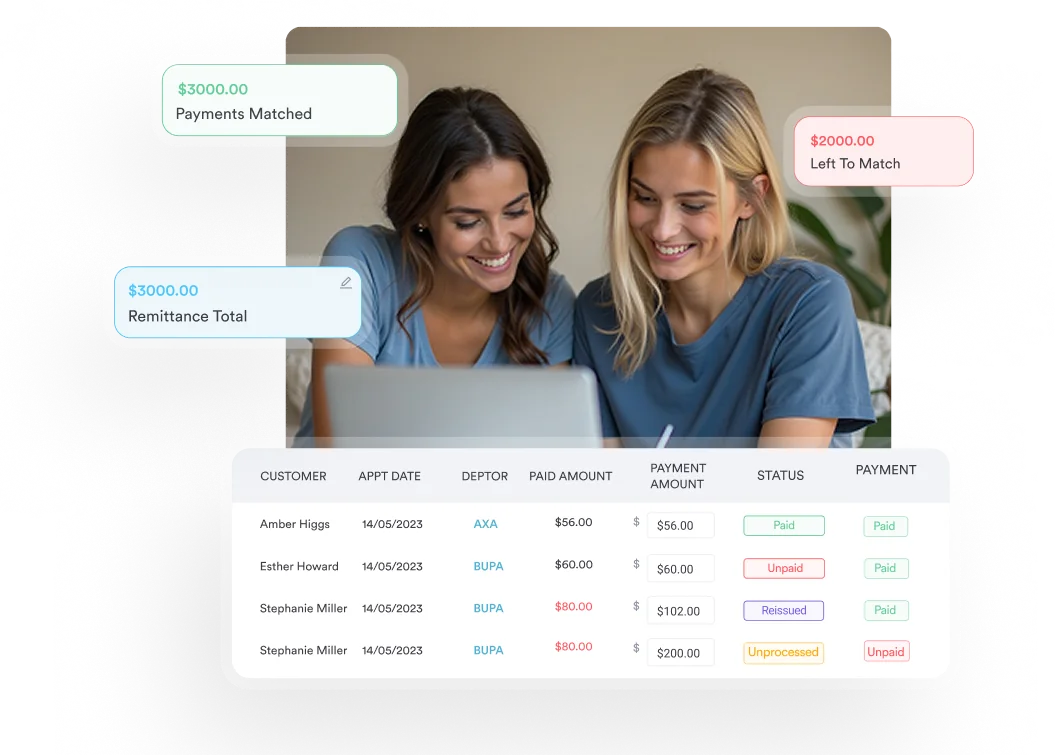

Pabau connects developmental health documentation with electronic claim submission through Claim.MD. Verify eligibility, catch errors before submission, and track ERA responses without switching systems.

ICD-10 Code F88 is a legitimate, billable diagnostic code with a clear clinical purpose in developmental medicine. Finding the code is straightforward. Documenting it correctly is what determines whether the claim gets paid. Practices that systematically record the rule-out reasoning, functional impact, and provider attestation for every F88 encounter see significantly fewer denials. Practices that default to F88 for unclear presentations see more.
Pabau’s integrated workflow connects clinical documentation with Claim.MD electronic claim submission. The evidence that supports an F88 diagnosis moves directly into the billing pipeline without manual re-entry. Book a demo to see how Pabau supports F88 documentation and claims from intake to payment.

Need a structured template for developmental evaluations? Psychiatric evaluation template provides a step-by-step framework for comprehensive mental health and developmental assessments.
Want to reduce claim denials across your developmental case mix? Denial management in healthcare outlines the workflows that prevent write-offs on behavioral health claims.
Looking for the clean-claim standard behind every developmental code? What is a clean claim explains the documentation elements payers check before reimbursing.
ICD-10 Code F88 is a billable ICD-10-CM diagnosis code for Other disorders of psychological development. It’s a residual classification within the F80-F89 block, used when a developmental disorder is confirmed but doesn’t fit a more specific code. That includes F80, F81, F82, F84, and F89. It is valid for FY2026 claims with an effective date of October 1, 2025.
Yes, F88 is a billable and specific ICD-10-CM code that can be reported directly on a claim for reimbursement purposes. No additional sub-code is required beneath it. Reimbursement depends on payer-specific coverage policies and supporting documentation, not code validity alone.
Yes, global developmental delay (GDD) in children under five is commonly assigned to F88 when a more specific diagnosis cannot yet be established. Documentation must confirm delay across two or more developmental domains using standardized assessment tools. The record must also explicitly state why intellectual disability (F70-F79) or autism spectrum disorder (F84) was excluded or deferred.
F88 (Other disorders of psychological development) indicates the evaluation is complete. The clinician has determined the disorder does not fit a more specific F80-F89 code. F89 (Unspecified disorder of psychological development) indicates the evaluation is insufficient to classify the disorder further. F89 should be a temporary assignment. Persistent use of F89 when the record would support F88 is a documentation deficiency.
There is no dedicated ICD-10-CM code for sensory processing disorder (SPD). When SPD is confirmed as a primary diagnosis and no other F80-F89 code applies, F88 is the closest available residual assignment. Clinicians should document the functional impact of the sensory processing impairment and note the absence of a more specific code. This supports medical necessity on any associated therapy claims.
Yes, F88 is valid for FY2026 billing. The 2026 edition of ICD-10-CM became effective on October 1, 2025. The CMS ICD-10 codes page publishes the annual code files confirming active codes for each fiscal year. F88 appears as billable and specific in the current tabular list.
Use F88 when a developmental disorder is clinically confirmed and all relevant F80-F89 codes have been considered and excluded or are inapplicable. The presentation also must not meet full criteria for intellectual disability (F70-F79) or autism spectrum disorder (F84). The record must document the differential reasoning explicitly. F88 is not a default for incomplete evaluations.