Healthcare workforce planning: a practical guide for practice leaders
Healthcare workforce planning is the structured process of matching clinical cap...

Last Updated: Oct 13, 2026
Most primary care physicians see 20-25 patients a day. That leaves an average of 15 minutes per visit, including the time to chart notes, review history, and write referrals. For physicians trying to practice thoughtfully, and for patients who need more than a quick prescription, that arithmetic doesn’t work.
Concierge medicine is one answer to that problem. Physicians in this model cap their roster and charge a retainer fee instead of cycling through a high-volume panel. In return, patients get guaranteed access, longer appointments, and proactive care. The model has grown steadily over the past decade.
This guide covers how concierge medicine works, what it costs, and how it compares to direct primary care. It also walks through the decisions a physician has to settle before launching a concierge practice.
Concierge medicine is a primary care model in which patients pay a recurring retainer or membership fee directly to their physician. The fee buys enhanced access and personalized care. In exchange, the physician limits their panel to a fraction of the standard size, guaranteeing availability that traditional primary care cannot offer.
The model goes by several names: retainer medicine, boutique medicine, and membership medicine. Direct primary care sits close by, though that term is technically distinct, as covered below. What unites them is the direct financial relationship between patient and physician, which keeps the membership fee out of the insurance billing cycle.
According to the American Medical Association, the shift toward membership-based models reflects broader dissatisfaction with volume-driven healthcare delivery. For physicians, it often means reclaiming the clinical relationship at the core of their training. For patients willing and able to pay, it means a different experience of primary care.
The patient journey follows a straightforward pattern. A patient enrolls with a concierge physician and pays a retainer, billed monthly or annually. That fee buys access, not a set number of visits.
What access looks like depends on the physician’s offering. It usually covers same-day or next-day appointments, extended visit times, and after-hours availability. Patients also get direct phone or email contact with the physician. Some practices add house calls and specialist coordination.
The critical operational difference is panel size. Concierge physicians typically care for 300-600 patients, compared to 2,000-3,000 in conventional primary care. That reduction is what makes the model viable without insurance reimbursement for the fee itself. A smaller panel at higher per-patient revenue can match a high-volume practice’s income while cutting administrative overhead.
Most concierge practices still carry insurance for covered clinical services. The retainer pays for access and care coordination. Insurance pays for procedures, lab work, specialist referrals, and hospitalizations.
Inclusions vary between practices, but these services appear across most concierge arrangements.
Practices at the premium end of the market are often called boutique or VIP medicine. They may add travel health services, executive physicals, and direct specialist booking. The fee structure scales accordingly.
The two models are often conflated, but they differ in meaningful ways. Direct primary care (DPC) uses a similar membership structure, yet it typically opts out of insurance billing entirely. Concierge medicine more commonly keeps insurance integration alongside the retainer fee.
The table below sets both against traditional primary care, across the dimensions that decide which model fits a practice.
That third row explains most of the confusion between the two. DPC keeps fees low by dropping claims work altogether, while concierge practices charge more and keep billing insurance. The choice changes what you need from your primary care software, because only one of the two still runs claims.
Retainer fees vary widely by practice tier, geography, and the scope of services included. Based on figures from established concierge networks, the industry ranges look roughly like this:
These fees cover the access and coordination component. Patients typically still carry health insurance for specialist visits, imaging, lab work, and hospitalizations. The retainer is an out-of-pocket expense on top of that.
Whether HSA or FSA funds can pay concierge fees is an area where IRS guidance is nuanced. Eligibility depends on how the practice structures its fee. Patients should verify with their plan administrator and consult IRS Publication 502 before assuming eligibility.
No. According to Medicare.gov, Medicare does not cover the membership or retainer fees charged by concierge practices. Some concierge physicians still accept Medicare for covered clinical services, billing Medicare separately for those encounters. The patient pays the retainer out of pocket, and Medicare pays for eligible services as it would with any participating physician.
The appeal of concierge medicine is easy to see, and so are the trade-offs. Both deserve honest treatment before a physician or a patient commits.
The most substantive criticism of concierge medicine is systemic rather than clinical. When a primary care physician converts a 2,500-patient panel to a 500-patient concierge model, the 2,000 patients who don’t follow lose their doctor. In a system already short of primary care physicians, that displacement matters.
Research from the Harvard T.H. Chan School of Public Health has highlighted this tension. Concierge medicine delivers measurable benefits for enrolled patients while reducing access for those who cannot afford the fee. The model works at the individual physician-patient level, and its aggregate effect on equity is more contested.
Proponents argue that physician autonomy and burnout reduction matter too. A physician who can sustain a satisfying career is more likely to stay in medicine. The concierge model has been cited as a factor in reducing the administrative burden that drives physician attrition. Neither side of this debate has a clean answer.
Most guides to this model stop at the definition. For physicians and practice owners weighing the transition, these are the decisions that actually decide whether it works. The guide to starting a medical practice covers general launch considerations, and concierge setup adds its own variables on top.
One sequencing note: settle the billing and record-keeping stack before you announce the change. Rebuilding it while a live panel is enrolling costs far more than doing it in advance.
Concierge medicine is not the right fit for every patient or every physician. Knowing who benefits most clarifies when the model makes sense.
Running a 400-patient concierge panel is not a scaled-down version of high-volume primary care. Every touchpoint carries more weight. One missed recall message or failed payment hits a much larger share of your revenue, and software built for throughput does not map to that.
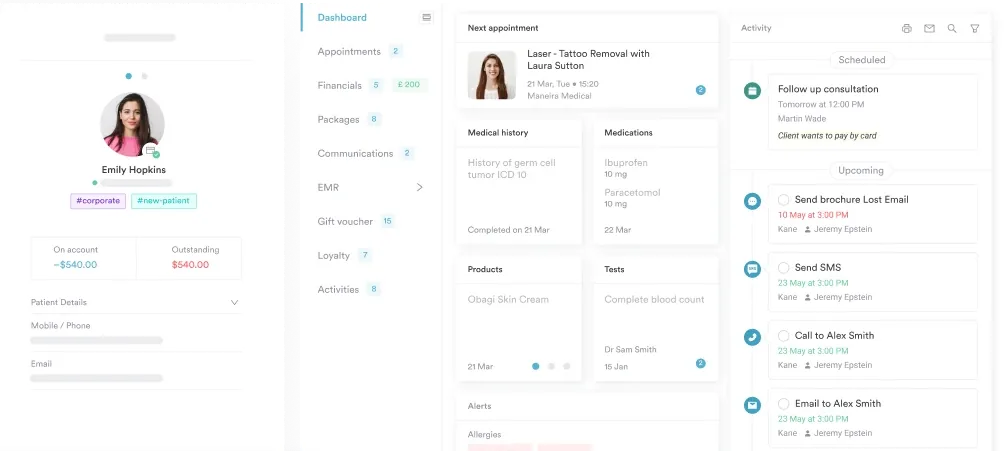
Practice management software like Pabau is built around the client record rather than the claim. That matters when a physician needs the full history in front of them before a 45-minute visit. A summary screen designed for a 12-minute appointment will not carry that weight.

Pabau’s client records hold clinical notes, treatment history, measurement tracking, and communication logs in one place. Paired with built-in membership management, the recurring side runs on its own. Retainers bill automatically, failed payments retry, and membership status sits next to the record instead of in a separate subscription tool.
The fit is not unique to concierge primary care. Longevity and functional medicine practices run the same retainer economics, which is why longevity clinic software buyers ask about recurring billing and record depth first. Esteem Life Medical Group runs that setup today.
Concierge medicine is a trade, not an upgrade. You give up volume and the revenue attached to it. What you get back is time, continuity, and an income that arrives on a schedule.
The number that decides it is panel size. Model your fee at 300, 450, and 600 patients before you write a single letter to your existing list. If the practice only works at full enrollment, it does not work yet.
Then make sure the back office can carry recurring billing without a spreadsheet. Book a demo to see how Pabau handles membership billing and client records for a concierge panel.
Concierge medicine is a primary care model where patients pay a monthly or annual retainer directly to their physician. The fee buys enhanced access, longer appointments, and a smaller patient panel. Physicians limit enrollment to 300-600 patients, against 2,000-3,000 in traditional practice. That makes same-day appointments, 24/7 physician contact, and proactive preventive care possible. Patients typically still carry health insurance for specialist visits and hospitalizations.
Concierge medicine fees typically range from $125 to more than $500 per month, depending on the practice tier and services included. Entry-level practices charge $125-$200 a month, while premium or boutique practices can exceed $500. These are industry ranges drawn from established concierge networks, and they vary widely by geography and physician.
No, the retainer or membership fee is not covered by insurance or Medicare. According to Medicare.gov, Medicare does not pay concierge membership fees under any circumstances. Some concierge physicians still accept Medicare for covered clinical services, which are billed separately from the retainer. Standard health insurance also excludes the membership fee, though patients keep their coverage for other medical services.
The membership model is also spreading into mental health, where practitioners offering brainspotting or gestalt therapy use retainers to fund longer sessions.
The key difference is insurance integration. Concierge medicine keeps insurance billing for clinical services alongside the retainer fee. Direct primary care (DPC) typically opts out of insurance for primary care entirely. A DPC practice charges only a monthly membership fee and relies on patients to hold separate coverage. DPC fees are generally lower, at $50-$150 a month, while concierge practices charge more for a broader scope of services.
For patients who need frequent primary care contact or manage chronic conditions, concierge medicine is usually worth the cost. Guaranteed same-day access has the same effect. For generally healthy people with infrequent needs, the annual retainer may exceed what they actually use. For physicians, the model offers better work-life balance, less administrative burden, and more satisfying relationships. The financial case depends on panel fill rate and local market pricing.
The main criticism is a systemic access concern. When a physician converts a 2,500-patient traditional panel to a 500-patient concierge model, the 2,000 patients who don’t follow are displaced. Harvard research has noted that concierge medicine at scale can reduce primary care availability for patients who cannot afford membership fees. Critics argue this creates a two-tiered system, where access depends on financial means rather than clinical need.