OSHA respirator medical evaluation questionnaire
The OSHA respirator medical evaluation questionnaire is the mandatory health for...

3
Last Updated: Oct 15, 2026

Nookal is allied health clinic management software used by physiotherapists, chiropractors, osteopaths, and massage therapists primarily in Australia and New Zealand.
Nookal charges per practitioner each month across two plans, Essentials and Professional, plus custom Enterprise pricing rather than fixed seat-band tiers.
Nookal charges usage-based fees for SMS reminders, from $0.07 AUD per outbound message, on top of the monthly practitioner fee.
Pabau offers a comparable alternative with built-in marketing automation, AI clinical notes, and multi-location support at transparent monthly pricing from $62/month.
Evaluating Nookal pricing takes more than checking a headline figure. The per-practitioner model means the monthly cost changes as you add clinicians. SMS reminders are billed per message rather than bundled into the subscription.
For a physiotherapy or chiropractic clinic forecasting software spend, that combination adds uncertainty to the total cost. This guide covers:
If you are evaluating allied health software and want the full cost picture before committing, start here.
Nookal charges per practitioner, per month, across three published plans: Essentials, Professional, and Enterprise.
Every practitioner added to a Nookal account increases the monthly bill by the plan’s per-seat price. There are no bundled seat counts or tier ceilings to plan around.
A solo physiotherapist on Essentials pays $49 AUD a month. A three-clinician clinic on Essentials pays $147 AUD a month. That’s three seats at $49 each.
Add a fourth clinician and the bill rises by another $49, not a step increase to a new tier. Admin and reception staff don’t count as billable seats on Nookal, so a clinic with two clinicians and one receptionist pays for two practitioners.
SMS reminders are included as a feature on every Nookal plan, but each message sent is billed separately. Nookal’s own pricing page lists SMS from $0.07 AUD per outbound message.
For a clinic sending 400 SMS reminders a month, that usage charge adds roughly $28 AUD on top of the base subscription.
Feature access differs mainly by tier rather than by seat count. Essentials covers core scheduling and clinical documentation. Professional adds automation, deeper reporting, and API access.
Nookal’s core strength is scheduling and clinical documentation for allied health workflows. It’s a common choice for physiotherapy clinic management, though marketing automation and patient reactivation tools stay limited even on the Professional plan.
Yes. Nookal offers a 30-day free trial with no credit card required. Support staff can be added at no charge during and after the trial.
Review the subscription terms before the trial ends if you plan to cancel. Nookal charges the card on file automatically once the 30 days are up.
Nookal operates in a competitive segment of the allied health software market. Cliniko is its most direct competitor in Australia and New Zealand. Clinic management software like Pabau is a broader alternative serving clinics in the UK, US, Australia, and beyond. See our Cliniko vs Nookal comparison for a deeper breakdown of that specific matchup.
On headline numbers, Nookal and Cliniko are closely matched for solo and small clinics. Both use per-practitioner pricing and operate in the Australian market. The key differentiator is Nookal’s per-message SMS billing versus bundled communication credits in some Cliniko plans.
Noterro pricing follows the same per-practitioner pattern, starting at $33 USD a month for the Core plan. That plan covers one practitioner, and every extra seat adds a monthly charge.
Pabau’s starting price in USD is higher than Nookal’s per-practitioner rate. The platform bundles marketing automation, AI-assisted clinical notes, and multi-location management that Nookal’s plans don’t include.
For clinics planning to grow past a single site or that want built-in patient recall campaigns, that breadth can offset the price difference. Cliniko pricing is worth verifying directly, since providers adjust rates periodically.
When comparing Nookal pricing to alternatives, calculate the full monthly cost per practitioner, not just the headline plan price. Add-ons like the Patient Portal, AI + Voice, and per-claim charges stack on top of the base subscription. Weigh that total against what a broader platform, like Pabau, includes as standard. That means marketing automation, AI clinical notes, and multi-location support built into the base subscription.
Nookal’s Capterra reviews consistently rate the platform well for ease of use and scheduling. Feedback is more mixed on marketing capability and on total cost once usage-based SMS and claim fees are factored in.
For a solo physiotherapist or a two-person chiropractic clinic, the value holds up well. The platform manages appointments, documents clinical sessions, and processes payments as designed.
Clinics that want to grow their client base through automated recall campaigns or targeted email marketing tend to outgrow Nookal’s native tools quickly.
A fair assessment of Nookal pricing comes down to what your clinic actually needs from its management software.
Nookal works best for solo clinicians and small clinics running core appointments, notes, and invoicing workflows. Clinics that want automated recall, deeper reporting, or bundled marketing tools should weigh the jump to Professional, or a broader platform, as they grow.
Nookal was built for the Australian and New Zealand allied health market. Its integration with Medicare-adjacent billing workflows, through Medipass, and DVA billing makes it useful for clinics working within Australia’s healthcare funding landscape. That matters most for physiotherapy and occupational therapy clinics.
According to Allied Health Professions Australia (AHPA), allied health practitioners make up a significant share of the country’s health workforce. Software that handles local billing complexity is a meaningful operational advantage for these clinics.
For clinics outside Australia evaluating Nookal, the Australia-centric billing integrations are less relevant. A platform with broader international payment and compliance coverage may serve non-Australian clinics better.
Pabau is an all-in-one clinic management platform serving allied health, aesthetic, wellness, and medical clinics across the UK, US, Australia, and UAE. Nookal focuses on scheduling, notes, and billing for allied health practitioners.
Pabau adds built-in marketing automation and AI-assisted clinical notes via Pabau Scribe, our AI scribe. Automated workflows handle patient recall and reactivation, all as part of the core subscription.
Pabau also supports multiple locations under one account, so a group running two or more sites manages scheduling, reporting, and billing from a single platform. Pabau pricing starts from $104/month and scales by location and user count, with every feature available at every tier.
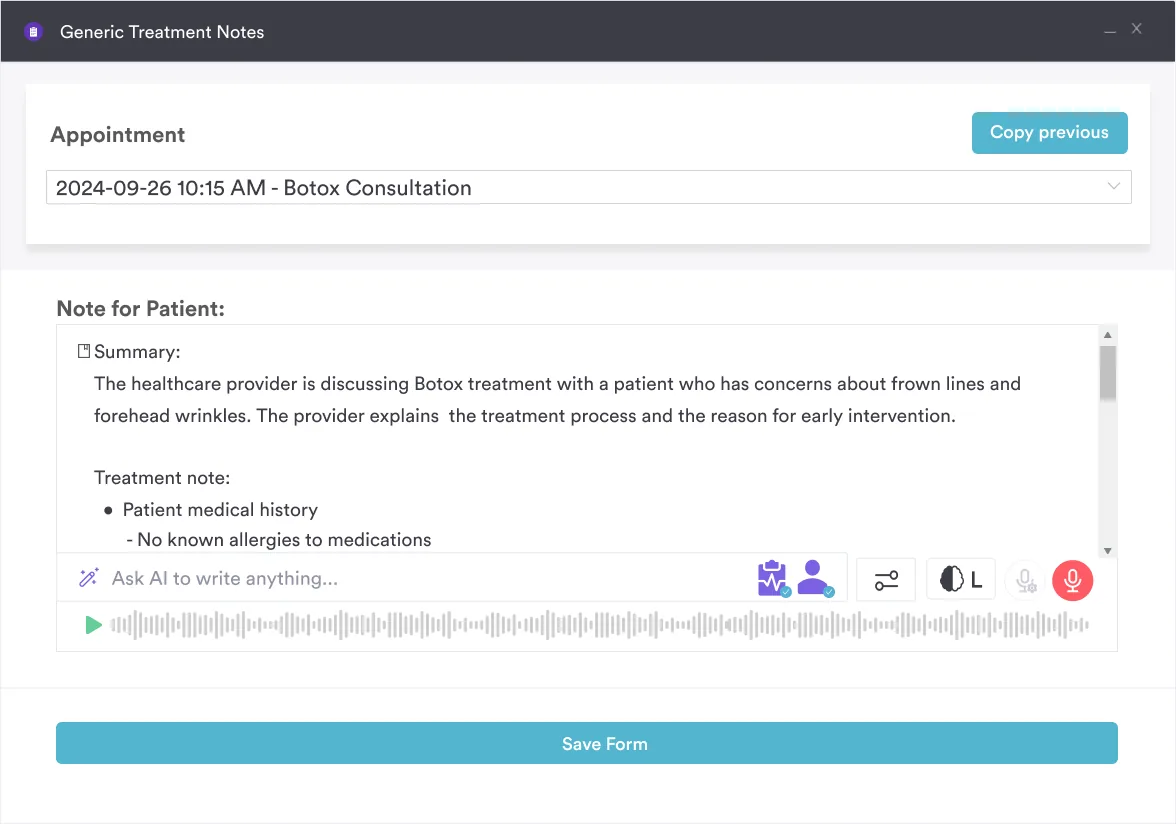
Clinics that have outgrown Nookal’s marketing tools, or want one platform covering aesthetics and medical specialties too, should evaluate Pabau as a direct alternative. Pabau holds a 4.7/5 rating from 600+ reviews on Capterra. The platform covers allied health clinic management alongside aesthetic and medical workflows, making it particularly strong for multi-specialty or multi-location clinics.

From automated appointment reminders to AI-assisted clinical notes, Pabau brings scheduling, marketing, and multi-location management into one platform for allied health and aesthetic clinics. No feature gating. Book a demo to see it in action.

Nookal pricing looks straightforward on the surface. Usage-based SMS and claim charges mean total monthly spend runs higher than the headline plan price suggests, especially for communication-heavy clinics. For solo practitioners and small allied health clinics running core scheduling and billing workflows in Australia, it is a solid fit.
For clinics wanting growth tools, automated recall, or a platform that scales across multiple locations without added billing complexity, the calculus shifts. Pabau offers those capabilities at transparent, feature-inclusive pricing.
If you are currently evaluating Nookal and want to see how a broader platform compares in practice, book a demo with the Pabau team.

Evaluating Cliniko alongside Nookal? Cliniko vs Nookal comparison covers scheduling, billing, and support differences between both platforms.
Looking for broader allied health software options? Best medical practice management software covers the top platforms across specialties and clinic sizes.
Running an occupational therapy clinic? Occupational therapy software explores the specific workflow and compliance needs of allied health practitioners.
Nookal is cloud-based clinic management software built for allied health clinics, primarily physiotherapists, chiropractors, osteopaths, and massage therapists in Australia and New Zealand. It covers appointment scheduling, clinical notes, invoicing, and reporting in a single platform.
Nookal charges per practitioner per month across two published plans. Essentials costs $49 AUD, and Professional costs $59 AUD, both billed per practitioner. Enterprise pricing is custom. Contact Nookal’s sales team for a quote.
Yes. Nookal’s per-practitioner pricing model means the monthly cost scales with the number of clinicians on the account. Admin and reception staff don’t count as billable seats.
Yes. SMS reminders are included as a feature, but Nookal charges per message sent, from $0.07 AUD per outbound SMS. For a clinic sending 400 reminders a month, that adds roughly $28 AUD on top of the subscription.
Yes. Nookal offers a 30-day free trial with no credit card required. Billing starts automatically on the plan you selected once the 30 days end, unless you cancel first.
The most commonly compared alternatives to Nookal are Cliniko (closely matched on price and target market), Halaxy, Power Diary, and Pabau. Pabau is a strong option for clinics wanting built-in marketing automation, AI clinical notes, and multi-location support at inclusive pricing.