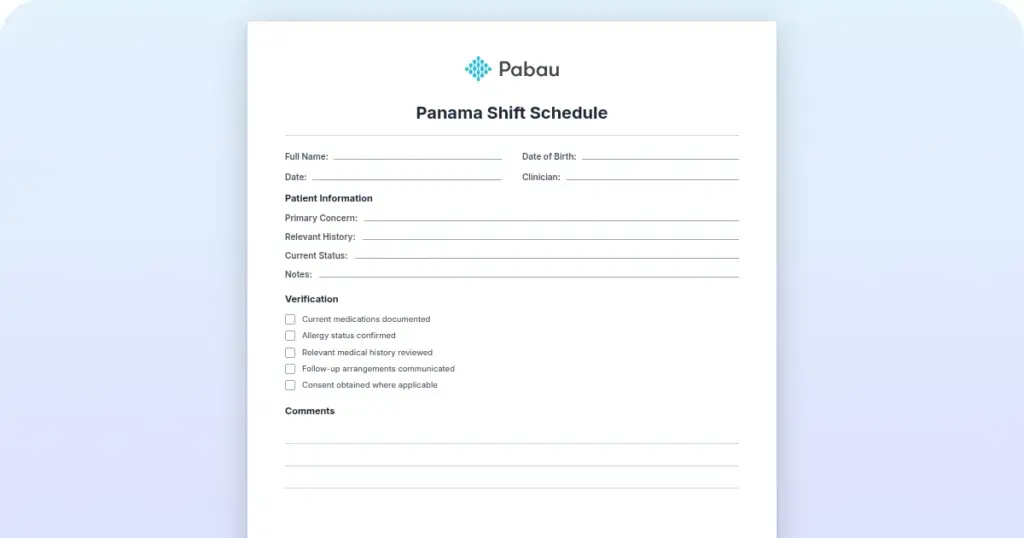
Panama shift schedule: Free 2-2-3 template
The Panama shift schedule is a 2-2-3 rotation that keeps a practice staffed arou...

1
Last Updated: Oct 6, 2026
EHR interoperability is the ability of electronic health record systems to exchange, interpret, and use patient data across platforms, providers, and care settings. It works at four levels, rests on a handful of shared standards, and is now enforced by federal rules.
Certified software is close to universal. ONC’s final data brief on hospital adoption put certified EHR use at 99.4% of non-federal acute care hospitals in 2024. Connected records lag behind that figure, so practices still repeat tests, chase medication histories, and re-key referral data by hand.
This guide covers the four levels of interoperability, the standards behind them, the barriers private practices hit, and what the 2026 Promoting Interoperability measures require.

EHR interoperability lets health systems exchange and use patient data across platforms without manual re-entry
Four levels exist: foundational, structural, semantic, and organizational, each addressing a different layer of data exchange
HL7 FHIR R4 is the ONC-mandated API standard under the 21st Century Cures Act, with information blocking rules in force
Data silos, implementation costs, and legacy system incompatibility remain the top barriers for independent practices
Pabau supports private practice interoperability through API-based integrations, centralized patient records, and digital documentation
Two systems talking to each other is only the starting point. When a patient sees a specialist, the primary care record has to travel with them. It also has to arrive in a format the specialist’s system can read and act on. Without that, clinicians order tests already done elsewhere, miss medication histories, and rebuild care plans from partial information. Our guide to EHR integration workflows covers how those connections get built.
The cost of poor exchange shows up in ordinary places. Staff re-key referral letters, and the front desk phones another practice for a medication list. A clinician orders a test the patient had six weeks ago. Those hours rarely get measured in an independent practice until they surface as revenue leakage or patient complaints.
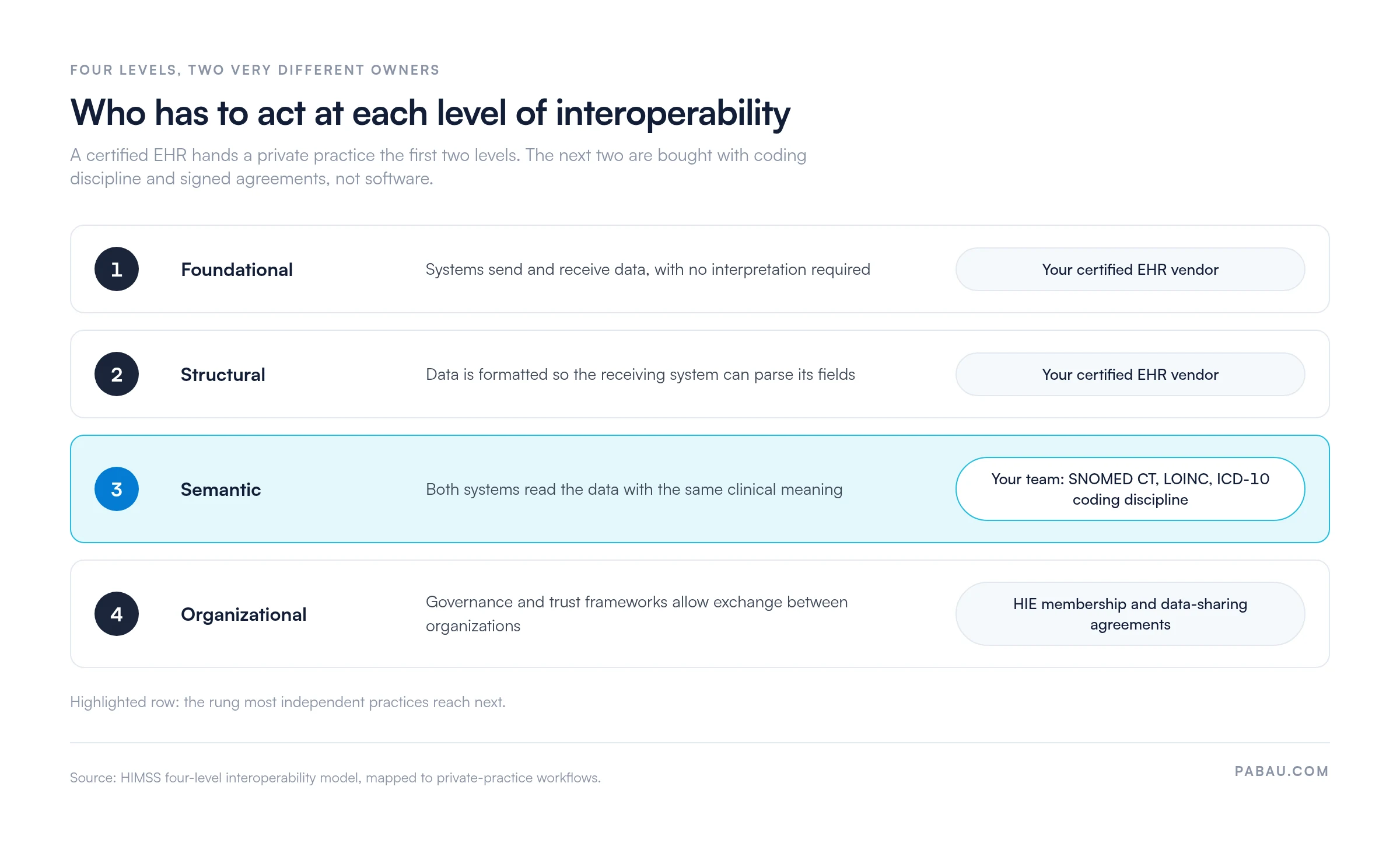
The Healthcare Information and Management Systems Society (HIMSS) defines four levels of interoperability, each covering a distinct layer of health data exchange. Most practices operate at level one or two. Reaching levels three and four takes deliberate investment in standards and governance.
Most independent practices get foundational and structural interoperability from their EHR vendor. Semantic and organizational levels take more work. That means shared coding standards (SNOMED CT, LOINC, ICD-10), membership of a health information exchange (HIE), or data governance agreements with referring providers. Which rung you sit on decides who has to act next.
Complete patient data at the point of care reduces preventable errors, and that is the clinical case. The operational case is just as strong. A practice that cannot receive structured data from referring providers re-enters it by hand, which costs time and introduces transcription errors.
For practice managers, the operational argument usually lands hardest. Poor exchange means your team does data entry that a properly configured system would handle, and that burden grows with patient volume.
EHR interoperability standards are the shared technical languages that let different systems exchange data reliably. No single standard covers every case. Each was designed for a particular data type, which is why most EHR implementations support several at once.
HL7 FHIR R4 is the ONC-mandated standard for patient data access APIs under the 21st Century Cures Act. Older HL7 versions needed custom integration work for every connection. FHIR uses RESTful APIs, the same approach behind consumer apps, so connections are quicker to build. The full specification is published by HL7 International.
FHIR APIs let patient access applications pull data straight from a certified EHR, with no manual export step. Patients can use approved health apps to view their own records, and referring providers can pull structured summaries programmatically. Any practice running certified EHR software already supports FHIR R4.
Check whether your current EHR holds ONC certification under 45 CFR Part 170. Certified systems are required to expose FHIR R4 APIs, which means you may already have the foundation for broader interoperability without upgrading your software.
The barriers are not spread evenly. A smaller independent practice hits a different set of obstacles than a large hospital network, and the fixes differ with them.
Solving exchange rarely requires replacing the whole EHR. Several targeted approaches work well for independent and multi-specialty practices.
Vendor choice is where most of this gets decided. If you are comparing systems, our guide to the best EMR software weighs them on certification, API access, and export options.
US interoperability regulation has changed substantially since 2020. The 21st Century Cures Act, implemented through ONC’s Final Rule, set three binding requirements for every practice using a certified EHR. Those are FHIR R4 API access, a prohibition on information blocking, and certification requirements for EHR developers.
The CMS Promoting Interoperability Program attaches payment incentives and penalties to specific measures. The data itself is standardized too. Under the HTI-1 final rule, certified health IT has had to support USCDI version 3 since January 1, 2026. That version widens the required data set to social determinants of health and expanded demographic fields.
The CMS Promoting Interoperability Program requires MIPS-eligible clinicians to report a defined set of measures each performance year. For 2026, CMS keeps its emphasis on electronic prescribing, health information exchange, provider-to-patient exchange through FHIR APIs, and public health reporting.
Compliance in 2026 comes down to four steps. Confirm your EHR is certified to the current edition, enable the patient access API, report every required measure, and keep the supporting documentation. The health information exchange measures are scored proportionally rather than against a fixed pass rate. Check the current measure specifications on CMS.gov before you report, since they are updated annually.
These five scenarios show what changes once records move between systems on their own.
Three shifts are reshaping data exchange faster than most private practices can track.
TEFCA (Trusted Exchange Framework and Common Agreement) is ONC’s national interoperability framework, built as a single on-ramp for health data exchange across the US. A practice that joins a TEFCA-compliant Qualified Health Information Network (QHIN) reaches infrastructure that was previously the preserve of large hospital systems.
AI-driven data harmonization is being applied to the semantic problem at scale. Machine learning models can map inconsistent terminology, resolve duplicate patient records, and normalize data from different coding systems with far less manual review.
Value-based care data requirements are turning interoperability into a financial necessity. Payers increasingly tie reimbursement to outcomes data that only connected systems can collect. Practices that invest now are better placed to join alternative payment models as those expand.
Review the ONC TEFCA webpage annually. As more Qualified Health Information Networks come online, joining one becomes the simplest route to national-level exchange for a practice without IT staff.
Private practices carry the same compliance requirements and patient expectations as large hospital systems, without the IT department. Practice management software like Pabau answers the first half of that problem. One practice management app holds appointments, clinical notes, forms, prescriptions, and communications against a single patient record.
Pabau’s API-based architecture supports integrations with labs, imaging providers, and third-party platforms. Digital intake forms capture structured patient data from first contact, replacing the unstructured PDFs that downstream systems cannot parse. Every clinician on the team reads the same record, whichever practitioner the patient saw last.
Audit trails and structured data export support MIPS reporting and state-level requirements. For a practice running several practitioners or locations, that internal foundation comes before any external data exchange is worth attempting.
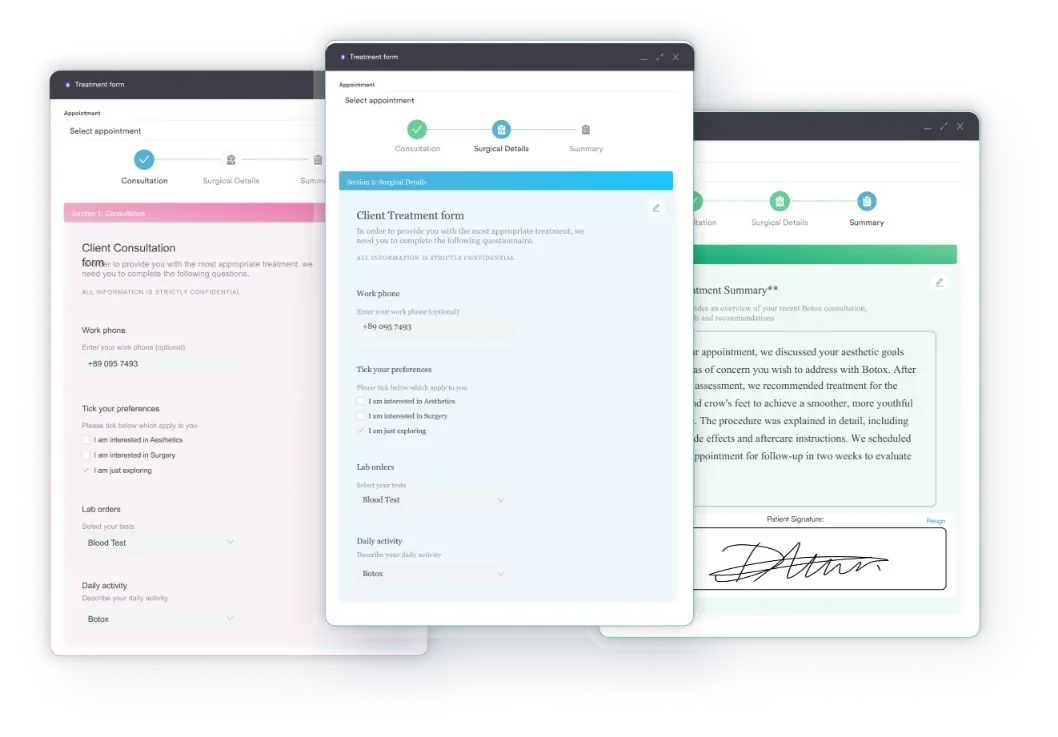

Pabau gives private practices a centralized patient record with open API integrations. See how it simplifies data workflows across your team.

Interoperability is now a small-practice problem as much as a hospital one. The same rules apply, patients expect the same continuity, and every handoff that loses data costs staff time to rebuild.
Most independent practices sit at foundational or structural exchange. Moving up means shared coding standards, an HIE membership, or an agreement with the practices that refer to you. Those are governance decisions, and no vendor can make them for you.
Put the internal record in order first, because external exchange is far harder from a fragmented starting point. Book a demo to see how Pabau centralizes patient records and API integrations for your practice.

Want to understand how EHR integration fits your practice’s tech stack? EHR integration workflows covers the connection points between practice management systems and external platforms.
Planning a move to a new system? EHR implementation walks through the stages, the data migration decisions, and the staff training that keeps a rollout on schedule.
Still pinning down the terminology? EHR meaning explains what an electronic health record holds and how it differs from an EMR.
Considering a move to paperless clinical records? Going paperless in your practice explains the workflow changes and compliance points involved.
EHR interoperability is the ability of electronic health record systems to exchange, interpret, and use patient data across platforms and care settings. It removes manual re-entry between systems. The four levels are foundational, structural, semantic, and organizational, and each covers a different layer of how data moves.
The main barriers are data silos from incompatible systems and inconsistent implementation of HL7 and other protocols. Practices also face HIPAA-related caution about sharing data, high integration costs, vendor information blocking, and legacy systems that predate modern API standards.
The primary standards are HL7 FHIR R4, HL7 v2, C-CDA, and DICOM. FHIR R4 is the ONC-mandated API standard for patient data access, and HL7 v2 still carries lab and pharmacy messaging. C-CDA moves clinical documents, and DICOM handles medical imaging. Most certified EHRs support several at once.
The CMS Promoting Interoperability Program is the part of MIPS that scores eligible clinicians on their use of certified EHR technology. Measures cover electronic prescribing, health information exchange, patient access through FHIR APIs, and public health reporting. Clinicians who do not report the required measures score zero in that category, which drags down the final MIPS score.
Yes. Any practice using a certified EHR falls under the ONC information blocking rules, whatever its size. The FHIR API requirements of the 21st Century Cures Act apply the same way. MIPS-eligible clinicians in private practice also report Promoting Interoperability measures, with payment consequences attached.