

Waist-to-hip ratio chart: Risk bands for women & men (free PDF)
A waist-to-hip ratio chart sorts a patient’s waist-to-hip ratio (WHR) into low, moderate, or high risk, with separate cut-offs for women and men. Divide waist circumference by hip circumference, then read the result against the chart. Women are low risk at 0.80 or below and high risk above 0.85. Men are low risk at 0.95 […]
Newborn head circumference chart
A newborn head circumference chart plots a baby’s head measurement against age-based percentiles, so you can see whether brain growth is on track. At birth, a term baby’s head usually measures 33 to 35 cm. The WHO median is 34.5 cm for boys and 33.9 cm for girls. A reading below the 3rd percentile or […]
Preemie weight chart
A preemie weight chart tracks a premature baby’s weight, length and head circumference against a preterm growth reference, most often the Fenton 2013 chart. Each measurement is plotted by post-menstrual age rather than weeks since birth, so the percentile reflects the baby’s stage of development. NICU teams, neonatologists and pediatricians use the chart to spot […]
GLP-1 diet plan
A GLP-1 diet plan is a structured eating framework for patients taking semaglutide (Ozempic, Wegovy) or tirzepatide (Mounjaro, Zepbound). It works around the appetite suppression and slower gastric emptying these medications cause. The job of the plan is to protect protein intake, hydration and micronutrient status while total calories fall. The targets are the same […]
Newborn feeding schedule: How much and how often by week
A newborn feeding schedule is a framework for how often and how much a baby eats in the first weeks of life. Most newborns feed 8 to 12 times every 24 hours. The pattern shifts with feeding method, and at this age hunger cues beat the clock. This guide sets out typical frequencies and volumes […]
Health appraisal form
A health appraisal form is a record a licensed provider signs to document someone’s medical history, immunizations, and physical exam findings at a single visit. Schools, childcare programs, camps, and some employers require one before a person joins a group setting. The signed form also becomes the baseline you compare future checkups against. Validity commonly […]
Medication tracker template: Free PDF for clinicians and caregivers
A medication tracker is a form that records each medication a patient takes, when each dose is due, and whether it was taken or missed. It covers prescriptions, over-the-counter (OTC) drugs and supplements on one sheet, with room for side effects, allergies, the prescriber and the pharmacy. Clinicians use it to spot duplicate therapy and […]
Normal ECG values chart: Adult and pediatric reference ranges
A normal ECG values chart lists the expected range for every measurement on an electrocardiogram, so you can spot an abnormal tracing at a glance. A resting adult’s normal heart rate is 60–100 bpm, with a PR interval of 120–200 ms and an axis between −30° and +90°. QRS duration stays under 110 ms in […]
Food calorie chart: Calories by food group and portion size
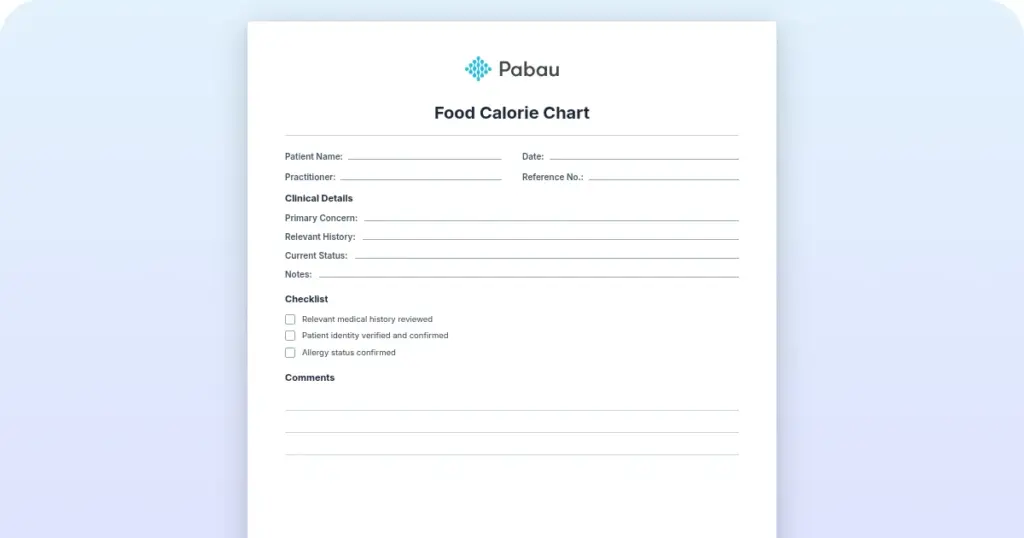
A food calorie chart lists the calories in common foods per standard serving, grouped by food type. It lets a patient or practitioner estimate a day’s intake in minutes, without an app. The catch is portion size. One cup of cooked white rice carries 242 kcal, and a second scoop quietly adds another 242. Get […]
Detox diet plan
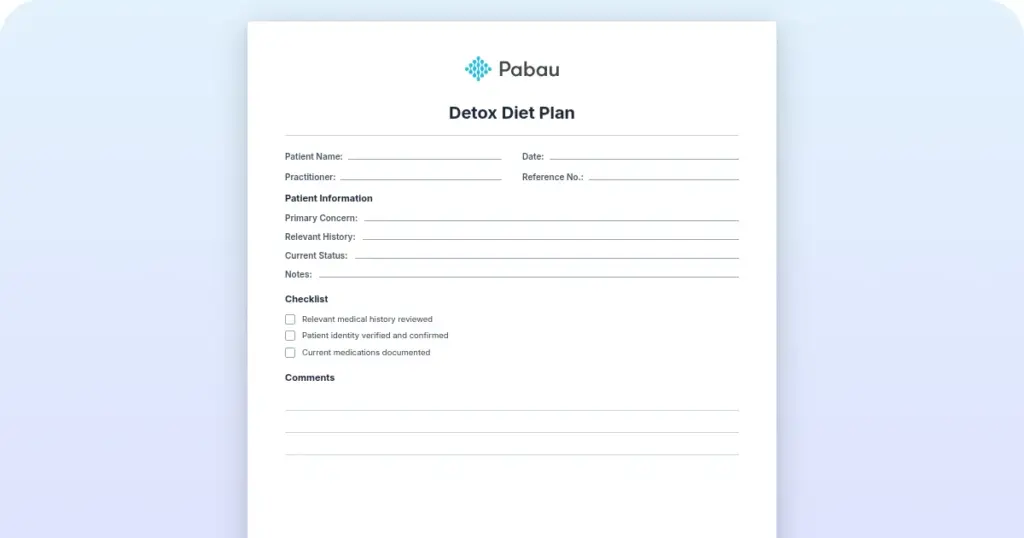
A detox diet plan is a structured eating protocol that cuts processed foods, added sugar, alcohol and caffeine for three to 30 days. In their place, patients eat vegetables, fruit, legumes, whole grains, lean protein and plenty of water. The plan doesn’t remove toxins, because the liver and kidneys already do that around the clock. […]