

Referred pain map: Clinical reference chart
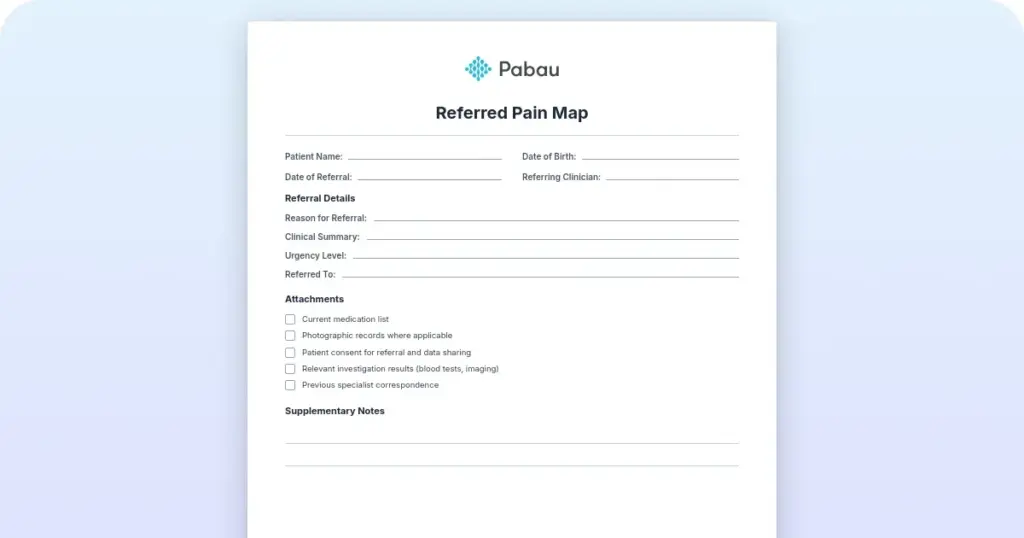
Download your free referred pain map The chart maps somatic trigger point referrals, visceral organ referrals, and cardiac patterns by body region. Each zone lists the structures to palpate first, with the anatomical landmarks to work from. Download template Patients point to where pain is felt, not to where it starts. A referred pain map […]
Scapular winging exercises: A clinical guide for physiotherapists

Scapular winging rarely appears in isolation. A patient walking in with shoulder pain, restricted elevation, or visible shoulder blade protrusion almost always has an underlying pattern of periscapular muscle weakness. It is not usually a structural problem. Getting the exercise selection right from the first session determines whether rehab takes eight weeks or eight months. […]
Pronator drift test: How to perform, interpret, and document

Missed hemiparesis is one of the costliest diagnostic errors in acute neurology. A patient presents with vague arm heaviness, normal grip strength on direct testing, and no obvious facial droop. Standard motor grading returns a 5/5. Yet the pronator drift test catches the lesion in under 30 seconds. That difference between manual testing and the […]
Scapular stabilization exercises: 10 best for shoulder health

Scapular stabilization exercises: What they are and why they matter Most shoulder problems do not start at the shoulder joint. They start behind it, at the shoulder blade. Scapular stabilization exercises train the muscles that control the scapula’s position and movement. For practitioners at physical therapy practices, these exercises sit at the core of upper-limb […]
CPT Code 97016: Vasopneumatic device billing guide
CPT Code 97016 is the billable code for applying a vasopneumatic device, a supervised physical medicine modality. One unit covers the whole session, no matter how long the device runs. Medicare also requires a therapy discipline modifier on every outpatient claim that carries it. This reference covers the official descriptor, the documentation a payer expects, […]
Greater trochanter palpation: technique, facets, and findings

Lateral hip pain fills a large share of musculoskeletal (MSK) caseloads in primary care and physical therapy. Most of it traces back to the greater trochanteric region. Misdiagnosis stays common, because trochanteric bursitis, gluteal tendinopathy, and iliotibial band pathology all get filed under one vague label. A precise palpation sequence, run the same way every […]
Ege’s test: how to perform, interpret, and compare it

Ege’s test is one of the few orthopedic knee assessments that replicates the mechanism by which most meniscal injuries happen. Tears usually occur under load, yet the majority of clinical tests examine the knee supine and unloaded. Ridvan Ege, MD set out to close that mismatch when he described the test in 1968. Physical therapists, […]
Shoulder special tests: Technique, sensitivity, and interpretation
Most shoulder pain presentations arrive without a clear diagnosis attached. Clinicians spend valuable appointment time working through a mental checklist of possible structures, and an unstructured examination wastes that time. A well-sequenced shoulder special test approach cuts through the uncertainty by isolating specific tissues, generating objective findings, and guiding the next clinical decision. This guide […]
Posterior sag sign: Technique, grading, and PCL assessment
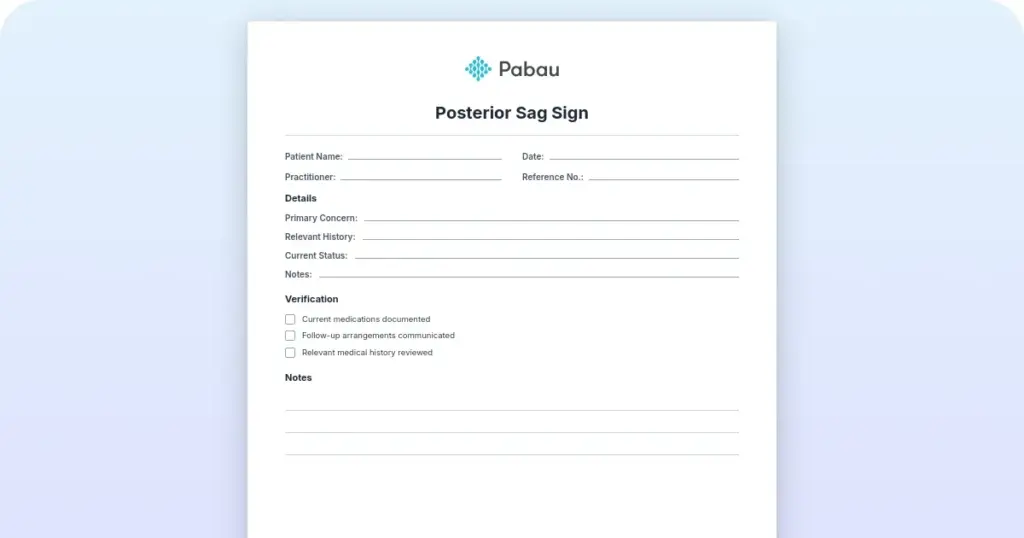
Download your free posterior sag sign assessment template A clinical assessment form for recording posterior sag sign findings, with a positioning checklist and bilateral comparison fields. It also carries severity grading and a clinical notes section, so the finding lands in the record in a readable form. Download template The posterior sag sign is one […]
Sit and reach test: Protocol, norms and score interpretation
Hamstring tightness shows up in almost every musculoskeletal screen, in both clinical and athletic populations. The sit and reach test gives you a fast, low-cost flexibility benchmark that takes under three minutes to administer. What separates a useful clinical data point from a number that goes nowhere is knowing how to run it and how […]