Medication tracker template: Free PDF for clinicians and caregivers
A medication tracker is a form that records each medication a patient takes, whe...

3
Last Updated: Oct 12, 2026
An aldosterone test measures the level of aldosterone, a steroid hormone the adrenal glands use to regulate blood pressure, sodium retention, and potassium excretion.
According to the National Library of Medicine, it is usually ordered alongside a renin measurement.
That pairing shows whether the adrenal glands are overproducing or underproducing the hormone. Clinicians use the results to investigate resistant hypertension, unexplained low potassium, and suspected adrenal disorders.
Normal serum values sit at roughly 3-35 ng/dL upright and 1-16 ng/dL supine, though every laboratory publishes its own intervals. This guide covers what the test measures, how to prepare, how to read the aldosterone-to-renin ratio, and which conditions it detects.

An aldosterone test measures adrenal hormone output to evaluate blood pressure and electrolyte regulation.
Normal serum aldosterone ranges differ by body position: roughly 3-35 ng/dL upright and 1-16 ng/dL supine in adults.
The aldosterone-to-renin ratio is the first-line screen for primary aldosteronism, which affects 5% to 14% of hypertensive patients in primary care.
Spironolactone and eplerenone have to be held for four to six weeks, so preparation sets the appointment date.
A result inside the normal range can still be abnormal when renin is suppressed at the same time.
An aldosterone test is a blood or urine measurement that quantifies circulating aldosterone to assess adrenal function and its effect on fluid and electrolyte balance. Aldosterone comes from the zona glomerulosa of the adrenal cortex.
Its job is to signal the kidneys to retain sodium and excrete potassium. When sodium is retained, water follows, which raises blood volume and, in turn, blood pressure.
The test runs on a serum sample or a 24-hour urine collection. Serum testing by liquid chromatography-tandem mass spectrometry (LC-MS/MS) is now the preferred analytical method, as confirmed by Mayo Clinic Laboratories. CPT code 82088 covers aldosterone measurement in both blood and urine specimens. Confirm code applicability against the current CMS code set each year.
Aldosterone function centers on sodium-potassium exchange at the distal nephron. It binds to mineralocorticoid receptors in the kidney’s collecting ducts. That binding increases sodium channels on the luminal side and sodium-potassium ATPase pumps on the basolateral side. Sodium then moves into the bloodstream, potassium moves into the urine, and blood volume rises.
The renin-angiotensin-aldosterone system (RAAS) is the hormonal cascade that controls aldosterone release. It works in three steps:
This feedback loop explains why clinicians measure renin alongside aldosterone. A disrupted ratio between the two points to where the system has broken down. The fault sits either at the kidney (low renin) or at the adrenal gland (high aldosterone).
Clinicians order an aldosterone test when clinical findings suggest the adrenal glands are producing too much or too little of the hormone. It belongs to a targeted workup, so it rarely appears on a routine panel.
Common indications for ordering include:
The aldosterone blood test is performed by standard venipuncture, usually from the antecubital vein. Most laboratories require a morning collection, since aldosterone follows a diurnal pattern and peaks in the early morning.
Body position at the time of collection matters just as much. Upright posture stimulates the RAAS and raises aldosterone, while lying supine suppresses it. Many labs ask the patient to sit or stand for at least 30 minutes before the draw.
A 24-hour urine collection is the alternative. It measures integrated aldosterone output across a full day, which reduces the positional variability of a single blood draw. Some confirmatory protocols use it for exactly that reason.
Preparation decides whether the result can be interpreted at all. Review the patient’s full medication list before ordering, because several drug classes interfere with the aldosterone-renin ratio:
Those windows run on different clocks, and the longest one sets the appointment date rather than the referral date.
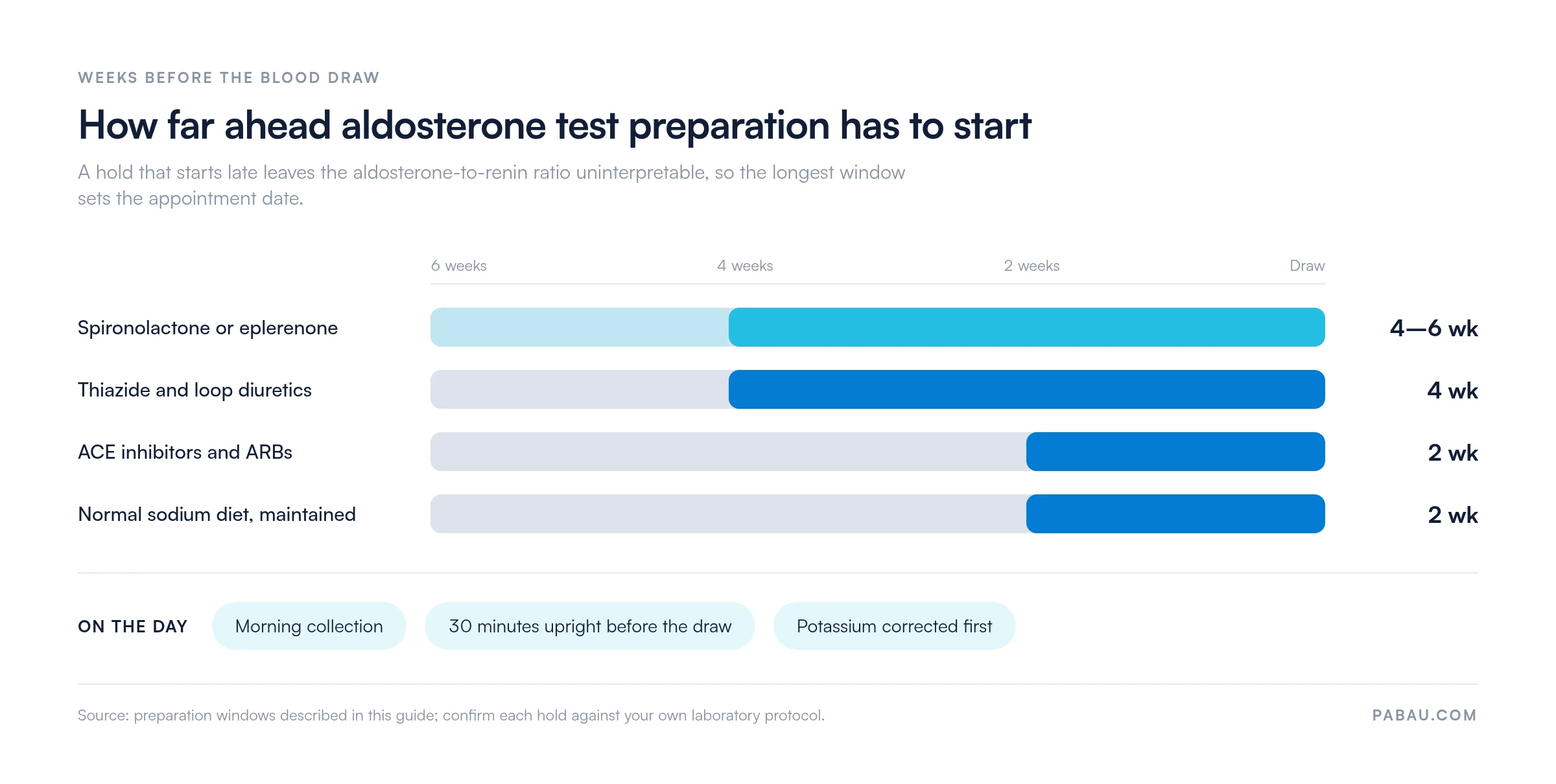
Patients should also maintain a normal sodium diet for at least two weeks before testing. Sodium restriction activates the RAAS and raises aldosterone, which produces misleading results. Correct potassium to normal first where possible, since hypokalemia suppresses aldosterone secretion and can mask hyperaldosteronism.
Normal aldosterone levels vary by specimen type, body position, age, and assay method. No single universal range applies, so compare every result against the reporting laboratory’s own reference interval. The values below are commonly cited ranges and work as guidance, not as absolute thresholds.
Always interpret aldosterone results in clinical context. A value inside the normal serum range can still represent pathology when renin is suppressed, which is what makes the aldosterone-to-renin ratio essential.
The aldosterone-to-renin ratio (ARR) is the preferred first-line screening test for primary aldosteronism, recommended by the Endocrine Society’s clinical practice guidelines. The ARR compares aldosterone output directly against renin activity, which makes it far more useful diagnostically than either value alone.
An ARR above 30, combined with an aldosterone level above 15 ng/dL, is a commonly cited threshold for a positive screen. That assumes aldosterone measured in ng/dL and plasma renin activity in ng/mL/hr. Cutoffs vary between guidelines and centers, so apply your local laboratory’s reference values.
One caveat carries a lot of weight here. A positive ARR screen does not diagnose primary aldosteronism, and confirmatory testing always comes before adrenal imaging or adrenal vein sampling.
Always document the patient’s body position, time of day, and recent medication list alongside the aldosterone result. A supine draw at 3 PM after three days of sodium restriction tells a different story than a morning upright draw on a normal diet.
A high aldosterone level means the adrenal glands are secreting more aldosterone than the body’s physiological state warrants. The excess drives sodium retention, potassium loss, and rising blood pressure. The clinical significance depends on whether renin is high or low at the same time.
High aldosterone symptoms often bring patients in before the diagnosis is made. Common presentations include:
The two main causes of elevated aldosterone differ by renin level. High aldosterone with low renin points to autonomous adrenal overproduction, which is primary aldosteronism. When aldosterone and renin are both elevated, an external stimulus has activated the RAAS: low blood volume, renal artery stenosis, or heart failure.
That second pattern is secondary hyperaldosteronism, and telling the two apart is exactly what the ARR is designed to do. Timing and context change the meaning of other cardiovascular markers too. Our chart of cardiac biomarker reference ranges covers troponin, where the hours since symptom onset decide how a result reads.
A low aldosterone level means the adrenal glands are failing to produce enough hormone to maintain sodium retention and blood pressure. The result is salt wasting, rising potassium, and falling blood pressure. Symptoms include fatigue, salt craving, lightheadedness on standing, and muscle weakness from hyperkalemia.
Three main conditions produce low aldosterone:
Following these patients means tracking electrolytes, renin, and blood pressure across many visits. Primary care practice software that files lab results straight into the patient record keeps that history in one place, without a side spreadsheet.
Primary aldosteronism is autonomous overproduction of aldosterone by one or both adrenal glands, independent of the RAAS. It is the most common secondary cause of hypertension. The Endocrine Society’s 2025 guideline puts it at 5% to 14% of hypertensive patients seen in primary care.
In referral settings and among patients with resistant hypertension, that share climbs to as much as 30%. The condition is still underdiagnosed, because many patients present with blood pressure that responds partly to standard antihypertensive drugs.
The two main subtypes differ in treatment:
Distinguishing the two subtypes requires adrenal vein sampling once the diagnosis is confirmed. CT imaging alone cannot reliably separate a unilateral adenoma from bilateral hyperplasia in every case.
Aldosterone testing creates documentation demands that manual processes handle poorly. A patient with resistant hypertension needs an aldosterone test and a simultaneous renin draw. Then comes a medication hold of up to six weeks, and a return visit for interpretation.
Every one of those steps is a handoff, and a handoff tracked on a sticky note is a handoff that gets missed. Practice management software like Pabau ties the whole sequence to the patient record instead.
Structured lab management software attaches the order to the encounter and flags abnormal values inside the chart. It also sets a follow-up task for the day the results arrive. Paired with patient records that hold the medication history next to lab trends, clinicians spend less time reconstructing context and more time on interpretation.
For practices that run hormone panels routinely, digital intake forms capture the medication list and dietary preparation before the appointment. The preparation context is already on file when the result comes back, so you know whether the number can be trusted.

Pabau helps practices manage lab workflows, track patient results, and automate follow-up between the aldosterone draw and the results appointment.

An aldosterone result is only as good as the preparation behind it. Book the draw around the longest medication hold, record posture and time alongside the value, and read the number against renin. The reference range on its own will hide a positive screen.
The patients who benefit are the ones nobody had flagged: the hypertensive on three drugs, the unexplained hypokalemia that keeps recurring. Screening them costs one planned medication hold and a blood draw. Missing them costs years of treatment aimed at the wrong target.
For practices ordering hormone panels regularly, the workflow around preparation, timing, and interpretation matters as much as the assay. Book a demo to see how Pabau keeps lab orders, results, and follow-up tasks in one patient record.

Screening a patient for resistant hypertension? Blood pressure monitoring covers how practices capture readings between visits and act on the trend.
Need the thresholds to hand during a consultation? Normal blood pressure chart sets out the reading categories in one printable reference.
Documenting consent before a blood draw? Blood test consent form gives you a ready-made form covering the test, the risks, and the patient’s agreement.
Assessing vascular risk in the same patient? Ankle-brachial index explains how the measurement is taken and what each result range indicates.
An aldosterone test measures the concentration of aldosterone hormone in blood serum or urine, reflecting how much the adrenal glands are producing. Results show whether output sits within the normal range for the patient’s position and time of day. A value that is elevated or suppressed points to adrenal dysfunction, primary aldosteronism, or adrenal insufficiency.
Normal serum aldosterone is approximately 3-35 ng/dL in adults measured upright and 1-16 ng/dL measured supine. These are commonly cited approximate ranges. Exact reference intervals vary by laboratory and assay method, so always compare a result against the reporting laboratory’s own reference range.
The aldosterone-to-renin ratio (ARR) is the ratio of serum aldosterone to plasma renin activity, used as the primary screening test for primary aldosteronism. An ARR above roughly 30, combined with an aldosterone level above 15 ng/dL, is a common positive screening threshold. The exact cutoff varies across guidelines and laboratories.
Primary aldosteronism is a condition in which one or both adrenal glands overproduce aldosterone independently of the renin-angiotensin system, causing hypertension and low potassium. The Endocrine Society’s 2025 guideline reports it in 5% to 14% of hypertensive patients in primary care. In referral settings and resistant hypertension, that share reaches 30%. Diagnosis runs from aldosterone testing and ARR screening to confirmatory testing before any adrenal imaging.
Several drug classes interfere with aldosterone and ARR results. Spironolactone and eplerenone should be withheld for 4-6 weeks, and ACE inhibitors, ARBs, and diuretics for 2-4 weeks. Beta-blockers and oral contraceptives can also suppress renin. Every medication hold is a clinical decision that weighs diagnostic need against cardiovascular risk.
Aldosterone is most commonly tested in serum using LC-MS/MS methodology, which is accurate enough for most clinical purposes. A 24-hour urine collection is used in some confirmatory protocols, or when positional variability makes a single blood draw unreliable. The clinical indication and local laboratory protocols decide which specimen type applies.