Hell’s Itch pain scale
The Hell’s Itch pain scale is a numeric rating system that quantifies the ...

7
Last Updated: Oct 5, 2026

Normal blood pressure is less than 120/80 mmHg under the 2017 ACC/AHA guidelines; ranges vary by age and sex.
Hypertension Stage 1 is 130-139/80-89 mmHg; Stage 2 is 140/90 mmHg or higher; >180/120 mmHg requires emergency care.
A downloadable reference chart helps clinicians standardise BP interpretation and reduce documentation inconsistencies.
Pabau’s vital signs tracking automates BP logging, flags abnormal readings, and integrates data directly into patient records.
Access the free chart template to print, laminate, or share with patients as a clinical reference tool.
A ready-to-use clinical reference chart covering patient details, blood pressure range categories (normal, elevated, Stage 1, Stage 2, hypertensive crisis), age-stratified and gender-specific thresholds, and ACC/AHA 2017 guideline classifications for immediate practice use.
Download templateA normal blood pressure chart is an essential clinical tool that helps practitioners quickly assess cardiovascular health and identify hypertension risk. This reference guide covers the complete ACC/AHA 2017 blood pressure classification system-from normal readings to hypertensive crisis-stratified by age and gender so clinicians can make informed decisions during patient consultations.
A normal blood pressure chart organises readings into five distinct categories based on systolic and diastolic pressures, both measured in millimetres of mercury (mmHg). The chart displays two numbers: the top (systolic) measures pressure when the heart contracts, and the bottom (diastolic) measures pressure when the heart rests. Understanding these measurements helps clinicians interpret patient records accurately and flag readings that require follow-up.
Blood pressure naturally changes across the lifespan. A normal blood pressure chart should reflect age-specific reference ranges so clinicians can distinguish normal variation from genuine pathology. The 2017 ACC/AHA guidelines apply uniformly across adults, but research shows modest differences between sexes and across age groups.
Note: These values are population averages and represent typical healthy readings for each decade. Individual variation is normal. Sex differences are modest across most age groups, with women generally showing slightly lower systolic and diastolic pressures before age 60, after which the gap narrows.
The two numbers in a blood pressure reading tell clinicians different stories about cardiovascular stress. Systolic pressure (the top number) reflects the force exerted when the heart pumps blood into the arteries. Diastolic pressure (the bottom number) reflects the resistance in the blood vessels when the heart relaxes between beats.
Under ACC/AHA 2017 guidelines, either number can define the severity of hypertension. A reading of 135/70 mmHg triggers Stage 1 classification based on the systolic value alone, even though the diastolic is normal. Conversely, isolated diastolic elevation (e.g., 115/92 mmHg) also signals Stage 1 hypertension. Digital intake forms in Pabau capture both values, ensuring nothing is overlooked in the clinical assessment.
A printable or laminated normal blood pressure chart serves three critical functions. First, it provides a consistent reference standard so all staff interpret readings identically-reducing the risk that a patient’s Stage 1 elevation is misclassified as “normal” or overlooked. Second, it accelerates clinical decision-making during busy appointment blocks; practitioners can glance at the chart and immediately know whether a reading warrants medication adjustment, lifestyle counselling, or referral.
Third, a shared chart validates patient questions. Many patients ask, “Is my 135/75 mmHg okay?” A visual reference empowers clinicians to explain the systolic-driven Stage 1 classification with clarity and confidence. Pabau’s patient portal lets practices share BP logs with patients, creating transparency around trend data and encouraging engagement in blood pressure management.
Effective BP management requires systematic documentation. Practices that log readings inconsistently or store them in scattered locations risk missing hypertension trends and delayed treatment escalation. A structured approach-using a standardised chart and digital tracking tools-ensures that every reading is recorded against the correct ACC/AHA category and linked to the patient’s timeline.
Pabau’s measurements tracking feature automates this workflow: readings are logged during consultations and automatically classified against the ACC/AHA thresholds. Staff receive alerts if a crisis-level reading is entered, ensuring no emergency case slips through unnoticed.
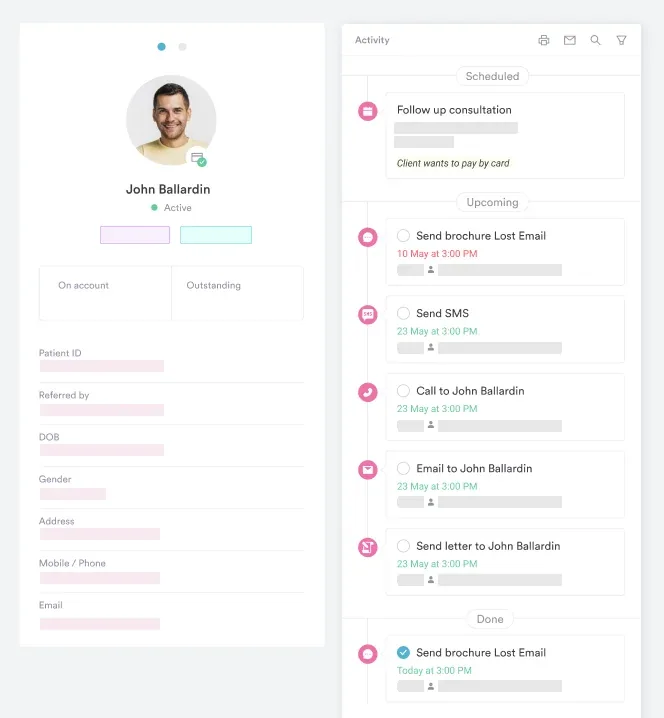
Digital practice management systems transform static charts into actionable clinical tools. When Pabau integrates BP readings into patient records, practitioners can retrieve historical trends instantly, spot patterns (e.g., white-coat hypertension at clinic visits vs. home readings), and make evidence-based treatment decisions. The platform’s vital signs dashboard shows which patients need follow-up based on classification thresholds, reducing manual review work.
Automated workflows triggered by BP readings further improve patient outcomes: a Stage 2 reading automatically generates a care flag, prompts a clinician reminder for medication review, and can trigger a patient education email about lifestyle modification. Multi-location practices benefit from centralised tracking-all clinics see the same patient BP history, eliminating silos and supporting consistent care standards.

Discover how automated blood pressure logging, alerts, and patient record integration reduce documentation burden and improve cardiovascular risk management in your practice.

Any reading above 180/120 mmHg is classified as a hypertensive crisis and requires immediate medical attention. This threshold does not automatically mean the patient is having a stroke or heart attack, but it signals acute cardiovascular stress that warrants emergency evaluation. Primary care practices should establish clear crisis protocols: staff are trained to recognise crisis-level readings, alert the clinician immediately, and initiate emergency referral if the patient has symptoms (chest pain, shortness of breath, severe headache, altered vision).
Documentation of the crisis reading, time, patient symptoms, and action taken (referral to ED, emergency call) becomes a critical medical-legal record. Pabau’s alerts ensure these readings never go unnoticed in a busy clinic environment.
While hypertension dominates clinical attention, hypotension (low blood pressure below 90/60 mmHg) also warrants concern, particularly in older patients or those on antihypertensive medication. Symptoms like dizziness, syncope, or fatigue paired with low readings trigger investigation into medication interactions, dehydration, or underlying cardiac disease. A complete normal blood pressure chart includes hypotension reference ranges so clinicians recognise when a “low” reading becomes clinically significant.
A normal blood pressure chart is a foundational reference tool for any healthcare practice. By standardising how clinicians interpret readings against the ACC/AHA 2017 classification system, the chart reduces documentation errors, accelerates decision-making, and ensures consistent care across your team. Download the template above, print it for your consultation rooms, and pair it with Pabau’s vital signs tracking to automate BP logging and alerts so no hypertensive crisis goes unnoticed.

Prepping for a radial artery procedure? Allen test documentation template captures hand blanching and color return timing before radial artery procedures.
Managing a patient with known allergies? Allergy action plan template documents patient allergens, symptom severity, and the emergency response steps to take.
Assessing a patient’s daily living needs? Assisted living assessment tool covers ADLs, IADLs, cognitive status, and medical needs, with scoring guidance.
Normal blood pressure under ACC/AHA 2017 guidelines is less than 120/80 mmHg for all adults regardless of age. However, average readings rise with age; a 60-year-old’s typical pressure (~135/88 mmHg) is higher than a 30-year-old’s (~122/79 mmHg), yet both may fall within the Stage 1 hypertension category if at or above 130/80 mmHg.
Yes. 120/80 mmHg sits at the boundary of normal and elevated; it is technically normal under ACC/AHA 2017 guidelines (normal =
A hypertensive crisis (>180/120 mmHg) requires immediate medical evaluation. If the patient has symptoms (chest pain, shortness of breath, severe headache), emergency department referral is warranted. If asymptomatic, urgent clinical assessment within hours is appropriate.
Women follow the same ACC/AHA guidelines as men: normal blood pressure is
Annual screening is recommended for most adults with normal BP. Patients with elevated or Stage 1 readings benefit from home monitoring (daily or weekly) to confirm diagnosis and track response to lifestyle changes. Patients on antihypertensive medication should be monitored regularly per clinical protocol.