Vancouver scar scale template & scoring guide
Download your free Vancouver Scar Scale template A ready-to-use scoring form cov...

44
Last Updated: Sep 16, 2026

A tummy tuck revision is a second abdominoplasty that corrects scars, belly button position, muscle repair, or contour left behind by the first surgery.
This free checklist walks you through documenting your prior surgery, photographing each concern, and ranking your revision goals before the consultation.
Patients preparing for a revision consultation use it, and so do practices that want every revision patient to arrive with the same documentation.
Most surgeons wait six to 12 months after the primary tummy tuck, so the scar matures and the tissue stabilizes first.
Practice management software like Pabau captures every revision concern against the client record, so nothing has to be retold at the next visit.
The checklist gives you fields for your original surgery details, a photo log for each documented concern, and space to rank your revision goals. It closes with the questions to raise with a board-certified plastic surgeon at your secondary abdominoplasty consultation.
Download templateWalk into a revision consultation with photographs, dates, and a ranked list of what bothers you. The surgeon can then assess your case in a single visit. This checklist is the document that gets you there, and it follows the order a revision surgeon works through your first tummy tuck.
Anyone booking a second round of abdominal plastic surgery already understands what tummy tuck surgery involves. What tends to be missing is a record of what went wrong. Memory blurs, phone photos get deleted, and the operative notes sit in another practice’s filing system.
Work through the checklist over a week or two before your appointment, then bring it with you. Practices can hand the same document to patients at booking, so the consultation starts with the paperwork already done.
A tummy tuck revision is a second abdominoplasty performed to correct an unsatisfactory result from the first one. Surgeons also call it secondary or revision abdominoplasty.
A primary tummy tuck removes excess abdominal skin and tightens the muscle wall for the first time. A revision works on what that surgery left behind. That might be a widened scar, a misplaced belly button, skin bunching at the hips, or muscle repair that did not hold.
The technique differs from primary surgery in ways that matter to you. Existing scar tissue changes the tissue planes, and the blood supply to the abdominal flap has already been altered once. Board-certified plastic surgeons plan a revision around what the first operation did, which is why your surgical history counts as much as your photographs.
Work through the five steps below in order. Each one produces something the surgeon can look at rather than something you have to remember.
It serves two groups, patients preparing for a revision consultation and the practices running those consultations. Both need the same facts written down before anyone talks about surgery. That is true of any cosmetic consultation, and doubly so when a second operation is on the table.
A good patient management system files each completed scale under the right patient automatically.
A completed checklist changes what the appointment is for. The surgeon spends it assessing your anatomy instead of collecting your history.
Clinical safety. Prior complications, healing delays, and your current health all raise or lower revision risk. Written down in advance, they let the surgeon plan around scar tissue burden and compromised blood supply rather than meet them mid-procedure.
Clearer expectations. Patients who write their concerns down describe them more precisely in the room.
Shorter, sharper appointments. Photography, dates, and goals arriving in advance free the surgeon to concentrate on technique. That usually means fewer follow-up calls chasing missing detail afterward. It also helps with converting consultations into bookings, because the patient leaves with a plan instead of a list of unknowns.
Records that hold up later. Documenting pre-consultation concerns alongside the cosmetic surgery consent form supports HIPAA compliance and leaves the practice a dated audit trail.
Ask the original facility for your operative notes and any complication summaries before the consultation, even if you’ve moved cities since. The report names the technique used, whether the rectus muscle was plicated, and how the umbilicus was handled. A revision surgeon reading it can tell you what is fixable in one operation and what is not.
Six concerns account for most revision requests. Document each one that applies to you, with a photograph and a date attached.
Recovery detail belongs here too. A seroma after tummy tuck surgery, a wound that opened, or a long stretch in a compression binder all matter. Each one tells the surgeon how your tissue behaved the first time around.
Scar problems are among the most common reasons patients ask about revision. Note whether your scar has widened beyond a few millimeters, turned raised and rope-like, or settled too high to hide under underwear. Photograph it with a ruler alongside for scale.
A widened or hypertrophic scar is treated by excising and reclosing it. Surgeons call that a tummy tuck scar revision, or abdominoplasty scar revision on the operative note. Record any treatment you already tried.
Ask about position as well as width. Nobody performs true tummy tuck scar removal, because closing an incision always leaves a line. The goal is a thinner scar sitting where clothing covers it.
A belly button revision, or umbilicoplasty, corrects position and shape after the first operation. Look at your tummy tuck belly button in a mirror and note precisely what is off. The usual complaints are a navel sitting too high, drifting off-center, or losing its natural hooded shape.
Write down any healing trouble you had with the belly button after tummy tuck surgery, such as infection or partial tissue loss. Tissue that healed badly the first time limits what a second operation can reshape, so the surgeon needs to know early.
Dog ears are pockets of skin that bunch at the outer ends of the scar, over the hips. They appear when the incision stops before the loose skin does. Note whether yours sit on one side or both, and how they look in fitted clothing.
Correction usually needs the incision extended sideways, sometimes with liposuction to blend the flank. Photograph the area from the side and from behind, not only from the front.
Muscle repair can be incomplete from the start, or it can loosen later under abdominal strain. If your abdomen still bulges when you sit up, document that as a possible muscle problem rather than a skin problem.
Check what your first operation included. A diastasis recti tummy tuck stitches the separated rectus muscles back together, and a skin-only tummy tuck doesn’t. If nobody plicated the muscle the first time, your revision is a first repair rather than a redo.
Ask which suture technique was used as well. Diastasis recti can be repaired in more than one way, and the method affects how durable the result is.
Some patients finish healing and still carry loose skin, or a pocket of fat the first surgery never addressed. Pinch the area, photograph it, and note where on the abdomen it sits. Do this in the same two poses each time, standing and seated.
The distinction decides the plan. Loose skin needs excision, stubborn fat responds to liposuction, and plenty of revisions use both. Note any weight change since the first operation as well, because a swing of 20 pounds can undo a result that once looked correct.
Contour problems are the ones patients describe as uneven rather than loose. One side sits flatter than the other, a ridge runs along the flank, or the abdomen dips where liposuction went deep. Surgeons treat these separately from scar and muscle concerns.
Photograph both sides in the same pose and the same light, then mark the spots that bother you. Asymmetry is easy to feel and hard to describe. A marked photograph does more than a paragraph of explanation.
It saves the surgeon guessing at what changed, and when.
Ask one specific question per concern you documented, then six general ones about approach, timing, recovery, scars, risk, and results. The table below pairs each documented concern with the question that gets a useful answer. It also names the evidence to bring, so the surgeon can answer it in the room.
| Documented concern | Question to ask your surgeon | Evidence to bring |
|---|---|---|
| Widened or raised scar | Will you excise and reclose the scar, or reposition it lower? | Photos with a ruler for scale, plus the month the scar stopped changing |
| Belly button position or shape | Can the umbilicus be repositioned, or does it need rebuilding? | Close-up photos taken standing upright, plus notes on any healing problems |
| Dog ears at the hips | How far will the incision extend, and will liposuction be part of it? | Side and rear photos, in fitted clothing and without |
| Incomplete muscle repair | Was my rectus muscle plicated the first time, and does it need redoing? | The operative report if you have it, plus photos relaxed and flexed |
| Excess skin or residual fat | Is this a skin excision, liposuction, or both in one operation? | Pinch-test photos and your weight at the time of the first surgery |
| Contour irregularity or asymmetry | Which side will you adjust, and how will you match the two halves? | Both sides photographed in one pose, under the same light |
Then cover the ground that applies to every revision, whatever your particular concern:
Write the answers straight onto the checklist during the appointment. A revision decision often takes two consultations, and notes from the first one are what keep the second one short.
Most revision consultations open with a patient recounting an operation somebody else performed. The intake form is on paper, the photos are on a phone, and the operative report is a PDF buried in an email thread. None of the three reaches the client record. A medical spa expanding into revision consultations needs the same paperwork discipline built into its business plan from day one.
Pabau is an all-in-one practice management system and plastic surgery EMR, short for electronic medical record. It puts that paperwork in one place before the patient arrives. Send this checklist out as a digital cosmetic surgery intake form at booking, and the answers land in the client record.
Consent forms travel the same route, signed on a tablet in the waiting room. Consultation reminders can carry the form with them, so the documentation is finished before the appointment starts. If a patient books, forgets, and turns up empty-handed, that reminder is what saves the slot.

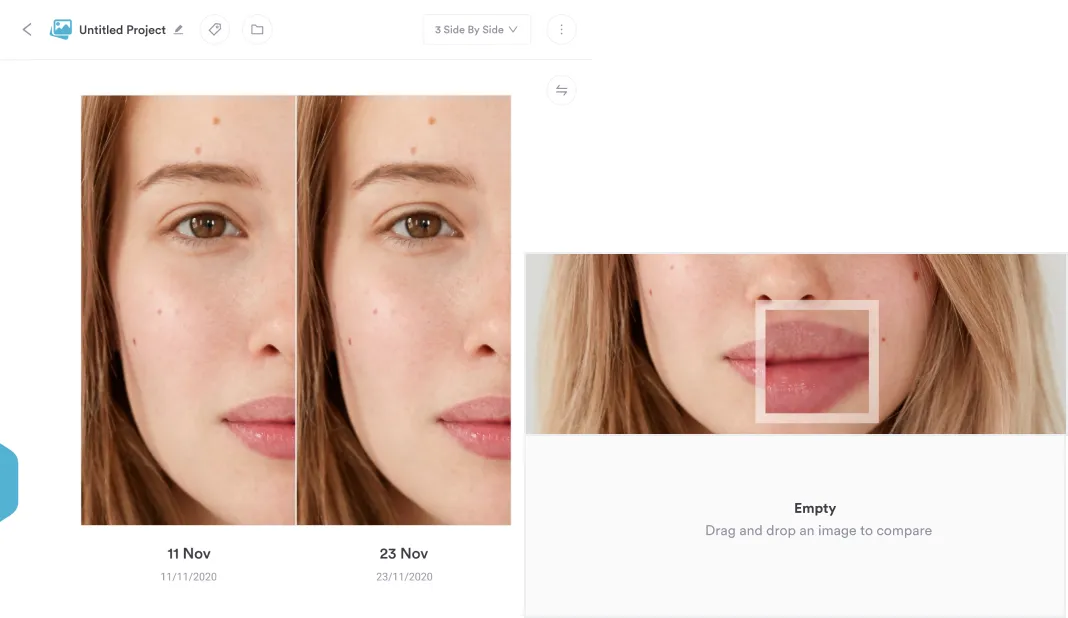
Photos follow the same principle. Before-and-after images attach to the client record instead of a camera roll, which matters when the comparison spans two operations and two surgeons. Forms, records, photos, and patient messaging come with every subscription, so none of this sits behind a higher tier.

Pabau’s digital intake forms, before-and-after photos, and client records keep every revision detail in one place. Your surgeons walk into the consultation with the history already documented.

The checklist is worth exactly what you put into it before the appointment. Filled in the waiting room, it’s a form. Filled in over two weeks, with photographs, dates, and the operative report chased down, it changes what a surgeon can tell you on day one.
The trade-off worth remembering is timing. Most concerns look worse at six months than they will at twelve. A scar that’s still red is a scar that’s still changing. Document now, operate later, and you spend your revision on the problems that turned out to be permanent.
For practices, the same documentation is what stops a revision consultation repeating itself. Book a demo to see how Pabau keeps revision histories, photos, and consent forms in one client record.

Need a framework for surgical consultation management? Performing consultations that convert shows practices how to structure a consultation that sets realistic expectations.
Also performing blepharoptosis repair? Ptosis surgery documentation template covers pre-operative assessment, levator function measurement, surgical planning, and post-operative care instructions.
Comparing EMR software for your practice? Best plastic surgery EMR software ranks platforms for plastic surgery practices on records, photos, consent, and quotes.
Offering non-surgical body contouring too? Venus Freeze templates cover the consultation and treatment-course paperwork for radiofrequency skin tightening.
Using AlloDerm grafts in surgery? AlloDerm consent form template covers contraindications, informed consent for AlloDerm grafts, tissue bank sourcing, and post-operative care.
Revision is usually appropriate six to 12 months after your primary tummy tuck, once the scar has matured and healing is complete. The signals to watch for are a wide or raised scar, a misplaced belly button, or dog ears at the hips. Incomplete muscle repair and skin excess that never improved count too.
The clinical name is revision abdominoplasty, also written as secondary abdominoplasty. The tummy tuck medical term on its own is abdominoplasty, so a revision simply adds the qualifier. You will also see umbilicoplasty listed separately when only the belly button is being reshaped.
The total cost of tummy tuck revision depends on scope. A limited scar revision is commonly quoted between $4,000 and $8,000. A full secondary abdominoplasty usually runs from $8,000 to $15,000 or more, with surgeon experience and location moving the figure. Revision is almost always classified as cosmetic, so insurance rarely contributes.
Most patients are back to light activity in two to three weeks. Strenuous exercise and heavy lifting stay off the table for six to eight weeks. Tummy tuck recovery time runs longer after a revision than after the first operation, because existing scar tissue slows healing. Expect three to six months before the new scar settles.
No, the two operations have different aims. The panniculectomy vs tummy tuck distinction comes down to intent. A panniculectomy removes the overhanging apron of skin below the navel and does nothing else. A tummy tuck also tightens the muscle wall and repositions the belly button, and a revision corrects that cosmetic work.
Revision carries higher complication risk than primary surgery, because of existing scar tissue and an altered blood supply. Reported risks include infection, seroma, prolonged swelling, asymmetry, an unfavorable scar, and rarely tissue necrosis. A surgeon experienced in revision abdominoplasty reduces those risks through careful planning.
Yes. Umbilicoplasty is one of the most common parts of a revision. If your navel sits too high, looks asymmetric, or lost its natural shape after the first surgery, a revision surgeon can reposition and refine it. How much can be changed depends on how well the tissue healed the first time.
Dog ears are pockets of excess skin at the outer ends of the tummy tuck scar, over the hips. They form when the incision stops before the loose skin does. Correction usually extends the incision sideways, sometimes with liposuction to blend the flank into the new contour.
Almost never, because revision is classified as cosmetic surgery. An insurance review is occasionally worth requesting when the revision addresses a functional problem, such as a complication that causes pain. Coverage remains rare, so confirm the position with your plan and the surgeon’s office before you budget.
Download the checklist above and work through it over a week or two. It walks you through your prior surgery timeline, a photograph of each concern, and a ranked list of goals. Bring your original operative report if you can get hold of it, along with the questions you want answered.