Facial skin treatment consent form template: Microneedling and phi-ion
A facial skin treatment consent form is the signed proof that a patient was scre...

2
Last Updated: Oct 21, 2026

Silikon 1000 is a permanent, non-reversible liquid silicone (polydimethylsiloxane) FDA-approved for ophthalmic use but used off-label for facial volume via microdroplet injections.
Sessions are spaced 4-6 weeks apart to allow tissue encapsulation, and permanence requires explicit informed consent covering irreversibility and long-term risks like granuloma formation.
Aftercare covers swelling management, activity restrictions, and multi-session scheduling, and practices must document each phase with structured consent and treatment records.
Practice management software like Pabau simplifies multi-session protocols, consent capture, and post-treatment documentation for practices offering Silikon 1000.
A ready-to-use consent and aftercare form covering patient details, permanence disclosure, and risk acknowledgment for granuloma, migration, and inflammatory response. It includes informed consent signature blocks, post-treatment restrictions like avoiding heavy lifting and massage, swelling timelines, and scheduled follow-up intervals.
Download templateSilikon 1000 is a permanent, non-reversible liquid silicone filler used off-label by trained physicians for facial volume restoration via the microdroplet technique. Unlike dissolvable fillers such as hyaluronic acid and calcium hydroxylapatite, Silikon 1000 cannot be reversed. That distinction must be embedded in informed consent and documented throughout the patient journey.
Practices offering Silikon 1000 face unique documentation challenges:
This guide covers the clinical essentials, patient selection criteria, and the downloadable aftercare template your team needs to manage Silikon 1000 treatments safely and compliantly.
Silikon 1000 is a purified liquid silicone (polydimethylsiloxane) with a viscosity of exactly 1000 centistokes. The “1000” in the name refers to this specific measurement. The FDA has approved Silikon 1000 exclusively for ophthalmic injection (retinal detachment surgery). All cosmetic and soft-tissue use is strictly off-label.
The defining characteristic of Silikon 1000 is permanence. Unlike temporary fillers that the body gradually metabolizes, Silikon 1000 does not dissolve. Once injected, it remains in the tissue indefinitely. This distinguishes it both clinically and legally, and it must feature prominently in patient consent.
Patients who want lip definition without a permanent product sometimes choose a lip thread lift, where dissolvable threads fade after 12 to 18 months. That option still needs its own consent and aftercare paperwork.
Off-label use of Silikon 1000 for cosmetic purposes carries regulatory complexity. State medical boards permit appropriately licensed physicians to administer off-label medications and devices. Practitioners must still obtain explicit informed consent that acknowledges the off-label status, permanence, and documented risks. A medical spa compliance checklist can help standardize how a practice keeps records of risk disclosure and patient acknowledgment.
The downloadable Silikon 1000 Aftercare Instructions form is structured around five operational steps that mirror the microdroplet injection protocol. Your clinical and administrative teams should follow this sequence for each patient.
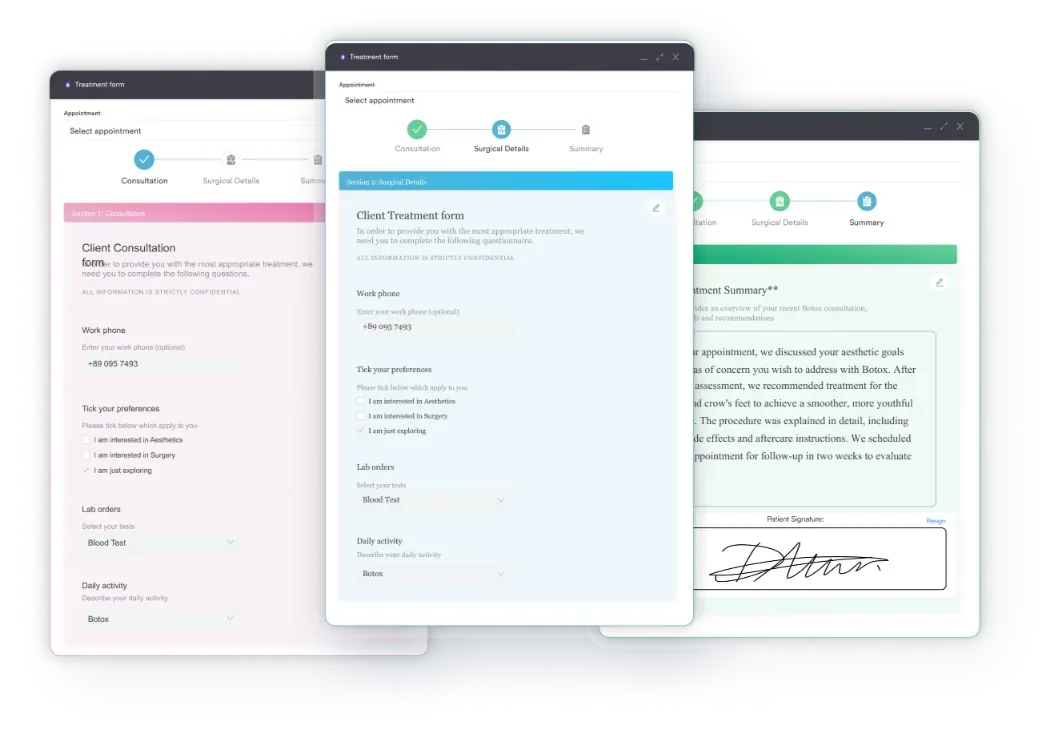
Use digital consent forms to capture signatures electronically, timestamp the consent, and automatically file a copy in the patient’s medical record. This reduces paper handling and creates an auditable compliance trail.
This template is designed for any med spa, dermatology practice, or cosmetic surgery center offering off-label Silikon 1000 injections. The specific audiences include:
Legal and compliance protection: Off-label use requires documented informed consent. The template explicitly discloses permanence, off-label status, and known risks (granuloma formation, migration, inflammatory response). Written acknowledgment protects the practice in the event of adverse outcomes or patient dissatisfaction.
Patient safety through structured aftercare: Silikon 1000 requires staged injections spaced 4-6 weeks apart. Unclear aftercare instructions increase risk of infection, excessive swelling, or poor outcomes. A structured template ensures every patient understands activity restrictions, swelling timelines, and when to contact the practice for complications.
Workflow efficiency and appointment consistency: Multi-session treatments benefit from automated scheduling and documentation. The template’s section on follow-up intervals (4-6 weeks between sessions) integrates with practice scheduling systems, reducing no-shows and ensuring patients return for staged augmentation.
Medico-legal documentation: Detailed records of risk disclosure, patient acknowledgment, and post-treatment instructions create a strong medico-legal foundation.
Standardization across teams: A consistent template ensures all staff members, including physicians, nurses, and aestheticians, communicate identical aftercare guidance. This reduces confusion and improves patient trust in the practice’s expertise.
Schedule all Silikon 1000 follow-up appointments at the first consultation. Patients who commit to the 4-6 week timeline upfront are statistically more likely to complete the full series. They also tend to achieve better cumulative results than those who delay between sessions.
Silikon 1000’s permanence is both its strength and its greatest liability. Unlike temporary fillers that fade within months, Silikon 1000 results are meant to last a lifetime, and so are any complications. Practice teams must educate patients about delayed risks and maintain vigilant follow-up.
Granuloma formation: A documented long-term risk, granuloma (inflammatory nodules around silicone particles) can develop months or even years after injection. Symptoms include palpable lumps, persistent redness, or pain. Patients should be educated on this risk upfront and instructed to report any unusual sensations during follow-ups.
Migration: Migration is rare with the microdroplet technique, thanks to precise placement in the deep dermis. It can still happen if silicone is injected too superficially or if the patient engages in aggressive facial massage. The aftercare template explicitly prohibits massage to minimize this risk.
Informed consent revisited: Some practitioners schedule annual follow-up appointments specifically to reinforce permanence and discuss any long-term changes.
Silikon 1000 success depends on realistic patient expectations. A detailed aftercare template.
Most practices managing Silikon 1000 still rely on paper consent forms and manual appointment tracking across a treatment series that spans several months. Staff copy risk disclosures by hand, chase missing signatures before each session, and cross-reference paper charts to confirm which stage a patient has reached.
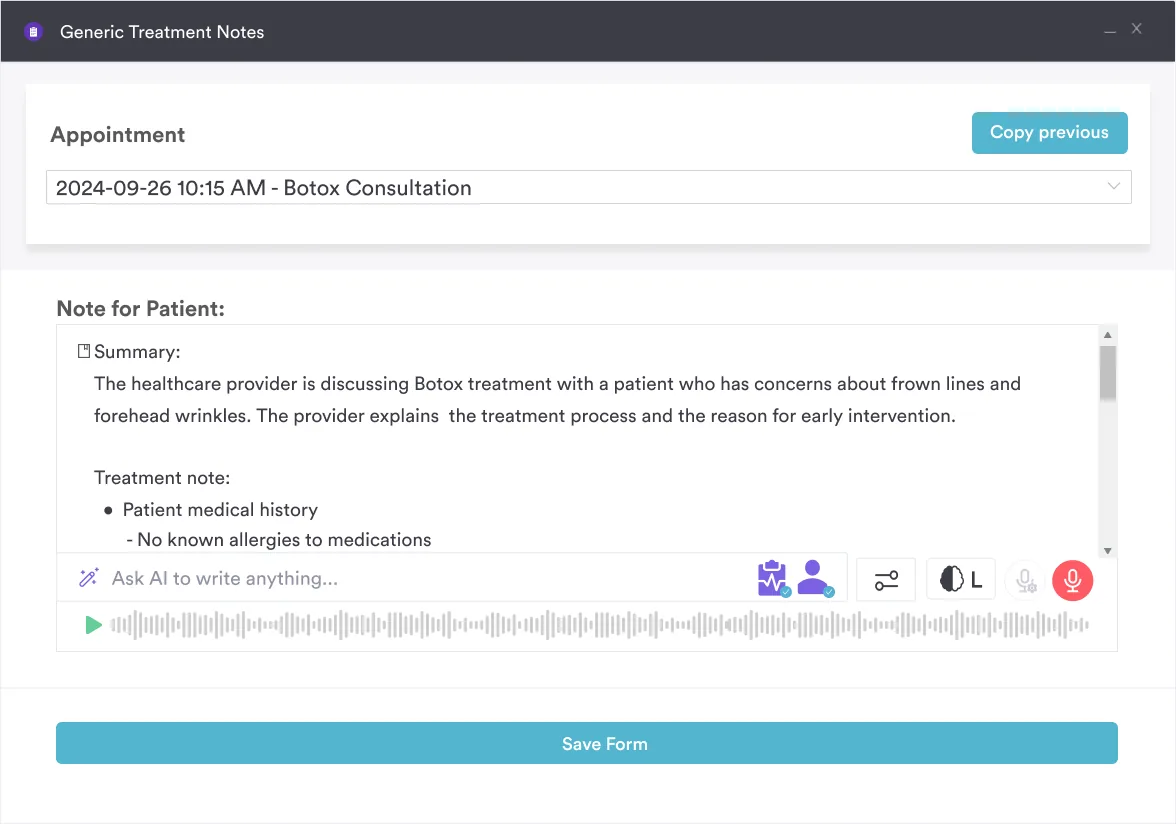
Pabau replaces that process with digital consent forms that timestamp every signature and file the completed form straight into the patient record. Appointment scheduling sends automatic reminders ahead of each 4-6 week session. Pabau Scribe structures the treatment note from the consultation, so risk discussions get documented without extra typing.
The result is a dated record of every disclosure and session that a practice can produce quickly if a patient raises a concern years later. Read the case study on Intrigue Cosmetic Clinic to see how another aesthetic practice put digital consent and scheduling to work.

See how private GPs reduce admin, improve clinical safety, and increase revenue with Pabau.

Silikon 1000’s permanence demands meticulous informed consent, staged session planning, and detailed aftercare documentation. This free downloadable template provides the clinical and legal foundation your team needs to safely offer this treatment. Pabau’s digital forms and multi-session appointment scheduling automate the administrative complexity around it. Book a demo to see how your practice can streamline Silikon 1000 workflows and reduce compliance risk.

Need another aftercare form to adapt? Dermal filler aftercare form uses a similar consent-and-signature structure that transfers well to other injectable treatments.
Managing consent for another permanent treatment? SAFELipo aftercare template covers the same staged consent and recovery documentation for a different permanent procedure.
Need a thorough form for advanced treatments? Advanced treatment consultation form covers medical history, contraindication screening, and informed consent in one document.
Need to log injection details precisely? Allergan injection site record logs the product, batch, dose, and injection sites for every Botox or filler treatment.
Silikon 1000 is a permanent, non-dissolvable liquid silicone (polydimethylsiloxane) injected via the microdroplet technique for facial volume restoration. Unlike hyaluronic acid or calcium hydroxylapatite fillers, which the body gradually absorbs over 6-12 months, Silikon 1000 remains permanently in the tissue. It cannot be reversed with an enzyme injection (as hyaluronic acid can with hyaluronidase).
No. The FDA has approved Silikon 1000 exclusively for ophthalmic injection (retinal detachment surgery). All cosmetic soft-tissue use is off-label. Practitioners must obtain explicit written informed consent acknowledging the off-label status, permanence, and documented risks before treatment.
Documented risks include granuloma formation and product migration. Granuloma is an inflammatory nodule that can develop months or years after injection. Migration is rare with the microdroplet technique but possible if injected too superficially, and inflammatory reactions and permanent tissue alteration are also documented risks. Patients cannot reverse the treatment. All complications are permanent or require surgical removal.
Silikon 1000 is administered in multiple sessions spaced 4-6 weeks apart. The exact number depends on the desired volume and anatomical area, but most patients require 3-5 sessions to achieve their aesthetic goals. Each session allows surrounding tissue to encapsulate the silicone before additional volume is added.
For the first 48 hours, patients should avoid massage of the treated area, heavy lifting, strenuous exercise, and facial treatments. For 4-6 weeks (until the next session), avoid vigorous facial massage and high-impact activity. Gentle walking and desk work are permitted. Broad-spectrum SPF 30+ sunscreen is recommended to protect the area from UV exposure.
No. Silikon 1000 cannot be dissolved with an enzyme or non-surgically reversed. Removal requires surgical excision, which carries its own risks and may not completely eliminate all silicone particles. This irreversibility underscores the critical importance of informed consent and realistic pre-treatment counseling.