Newborn assessment
A newborn assessment is a structured head-to-toe check of a baby’s health,...

4
Last Updated: Oct 9, 2026
A post c-section exercise plan is a phased, week-by-week framework for returning to activity after a cesarean. It opens with breathing and pelvic floor work in week one, and builds to running and resistance training from week twelve.
Standard postpartum advice does not fit after abdominal surgery. The surgeon cuts through skin, fat, fascia, and abdominal muscle to deliver the baby. Healing runs for weeks, and the core that stabilizes every movement is left weak.
A structured plan protects the healing wound, lowers the risk of prolapse and incontinence, and rebuilds functional strength. Below are the four phases, the exercises that are safe in each one, the movements to avoid, and the warning signs that mean stop.
A phased recovery plan to hand to a patient, covering weeks one through twelve and beyond. Each phase lists the safe exercises, the movements to avoid, the weekly milestones, and the warning signs that mean stop.
Download template
A phased plan runs from breathing and pelvic floor work in weeks 1 to 2 through to high-impact exercise from week 12.
The first six weeks belong to wound healing. Gentle movement and pelvic floor contractions are safe, but crunches, running, and heavy lifting are not.
The c-section belly pouch comes from scar tissue, skin laxity, and diastasis recti. Core reconnection and scar massage after week 6 improve function, though some pouch usually remains.
Practice management software like Pabau sends the phased plan to patients, tracks weekly milestones, and flags reported warning signs for the clinical team.
A cesarean divides several layers of tissue, and each layer heals on its own timeline. That is what the phases below follow. A planned or emergency cesarean cuts through skin, subcutaneous fat, fascia, and the rectus abdominis muscle. The surgeon then opens the uterus, delivers the baby, and closes each layer with sutures.
Five of those changes decide what exercise is safe, and when:
The four phases follow that healing order. The chart below puts the whole timeline in one frame, including the clearance each phase waits for.
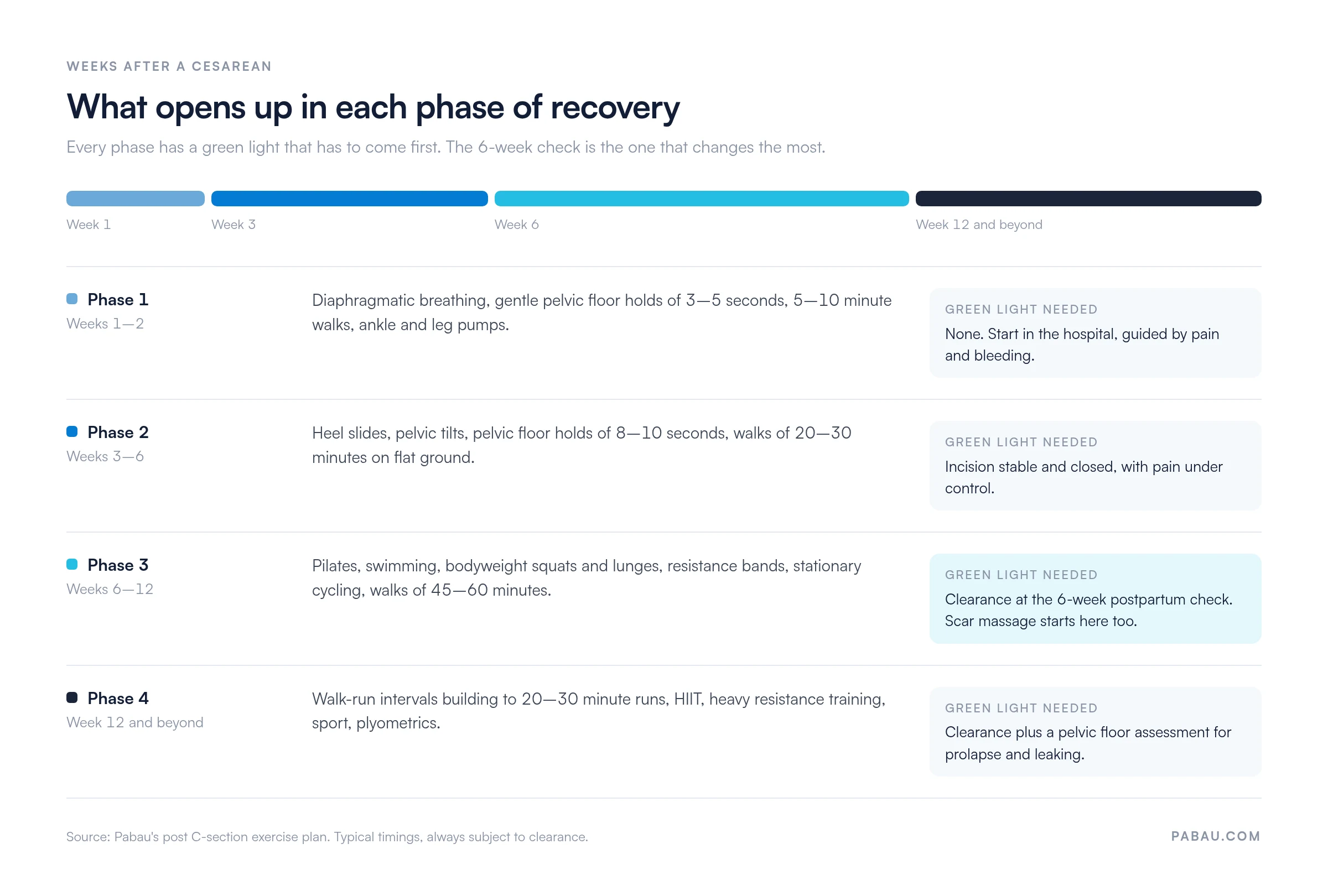
The goal in the first two weeks is wound stability, pain control, and gentle reconnection with the core and pelvic floor. Exercise stays light and deliberate.
Safe exercises, weeks 1-2:
Avoid entirely: Sit-ups, crunches, heavy lifting, jumping, running, sex, tampons, and any movement that pulls on the wound.
From week three the wound is stable enough for gentle core activation. The focus moves to the deep transverse abdominis and, once cleared, early scar tissue work.
Safe exercises, weeks 3-6:
Avoid: Full sit-ups, crunches, planks, running, HIIT, heavy lifting, and any exercise that causes pain or bulging at the incision.
By week six most women are cleared for low-impact exercise at the postpartum check, in line with ACOG’s postpartum exercise guidance. The aim now is cardiovascular fitness, functional strength, and steady pelvic floor conditioning.
Safe exercises, weeks 6-12:
Before running or HIIT, a formal pelvic floor assessment checks prolapse risk and readiness. Practices that offer pelvic health services usually book that assessment at the 12-week mark.
Patients who delivered vaginally progress on a shorter timeline. Our post-pregnancy workout plan sets out that version week by week.
After 12 weeks the incision is fully closed and core strength is close to pre-pregnancy levels. High-impact exercise becomes reasonable once the pelvic floor is ready.
Safe from week 12, once cleared by a provider and a pelvic floor therapist:
That assessment is easier to repeat when it has a baseline. A pelvic floor distress inventory scores symptoms before and after the return to impact.
Warning signs to stop and get help: Heavy vaginal bleeding, wound pain or reopening, leaking with exercise, pelvic heaviness, dizziness, or severe fatigue.
Many women develop a c-section belly pouch, a bulge below the incision that stays put despite weight loss and exercise. It forms because scar tissue contracts, skin loses elasticity, and the rectus muscles stay separated.
Three things move the needle here:
Function improves steadily with that work. Appearance improves less predictably, because skin laxity and scar adhesions are permanent, so it is worth setting that expectation early.
Some movements are off the table in the weeks after a cesarean, because they strain the healing incision or raise prolapse risk.
Stop exercising and contact your provider, midwife, or pelvic floor therapist if any of the following happens:
These are complications rather than minor discomforts, and they need a clinical assessment. Printing them into the aftercare plan gives the patient a clear line for when to call.
Exercise is one strand of recovery. A wider postpartum care plan covers feeding, mood, and the follow-up appointments that run alongside these weeks.
Physical therapy practices, women’s health services, and primary care teams all hand out some version of this plan. Most hand it out once, on paper, at the postpartum check. The patient then manages twelve weeks of progression on her own.
Practice management software like Pabau changes where the plan lives. The phased plan goes out through the patient portal, so it sits on the patient’s phone instead of in a drawer. Automated messages carry each week’s cue, such as adding heel slides at week three or booking clearance at week six.
Staff can see who opened the plan and who has gone quiet. Reported warning signs land in the patient record rather than a voicemail, so the team can act the same day. Purpose-built women’s health practice software keeps the plan, the messages, and the clinical notes against one record.

Pabau sends the phased exercise plan through the patient portal and carries each week’s milestone by automated message. Reported warning signs land against the patient file for the clinical team.

The calendar is a guide, not a rule. Bleeding, wound pain, and pelvic floor symptoms override the week number every time, and a patient who pushes through them pays for it later.
The trade-off worth remembering is that the slow phases buy the fast ones. Weeks of breathing drills and pelvic floor holds look like very little at the time. They are what makes running at week 12 safe.
For a practice, the plan itself takes an afternoon to write. Keeping a patient with it for twelve weeks is the harder job. Book a demo to see how Pabau delivers the plan, tracks each milestone, and flags the patients who report a warning sign.

Need the wider recovery picture? Postpartum checklist covers the checks, appointments, and symptoms to track across the same twelve weeks.
Planning a future birth after a cesarean? VBAC birth plan sets out the questions and preferences to document well before labor.
Building a pelvic health service? How to start a pelvic health practice walks through scope, staffing, and the first year of demand.
Gentle exercise starts straight away. Breathing exercises, pelvic floor contractions, and walks of 5-10 minutes are safe from day one. Low-impact exercise such as pilates, swimming, and longer walks starts after clearance at the 6-week check. High-impact exercise waits until week 12, after a pelvic floor assessment.
Sit-ups and crunches load the rectus abdominis, which was cut or separated during surgery. They cause bulging at the incision and raise pressure on the healing wound. Heel slides, pelvic tilts, and breathing drills rebuild the same muscles more safely.
Most guidance puts running at 12 weeks or later. Start with walk-run intervals, and only after clearance from a provider plus a pelvic floor assessment. That assessment checks prolapse risk and leaking, which running can make worse if the pelvic floor is not ready.
Progressive core work improves function and can soften how the pouch looks. Scar tissue contraction and skin laxity are permanent, so some pouch usually remains. Transverse abdominis activation and scar massage give the best results available without surgery.
Stop and rest. Light spotting after activity is common. Heavy bleeding that soaks more than one pad an hour needs an urgent review, and so does pain at the incision. Never push through either one.