Cervix length during pregnancy chart
A cervix length during pregnancy chart records cervical length in millimeters ag...

7
Last Updated: Oct 14, 2026

The downloadable template is a blank goals and actions care plan form. The exercise detail comes from this guide and from your own assessment.
A workout plan for post pregnancy starts with pelvic floor contractions and gentle walking. Strength work comes later, and the recovery phase is never skipped.
Vaginal birth and C-section recoveries follow different timelines. Most C-section patients should avoid core exercises for at least 8 to 12 weeks.
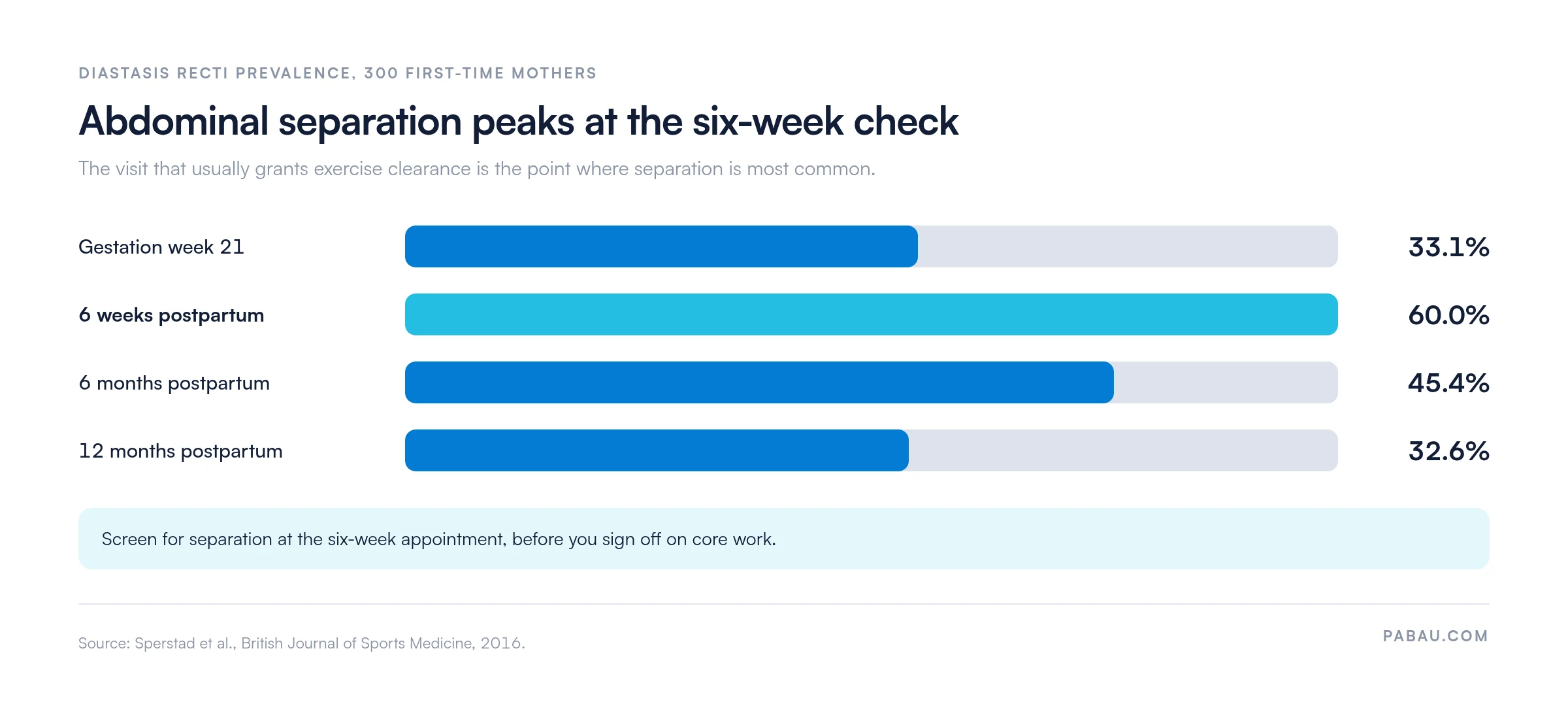
Abdominal separation is most common at six weeks postpartum, the same visit that usually grants clearance, so screen before you advance anyone.
Pabau’s digital forms and post-care tools help practices share personalized plans and track recovery at each postnatal visit.
A printable two-page care plan form for agreeing and reviewing a postnatal exercise plan with each patient. It has patient details, a background box, five goals, seven actions, a support checklist, a warning signs box, and five review records.
Download templateMost new mothers get little more than a “you can exercise again now” at their six-week check. That single sentence, with no phased plan behind it, is one of the most common reasons postnatal fitness stalls. This guide gives practitioners a structured, evidence-informed workout plan for post pregnancy. It runs from the first days after birth through 12 weeks and beyond.
The sections below cover the exercises, the timing, the red flags, and the clinical context practitioners need. Diastasis recti, pelvic floor rehabilitation, C-section modifications, and return to running each get their own section. The downloadable form is a blank goals and actions care plan. The clinical detail comes from this page and from your assessment of the patient.
A workout plan for post pregnancy is a phased, medically guided return-to-exercise program for women recovering from vaginal birth or C-section. It is built around hormonal shifts, wound healing, pelvic floor function, and abdominal wall integrity. All four are compromised immediately after birth, which is what separates it from a generic fitness plan.
The plan runs across three phases. Those are gentle recovery in weeks 0 to 6, strength rebuilding in weeks 6 to 12, and higher-impact work from 12 weeks. Clearance from a physician or midwife is required before the patient moves past the first phase. Practices running OBGYN practice software can attach the form to the postnatal appointment itself.
Women with uncomplicated vaginal births can begin gentle movement within the first few days postpartum, according to the American College of Obstetricians and Gynecologists. The critical word is gentle. That means pelvic floor contractions, diaphragmatic breathing, and short walks only.
These are general guidelines. Individual recovery varies with complications, birth trauma, anemia, and mental health. Assess each patient on her own history before you confirm any phase transition.
A phased approach is the clinical standard. Skipping phases is the most common cause of setback and injury in the postnatal period. The temptation is strongest for women who want their pre-pregnancy fitness back quickly.
This phase begins immediately after birth. The goal is not fitness. It is reconnection: helping the body restore basic pelvic floor function, manage post-birth swelling, and rebuild diaphragmatic breathing patterns.
NHS guidance puts it the same way. After a straightforward birth, gentle exercise can start as soon as the woman feels up to it, including walking, gentle stretches, and pelvic floor exercises. Anything high-impact waits for advice at the six-week check.
After clearance at the six-week check, women can progress to low-impact strength exercises. Core stability and pelvic floor function must be assessed before you add any load. Clearance is not a green light for crunches or heavy lifting.
Running, HIIT, and jumping place significant load on the pelvic floor and abdominal wall. The 2019 UK and Ireland guidelines from Goom, Donnelly and Brockwell recommend a 12-week minimum before a return to running. They also set entry criteria. The woman should walk briskly for 30 minutes, hold a single-leg balance for 10 seconds, and manage 20 single-leg calf raises. All three have to be symptom-free.
Symptoms that say the body is not ready include heaviness in the pelvis, leaking urine, or pelvic pain during or after activity. These need referral to a pelvic floor physical therapist before progression continues.
Pelvic floor rehabilitation is the foundation of the whole program. Without it, higher-intensity exercise can worsen the damage pregnancy and birth caused rather than repair it. ACOG and the NHS both advise starting pelvic floor work soon after delivery. Practices with a dedicated women’s health caseload usually track it in pelvic health software, so the plan and its review dates sit in one record.
Where symptoms are already present, a validated questionnaire gives you a baseline to review against. The pelvic floor distress inventory scores urinary, bowel, and prolapse symptoms on one form, so you can show the patient what improved.
One important caveat: Kegel exercises are not universally appropriate. Women with a hypertonic, or overactive, pelvic floor may get more pain from repeated contractions. If any exercise causes discomfort, worsens leaking, or increases pelvic pressure, the patient should stop and be assessed by a specialist.
Diastasis recti is a separation of the two bellies of the rectus abdominis, and it is common enough to expect. A prospective cohort study measured prevalence at four points in 300 first-time mothers. It found 33.1% at gestation week 21, 60.0% at six weeks postpartum, 45.4% at six months, and 32.6% at 12 months.
The shape of that curve is what matters for scheduling. Separation is most common at six weeks postpartum, which is the same visit where most women are cleared to exercise. Screening at that appointment is what stops a clearance letter from becoming a setback.
The linea alba is the connective tissue running between the two muscle bellies. It stretches to accommodate the growing uterus and does not always return to full tension after birth. Exercises that raise intra-abdominal pressure before that tension comes back can widen the separation instead of closing it.
A women’s health physical therapist can run a diastasis recti check and confirm which exercises are safe for this patient. Recommend that assessment before any core-focused strength work starts.
Patients need to know which symptoms mean they have gone past their current recovery capacity. These are not minor discomforts to push through. They are the body’s signal to stop, rest, and seek medical review.
Copy these signals into the warning signs box on the form and name who the patient should call. She then has written reference material at home instead of relying on recall.
The template is a printable two-page care plan form. It does not contain a pre-written exercise program, phase charts, or diastasis recti guidance. Those come from the sections above and from your own assessment. What the form gives you is a structured place to agree the plan and review it over time.
Because the fields are generic, one form works across a whole postnatal caseload. You write the clinical detail into the goals and actions rows. That means the phase, the exercises, the frequency, and the criteria for moving on.
Fill the form in with the patient rather than handing it over blank. Here is how each part of it maps onto the phases above.
Some patients need broader follow-up as well as exercise. Pair this form with the postpartum care plan and put both on the same review date.
Document each phase transition in the patient record. A clear audit trail of when you advanced a patient’s exercise plan, and the clinical reasoning behind it, matters if symptoms show up later. Use structured notes rather than free text, so records stay comparable across your team.
Handing over an exercise plan is not the end of the job. Recovery runs over months, and the practice sees the patient only a handful of times in that window. Most teams manage it with a printed form, a paper diary, and a phone call when something goes wrong.
Practice management software like Pabau closes that loop. Digital intake forms collect the birth type, symptoms, and clearance status before the appointment, so the consultation starts with the assessment rather than the paperwork. The patient portal then puts her plan, her exercises, and her red flag list on her phone.
Automated pre- and post-care messages go out on the schedule you set, so the week-six and week-twelve check-ins do not depend on anyone remembering. Pabau Scribe, our AI scribe, writes the consultation note while you talk. Phase transitions stay documented without adding admin time to the visit.
Practices that cover fertility, obstetrics, and postnatal care keep one history per patient rather than three. That span is what fertility clinic software is built for, and postnatal recovery is the last stretch of it.
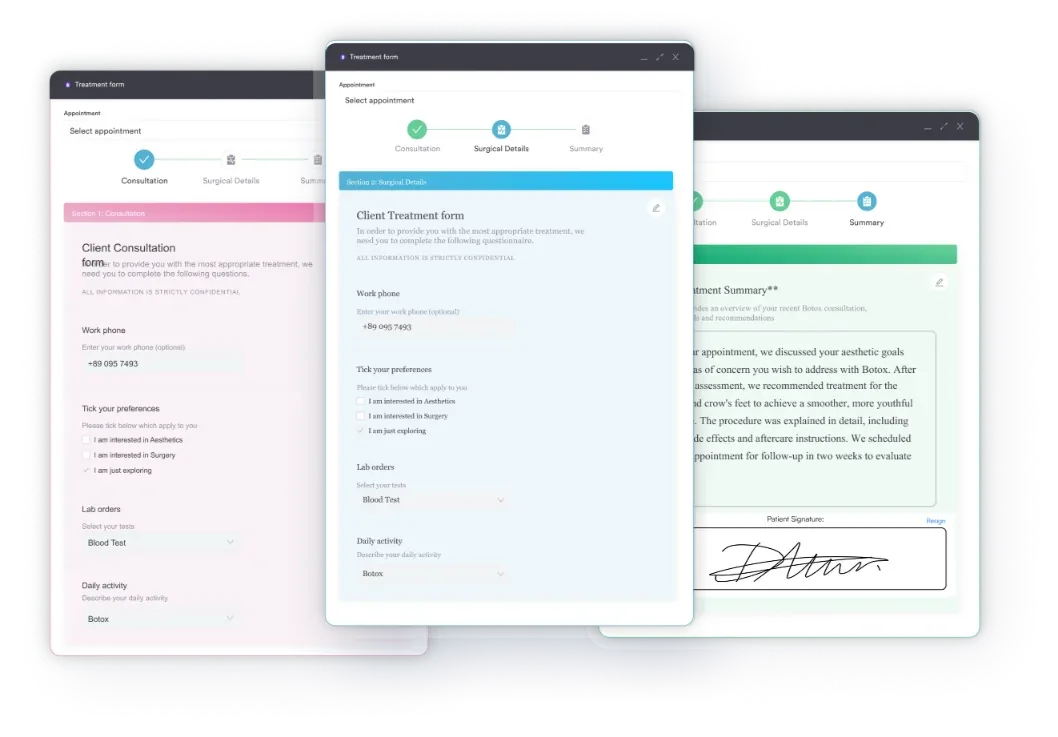

Digital forms, a patient portal, and automated post-care messaging give women’s health practices a way to deliver structured, trackable postnatal care. Every subscription includes all of it.

A clearance letter is not a plan. What changes the outcome is a phased program the patient can actually follow, written down, with review dates attached. Someone then has to check the red flags at each of those reviews.
Treat the six-week check as an assessment rather than a green light, and screen for separation before you sign anyone off for core work. That one habit is the difference between a plan that holds and a patient who comes back with symptoms.
Download the free form above and use it at the next postnatal appointment. Book a demo to see how Pabau keeps postnatal plans, reviews, and red flag messaging in one patient record.

Need the diet side of postnatal recovery? Postpartum diet plan sets out nutrition targets for the same recovery window and uses the same goals and reviews structure.
Building a pelvic health service from scratch? How to start a pelvic health practice covers scope, referral routes, and the documentation a new pelvic floor caseload needs.
Deciding how to charge for pelvic floor therapy? Pelvic floor therapy pricing compares session-by-session billing with packaged courses of treatment for postnatal patients.
A postpartum workout plan is a medically informed, phased return-to-exercise program designed specifically for women recovering from birth. It differs from a standard fitness plan in what it puts first. Pelvic floor rehabilitation, abdominal wall integrity, and hormonal recovery all come before conventional strength or cardio load. Attempting regular exercise too early causes problems. It can worsen diastasis recti, cause pelvic organ prolapse symptoms, or delay healing at a surgical wound site.
In the first 6 to 8 weeks after a C-section, safe exercises include pelvic floor contractions (Kegels), diaphragmatic breathing, and short gentle walks. Core and abdominal exercises should generally be avoided until the surgical wound has healed. A practitioner usually confirms clearance at the 8 to 12 week mark. Exercises like heel slides and pelvic tilts can then be introduced gradually before progressing to glute bridges and bodyweight squats.
The 2019 UK and Ireland clinical guidelines recommend a minimum of 12 weeks postpartum before returning to running. They also set functional milestones. The woman should manage brisk walking for 30 minutes without symptoms. She should also hold a single-leg balance for 10 seconds and complete 20 single-leg calf raises with no leaking or heaviness.
A simple self-check involves lying on your back with knees bent, then slowly lifting your head and shoulders as if doing a crunch. Place two fingers horizontally across your midline at navel level. A gap wider than two finger-widths, or a soft or mushy texture rather than firm tension, may indicate diastasis recti. A women’s health physical therapist can confirm the diagnosis and measure the gap and tissue quality accurately before recommending specific exercises.