Free patient financial agreement template for practices
A financial agreement is the form a patient signs before treatment to confirm wh...

2
Last Updated: Oct 23, 2026

The Pharmacy Technician’s Letter is a subscription publication from TRC Healthcare that delivers ACPE-accredited continuing education and drug information for pharmacy technicians.
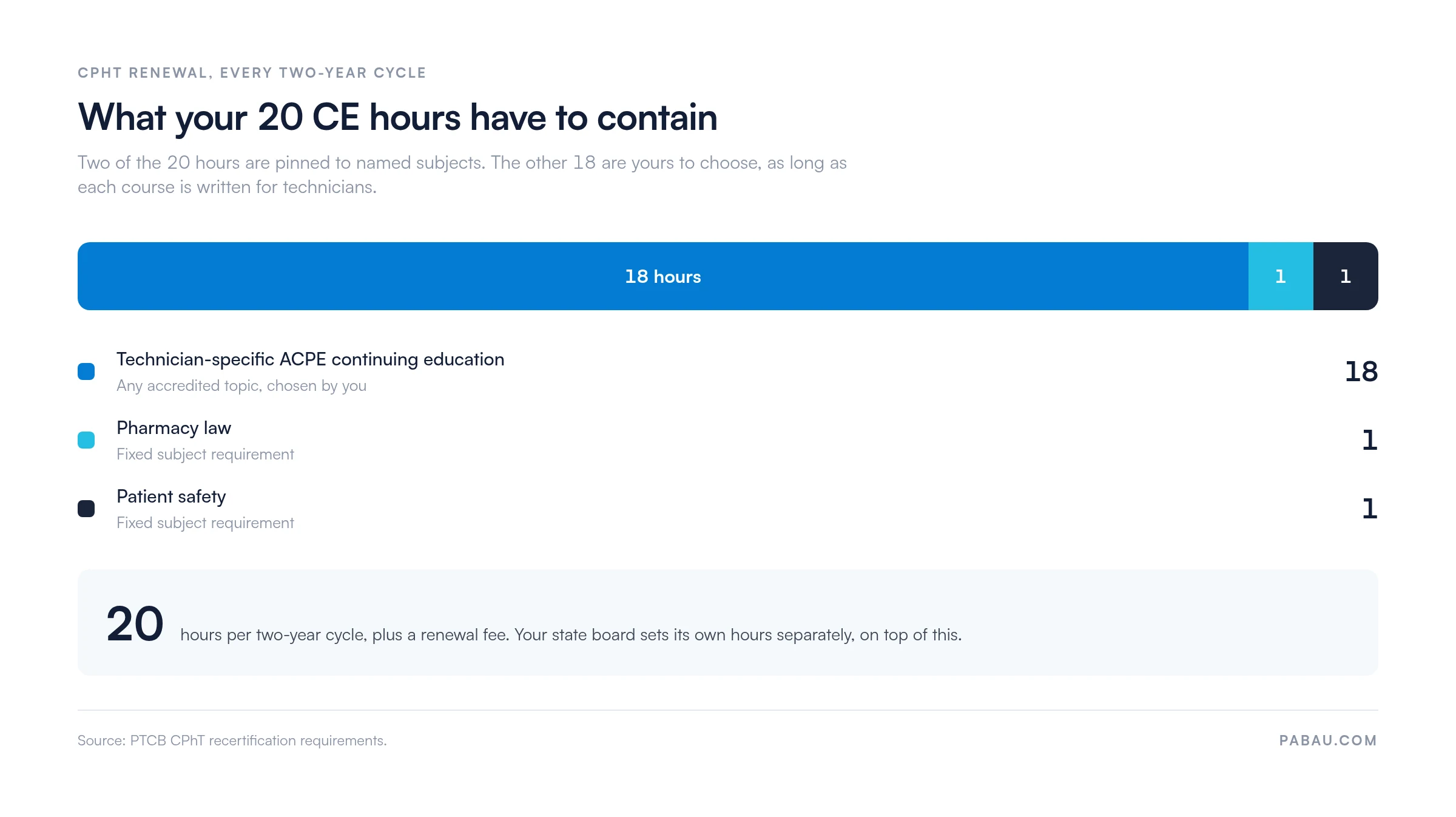
PTCB requires 20 CE hours in every two-year cycle to renew a CPhT credential. One hour must cover pharmacy law and one must cover patient safety.
State boards set their own continuing education hours separately, so check your board’s current rule before you buy a course.
The free download on this page is one blank letter template, not a set of pre-written letters.
You can adapt that single template into a CE cover note, a job application letter, or a reference request.
A blank, print-ready letter with fields for your practice details, the recipient, a reference number and a subject line. The body is three guided paragraphs, followed by a signature block. Adapt it for a CE cover note, a job application, or a reference request.
Download templatePharmacy technicians who search for a pharmacy technician letter usually want one of two documents. Some want the Pharmacy Technician’s Letter, the continuing education publication from TRC Healthcare. Others want a letter they have to send, such as a CE cover note, a job application, or a reference request.
This page covers both. It explains how the publication works for CE and CPhT renewal, what PTCB requires, and how to write the letters technicians send most often. The download above is one blank letter template you can adapt to any of those jobs.
The pharmacy technician letter is more formally known as the Pharmacy Technician’s Letter (PTL). It is a subscription publication from TRC Healthcare (Therapeutic Research Center) that gives pharmacy technicians evidence-based drug information, clinical updates, and ACPE-accredited continuing education. Technicians use it to stay current on medication safety and new therapies while earning the credits their renewal requires.
PTL includes clinical drug monographs, practice alerts, dosing calculators, and accredited CE courses. Hospital pharmacies, retail pharmacies, and practice-based pharmacy teams across the United States subscribe to it. It works as a clinical reference and as a licensing support tool at the same time.
Unlike a textbook or a single journal, PTL bundles practice-ready clinical information with continuing education compliance in one subscription. That is the whole pitch. One place to read up, and one place to earn the hours.
Pharmacy technicians earn continuing education credits to renew two separate credentials. One is a national certification and the other is a state license or registration.
PTCB sets one fixed national requirement for the CPhT credential. Each state board of pharmacy sets its own hours on top of that, and those rules differ widely. The Pharmacy Technician’s Letter delivers ACPE-accredited courses that count toward both.
CE courses through PTL cover drug interactions, patient safety protocols, compounding practice, controlled substance handling, and emerging therapeutic topics. Each course ends with an assessment, and passing it awards the credit hours. Technicians work through courses at their own pace, then submit the completion records to their state board or to PTCB.
Completing CE credits through the Pharmacy Technician’s Letter takes six steps:
Some practices keep technician certificates with the rest of their staff paperwork in digital team management systems. Renewal dates then stay visible in one place, instead of scattered across inboxes.
TRC Healthcare publishes a specialized edition called the Hospital Pharmacy Technician’s Letter for technicians working in inpatient and acute care settings. Hospital technicians face different clinical work than retail technicians do.
Their day covers IV admixtures, high-risk medications, sterile compounding, and controlled substances in critical care. The hospital edition tailors its CE courses and drug content to those workflows.
The hospital edition puts extra focus on:
If you work in a hospital pharmacy, choose the hospital subscription for content that matches your clinical environment and your mandatory CE topics. Retail and community pharmacy technicians are better served by the standard edition.
The Pharmacy Technician Certification Board (PTCB) is the national credentialing authority for pharmacy technicians in the United States. PTCB awards the CPhT credential, which is the most widely recognized certification for technicians. Many employers require it as a condition of hire, and several states mandate it for technician practice.
Candidates earn the credential by passing the Pharmacy Technician Certification Exam, known as the PTCE. The ExCPT is a different exam, owned by the National Healthcareer Association, and it is not a PTCB product.
To keep the credential, technicians complete 20 hours of CE in each two-year cycle. Two of those hours are pinned to named subjects, so the split matters as much as the total. PTCB lists approved CE providers, and TRC Healthcare is among them.
The download on this page is one blank letter, not a set of pre-written letters. It opens with a header for your practice or organization name, the date, and your address, phone and email. Below that it carries the recipient’s name and address, a reference or record number, and a subject line.
The body is three guided paragraphs, each marked with a bracketed prompt. The first states why you are writing. The second carries the detail the reader needs, such as dates, findings, and decisions taken. The third states the next step, any deadline, and who to contact.
The page closes with space for notes or enclosures, a sign-off, and your signature block.
Because the paragraphs are blank, one file covers several jobs. Use it as the cover note that goes with a CE completion certificate. Use it as the frame for a job application letter. Or hand it to a supervisor as the request that starts a reference letter.
Replace every bracketed prompt with your own wording, and delete any paragraph that does not apply.
One formatting note before you print. The date field is laid out as dd / mm / yyyy. Write the month as a word if your recipient reads dates in the US order.
Many pharmacy technicians search for a pharmacy technician letter because they want a job application cover letter, not the PTL publication. Your cover letter is where you show your credentials, your clinical skills, and your motivation before anyone decides on an interview.
A strong pharmacy technician cover letter demonstrates:
Cover letter structure:
The template above gives you that shape already. Its three bracketed paragraphs map onto the opening, the evidence, and the close, so you rewrite the prompts rather than starting from an empty page. If you would rather start from wording written for healthcare hiring, our cover letter template covers the same ground.
You can also customize digital forms in your practice management system, so reference requests reach supervisors in the same format every time.
A recommendation letter from a supervisor, mentor, or pharmacist strengthens job applications, pharmacy school prerequisites, and credential programs. A cover letter is the one you write about yourself. A recommendation letter comes from someone who has watched you work and can vouch for your competence and character.
When you request one, give the writer:
What a recommendation letter covers:
Ask the supervisors or pharmacists who know your work best, rather than a general manager or a distant colleague. A specific letter from a direct supervisor carries more weight than a vague one from a senior name.
Before you enroll in any CE program, check that it meets your state’s rules and PTCB’s standards. The Pharmacy Technician’s Letter is ACPE-accredited, so its credits are accepted by state boards of pharmacy and by PTCB at renewal. Some states add stricter requirements, so confirm the current rules with your board’s licensing division first.
ACPE, the Accreditation Council for Pharmacy Education, is the official accreditor for US pharmacy education. When a program displays ACPE accreditation, licensing bodies will recognize its credits. Check the course page for its UAN, and make sure it carries the technician designation.
In most practices, the paperwork behind a technician’s credential lives in several places at once. CE certificates sit in a personal inbox and reference letters sit in a manager’s drive. The letters sent out to boards or employers exist only as printed copies. At renewal time, someone spends an afternoon hunting for files nobody filed.
Practice management software like Pabau keeps that documentation with the record it belongs to. One app for practice teams holds the staff record, the certificates and the letters, so nothing depends on who saved which file.
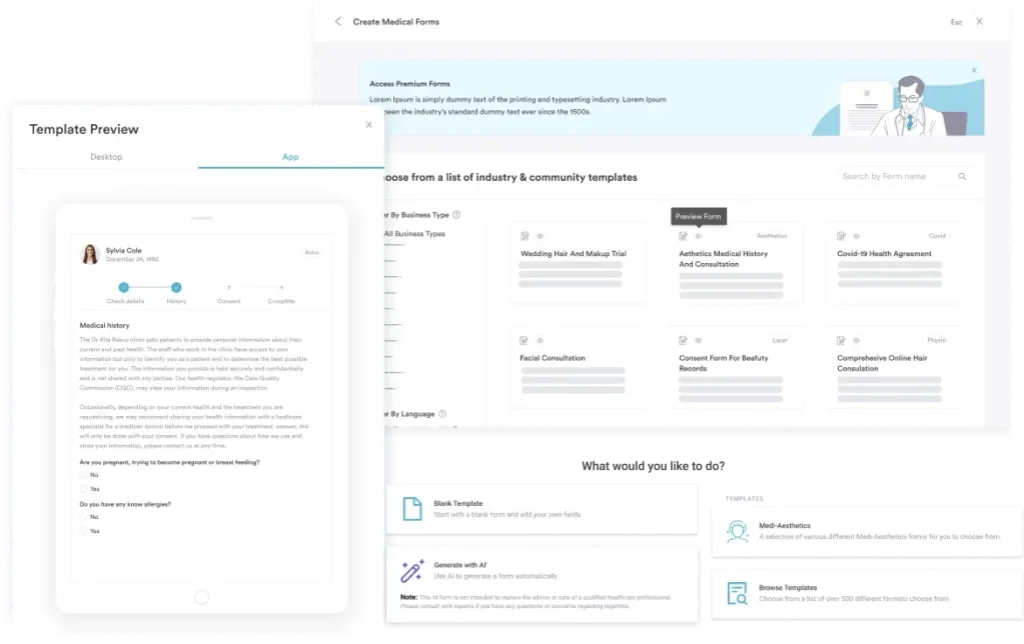
Digital forms let you save a letter or a reference request as a reusable template, so every member of staff starts from the same wording. Documents stay attached to the record instead of circulating as email attachments.
The practical result is a shorter renewal week. The certificate you need is where you left it. The letter you sent last year is easy to reuse, and no one reconstructs a paper trail from memory.

Pabau stores digital forms, letters and certificates against the record they belong to. Your team can reuse a template and find any document at renewal time, without hunting through inboxes.

Two documents carry a pharmacy technician career forward, and they are easy to confuse. The Pharmacy Technician’s Letter keeps your CE hours accredited and on schedule. The letters you write yourself, to a board, an employer, or a referee, decide how your work reads to someone who has never met you.
Get the PTCB numbers right first. That is 20 hours in every two-year cycle, with one hour of law and one of patient safety, plus whatever your state board adds.
Then use the blank template on this page for the letters. A structure you fill in beats a blank page, and it keeps your wording consistent every time you send one.
The trade-off worth remembering is that no template writes the specifics for you. The detail you add, the dates, the achievements, the name of the person who supervised you, is what makes the letter land. Book a demo to see how Pabau keeps those letters, forms, and certificates together in one practice record.

Writing a cover letter for a healthcare role? Cover letter template for healthcare professionals gives you a ready structure and wording you can adapt for a technician job.
Need to document a performance conversation? Performance improvement plan template for healthcare staff sets out goals, review dates and sign-off in one form.
Running staff reviews this quarter? Annual review template for healthcare practices keeps every appraisal on the same headings and scoring.
Hiring your next licensed practical nurse? 11 Interview questions to ask to hire your next LPN shows what each answer tells you about the candidate.
Handling a conduct or attendance issue? Employee counseling form: A free template and guide records the discussion, the agreed actions and the follow-up date.
The Pharmacy Technician’s Letter (PTL) is a subscription publication from TRC Healthcare. It provides ACPE-accredited continuing education, evidence-based drug information, and license renewal support for pharmacy technicians in the United States.
PTCB requires 20 hours of continuing education in each two-year cycle to renew a CPhT credential. One hour must cover pharmacy law and one must cover patient safety. State boards set their own hours separately, so check your board’s current rule.
Yes, the Pharmacy Technician’s Letter courses are ACPE-accredited, so the credits count toward state board and PTCB renewal requirements. Check the course page for the universal activity number, and make sure it carries the technician designation.
Ask supervisors, head pharmacists, or mentors who watched your pharmacy work and can speak credibly about your clinical skills and professional character. Give them your resume, the job description, and the blank letter template on this page to structure their writing.
It is one blank letter with fields for your practice details, the date, the recipient, a reference number, and a subject line. The body is three guided paragraphs, followed by space for enclosures and a signature block. It contains no pre-written CE, cover letter, or reference wording.