GLP-1 diet plan
A GLP-1 diet plan is a structured eating framework for patients taking semagluti...

2
Last Updated: Oct 13, 2026
The man o’ war sting pain scale puts this sting near the top of any marine injury list. Pain hits within seconds, peaks inside half an hour, and feels like a hot rope laid across the skin. One step matters more than the rest. Rinse with seawater or vinegar, and keep fresh water away.
Fresh water sets off the stinging cells still sitting on the skin, so it makes the injury worse. Get that first minute right and most stings settle at home. Handle it wrong and a beach incident can turn into an emergency room visit.
The ranking, the hour-by-hour pain course, correct first aid, and the red flags to watch all follow below.
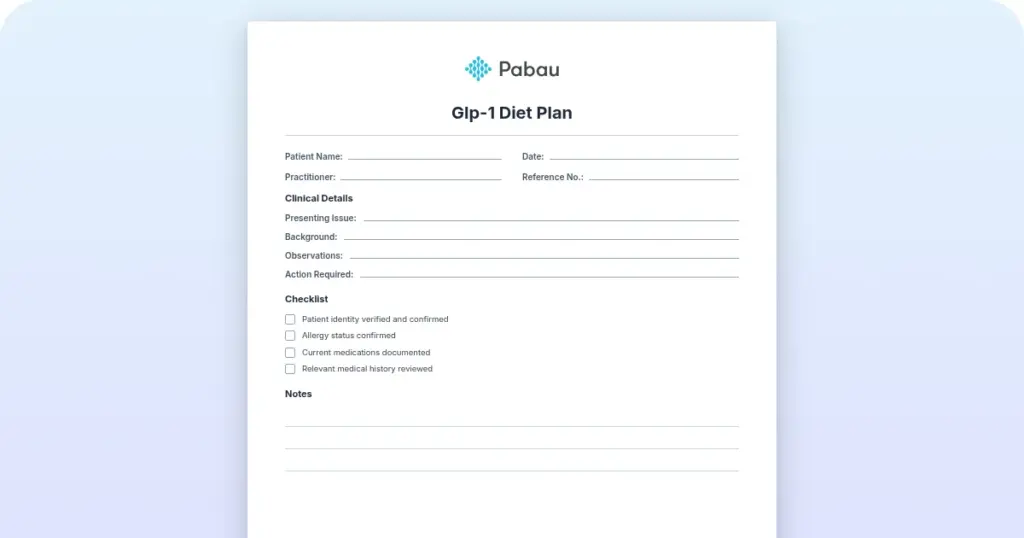
One printable page with a pain intensity rating, a symptom progression checklist, the first aid steps in order, and the emergency red flags. Sized for a beach safety kit, a lifeguard station, or a phone screen.
Download template
A man o’ war sting sits among the most severe marine stings, with pain arriving within seconds.
Pain peaks 5 to 30 minutes after contact, then throbs for 1 to 3 hours.
Rinse with seawater or vinegar, and lift tentacles off with a card rather than bare hands.
Fresh water and rubbing set off more stinging cells, so both make the sting worse.
Call 911 for breathing trouble, chest pain, a spreading rash, or loss of consciousness.
The Portuguese man o’ war (Physalia physalis) is not a true jellyfish. It is a siphonophore, a colony of specialized polyps that live and hunt as one animal. Its tentacles average around 30 feet and can trail as far as 100 feet.
Those tentacles carry millions of stinging cells called nematocysts. Each one fires a barbed tube that punctures the skin and injects a venom mix containing physalitoxin. Thousands discharge at once along the line of contact, which is why the pain arrives all at once instead of building.
That delivery method explains the severity. The venom irritates the skin locally, and in sensitive people it can provoke a whole-body reaction as well.
Among marine stings, the man o’ war ranks at the severe end. It sits below the box jellyfish and well above the common jellyfish most swimmers meet. No formal index rates marine stings the way insect stings are rated, so the table below is descriptive rather than scored.
The bee sting sits in the table for scale, since most people have one to compare against. Reactions vary, so a sting across thin skin or a large area can feel worse than the row suggests.
Most of the pain is done inside three hours. Patients describe the first moment as a hot rope laid across bare skin, and the burn spreads up the limb within seconds. A bee sting builds over a few seconds by comparison, because it delivers one puncture rather than thousands.
The timeline below tracks what the pain does from contact through to the welts clearing.
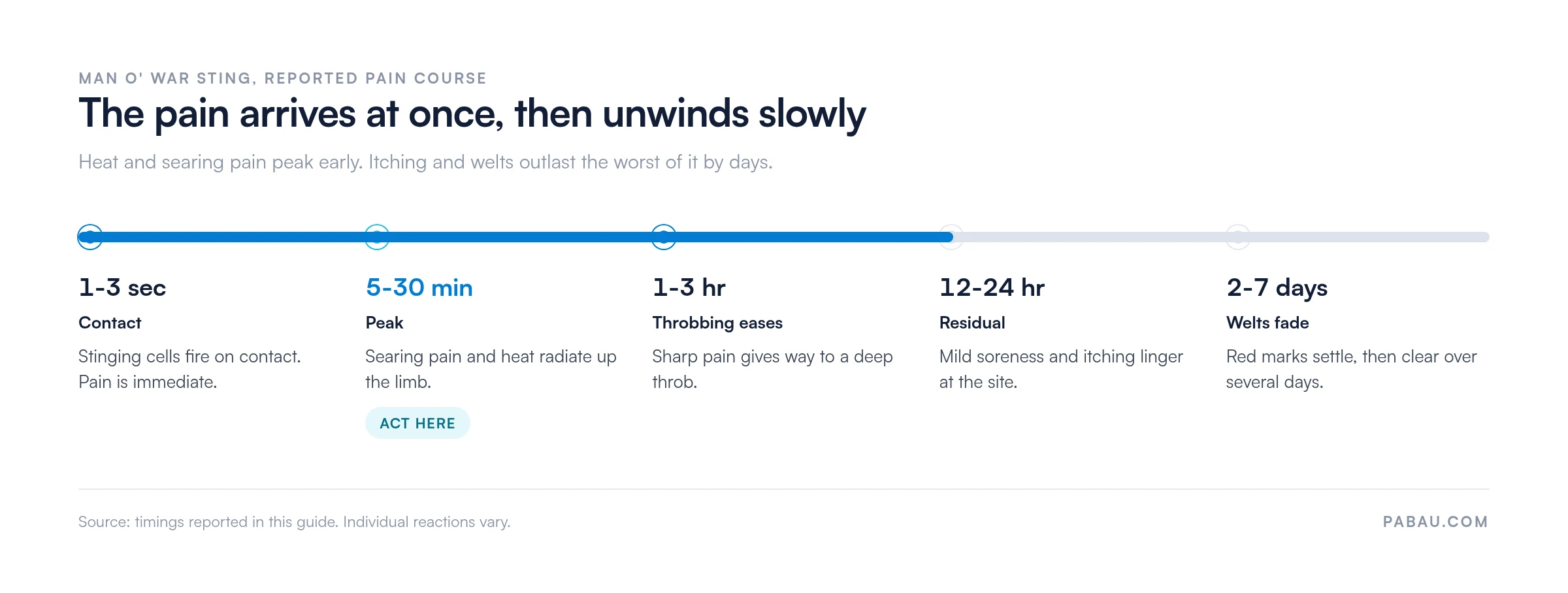
Alongside the clock, four features of the pain come up again and again:
Most stings stay in the skin, and a small number turn systemic. People with a previous sting, or a known marine venom sensitivity, are the ones most likely to react beyond the contact site.
Practices that see beach injuries in summer often keep an allergy action plan on file for at-risk patients. Agreeing the response in advance saves minutes when someone arrives struggling to breathe.
What happens in the first five minutes decides how bad the next three hours get. Correct first aid holds the pain down and stops the stinging cells left on the skin from firing again.
Three things to skip. Urine has no effect on the venom and wastes time. Alcohol rinses set off more stinging cells, exactly as fresh water does. Rubbing the site with a towel or with sand fires the cells still lying on the skin.
Any breathing difficulty, chest symptom, or reaction spreading past the sting site is an emergency. Most stings settle within 24 hours on home first aid, but a small number do not. Call 911 if any of these appear:
In a practice or urgent care setting, record pulse, blood pressure, and breathing rate on arrival. Repeat them 30 minutes later, because a systemic reaction usually shows up in those numbers first. An abnormal vital signs chart gives staff the thresholds to measure against.
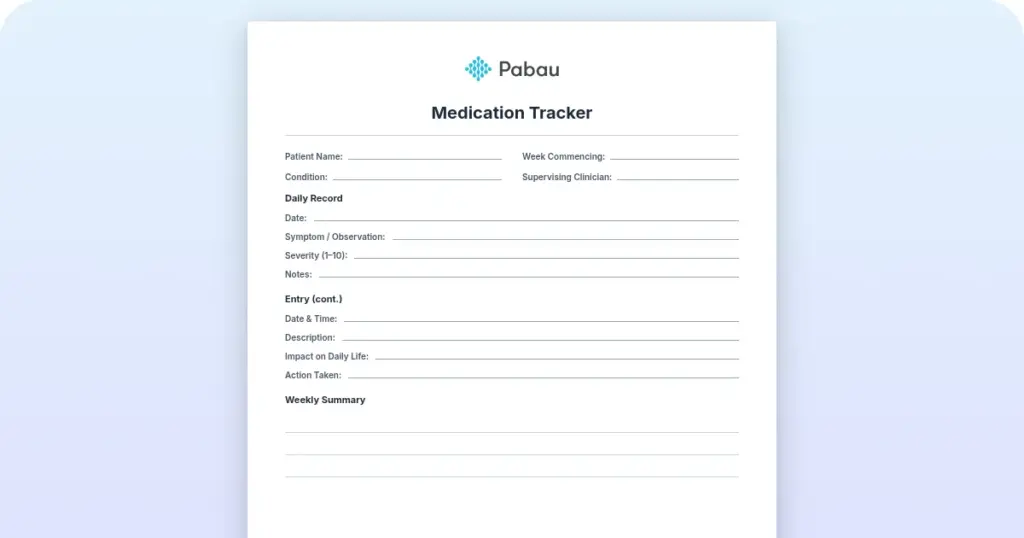
Record the time of contact, the rinse that was used, and a pain score at set intervals. Those three details let the next clinician tell improvement from deterioration. Marine stings get documented badly, because they happen a long way from a desk. By the time the patient reaches reception, the detail has usually blurred.
Six items are worth capturing while the treatment is still happening:
A pain score is only useful when the same scale is used every time. If the practice already runs a numeric or behavioral scale for other injuries, use that one here too. An acute pain care plan keeps the wording consistent across a team, which matters when three people see the patient in one afternoon.
Coastal practices, travel clinics, and urgent care sites all meet this injury in the same few weeks of the year. Primary care practice software that stores the form against the patient record keeps those notes together. Otherwise the detail sits in a paper folder behind reception.
Right now the assessment probably lives on paper. Someone writes the time of contact and a pain score on a printed card, and it gets typed up later, or not at all.
Practice management software like Pabau runs the same card as a digital form instead. Staff complete it on a tablet at the treatment chair, and the answers save straight onto the patient record. Pain scores land as tracked measurements, so the 30-minute reading sits beside the arrival reading without anyone doing the arithmetic.
Because the form is identical every time, a weekend staffer records what the Monday team records. So you can review a patient’s pain course later without reconstructing it from three sets of handwriting.
Follow-up runs on its own as well. A message goes out the next day asking how the site looks, and the reply is filed against the same record.

Pabau’s digital forms capture pain scores, first aid steps, and red-flag checks at the treatment chair, then file them on the patient record. Follow-up messages go out on their own.

Where the sting ranks matters less than what happens in the first minute. Rinsed with seawater and soaked in hot water, it usually ends as a bad afternoon. Under a beach shower instead, the same sting can end in an emergency room.
Keep the reference card where the decision gets made: the lifeguard station, the beach kit, or a phone. Then make sure whoever treats the patient records the time, the rinse, and the pain score. That is the detail the next clinician needs.
Getting that record right is a software problem more than a clinical one. Book a demo to see how Pabau turns a paper assessment card into a form your team fills in once.

Need a pain score for a patient who cannot self-report? Abbey pain scale scores pain from observed behavior instead of a spoken rating.
Treating a stung child? CRIES pain scale template builds an infant pain score from crying, vital signs, and facial expression.
Patient with a known venom allergy? Allergy action plan sets out the agreed response before a reaction starts.
Documenting how much skin is affected? Burn percentage chart maps body surface area, which helps when welts cover a wide area.
It ranks among the most severe marine stings. Lion’s mane and moon jellyfish are not close, and neither is a bee sting. Only the box jellyfish is clearly worse, because that sting can be fatal.
Yes, and for weeks. Stranded animals and broken tentacles keep working stinging cells, so drying out on the sand does not make them safe. Treat any beached man o’ war as live, keep children and dogs away, and tell the lifeguard station.
Deaths are extremely rare. They happen almost only through severe anaphylaxis, or in someone with a pre-existing heart condition. With prompt first aid, the great majority of stings are not life-threatening.
Hot water. A soak at 110 to 113°F for 20 to 45 minutes breaks down the venom proteins, which is what brings the pain down. Ice does not deactivate the venom, so use a cold pack only when no hot water is available.
Far worse, and it arrives differently. A bee delivers one puncture, and the pain builds over a few seconds. A man o’ war fires thousands of stinging cells along the whole contact line at once. The pain is immediate, and it covers a far larger area.