Journal prompts for mental health
Journal prompts for mental health are guided questions that help people process ...

2
Last Updated: Oct 13, 2026

A hypno script is a one-page guided relaxation and affirmation script, not a multi-phase clinical session protocol
The template includes a name and date field, a single continuous relaxation passage, a short set of present-tense affirmations, a count from one to five to return to alertness, and an additional notes field
Because the affirmations are written in generic language, practitioners should personalize them for each client’s goals before the session rather than reading them exactly as written
Pabau, practice management software for therapy and wellness practices, lets practitioners store, customize, and file a client’s completed hypno script alongside consent forms and session notes
A one-page guided relaxation and affirmation script with a client name and date field, a relaxation passage, present-tense affirmations, and a count from one to five back to full alertness. Ready to read aloud or customize for a specific client.
Download templateA short, well-written relaxation script gives a hypnotherapy or wellness practitioner something reliable to read from, rather than improvising calming language on the spot. This guide explains exactly what the hypno script template contains, how to use it in a session, and who it’s useful for.
In short, a hypno script is a one-page written guide used to lead a client through a guided relaxation and affirmation exercise. Specifically, it is a single continuous script that a practitioner can read aloud, either verbatim or adapted to the individual client.
The National Council for Hypnotherapy (NCH), the UK’s largest professional body for qualified hypnotherapists, recommends that practitioners keep session documentation consistent and appropriate to their scope of practice. A simple relaxation script like this one is best used as a light-touch relaxation aid rather than a substitute for full clinical session planning.
The template itself is a single page and includes:
Because it’s a single generic passage rather than a set of interchangeable modules, practitioners who want session documentation tailored to informed consent or a specific presenting issue should pair it with dedicated documentation, such as the group therapy informed consent template.
Using this template well is more than reading it aloud word for word. A few minutes of preparation before the client arrives makes the delivery sound natural rather than rehearsed.
First, fill in the client’s name and the date at the top of the form before the session, or as part of the intake paperwork. This keeps the completed script identifiable once it’s filed in the client record.
Next, read the relaxation passage slowly and evenly, pausing between sentences so the client has time to settle into the breathing and visualization cues. The passage moves from breath awareness through progressive body relaxation into an imagined calming scene, so there’s no need to rush between ideas.
Once the client is settled, move into the affirmations. This is the point to personalize the session: the template’s affirmations are written in general, present-tense language, so swap in wording that reflects the client’s own goals where appropriate, rather than reading the generic examples unchanged every time.
Close the relaxation exercise by counting the client from one to five, letting each number bring a little more alertness, and finishing with a prompt to open their eyes. Keep this part unhurried. It’s the client’s transition back to full waking awareness.
After the session, use the additional notes field to record anything worth remembering for next time, such as which affirmations resonated, how the client responded to the visualization, or any adjustments to make before the next session.
Pabau’s digital forms feature lets you store a completed hypno script directly in the client record, so each session’s version is tied to the client and easy to find before the next appointment.
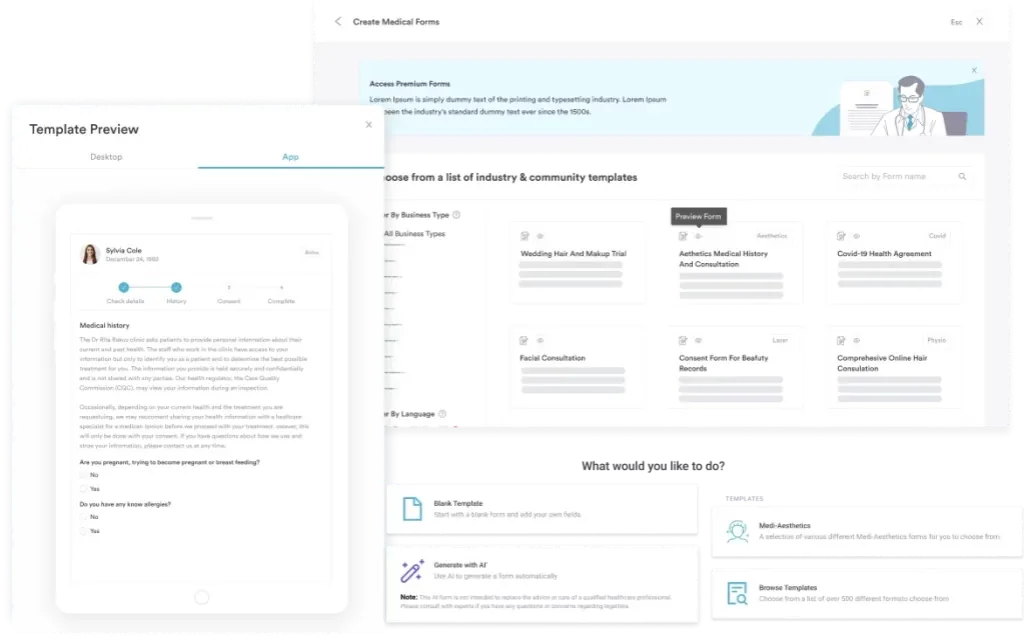
A patient management platform stores every completed form against the right patient record automatically.

Pabau handles client records, consent forms, appointment scheduling, and session notes in one place, so you focus on the session, not the paperwork.

The template suits anyone who wants a ready-made relaxation and affirmation script to read to a client, rather than a full clinical hypnotherapy protocol. In fact, it suits several practice types.
Registered hypnotherapists can use the script as a quick relaxation component within a longer session they’ve already planned, or as a starting point they expand with their own induction and suggestion language. Practitioners registered with the NCH or the General Hypnotherapy Register (GHR) should still add their own consent and intake documentation, since this template does not include a pre-talk or consent section.
Psychologists and counseling therapists who occasionally use guided relaxation alongside CBT or person-centered approaches may find the affirmations a useful starting point for a client already familiar with therapeutic work. Similarly.
Wellness and integrative practitioners. Its generic, present-tense affirmations are well suited to general stress relief rather than a specific presenting issue.
Lastly, hypnotherapy trainees can use a clean, professionally formatted script as a practice aid while they build their own material, since it demonstrates the basic shape of a relaxation induction and re-alerting close.
Personalize the affirmations before each session, not during it. Swap in the client’s own words or goals from your intake conversation ahead of time. This sounds natural when you read it aloud and takes the script beyond a generic relaxation exercise without adding prep time in the moment.
Working from a written script does not make a session mechanical: it removes the pressure of improvising calming language, so the practitioner’s attention stays on the client’s responses.
The International Journal of Clinical and Experimental Hypnosis has published evidence suggesting that relaxation-based hypnotherapy techniques can be a useful adjunct for conditions including anxiety and stress. Practitioners should treat a simple relaxation script like this one as a light, general-purpose tool rather than a substitute for a full clinical hypnotherapy protocol.
Checking in with therapist burnout resources can also help practitioners sustain the quality of their delivery over time.
A hypno script solves the in-session relaxation problem. The practice management problem is separate:
For this reason.
The platform’s client records keep every session document in one place.
For practitioners comparing clinical notes software options.

Want a wider view of client well-being alongside relaxation work? 8 dimensions worksheet uses the SAMHSA framework to help clients rate physical, emotional, and social wellness.
Working with a client who reports chronic restlessness? The boredom proneness scale is a validated 28-item questionnaire for scoring trait boredom proneness.
Need to screen for social isolation before starting relaxation work? The social network index is a validated questionnaire measuring a client’s social integration.
A simple, well-written hypno script removes the pressure of improvising relaxation language so practitioners can focus on what matters: reading the client, adjusting their pace, and personalizing the affirmations for that person.
Overall, Pabau’s digital forms keep your hypno scripts, consent records, and session notes in one HIPAA- and GDPR-aligned client record. To see how it works for a therapy practice, book a demo.
A one-page guided relaxation and affirmation script. It includes a name and date field, a single relaxation passage, a short set of present-tense affirmations, and a count from one to five to bring the client back to full alertness.
A name and date field, one continuous relaxation passage covering breathing and a calming visualization, generic present-tense affirmations, a count from one to five to re-alert the client, and an additional notes field for the practitioner.
Yes. Pabau’s hypno script template is a free one-page PDF download from the link above, covering a relaxation passage, affirmations, and a count from one to five back to alertness.
Edit the affirmations section before the session to reflect the client’s own goals and language, rather than reading the generic examples unchanged. The relaxation passage and re-alerting count can be read as written or adapted to the practitioner’s own pacing.
The one-page script typically takes a few minutes to read aloud at a slow, measured pace. Practitioners often use it as a short relaxation component within a longer session rather than as a full standalone protocol.