Antipsychotic medication list
An antipsychotic medication list is a structured reference that organizes psychi...

2
Last Updated: Oct 13, 2026

The Boredom Proneness Scale (BPS) is a validated 28-item self-report psychological assessment measuring trait boredom tendencies developed by Farmer & Sundberg (1986).
The 28-item BPS is scored as a single total. Its factor structure is genuinely debated (studies have found anywhere from 2 to 7 factors), so there’s no official 14/14 internal/external subscale split for this version.
A separate 8-item short form, the SBPS (Struk et al., 2017), is unidimensional (single score, α≈0.84) and quicker to administer. A different 12-item short form (Vodanovich et al., 2005) is the one with a validated internal- and external-stimulation subscale split.
Practice management software like Pabau lets you administer the BPS through digital intake forms, storing scores securely in client records for longitudinal tracking.
A validated 28-item psychological assessment measuring trait boredom proneness, scored as a single total score. Includes the full scoring key (with the 10 reverse-scored items), an illustrative interpretation guide, and clinical administration instructions for mental health practitioners and researchers.
Download templateTrait boredom, the chronic tendency to experience boredom across situations, correlates with depression, anxiety, substance use, and lower wellbeing. Clinicians need a reliable way to measure and track this trait in mental health practice settings.
The boredom proneness scale has been used in research and clinical settings for over 30 years. It helps therapists, counselors, and mental health practitioners identify clients at risk of boredom-related psychological challenges and tailor interventions accordingly.
The boredom proneness scale is a validated self-report psychological assessment tool designed to measure an individual’s tendency to experience boredom, what researchers call “trait boredom.” Developed by Farmer and Sundberg in 1986, the scale measures how prone someone is to feeling bored across different situations and contexts.
Boredom proneness differs from situational boredom (feeling bored right now). It reflects a stable personality characteristic: some people are naturally more susceptible to boredom than others, regardless of the activity or environment. Understanding this distinction shapes how clinicians interpret scores and plan interventions.
Research consistently links high boredom proneness to depression, anxiety, substance use disorders, ADHD, and reduced quality of life. Clinicians use the boredom proneness scale to identify clients at higher risk and to monitor boredom as a treatment target.
For practitioners using digital intake forms, the BPS becomes part of an automated screening workflow that flags high-risk clients for immediate follow-up care.
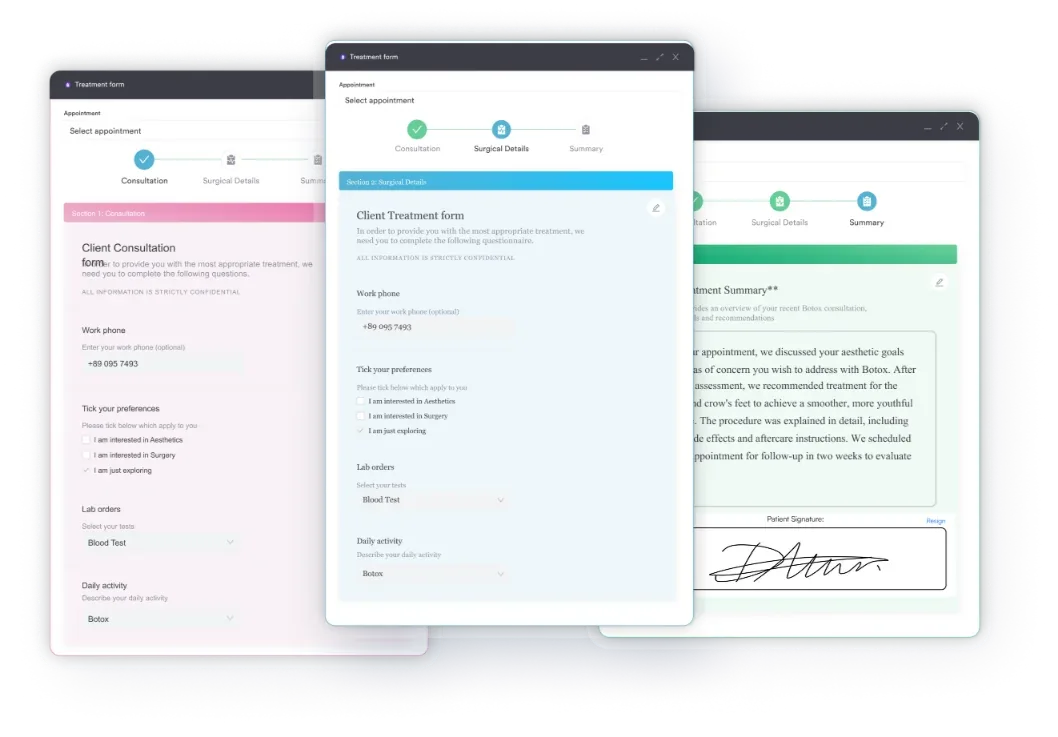
Administering the boredom proneness scale is straightforward and takes approximately 5-10 minutes. Follow these core steps for reliable results:
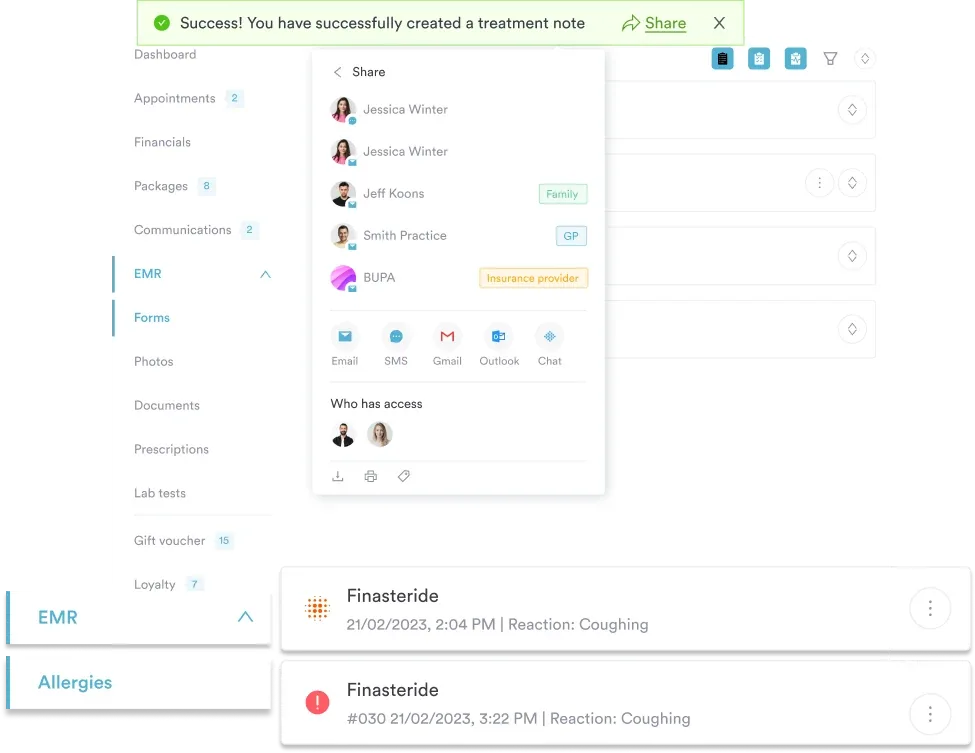
After scoring, store the completed boredom proneness scale in your client’s secure clinical record. Using client record management software enables you to upload the scored BPS and link it directly to the profile for longitudinal tracking and treatment coordination across sessions.
Two shorter forms exist alongside the original 28-item boredom proneness scale. The 8-item Short Boredom Proneness Scale (SBPS), validated by Struk et al. (2017), is a quick, single-score alternative to the full BPS.
A separate 12-item short form (Vodanovich, Wallace & Kass, 2005) is the one instrument in this family with a validated two-factor split: 6 items measure external stimulation and 6 measure internal stimulation.
If your workflow needs that internal/external breakdown, use the 12-item Vodanovich version rather than trying to split the 28-item BPS or the SBPS into subscales.
In busy clinical settings, many practitioners prefer the SBPS. It maintains strong reliability while reducing client burden.
The full 28-item BPS doesn’t add an official subscale breakdown on top of that, since its own factor structure isn’t settled. But it does preserve more item-level detail, which is useful in research or when tracking a case over a longer course of therapy.
Turning this scale into a digital form with form capture software removes double entry and keeps every score legible.
The 28-item boredom proneness scale is standardly scored as a single total, not split into official subscales. Its factor structure has been debated since the scale was published: exploratory studies have found anywhere from two to seven underlying factors, and there’s no single, agreed-upon internal/external split for these 28 items.
The clean two-factor structure some clinicians expect (six items measuring external stimulation, six measuring internal stimulation) belongs to a separately published 12-item short form (Vodanovich, Wallace & Kass, 2005), not the full 28-item scale.
Each item is rated 1 (Strongly Disagree) to 7 (Strongly Agree). Ten of the 28 items are reverse-scored (items 1, 7, 8, 11, 13, 15, 18, 22, 23, and 24). The downloadable template includes the full key.
Representative items include:
Item 8, “I find it easy to entertain myself,” is one of the reverse-scored items. A client who strongly agrees with it is showing low boredom proneness, so the raw response gets flipped before it’s added to the total.
Reading item content this closely, rather than just the total score, is what turns a raw total into a specific, actionable clinical picture.
Scoring the boredom proneness scale involves summing Likert responses, accounting for reverse-scored items. The downloadable template includes full instructions. Here is the general workflow:
Say a client’s 18 standard items average 4.5 (summing to 81), and their 10 reverse-scored items average 3.0 before recoding. Recoded (8 minus the raw response), that average becomes 5.0, summing to 50. The raw total is 131 out of a possible 28-196.
That’s toward the upper end of the range. But since there’s no universally validated cutoff for the 28-item BPS, treat this as a prompt to look closer rather than a diagnostic threshold. Compare it against the client’s own baseline or your practice’s typical range.
There’s no universally validated low/moderate/high cutoff scheme for the 28-item boredom proneness scale. It’s designed to be used as a continuous total, tracked over time or compared against your own sample rather than a fixed published norm.
Higher scores indicate greater trait boredom proneness and are associated with elevated risk for comorbid mental health challenges. The bands below are an illustrative, heuristic breakdown to help you get a rough sense of scale, not a validated clinical norm.
Illustrative score bands only, not a validated or published clinical norm:
High scorers warrant closer monitoring for depressive symptoms, anxiety, and impulsivity.
If you want to explore whether a client’s boredom stems more from low internal engagement (trouble self-entertaining) or high external stimulation needs (constant novelty-seeking), administer the separate 12-item short form (Vodanovich, Wallace & Kass, 2005). This is the version with a validated internal/external split. The 28-item BPS and the 8-item SBPS don’t carry that breakdown on their own. Reading change across appointments depends on consistent recording, which psychology practice software enforces.
That distinction can then shape treatment: low internal stimulation may respond to mindfulness or structured journaling.
The boredom proneness scale fits naturally into mental health intake workflows and ongoing monitoring. Administer at initial assessment for baseline, then readminister every 3-6 months to track change. High boredom proneness at intake flags risk. Improvement over time validates treatment efficacy.
Therapists use boredom proneness scale scores to inform conceptualization. A depressed client with a high total score may need behavioral activation and novelty. An ADHD client with a high total score might explore impulse management alongside structured accommodations, adding the 12-item Vodanovich short form if you want separate internal- and external-stimulation detail to sharpen the plan.
This pairing comes up often in ADHD-focused practices, where boredom intolerance and impulsivity are closely linked.
In outcomes research or clinic quality improvement, the boredom proneness scale tracks how program innovations (group therapy, peer support, creative workshops) impact client trait boredom over time. Use this data to inform patient satisfaction metrics and treatment efficacy reports to funders and leadership.

Store completed boredom proneness scales, track scores over time, and integrate results into client records all in one secure platform.

Administer the SBPS (8-item short form) at intake for rapid screening, then use the full 28-item BPS for clients showing moderate-to-high scores when you want more item-level detail to track over time. If you specifically need internal vs external stimulation subtypes, add the separate 12-item Vodanovich short form rather than trying to split the 28-item BPS or the SBPS.
The boredom proneness scale gives mental health practitioners a validated tool to measure and track trait boredom, a factor linked to depression, anxiety, and reduced wellbeing.
The 28-item BPS and the 8-item SBPS both give you a reliable total score. Pairing either one with the separate 12-item short form when you need the internal/external breakdown turns your case planning from generic to precise, targeted intervention.
Download the scale from our template library.

Screening for disordered eating patterns too? Orthorexia test screens eating habits with a 10-item questionnaire, scoring guidance, and interpretation thresholds.
Tracking social isolation alongside boredom? Social Network Index is a free scale for measuring a client’s social ties and support network.
Working on relational patterns in therapy? Attachment theory worksheet helps clients map their relationship patterns alongside other intake assessments.
Building empathy skills in session? Empathy Bingo is a free therapy tool for group and individual sessions.
The boredom proneness scale measures trait boredom, an individual’s chronic tendency to experience boredom across situations. Clinicians use it in mental health screening, outcome monitoring, and research to identify clients at elevated risk for depression, anxiety, and substance use.
The original boredom proneness scale (BPS) has 28 items and takes 5 to 10 minutes to complete. An 8-item short form, the SBPS (Struk et al., 2017), is also widely used and takes only 2 to 3 minutes. A separate 12-item short form (Vodanovich et al., 2005) exists too, with its own internal- and external-stimulation subscales.
Both are scored as a single total, not split into subscales. The 28-item BPS takes 5 to 10 minutes and keeps more item-level detail, which suits research or complex cases. The 8-item SBPS (Struk et al., 2017) takes 2 to 3 minutes and trades some of that detail for speed, making it a good fit for busy clinics or repeated assessments. Neither version has an official internal/external subscale split. That structure belongs to a separate 12-item short form (Vodanovich et al., 2005).
The scale isn’t formally in the public domain. It was published in a copyrighted journal (Farmer and Sundberg, 1986, Journal of Personality Assessment), so reproducing it involves the usual copyright considerations for a published academic work. That said, it’s widely used in research and clinical practice with attribution to the original authors. Verify copyright status with your institution or legal team before reproducing it at scale.
The boredom proneness scale was developed by Farmer and Sundberg, published in 1986 in the Journal of Personality Assessment. Vodanovich, Wallace, and Kass later derived a 12-item, two-factor short form in 2005. Struk, Carriere, Cheyne, and Danckert developed the 8-item SBPS (Short Boredom Proneness Scale), published in the journal Assessment in 2017.
Higher raw scores, toward the upper end of the 28-196 range, indicate greater trait boredom proneness. There’s no single validated clinical cutoff for the 28-item BPS, so compare a score against your own sample or track it over time rather than applying a fixed threshold. Research links high boredom proneness to depression, anxiety, impulsivity, substance abuse, and ADHD, warranting close clinical monitoring and targeted interventions.
No. The 28-item BPS is standardly scored as a single total, and its factor structure is genuinely contested, with studies finding anywhere from two to seven factors. A validated, symmetric internal/external split (6 items plus 6 items) belongs to a separate, shorter instrument: the 12-item short form published by Vodanovich, Wallace, and Kass in 2005. If you need that subscale breakdown, administer the 12-item version rather than trying to split the 28-item BPS or the 8-item SBPS.