HIPAA compliant texting: What you can send patients & how to communicate securely
HIPAA compliant texting is possible when a text holds no protected health inform...

Last Updated: Oct 16, 2026

Home care forms capture essential patient data (demographics, medical history, care needs, emergency contacts, consent) required by clinics and compliance bodies.
Every home care form should include intake fields, clinical assessment sections, consent declarations, and authorization for treatment or data sharing.
CMS doesn’t mandate a specific plan-of-care form — only the certification and plan-of-care content are required, though CMS Form 485 is the common format Medicare-certified agencies use.
OASIS assessment tools are required for Medicare and Medicaid home health patients.
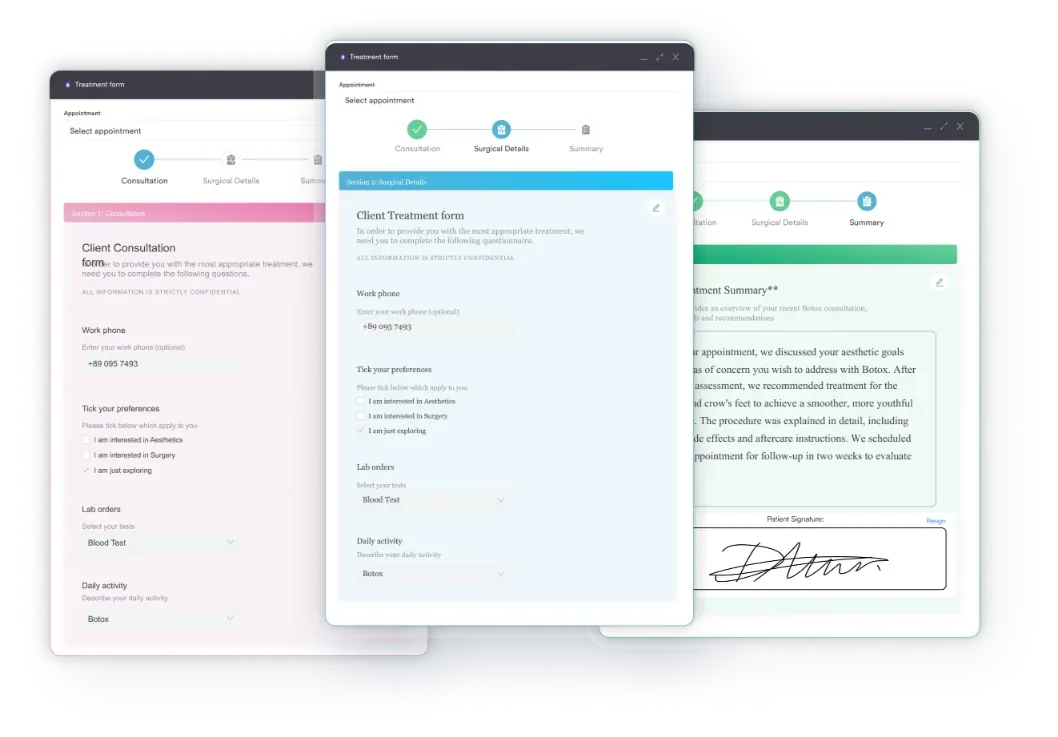
Practice management software like Pabau integrates digital home care forms with patient records, automates compliance tracking, and eliminates manual re-entry, significantly reducing documentation time.
A ready-to-use home care form covering patient intake, physician details, medical history and medications, living situation and home safety hazards, mobility and assistance needs, meal and medication management, and visit scheduling preferences.
Download templateHome care forms are the foundation of compliant, patient-centered documentation for any home health agency, home care provider, or practice offering in-home services. Whether you’re managing skilled nursing care, personal assistance, telehealth consultations, or wellness visits, a structured home care form captures the clinical data, consent, and care plans your team needs to provide safe, compliant care. Regulators from CMS to state health departments require it.
This guide covers:
A home care form is a structured documentation tool that captures patient demographics, medical history, care needs, treatment plans, and consent information for patients receiving care in their home. It serves three core purposes:
Agencies use home care forms across many settings: skilled nursing agencies (post-discharge care), non-medical home care providers (companion/homemaker services), home health physical therapy, mental health visits, IV therapy infusions at home, and wellness coaching. The form becomes the legal record of what care was authorized, what was provided, patient consent, and any adverse events or changes in condition. Skilled nursing agencies coordinating that post-discharge care often complete a discharge plan covering medication management and follow-up needs before the patient arrives home.
Most home care agencies use five to seven form types, each serving a distinct purpose in the patient journey. Understanding which forms are required, and what each one captures, is the first step to building a compliant documentation system.
Many agencies create variations of these forms — for example, a detailed nursing assessment for skilled care versus a simpler aide-companion assessment for non-medical home care. The key is ensuring each form aligns with your scope of practice and regulatory requirements. This is where patient management software becomes valuable: it provides a single integrated space to store, customize, and sequence these forms.
Rather than treat each form as an island, smart home care agencies think in terms of essential data fields that appear across forms. This reduces redundant data entry and ensures consistency. Here are the core fields your home care form should capture:
The best home care forms strike a balance: comprehensive enough to meet regulatory and clinical needs, but not so long that staff skip fields or spend excessive time on data entry. Digital intake forms solve this with conditional logic — for example, showing medication allergy fields only if the patient reports allergies — and by auto-populating repeat visits with data from prior forms.
Multiple overlapping rules govern home care documentation. Knowing which applies to your agency is essential to avoid penalties and compliance violations.
CMS (Medicare) Requirements: If your agency is Medicare-certified. CMS doesn’t require a specific plan-of-care form — only the certification and plan-of-care content elements are mandatory. Most Medicare-certified agencies use CMS Form 485 (Home Health Certification and Plan of Care) anyway. It must be signed by the treating physician before the claim is submitted, with the plan of care recertified at least every 60 days. Patients must receive a Notice of Privacy Practices. For Medicare-beneficiary assessments, OASIS-E2 (Outcome and Assessment Information Set) data collection is required at specific time points (start of care, resumption, follow-up, discharge).
State Health Department Rules: Vary significantly by state. Some states require licensure or certification of home care agencies and mandate specific documentation formats. For example, New York City’s HRA has historically required the M11Q form for certain Medicaid home care applicants (requirements have narrowed since 2022), and North Carolina specifies adult care home assessment templates. CMS Home Health regulations provide official forms and guidance for Medicare-certified agencies.
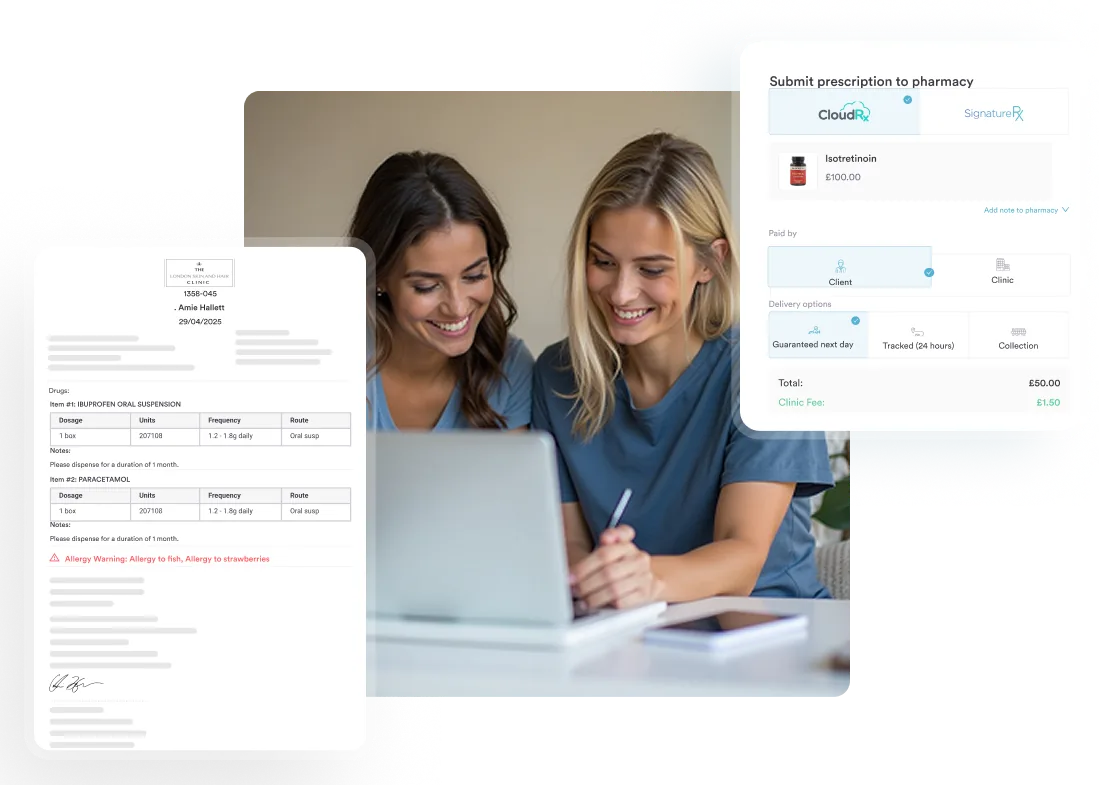
HIPAA Privacy and Security: Any home care agency transmitting patient health information electronically (email, patient portal, cloud storage) must comply with HIPAA’s Privacy Rule (patient rights to access/amend records) and Security Rule (encryption, access controls, audit logs). HIPAA official requirements detail privacy and security obligations for patient data. Obtain written consent for any uses beyond treatment and healthcare operations. Agencies handling prescription data or orders should verify that prescription management software meets HIPAA audit and access controls.
Record Retention: Most states require home care agencies to retain records for a minimum of 5-7 years after discharge. CMS requires 5 years. Industry standards from the National Alliance for Care at Home provide best practices and advocacy for the home care sector. Check your state’s specific timeline when designing your documentation and archival process.
Paper home care forms work, but they’re slow. You must print and mail intake forms, or complete them by hand on the first visit. Assessment updates sit in file folders. Staff store consent signatures in physical files. Compliance audits mean hunting through paper stacks.
Digital practice management systems like Pabau transform home care documentation into a workflow. Here’s how:
The result: home care agencies using digital forms significantly reduce documentation time, cut compliance audit risk, and free staff to focus on direct patient care instead of paperwork. Many agencies report that benefits of paperless systems extend beyond time savings to improved staff morale and patient satisfaction (no more “we’ll fax that to you later”). Many agencies use practice management software to auto-populate demographic fields across multiple forms, reducing redundancy.

Pabau’s integrated digital forms eliminate manual data entry, speed up intake, and automate compliance tracking for home care agencies.

A well-designed home care form is the backbone of safe, compliant, and efficient home health delivery. Whether you’re starting your first agency or scaling to multiple locations, the forms you choose — and how you manage them — will determine how much time your team spends on paperwork versus patient care.
The home care form template above covers the essential fields every agency needs. But the biggest win comes when those forms integrate with your clinical workflow:
Book a demo to see how digital forms transform home care operations.

Want to cut documentation time? Medical dictation tools covers the benefits of speech recognition technology and how it fits into an EHR workflow.
Looking to speed up clinical notes? SOAP notes examples guide practitioners through writing notes that compress documentation time without cutting clinical detail.
Need a full-body assessment form? 12-point review of systems template covers constitutional symptoms, HEENT, cardiovascular, respiratory, and other systems, with checkboxes.
A home care form is a structured documentation tool that captures patient intake data, clinical assessments, care plans, and consent information for patients receiving care in their home environment. It serves as the legal record of care provided and is required by regulators including CMS, state health departments, and HIPAA.
CMS doesn’t mandate a specific plan-of-care form — only the certification and plan-of-care content elements are required. Most Medicare-certified home health agencies use CMS Form 485 (Home Health Certification and Plan of Care) to document the patient’s diagnosis, physician orders, specific services/frequency, and expected outcomes. It must be signed by the treating physician before the claim is submitted, and the plan of care must be recertified at least every 60 days.
OASIS (Outcome and Assessment Information Set) is a standardized data collection tool required by CMS for Medicare and Medicaid home health patients. OASIS-E2, the current mandatory version, captures functional and clinical data at specific time points (start, resumption, follow-up, discharge) and is used to assess patient outcomes and agency quality.
Yes. Non-medical home care providers (companion, homemaker, personal care aide services) need intake, consent, and care agreement forms for legal protection and compliance. While they may not be subject to CMS or OASIS requirements, they must comply with state licensing rules and HIPAA if transmitting patient data electronically.
CMS requires a minimum of 5 years. Some states require 5-7 years. Check your state health department regulations for the specific timeline applicable to your agency and type of care provided.
Yes, under most state laws and HIPAA. Electronic signatures are valid if they include a timestamp, are non-repudiable, and you retain an audit trail. Verify your state’s specific e-signature law to ensure compliance.