List of vitamins: All 13 with RDAs and deficiency signs
A list of vitamins names the 13 essential vitamins the body needs from food or s...

8
Last Updated: Oct 8, 2026

The full Institute for Functional Medicine (IFM) matrix organizes patient findings across seven physiological systems and a center section for mental, emotional, and spiritual health; the free worksheet on this page focuses on the ATM timeline and modifiable lifestyle factors that feed into that broader picture.
The ATM framework covers antecedents (genetic predispositions), triggering events (environmental exposures), and mediators/perpetuators (ongoing lifestyle factors) that reveal why multiple symptoms appear together.
Completing the ATM and lifestyle factors worksheet during intake takes about 25-45 minutes and helps practitioners identify which modifiable mediators are sustaining a patient’s symptoms.
Storing the completed worksheet in digital practice management software enables longitudinal tracking and ensures HIPAA-compliant patient data security.
A ready-to-print clinical worksheet for retelling a patient’s story through antecedents, triggering events, and mediators (ATM), plus five modifiable personal lifestyle factors. Perfect for functional medicine intake visits and root cause analysis.
Download templateMost clinicians trained in conventional medicine chase symptoms: fatigue gets stimulants, brain fog gets cognitive testing, and joint pain gets NSAIDs. But the root causes – dysregulated cortisol, chronic dysbiosis, unaddressed environmental toxin exposure – remain invisible because the intake process wasn’t designed to surface them.
The functional medicine matrix is a clinical organizing tool created by the Institute for Functional Medicine (IFM) that changes this dynamic. Instead of a symptom list, the matrix maps how genetics, environment, lifestyle, and physiological systems interact to create either health or disease. In effect, it transforms scattered medical histories into a coherent picture of root causes.
This guide explains how the full functional medicine matrix works, including its seven physiological systems and its center section for mental, emotional, and spiritual health, then focuses on the ATM framework and modifiable lifestyle factors – the pieces of the matrix captured on the free downloadable worksheet above, which is ready to use immediately in your practice.
The functional medicine matrix is a visual assessment framework that organizes complex patient histories into a structured, systems-based view of health and disease. Developed by the Institute for Functional Medicine, it helps practitioners identify patterns and root causes that conventional medical intake forms miss.
Unlike conventional medicine – which matches complaints to diagnoses – the functional medicine matrix asks: What factors are driving these symptoms? In particular, it maps the relationships between genetics, environment, lifestyle, and physiology to reveal interconnected imbalances beneath patient dysfunction.
The free worksheet on this page focuses on the second and third pieces above: the ATM timeline and the five modifiable lifestyle factors. These are the inputs practitioners record most often during intake, and they feed directly into node-level clinical reasoning – but the seven nodes and the center mental, emotional, and spiritual section are part of the IFM’s fuller clinical matrix and aren’t separate fill-in sections on the printable template.
Why it matters: Research in systems biology shows chronic disease involves dysfunction across multiple physiological systems. Overall, the functional medicine matrix operationalizes this systems-thinking approach clinically.
The functional medicine matrix is designed for practitioners who practice root-cause, systems-based medicine: functional medicine MDs and DOs, naturopathic doctors, nurse practitioners, health coaches, and integrative medicine clinicians. It also supports psychiatrists and therapists addressing functional root causes of mood and cognitive symptoms.
Practices using the matrix include functional medicine clinics, integrative medicine practices, wellness centers, longevity clinics, and any multi-disciplinary team committed to identifying root causes rather than managing symptoms alone.
Identifies root causes, not just symptoms. By mapping antecedents, triggers, and mediators alongside lifestyle inputs, practitioners see which upstream factors are driving multiple patient complaints – the same inputs that feed into the IFM’s broader seven-system matrix for a longer-term view.
Organizes complex medical histories. For example, functional medicine patients often arrive with decades of fragmented records. Indeed, the matrix condenses chaos into one coherent visual framework every clinician understands immediately.
Supports personalized treatment planning. Because the matrix reveals the specific constellation of dysfunctional systems for each patient, interventions can be prioritized and sequenced. Two patients with “fatigue” may require entirely different protocols.
Improves documentation and compliance. Practices storing the matrix in digital patient records create audit trails, support continuity of care, and demonstrate thorough clinical reasoning to regulators.

This is the “Retelling the Patient’s Story” section of the free worksheet above, which organizes history into three categories that reveal root causes.
Clinical insight: Patients often focus on one trigger and expect recovery when the trigger is removed. But if multiple mediators persist (sleep deprivation, dysbiosis, chronic stress), health rarely improves. Ultimately, the ATM framework helps clinicians and patients see that recovery requires addressing mediators even after triggers are identified.
Completing the worksheet during a clinical encounter takes 25-45 minutes and involves gathering comprehensive patient history, then mapping findings onto the ATM and lifestyle sections. Here’s the workflow.
In addition, the functional medicine matrix is often used with the Functional Medicine Timeline, a second IFM tool that sequences patient events chronologically. While the matrix shows which systems are dysfunctional and why, the timeline shows when key events occurred.
Practitioners first complete the timeline (event sequencing), then use those events alongside the ATM and lifestyle findings to build out the broader matrix picture (systems organization). Together they answer: What happened (timeline)? How do those events affect physiology (matrix)? Many clinics store both as digital intake forms using patient management software to auto-organize intake data for every visit.

A printed matrix works for one visit. By contrast, digital capture transforms it from a one-time worksheet into a longitudinal clinical record. Practitioners upload the matrix as a custom digital intake form. Patients complete it pre-visit online. Afterward, the practitioner updates and saves it to the patient record, creating a comparison baseline for follow-up visits and enabling the team to track which mediators improved over time.
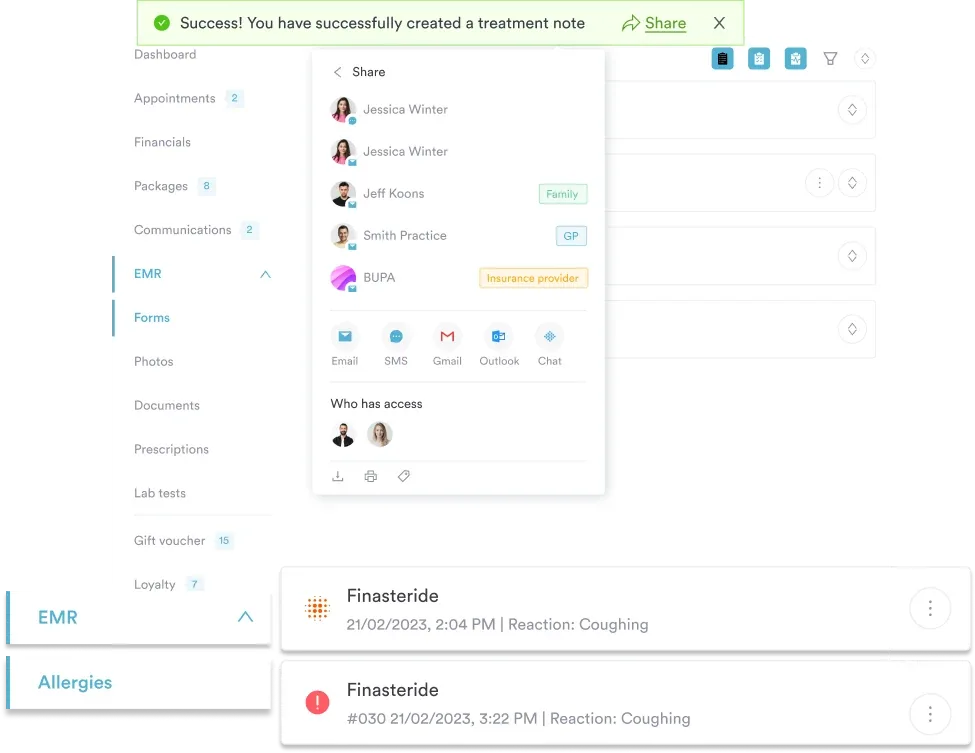
Compliance and security: Functional medicine software platforms storing intake data maintain HIPAA compliance (US) or equivalent data protection frameworks, ensuring patient antecedent/trigger/mediator information is secured and access-controlled.
Start with the mediators, not the full history. Many practitioners try to capture every antecedent and trigger during the first visit, which overwhelms both clinician and patient. Focus first on the two or three lifestyle mediators most relevant to the chief complaint, then fill in the rest of the ATM history across follow-up visits as the clinical picture clarifies. This phased approach improves patient buy-in and helps you refine your intake technique.

See how practice management software like Pabau brings digital forms, clinical documentation, and patient management features together, so functional medicine practices can capture, organize, and act on matrix data in one place.

The functional medicine matrix shifts clinical focus from treating symptoms to identifying root causes. By organizing patient history through the ATM framework and modifiable lifestyle factors – the building blocks of the IFM’s broader seven-system matrix – practitioners see the interconnected web of dysfunction conventional medicine misses, and design treatments that address causes, not just complaints.
Whether you’re new to the matrix or an experienced clinician looking to streamline intake, the free template above is ready to use immediately. Finally, download it, print it, and start mapping root causes in your practice today. For digital storage and longitudinal tracking, connect the matrix to your practice management platform.

Comparing EMR platforms built for root-cause practice? Best functional medicine EMR software reviews the platforms functional medicine practices use to store ATM histories, timelines, and longitudinal lifestyle data.
Setting up a new functional medicine practice? How to start a functional medicine practice walks through the operational steps, from intake design to compliance, before your first root-cause consult.
Need more patients booking consultations? Attracting functional medicine patients explains why patients research for weeks before booking a first appointment.
The functional medicine matrix is a clinical assessment tool from the Institute for Functional Medicine that maps patient symptoms, root causes, and physiological imbalances across seven core systems, alongside antecedent factors, environmental triggers, and lifestyle inputs, all built around a center section for the patient’s mental, emotional, and spiritual health. The free downloadable version of this template focuses on the ATM history and five modifiable lifestyle factors, which feed into that fuller picture, and doesn’t include the center section.
Practitioners gather patient history during intake, map antecedents, triggering events, and mediators using the ATM framework, document lifestyle factors, and use the completed worksheet to identify root causes and sequence interventions. The process typically takes 25-45 minutes and guides treatment planning.
The seven nodes are Assimilation (digestion and nutrient absorption), Defense and Repair (immunity and healing), Energy (mitochondrial function), Biotransformation and Elimination (detoxification), Transport (circulation), Communication (nervous, endocrine, and immune signaling), and Structural Integrity (connective tissue and barriers). At the center of the matrix sits a section for the patient’s mental, emotional, and spiritual health, which connects to all seven nodes. These nodes and the center section are part of the IFM’s full clinical matrix – the free downloadable worksheet on this page doesn’t include a separate section for each node or the center, but instead captures the ATM history and lifestyle factors that inform node-level reasoning.
Antecedents are genetic predispositions and early-life factors that set the stage for disease. Triggers are acute or cumulative environmental exposures that activate symptoms. Mediators are ongoing factors (stress, poor sleep, dysbiosis) that sustain disease and persist after triggers are removed.
Yes. The free Functional Medicine Matrix worksheet – covering the ATM history (Antecedents, Triggering Events, Mediators/Perpetuators) and five modifiable lifestyle factors – is available at the top of this article as a printable PDF. You can also digitize it with practice management software that supports custom digital intake forms.
The five lifestyle factors on the template are Sleep and Relaxation, Exercise and Movement, Nutrition, Stress, and Relationships – covering sleep quality, physical activity, dietary quality, chronic stress and resilience, and social support, respectively.