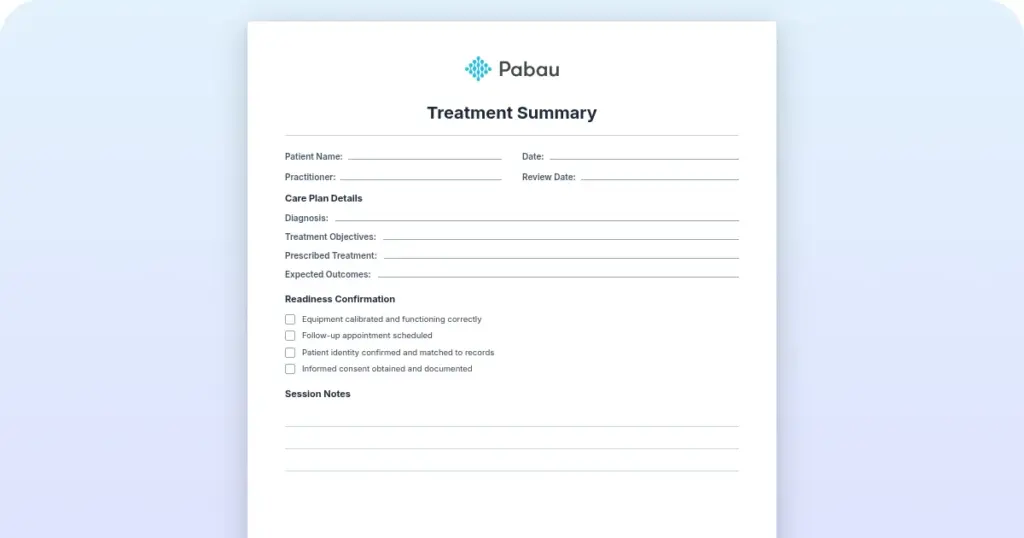
Treatment summary
A treatment summary is a written record of what care was delivered during an epi...

3
Last Updated: Oct 16, 2026
A food list for infants sets out which foods are safe at each stage between 6 and 12 months. Most babies start on smooth purees around 6 months and move to mashed textures by 8 months. Soft finger foods usually follow between 10 and 12 months. Breast milk or formula stays the main source of nutrition all year.
This guide breaks the first year of solids into age bands. It names the foods to avoid outright, the choking hazards that need preparation, and the allergens worth introducing early. The printable checklist below records what a baby has already tried, so nobody has to remember it at the next appointment.
A printable, age-banded checklist for recording which foods a baby has already tried between 6 and 12 months. Hand it to parents at the six-month well-child visit and review it at the next appointment.
Download template
Solid foods usually start around 6 months, once your baby sits with minimal support and shows interest in food.
Introduce single foods first and wait 3 to 5 days between new ones, so any reaction is easy to trace.
Honey is unsafe before 12 months because of botulism risk, and whole cow’s milk should not be the main drink yet.
Cut or mash choking hazards such as whole grapes, cherry tomatoes and raw carrots before they reach the plate.
AAP guidance supports introducing peanut, egg and other common allergens between 6 and 12 months, which may lower allergy risk.
Before introducing solids, check that your baby meets these milestones. Most babies reach them around 6 months, although development varies from child to child.
If your baby is not showing these signs, continue with breast milk or formula and check again in a few weeks. Starting solids earlier brings no benefit and raises the risk of choking. A structured pediatric assessment at the six-month visit documents head control, sitting balance and feeding readiness in one place.
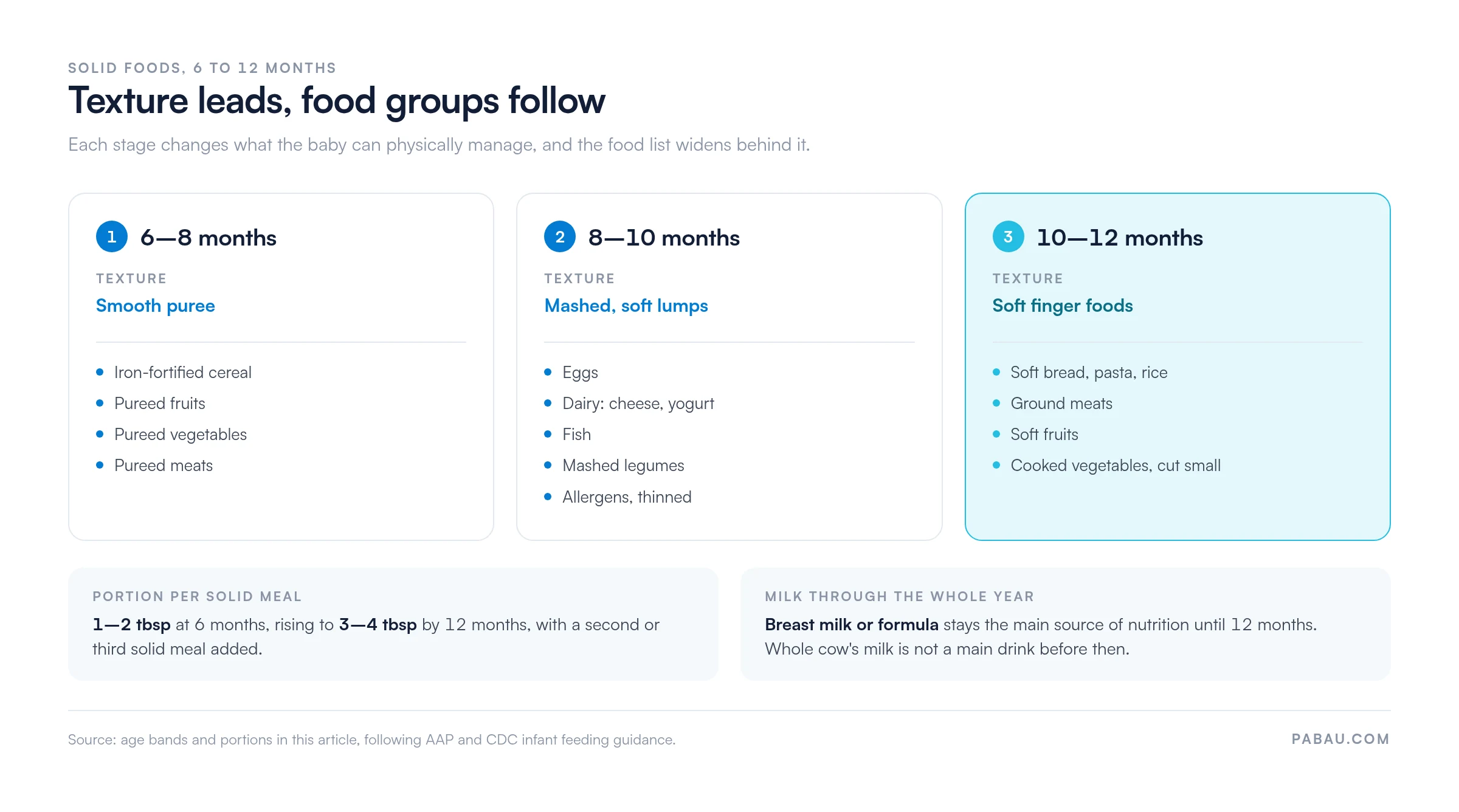
This age-banded breakdown shows which textures and food groups suit each stage of your infant’s development.
Iron-fortified infant cereal is a common first food. It rarely triggers an allergic reaction, and it supports the iron needs that rise around 6 months as maternal iron stores fall. No fixed order applies. Vegetables, fruits or meats are equally valid starting points.
Texture is what moves the sequence along. Each stage widens the list only once a baby can physically manage the food in front of them. Portions and meal counts climb alongside it.
Some foods are unsafe for infants under 12 months and should be avoided outright. These contraindications follow medical evidence and guidance from the CDC and the American Academy of Pediatrics (AAP).
Choking is a leading injury risk for infants learning to eat solids. Preparation and supervision cut that risk sharply.
Recent AAP guidance recommends introducing common allergens between 6 and 12 months. Studies suggest this lowers the chance of a food allergy developing. Recording each one on a food allergy form keeps the dates and any reactions together for the pediatrician to review.
Delaying allergen introduction does not prevent allergies, and it can miss the window when tolerance develops most readily. Speak to your pediatrician first if your baby has eczema or a known egg allergy. Once a reaction is confirmed, an allergy action plan sets out the symptoms to watch for and the steps to take.
Here is a typical day of feeding when solids begin at 6 months. Breast milk or formula remains the primary source of nutrition, and solid foods build up gradually around it.
Across the 6 to 12 month range, portions grow from 1 to 2 tablespoons to 3 to 4. A second or third solid meal joins the day. Milk feeds continue on demand. There is no set number per day, so follow your baby’s hunger and fullness cues.
Most practices hand the feeding checklist over as a paper sheet at the six-month visit. The copy goes home with the parent, and nobody at the practice sees it again until someone asks about it three months later.
Practice management software like Pabau stores the same checklist as a digital form attached to the patient record. You send it out before the appointment, the parent completes it on a phone, and the answers file themselves against that child’s chart. Automated reminders chase the forms that come back empty.
Your pediatric team then opens the next well-child visit with a dated record of which foods have been tried and which reactions were noted. For a group running primary care practice software across several providers, the same form set keeps that record consistent from clinician to clinician.

Pabau’s digital forms send the infant feeding checklist out before the visit and file the answers against the child’s chart. Your team can see what has already been tried without chasing paper.

The first year of solids goes best when it is slow and written down. Follow your baby’s readiness rather than the calendar, and add one food at a time. Honey and whole cow’s milk stay off the list until 12 months.
Parents rarely recall which foods were tried three weeks ago, which is why the written record matters more than the schedule. A checklist that travels between home and the practice removes that guesswork at the next appointment, and it gives the pediatrician something concrete to review.
Book a demo to see how Pabau keeps patient education and feeding records together in one chart.

Seeing the baby before solids begin? Newborn exam sets out the head-to-toe checks that give you a baseline for later feeding reviews.
Need to document readiness properly? Pediatric assessment walks through the structured checks behind a six-month developmental review.
Tracking the six-month visit as a whole? Immunization record form keeps doses and dates alongside the rest of the well-child record.
Recording growth and observations too? Pediatric vital signs chart gives you the age-banded reference ranges for infants and older children.
Running a fuller pediatric review? Pediatric review of systems covers the system-by-system questions that sit around feeding and growth.
Solid foods usually begin around 6 months, once your baby sits with support, has lost the tongue-thrust reflex and shows interest in food. Never before 4 months.
Iron-fortified infant cereal, pureed fruits such as apple, pear and banana, and pureed vegetables such as sweet potato and carrot are common first foods. No fixed order applies, so start with what interests your baby.
Never give honey before 12 months, because of the botulism risk. Also avoid whole cow’s milk as a main drink, added salt or sugar, and choking hazards such as whole grapes, raw carrots and nuts.
Infants under 6 months need no water, because breast milk or formula provides all the hydration they need. From 6 months, small sips of water with meals are fine, but milk feeds stay primary.
Baby-led weaning offers soft finger foods instead of purees. It is a valid approach once readiness is confirmed and choking hazards are prepared safely. Always supervise, cut food into safe sizes, and follow your pediatrician’s guidance.