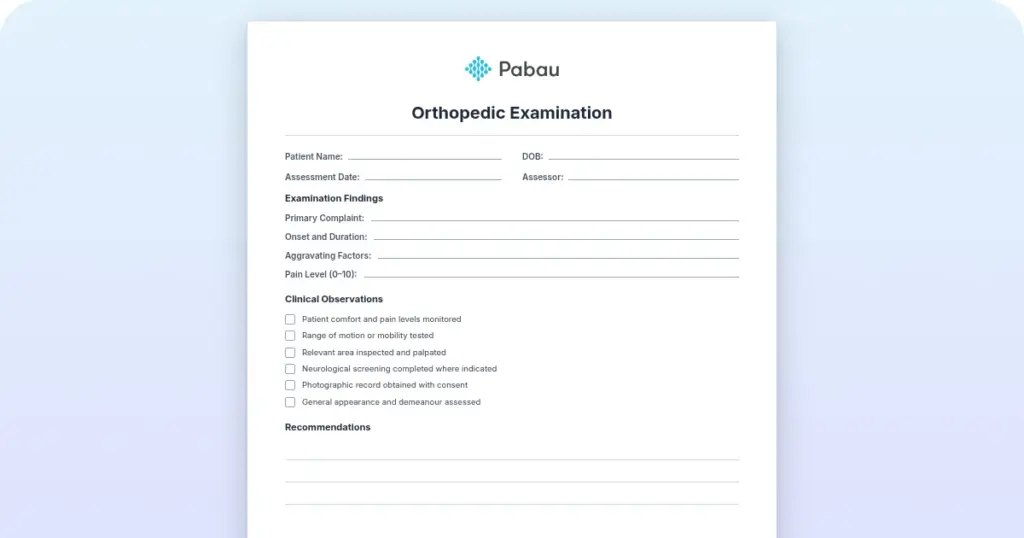
Orthopedic examination template: Free 6-stage form (PDF)
An orthopedic examination is a structured physical assessment of the bones, join...

2
Last Updated: Oct 16, 2026

Deep oscillation therapy uses low-frequency electrostatic oscillations (5-250 Hz) to penetrate tissue layers up to 8 cm deep, creating therapeutic effects on connective tissue, muscles, and lymphatic vessels.
HIVAMAT is the primary device used for deep oscillation therapy. It creates intermittent electrostatic fields between the therapist’s gloved hands and patient tissue.
Clinical applications include lymphedema management, post-surgical edema reduction, lipedema treatment, scar tissue minimization, and chronic pain relief — each requiring specific frequency and duration protocols.
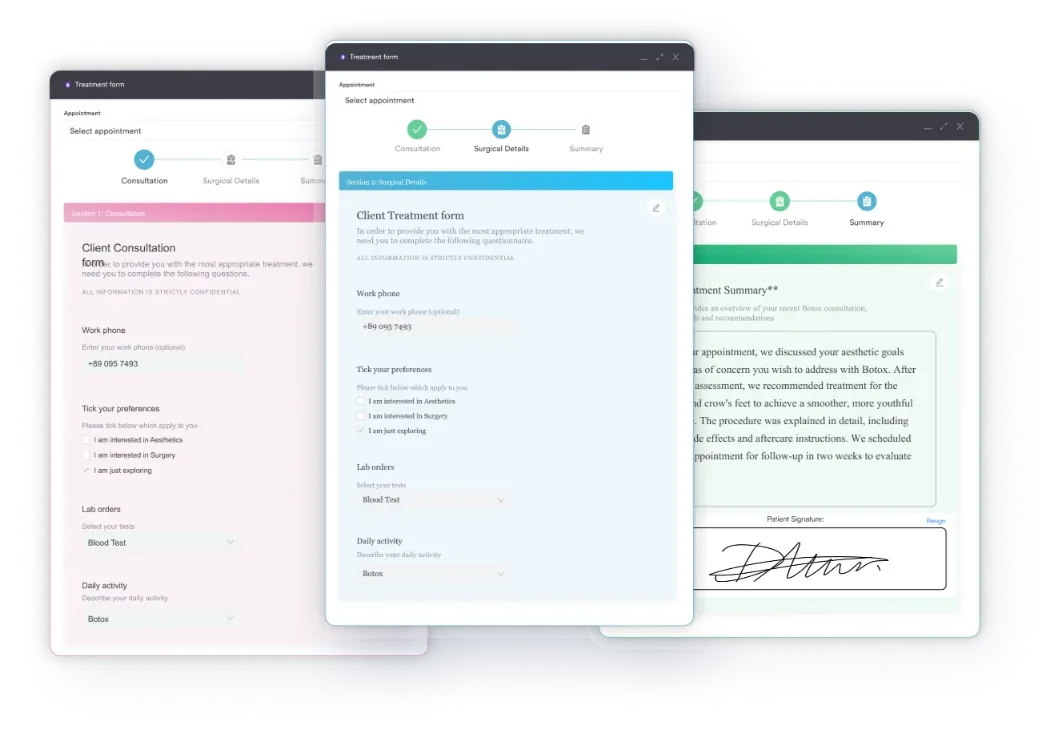
Practice management software like Pabau provides digital capture forms that help physiotherapists document treatment protocols, contraindication screening, and patient responses to deep oscillation therapy efficiently.
A comprehensive post-treatment protocol covering patient care instructions, recovery expectations, safety considerations, and activity guidelines to optimize healing outcomes following deep oscillation therapy sessions.
Download templateDeep oscillation therapy is a non-invasive physical therapy modality that reduces edema, pain, and inflammation through low-frequency electrostatic oscillations. Physiotherapists, lymphedema specialists, and rehabilitation practitioners across the NHS, private practice, and sports medicine settings use it for post-surgical recovery, lymphatic drainage, and tissue healing.
This guide covers the clinical mechanism, treatment protocols, contraindications, and evidence base, plus the downloadable aftercare template your team can implement immediately.
Effective deep oscillation therapy documentation requires structured digital intake forms to capture contraindication screening, patient goals, and treatment history. The template below, combined with Pabau’s clinical documentation features, ensures your team delivers consistent, evidence-aligned care while maintaining compliance with CQC, HIPAA, and GDPR requirements.
Deep oscillation therapy generates oscillating resonance within body tissues using intermittent electrostatic fields. The HIVAMAT device, manufactured by Physiomed Elektromedizin AG, is the primary deep oscillation therapy equipment. The therapist wears gloves attached to the device, which creates electrostatic attraction and friction between the gloves and the patient’s tissue.
This oscillation penetrates skin, connective tissue, subcutaneous fat, muscles, and blood and lymph vessels, reaching therapeutic depths of up to 8 cm.
The mechanism differs fundamentally from manual massage, oscillating at frequencies between 5-250 Hz according to independent clinical data, with lower frequencies (20-50 Hz) targeting deeper muscle tissue and higher frequencies (100-250 Hz) affecting superficial layers and lymphatic vessels.
This frequency selectivity allows clinicians to tailor treatment to specific tissue types and clinical goals, giving practitioners a precision advantage over traditional soft-tissue therapy.
Deep oscillation therapy is particularly effective for lymphatic conditions. Lymphedema (UK: lymphoedema) — abnormal accumulation of lymph fluid in tissues — is the primary clinical application. The oscillations stimulate lymphatic vessel contraction, accelerate lymph drainage, and reduce limb volume and pain.
Post-surgical edema reduction is another core application. Following breast surgery, liposuction, orthopedic procedures, or trauma, deep oscillation therapy reduces swelling and scar tissue formation, accelerating return to function. Lipedema, a fatty tissue redistribution disorder, responds well to deep oscillation therapy combined with compression and mobility work.
A therapy practice management system files each completed worksheet under the client’s treatment plan.
A standardized deep oscillation therapy treatment protocol ensures consistent outcomes and safe practice. The protocol varies by condition, tissue target, and patient tolerance.
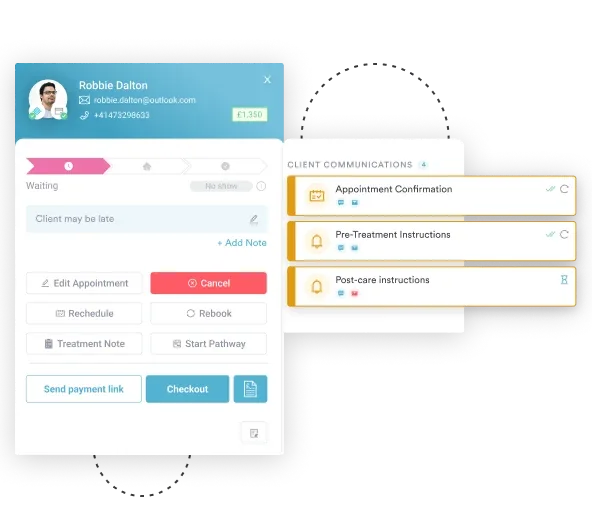
Total treatment courses typically range from 6-15 sessions depending on condition severity and response. Client management systems that track treatment progress and attendance enable clinicians to monitor outcomes, adjust protocols, and communicate results to patients in real time.
Practices that also offer cupping document the marks it leaves the same way. Grade each one against a cupping color chart, then record color, location, and fade time.
Deep oscillation therapy is effective across multiple healthcare disciplines. Physiotherapy practices managing post-surgical rehabilitation or sports injuries .
UK NHS lymphedema services, private aesthetic practices treating post-procedure swelling, and sports medicine teams all incorporate deep oscillation therapy into treatment pathways. Patients with edema-related pain, mobility loss, or functional decline are the primary candidates.
Absolute contraindications (where deep oscillation therapy should NOT be used) include acute infection, malignancy in the treatment area, active thrombosis/DVT, and electronic implants (pacemakers, metal joints). Relative contraindications requiring clinical judgment include early pregnancy, severe pain, and medications affecting coagulation.
Structured treatment protocols and aftercare guidelines reduce complications, improve patient compliance, and strengthen clinical liability protection. Digital forms for consent and contraindication screening ensure no safety flags are missed. Written aftercare instructions reduce patient anxiety and support faster recovery. For multi-location physiotherapy practices, standardized protocols across sites maintain quality consistency and make staff training more efficient.
Why this matters: CQC (Care Quality Commission) inspections in the UK explicitly assess documentation quality, patient safety protocols, and evidence of informed consent. A downloadable, clinician-reviewed aftercare template demonstrates your commitment to patient safety and clinical governance — both of which directly influence CQC ratings and patient trust.

See how private GPs reduce admin, improve clinical safety, and increase revenue with Pabau.

Manual lymphatic drainage (MLD) and traditional massage therapy address similar clinical goals — improving lymph flow, reducing edema, and managing pain. However, deep oscillation therapy offers distinct mechanistic and practical advantages.
Both modalities are complementary. Many practices combine deep oscillation therapy with MLD. The choice depends on condition severity, tissue depth involved, and practitioner capacity.
Safe practice requires thorough contraindication screening before every treatment. Built-in safety alerts in practice management software remind clinicians to confirm screening at each appointment and document results in the patient record.
A randomized controlled trial from Charité-Universitätsmedizin Berlin, published in the Journal of Rehabilitation Medicine (PMID 19020698), found that adding deep oscillation therapy to manual lymphatic drainage produced significantly greater pain and swelling reduction than manual lymphatic drainage alone in patients with secondary breast lymphedema.
UK lymphedema services increasingly incorporate deep oscillation therapy into treatment pathways, using it as an adjunct alongside compression and exercise therapy.
Post-surgical applications show faster edema resolution compared to standard care alone. Scar tissue remodeling is supported by observational clinical data, though randomized controlled trials on scar-specific outcomes remain limited. Sports medicine literature references deep oscillation therapy for acute soft-tissue injury recovery, with practitioners reporting improved pain reduction and faster return-to-play timelines.
Deep oscillation therapy delivers measurable clinical benefits for lymphedema, post-surgical recovery, and chronic pain when delivered according to evidence-based protocols. The downloadable aftercare template above standardizes patient instructions and clinical safety screening, reducing liability, improving compliance, and supporting CQC readiness.
Combining the template with Pabau’s digital forms and patient record system ensures your entire physiotherapy team documents treatment consistently, tracks patient progress, and communicates outcomes effectively.
Book a Pabau demo to see how it handles clinical protocols and patient communication for physiotherapy and rehabilitation practices.

Need a structured patient intake for deep oscillation screening? Physiotherapy clinic management workflows outlines best practices for intake documentation and contraindication assessment.
Screening for visual perception deficits? This visual perception test documentation template records results across five subtests, from spatial relationships to visual memory.
Ruling out an upper arm injury? The arm squeeze test screens for shoulder or upper arm pain using a simple grip technique.
Deep oscillation therapy is a non-invasive physical therapy modality that uses low-frequency electrostatic oscillations (5-250 Hz) to penetrate tissue layers up to 8 cm deep. The HIVAMAT device creates intermittent electrostatic fields between the therapist’s gloved hands and patient tissue, stimulating lymphatic drainage, reducing edema, and promoting tissue healing.
Treatment courses typically range from 6-15 sessions over 4-8 weeks, depending on condition severity and response. Lymphedema cases usually require 2-3 sessions per week, while post-surgical patients may benefit from 2-4 weekly sessions for the first 2-3 weeks. Your aftercare template provides guidance for adjusting frequency based on patient progress.
Deep oscillation therapy is safe for most patients when contraindications are screened. Do NOT use on patients with active infection, malignancy in the treatment area, acute thrombosis, or electronic implants. Relative contraindications (pregnancy, anticoagulation, recent surgery) require clinical judgment and modified protocols. Always obtain informed consent and monitor patients carefully during and after treatment.
HIVAMAT is the primary medical device for deep oscillation therapy. Manufactured by Physiomed Elektromedizin AG, HIVAMAT devices are cleared for use in the UK, EU (CE marking), and other regulated markets. The device must be operated by trained physiotherapists and maintained according to manufacturer specifications. Your practice’s device servicing and operator certification records are part of CQC compliance documentation.
Yes. Deep oscillation therapy is often combined with manual lymphatic drainage, compression therapy, exercise rehabilitation, and other modalities to optimize outcomes. Patient compliance tracking in your management system helps ensure multi-modal protocols are followed consistently across treatment courses.