Intake note template
An intake note is the clinical record a therapist or counselor writes at the sta...

2
Last Updated: Oct 22, 2026
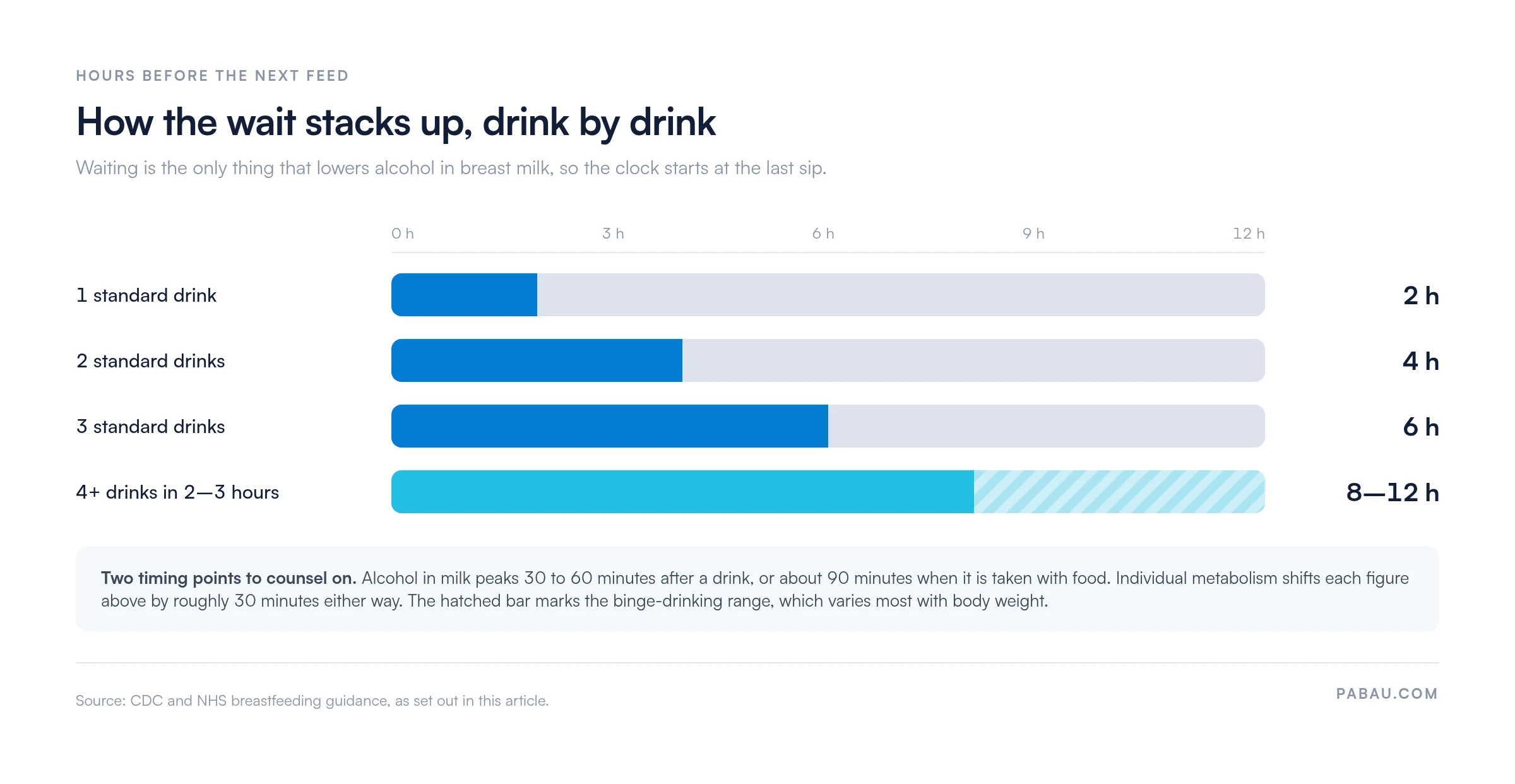
A breastfeeding and alcohol chart tells a nursing mother how long to wait before her next feed. The wait depends on how many standard drinks she has had. The working figure is about two hours per standard drink. Two drinks means roughly four hours, three drinks roughly six.
According to the CDC, alcohol passes freely into breast milk at levels mirroring blood alcohol concentration, and peaks 30 to 60 minutes after a drink. No amount of pumping shortens that window. Only time does.
Obstetric practices, midwifery teams and women’s health practices use the chart during postpartum consultations. This guide covers where the numbers come from and how to counsel on them without adding guilt. It also covers getting the advice into the patient’s record.
A printable clearance table for obstetric and midwifery practices, showing wait times by number of standard drinks and maternal body weight. It includes the standard drink sizes, the chart’s assumptions, and a line for recording the guidance you gave.
Download template
Alcohol clears breast milk at roughly one standard drink every two hours, so two drinks means about a four-hour wait.
Pumping and dumping does not speed clearance. The liver metabolizes the alcohol, and that takes the time it takes.
Body weight and individual metabolism shift each figure by around 30 minutes, so the chart is a starting point rather than a verdict.
Four or more drinks inside two to three hours calls for an eight to 12 hour wait before the next feed.
Record the chart reference, the drink count and the wait time you advised in the patient’s record.
Alcohol does not have to be broken down before it reaches breast milk. It moves straight from the mother’s bloodstream into the milk by passive diffusion. That is why the concentration in milk tracks the concentration in blood, rather than lagging behind it.
Levels peak 30 to 60 minutes after a drink, or closer to 90 minutes when the drink is taken with food. Clearance from that point depends on three things: the number of standard drinks, maternal body weight, and individual metabolism.
Across the common weight range, one standard drink takes somewhere between two and two and a half hours to clear. Lighter mothers sit at the longer end of that range. A weight-banded chart lets you give a number instead of a blanket instruction to wait two hours.
The chart is a matrix. Rows are the number of standard drinks consumed. Columns are maternal body weight bands, running from 100 lb (45 kg) up to 200 lb (91 kg) and above. Each cell gives the hours until alcohol has cleared the milk.
The shape of the rows matters more than any single cell. The wait scales almost linearly with the drink count, and only the binge-drinking band breaks that pattern.
Take a mother weighing 150 pounds who has had two standard drinks. She reads the “2 drinks” row against the 140 to 160 lb column and finds roughly four hours. After that point, she can nurse with no alcohol present in her milk.
Most of the confusion in this conversation comes from drink sizes. A restaurant wine glass holds 6 to 8 oz against a standard 5 oz. Craft beers run from 4% to more than 8% ABV, and a cocktail can carry two standard drinks without looking like it.
Give mothers a reference card with the three standard sizes on it. Many women underestimate their intake because they count glasses rather than units. Alcohol is one line in a wider conversation about diet after delivery. A postpartum diet plan gives you somewhere to record the rest of it.
The CDC and the NHS both hold that moderate drinking, up to one standard drink a day, is not known to harm a breastfed infant. The condition is that the mother waits at least two hours per drink before nursing. That two-hour window is deliberately conservative.
Tell mothers that avoiding alcohol altogether remains the safest choice, and that occasional moderate drinking with proper timing is compatible with breastfeeding. A missed wait is not an emergency. She waits the calculated time before the next feed, and expresses if engorgement becomes uncomfortable.
Pump and dump is the most durable myth in lactation. The belief is that emptying the breast of alcohol-containing milk speeds up how fast alcohol leaves the body. It does not, and repeating the myth adds stress to a mother who has already had the drink.
Pumping removes milk from the breast. It has no effect on blood alcohol, and no effect on the milk the breast produces next. While maternal blood alcohol is still present, newly produced milk carries alcohol at a proportional concentration. The liver does the clearing, on its own schedule.
Test strips detect alcohol in expressed milk and can reassure an anxious mother, but they do not replace a timed wait. They read qualitatively, giving a yes or a no rather than a concentration, and they carry known limitations.
A strip reading “no alcohol” is more dependable than one reading “alcohol detected”, because the false-positive rate is the higher of the two. Published evidence on sensitivity and specificity is thin. The InfantRisk Center advises treating strips as a supplement to timed waiting rather than a substitute for it.
Occasional exposure to small amounts of alcohol through breast milk is not known to cause lasting harm, particularly where mothers follow timed guidance. Regular or heavy drinking is a different case, with documented effects on infant sleep, feeding and motor development.
Reassure mothers that one feed with alcohol in the milk is unlikely to cause harm, especially where the wait was close to right. Risk becomes clinically meaningful with chronic or binge drinking. Use the conversation to screen for substance use, and offer a mental health referral where postpartum depression or anxiety is in the picture.
The chart earns its place when it is built into the visit rather than handed over at the door. That takes three things: education before the appointment, the chart open during the consultation, and the guidance written into the record afterward.
Occasional moderate drinking sits comfortably alongside breastfeeding. Heavier consumption, cravings or a pattern of drinking to cope does not. Screening at every postpartum visit, with a warm handoff ready, tells a mother she is being supported rather than judged.
Keep the referral routes to hand: SAMHSA’s National Helpline on 1-800-662-4357, Postpartum Support International, and any local program that combines obstetric care with addiction medicine. Treating substance use during breastfeeding is possible, and it improves outcomes for mother and infant alike.
In most practices the chart lives as a PDF on a shared drive. Someone prints it, marks it up in the room, and the annotated copy either gets scanned later or does not. The advice was given, but six months on there is no record of the weight band used or the wait time quoted.
Pabau is practice management software for women’s health, spanning software for fertility practices through to OBGYN, midwifery and postpartum teams. The chart sits inside the postpartum form as a fillable section. The drink count and wait time you enter save to the patient’s record as you counsel.
From there the follow-up runs itself. The mother gets the chart through her portal before the visit. Her acknowledgment is captured as a signature on the form, and the two-week reminder repeats her own wait time. Your record shows who was counseled, on what, and when.

Pabau stores the breastfeeding and alcohol chart, the guidance you gave and the mother’s acknowledgment against her record. Postpartum education, consent and follow-up reminders run from one system.

The arithmetic here is not difficult. Two hours per standard drink, adjusted for weight, with a longer wait after a binge. What is difficult is saying it in a way a tired mother believes and remembers, and proving later that you said it.
Pick one habit from this article and make it routine. Annotate the chart in the room, with her weight and her expected drink count on it. That does more for compliance than a leaflet handed over at reception. It also leaves you a dated note that the conversation happened.
The trade-off worth remembering is that precision cuts both ways. A specific number reassures a mother who would otherwise avoid nursing for a whole day. It also holds the line with one who would not have waited at all. Book a demo to see how Pabau keeps postpartum counseling, consent and follow-up in one patient record.

Documenting the newborn side of the visit? Apgar score gives you the scoring grid and the recording conventions for the first ten minutes after delivery.
Reviewing the system behind the forms? Best gynecology EHR compares the platforms obstetric and gynecology practices use to run charting, billing and patient education.
Moderate drinking, up to one standard drink a day, is not known to harm a breastfed infant. The condition is a wait of at least two hours per drink. Avoiding alcohol is still the safest choice. The chart helps mothers decide based on their own circumstances.
Alcohol clears from breast milk in roughly two to two and a half hours per standard drink, depending on maternal body weight and metabolism. Check the breastfeeding and alcohol chart for the wait time that matches her weight band and the number of drinks she has had.
No. Pumping removes milk, not alcohol, and it has no effect on blood alcohol or on the milk produced next. The liver metabolizes the alcohol, which is what lowers the concentration in milk over time. Pumping can ease engorgement, but it does not shorten the wait.
Wait the time the chart gives for that number of drinks before the next feed. One feed with alcohol present is unlikely to cause harm. If the amount concerns you, or it happens often, contact your healthcare provider or the InfantRisk Center.
Test strips detect alcohol but do not measure it, and false positives are common. They can reassure an anxious mother, yet they should supplement the timed chart rather than replace it. Timed waiting remains the evidence-based standard for clinical guidance.