Punch excision aftercare instructions template
Punch excision is a minor procedure that removes a small cylinder of skin with a...

2
Last Updated: Oct 15, 2026

An ear piercing pain scale ranks every common placement, from the lobe to the snug, on a 1-10 scale.
Standard lobe piercings score 1-2/10, while the snug rates 7-9/10 and is the most painful common placement.
Cartilage hurts more than the lobe because it carries fewer blood vessels and denser nerve endings.
Higher pain scores travel with longer healing: six to eight weeks for the lobe, three to six months for cartilage.
Digital forms and consent templates in practice management software like Pabau let you document pain tolerance, anxiety, and the aftercare plan.
An ear piercing pain scale ranks every common ear placement from 1 to 10. A standard lobe sits at 1-2/10.
Cartilage placements like the helix and tragus land at 4-5/10. The snug tops the chart at 7-9/10, because it passes through the ear’s densest cartilage ridge.
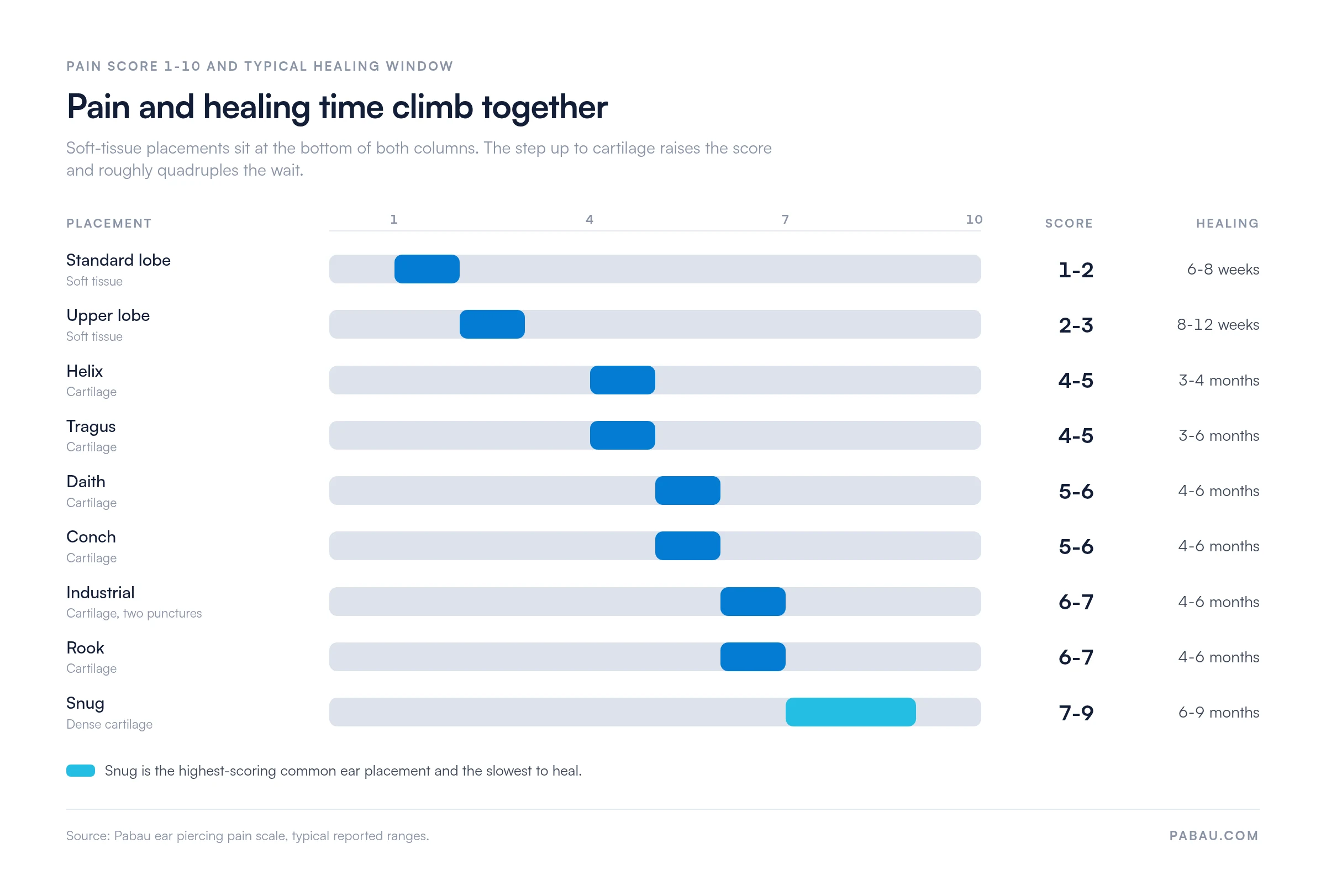
Pain is only half the conversation. Healing runs alongside it. Soft tissue closes in six to eight weeks, while cartilage needs three to six months. The chart below pairs both figures with the tissue type, so you can talk a client through the trade-off on one screen.
This page is written for the person holding the needle, not the person in the chair. You get the full ranking, the reason behind each difference, and a form for recording pain tolerance, contraindications, and the aftercare plan you agreed on.
A ready-to-use consultation form covering nine common ear placements ranked 1-10, with fields for pain tolerance, contraindications, and anxiety. It carries the healing timeline and the aftercare plan you hand the client on the day.
Download templateThe chart below carries the pain score, the tissue type, and the typical healing window for each placement. It is the part of the form practitioners and clients look at most.
The jump worth pointing out sits between the upper lobe and the helix. That is the step from soft tissue into cartilage, and it is where clients are most often caught off guard.
An ear piercing pain scale is a ranked reference that scores each placement from 1 (minimal discomfort) to 10 (severe pain). It gives piercers, spas, and clients a shared way to describe what the procedure will feel like.
Lobe piercings pass through soft tissue with a rich blood supply, so they score lowest. Cartilage scores higher because it holds fewer pain-dampening blood vessels and denser nerve endings.
Pain perception stays individual. A 3/10 for one client can be a 6/10 for another, depending on anxiety, hydration, sleep, and previous piercing experience. Treat the scores as the start of a conversation, not a promise.
The Association of Professional Piercers (APP) recommends covering pain, healing timelines, and aftercare during the initial consultation. Doing it up front cuts cancellations and builds trust before the client is in the chair.
The downloadable form turns the chart into a record. Work through it in five steps.
If you are building the paperwork from scratch, pair the pain scale with a general spa intake form. Medical history, consent, and the pain score then sit in one place instead of three.

Piercing comes up in more settings than piercing studios. The chart earns its place in any practice where the conversation happens:
Fewer cancellations and no-shows. A client who knows the score in advance is less likely to cancel or freeze in the chair. Clear expectations also reduce anxiety-related events like vasovagal syncope, better known as fainting.
Stronger informed consent. A structured form leaves a record that you discussed risks, benefits, and pain management. That record is what protects you if a complaint arrives months later, and it keeps you in line with APP guidelines.
Aftercare that fits the client. Once pain tolerance and anxiety are on file, you can tailor what you send them. An anxious client needs more reassurance on healing milestones. A confident one may be ready for a harder placement next time.
Fewer healing complications. Clients who hear the healing window and the saline routine spelled out are far more likely to follow it. That means less infection, fewer keloids, and less jewelry migration.
Consistency across the team. One form means every piercer runs the same consultation. New staff have a script to learn from, and experienced staff stop drifting into their own version of the pain talk.
The pain itself is brief, usually 5 to 30 seconds, though it is sharp at the top of the scale. Soreness afterwards can run for days or weeks. These steps reduce both:
Healing tracks pain closely, because both come down to tissue type. A lobe closes in six to eight weeks on the strength of its blood supply. Cartilage takes three to six months or longer, since it has poor blood flow and rebuilds slowly.
Give the client four instructions for the healing window:
Infection signs include yellow discharge, heavy redness, swelling past two weeks, or a fever. Refer the client to a healthcare provider if those appear. Hand them written instructions on the day, so nothing rests on memory. Our body piercing aftercare sheet covers the same ground for placements beyond the ear.
Record healing milestones in the client’s file with digital intake forms. You can then see who followed aftercare, and who came back for a second placement.
If you are adding piercing to a spa or wellness menu, the pain conversation is a compliance step as much as a sales one. It shows the client was informed, and it leaves you something to point at if a complaint follows. Practices running the service on spa software can attach the completed form to the client record instead of filing paper.
Practitioners tend to underestimate what expectation-setting is worth. A client who expects 5/10 from a tragus is far more likely to finish the appointment than one who expected a lobe pinch. Fewer surprises means fewer cancellations, and more clients who come back for their next placement.
Most piercing consultations still end with a paper form in a drawer. The pain score gets discussed and the aftercare gets explained. A month later, when the client calls about a sore helix, none of it is easy to find.
Pabau turns that conversation into a record. You build the pain scale into a digital consultation form, and the client signs on a tablet. The completed form saves to their file, next to the appointment. Every subscription includes the forms, so there is nothing to add on.
From there the aftercare instructions send themselves once the appointment is marked complete, and recheck reminders follow the healing timeline you set. Pabau Scribe, our AI scribe, can draft the consultation note, so you are not typing while the client waits.

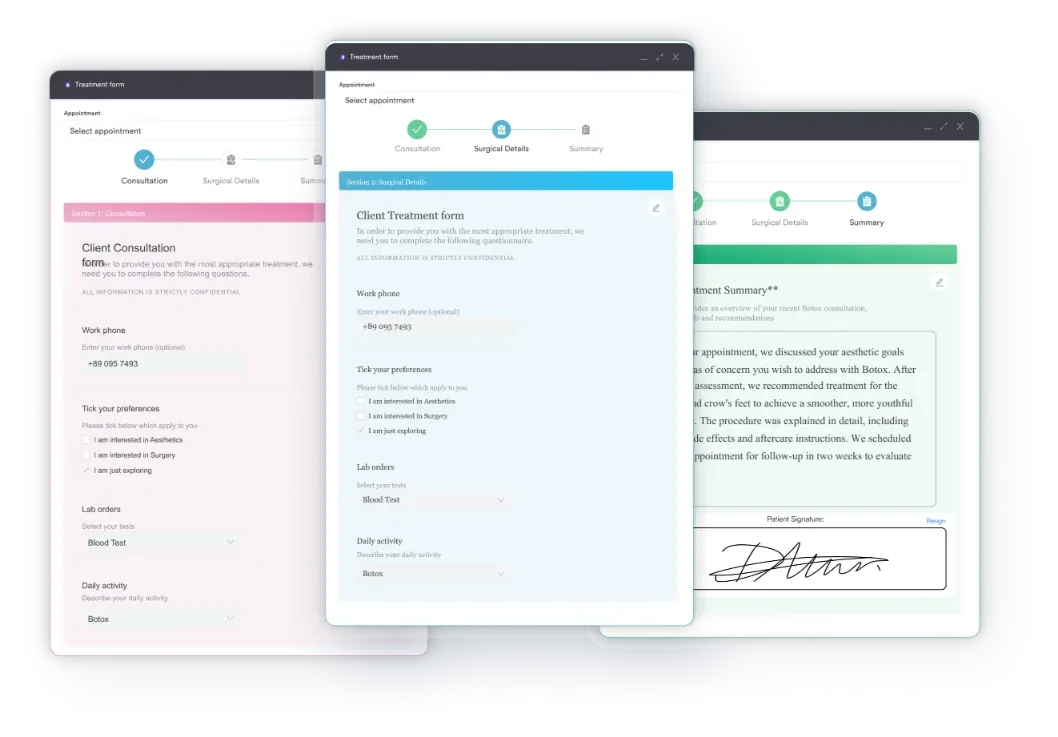
Capture pain tolerance, consent, and the aftercare plan on a single digital form. The signed record saves to the client’s file with the appointment.

Pain is the first question every piercing client asks, and a shrug is a bad answer. Give them the number, the tissue reason, and the healing window in the same breath, and the appointment stops feeling like a gamble to them.
The bigger win is the record you keep. A completed form for every consultation keeps the pain talk consistent across your team, and provable if anyone questions it later. Download the chart, use it on the next consultation, and file it with the client’s notes. Book a demo to see how Pabau keeps piercing consent, pain scores, and aftercare in one client record.

Need the handout that goes home with the client? Body piercing aftercare instructions gives you a printable sheet covering cleaning, healing signs, and when to come back.
Building out the consultation paperwork? The esthetician consultation form shows how to structure history, preferences, and treatment goals in one document.
Want consent that holds up under scrutiny? The facial consent form is a worked example of the risk, benefit, and signature wording an inspector expects to see.
Comparing systems to run the front desk on? Best software for spas weighs the options on booking, client records, and payments.
The snug piercing, which sits on the anti-helix, ranks highest at 7-9/10. It passes through one of the ear’s densest cartilage ridges, where nerve endings are abundant. Industrial and rook piercings come next at 6-7/10, since both also puncture thick cartilage.
Standard lobe piercings hurt the least, at 1-2/10. Lobe tissue is soft, well supplied with blood, and carries fewer nerve endings than cartilage. The pain lasts seconds, and most clients describe it as a quick pinch. That is why the lobe is the usual choice for a first piercing.
Acute pain during the piercing lasts 5 to 30 seconds. Soreness peaks within three to seven days afterwards. It usually settles within two to three weeks for a lobe, and four to eight weeks for cartilage. How closely the client follows aftercare decides where they land in that range.
Yes. A helix piercing (4-5/10) hurts noticeably more than a lobe piercing (1-2/10), because it passes through cartilage rather than soft tissue. Cartilage has fewer blood vessels and more nerve endings, so the pain is sharper. Healing runs three to four months, against six to eight weeks for a lobe. Most clients still find a helix manageable.
Some soreness after a week is normal, especially on cartilage, which heals slower than the lobe. Watch for heavy pain, swelling, or warmth spreading beyond the site. Those can signal infection or a reaction to the jewelry. Refer the client to a healthcare provider if pain comes with redness, discharge, or fever. Otherwise check they are rinsing with saline twice daily and sleeping on the opposite side.
Seven factors matter most. Tissue type comes first, since soft tissue scores lower than cartilage. Individual pain tolerance comes next, along with anxiety during the procedure. Hydration and a meal beforehand change how it feels. Piercer technique, needle quality, and jewelry gauge also play a part, as does previous piercing experience.