CCSD Code T7790: Excision of benign soft tissue tumour
CCSD Code T7790: Definition and procedure scope CCSD Code T7790 is defined in th...

Last Updated: Nov 20, 2026
K0007 is the HCPCS Level II code for an extra heavy duty wheelchair, a manual wheelchair base rated to carry more than 300 pounds. Medicare covers it when the patient weighs more than 300 pounds and meets the general manual wheelchair criteria in LCD L33788.
The chair is billed as a capped rental over 13 months. Since October 28, 2026, it also needs a face-to-face encounter and a signed written order before delivery.
Let Pabau's smart automation suggest the right codes, reduce claim denials, and keep your practice compliant—effortlessly.
Automate repetitive tasks and focus on what matters most—your patients.
Reduce coding errors and ensure compliance with the latest regulations.
Clean claims, fewer denials, and faster reimbursements.
Powerful insights and reporting to help your practice thrive.
HIPAA compliant SOC 2 certified GDPR-compliant Trusted by 4,000+ clinics worldwide

HCPCS code K0007 is an extra heavy duty manual wheelchair base, covered by Medicare when the patient weighs more than 300 pounds.
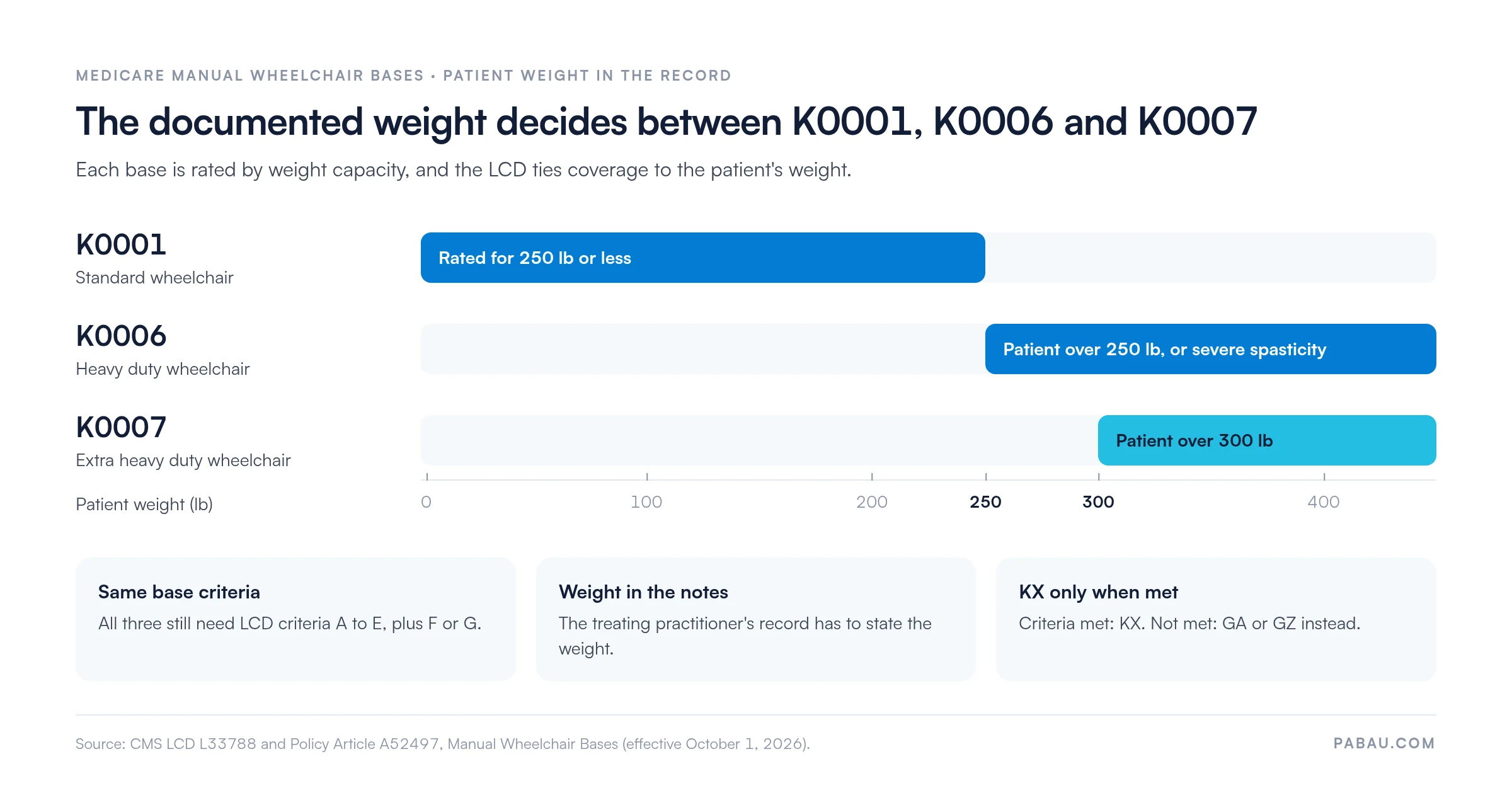
K0006 covers patients over 250 pounds or with severe spasticity, so the weight in the medical record decides between the two codes.
Since October 28, 2026, K0007 needs a face-to-face encounter in the six months before the order and a signed standard written order before delivery.
Bill each rental month with RR plus KH, KI, or KJ, and add KX only when every LCD criterion is met, otherwise GA or GZ.
Repairs to an owned chair are billed with each part’s own code plus RB, with labor under K0739, never under K0007 itself.
Pabau’s claims management submits claims, checks eligibility, and posts remittances, so your team can follow each rental month to payment.
HCPCS code K0007 is the billing code for an extra heavy duty manual wheelchair base. Medicare’s manual wheelchair bases LCD (L33788) covers it when the patient weighs more than 300 pounds. The official descriptor reads: “Extra heavy duty wheelchair.”
CMS maintains the code in the Healthcare Common Procedure Coding System (HCPCS). It sits in the K-series, the temporary codes for durable medical equipment that the DME MACs process. For the wider code set, see the HCPCS Level II codes reference.
DMEPOS suppliers use K0007 to bill Medicare Part B and commercial payers under the durable medical equipment benefit. It describes equipment, not a diagnosis. Medicare’s policy article defines the chair by a weight capacity above 300 pounds, and that capacity counts the patient plus every accessory on the chair.
Weight is what separates the heavier K-series bases. K0006 covers patients over 250 pounds or with severe spasticity, while K0001 through K0003 are rated for 250 pounds or less. Because the weight decides the code, the patient’s weight has to appear in the medical record.
The K-series manual wheelchair codes share similar descriptors, which makes it easy to bill the wrong base. The table below shows the features Medicare’s policy article uses to tell them apart.
Two coding slips cause most of the trouble here. One is billing K0006 when the record shows a weight over 300 pounds. The other is billing K0007 with no weight in the record at all. The weight has to sit in the treating practitioner’s notes, not only on the supplier’s order, and the chart below shows where each threshold falls.
LCD L33788 sets the medical necessity rules for K0007, and the weight threshold alone is not enough. The patient also has to meet the general criteria every manual wheelchair base shares, and the chair has to be used regularly in the home.
The general criteria require that:
On top of those, K0007 is covered only when the patient weighs more than 300 pounds. A chair meant only for use outside the home is denied as noncovered, with no benefit, because the DME benefit requires use in the home.
Since October 28, 2026, K0007 has been on the CMS face-to-face and written order list. The treating practitioner must see the patient face to face within the six months before the order. The supplier must also receive the signed standard written order before the chair is delivered.
DME suppliers need a complete documentation file before the chair ships and before the claim goes out. A supplier billing HCPCS code K0007 without that file risks recoupment if the claim is audited. The file holds:
Keep the documentation for at least seven years. Auditors check the dates first. The encounter has to fall within six months before the order, and the order has to reach the supplier before the delivery date.
Run a documentation checklist against every K0007 claim before billing. The face-to-face note, the written order, and the proof of delivery must be dated in sequence: encounter first, written order second, delivery last. A chair delivered before the supplier holds the signed order is denied as not reasonable and necessary.
Medicare does not require prior authorization for K0007. The one manual wheelchair base added to the national prior authorization list, effective October 28, 2026, is K0005, the ultralightweight chair. The CGS prior authorization list shows the current codes, and the list can change. Check with your DME MAC, Noridian or CGS depending on your jurisdiction, before you rely on it.
Medicare Advantage and commercial plans set their own prior authorization rules for bariatric equipment. Verify the plan’s DME policy before delivery, as part of your medical billing compliance routine. Applying Medicare rules to a commercial claim, or the other way round, leads to avoidable denials.
HCPCS code K0007 is billed with modifiers that describe the rental month and whether the coverage criteria are met. Using the wrong one, or leaving out a required one, gets the claim line rejected or denied. The table below summarizes the modifiers that apply to K0007 claims.
KX is required whenever all the coverage criteria for manual wheelchair bases are met and documented. When a criterion is not met, KX comes off and GA or GZ goes on instead. Claim lines billed without a KX, GA, GY, or GZ modifier are rejected as missing information.
Repairs to a beneficiary-owned K0007 chair are not billed under K0007. Bill each replacement part under its own HCPCS code with the RB modifier, and bill labor under K0739 in 15-minute units. Medicare does not pay separately for repairs during the rental period or for repairs covered by a warranty.
A valid repair claim for owned equipment needs:
Medicare does not require a standard written order for a repair, but keep any repair order in the file. While the owned chair is in the shop, Medicare covers one month’s rental of a standard manual wheelchair as a loaner.
K0007 is a capped rental item, pricing indicator 36 in the CMS HCPCS file. Medicare pays it as a monthly rental for up to 13 continuous months. Title passes to the beneficiary on the first day after the 13th paid month, under 42 CFR 414.229.
Each rental month pays 10% of the recognized purchase price for months 1 to 3, then 7.5% for months 4 to 13. The rental-to-own timeline works as follows:
NR does not mark the first rental month. It applies only when a chair that was new at the start of the rental is later purchased.
K0007 denials cluster around the weight, the order, and the modifier on the claim line. The table below pairs each pattern with the step that prevents it. Denial management workflows for DME suppliers should flag these triggers before claims are submitted.
A clean claim submission for K0007 starts with every document in hand before billing. A claim released while documents are outstanding is hard to fix on appeal. Build a pre-bill checklist into the workflow, and hold the claim until each item is confirmed.
The Medicare allowable for HCPCS code K0007 varies by state. CMS publishes it in the DMEPOS fee schedule as a monthly rental amount. Use the CMS DMEPOS fee schedule to pull the current figure for your service area.
Under the standard Medicare payment structure for capped rental items:
CMS updates the DMEPOS fee schedule file during the year, so pull the current file rather than reusing last year’s allowable. Knowing where the medical billing process meets the fee schedule helps your team quote the right 20% share for each rental month.
A K0007 claim depends on paperwork that starts in the treating practitioner’s office: the encounter note, the documented weight, and a signed order. When that paperwork lives in email threads and paper files, the chair waits until someone finds it.
Pabau, a practice management platform, keeps clinical notes and signed digital forms on one patient record. For practices that bill insurance, Pabau’s claims management software submits claims, runs eligibility checks, and posts remittances against the same record.
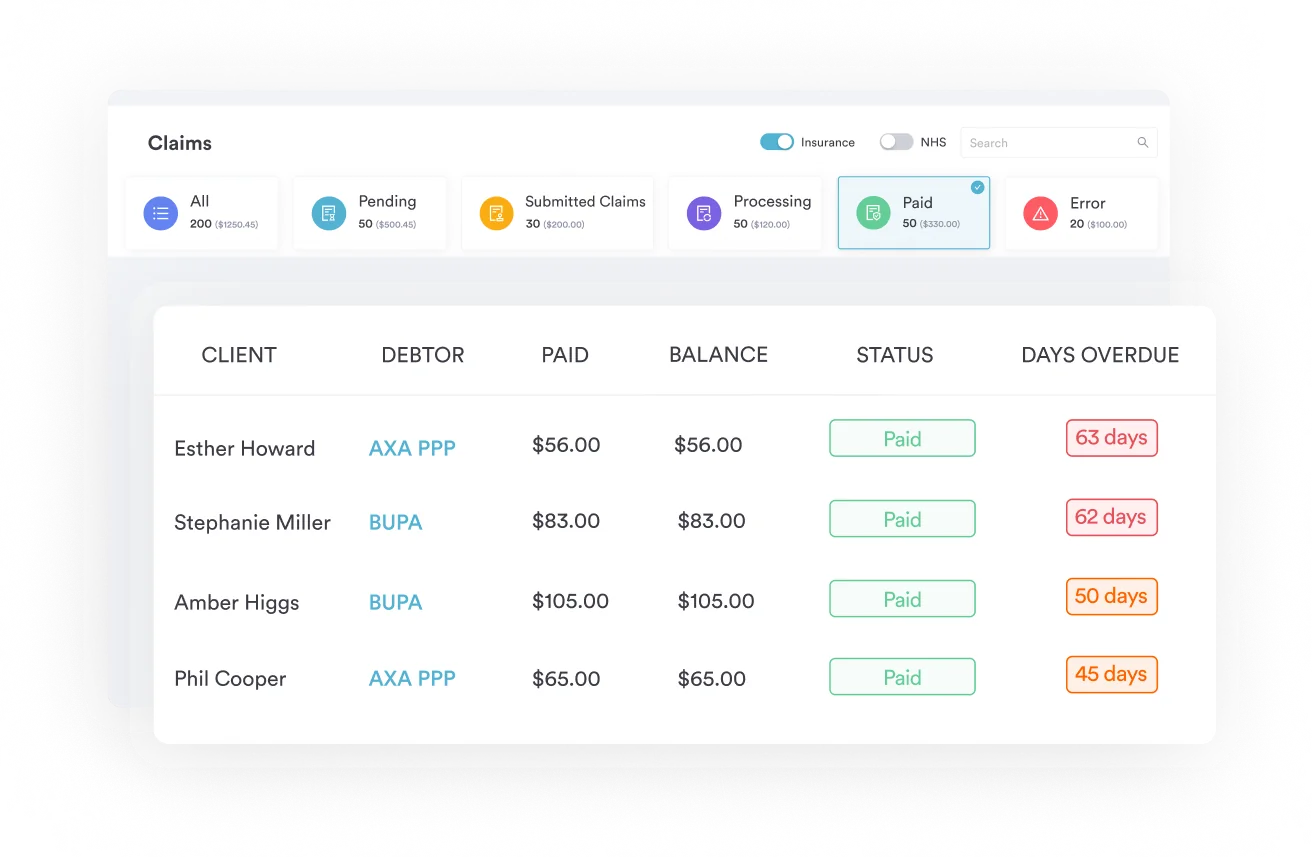
The outcome is fewer calls chasing a missing note, and a clear view of which claims are paid, pending, or denied.

Pabau’s claims management submits claims, checks eligibility, and posts remittances on the same patient record that holds the notes and signed forms. Your team can follow each claim to payment without switching systems.

K0007 turns on one number in the chart. If the treating practitioner’s notes put the patient over 300 pounds, the claim has a basis. The encounter note and the signed order then decide whether it holds up.
Get those two documents in hand before the chair ships, and the rest is routine rental billing. Skip them, and no modifier will rescue the claim.
Book a demo to see how Pabau keeps patient notes, signed forms, and claim status on one record.

Billing a lighter patient? HCPCS code K0006 covers the heavy duty base for patients over 250 pounds or with severe spasticity.
Billing labor on a chair repair? HCPCS code K0739 explains how repair labor is billed in 15-minute units.
Need help managing DME claim denials? Denial management in healthcare covers the leading denial patterns across payer types and how to build an appeal workflow.
Looking for a DME billing compliance framework? Medical billing compliance outlines the documentation standards and audit-readiness checks that apply to DMEPOS suppliers.
Want to understand how the billing process fits together? What is medical billing walks through the full revenue cycle from claim creation to remittance, including DME-specific considerations.
HCPCS code K0007 is the billing code for an extra heavy duty manual wheelchair base, a chair rated to carry more than 300 pounds. It covers the equipment itself, not a clinical service. Medicare covers it when the patient weighs more than 300 pounds and meets the general manual wheelchair criteria for regular use in the home.
K0006 covers heavy duty wheelchairs for patients who weigh more than 250 pounds or have severe spasticity. K0007 covers extra heavy duty chairs for patients who weigh more than 300 pounds. The patient’s weight must be documented in the treating practitioner’s notes to support whichever code is billed.
Modifier NR (new when rented) applies only when an item that was new at the start of the rental is later purchased. It does not mark the first rental month. K0007 rentals show the month with RR plus KH for month 1, KI for months 2 and 3, and KJ from month 4.
Repairs to a beneficiary-owned K0007 chair are not billed under K0007. Each replacement part is billed under its own HCPCS code with the RB modifier, and labor is billed under K0739 in 15-minute units. Medicare does not pay separately for repairs during the rental period or for repairs a warranty covers.
The leading K0007 denial triggers are a missing face-to-face encounter note and a body weight that never appears in the record. Others are a claim line with no KX, GA, GY, or GZ modifier, and delivery before the signed standard written order. A pre-bill checklist catches most of these before the claim goes out.