

HCPCS code E0198: Water pressure pad billing guide
HCPCS code E0198 is a water pad for a standard mattress HCPCS code E0198 is the ...

Last Updated: Oct 13, 2026
G0153 is the HCPCS Level II code for services performed by a qualified speech-language pathologist in the home health or hospice setting, each 15 minutes.
Claims for G0153 are denied more often than billers expect. The code looks straightforward on paper: speech-language pathology services, home health or hospice, 15 minutes per unit. But in practice, a single missing ICD-10 code or a miscalculated timed unit sends the claim back.
For speech therapy practice management teams billing Medicare home health, understanding exactly how this code works is the difference between clean claims and repeated rejections.
Let Pabau's smart automation suggest the right codes, reduce claim denials, and keep your practice compliant—effortlessly.
Automate repetitive tasks and focus on what matters most—your patients.
Reduce coding errors and ensure compliance with the latest regulations.
Clean claims, fewer denials, and faster reimbursements.
Powerful insights and reporting to help your practice thrive.
HIPAA compliant SOC 2 certified GDPR-compliant Trusted by 4,000+ clinics worldwide

HCPCS Code G0153 covers services performed by a qualified speech-language pathologist in home health or hospice settings, billed in 15-minute increments
Medicare Part A covers G0153 when a physician-certified plan of care is on file and the patient meets homebound status criteria
Common denial triggers include missing ICD-10 diagnosis codes, incorrect unit calculation under the 8-minute rule, and absent plan of care documentation
Practice management software like Pabau helps home health and SLP practices stay organized with structured clinical documentation, timed-service tracking, and audit-ready visit notes
HCPCS Code G0153 is a Level II Healthcare Common Procedure Coding System G-code maintained by the Centers for Medicare and Medicaid Services (CMS). It describes services performed by a qualified speech-language pathologist in the home health or hospice setting, billed per 15-minute increment.
G-codes in the G0150-G0170 range are home health therapy codes. G0153 is the speech-language pathology slot in that series, alongside G0152 for occupational therapy. Skilled nursing services in home health and hospice are billed under G0299 (RN) and G0300 (LPN), which replaced the retired G0154 in 2016.
Medicare Part A covers G0153 under the home health benefit when four conditions are met. Missing any one of them is sufficient grounds for denial.
Under the hospice benefit, coverage rules shift. SLP services in hospice are covered when they relate to palliation and comfort rather than curative treatment. The plan of care structure differs between settings, and the revenue codes required on the claim also differ. Review the hospice vs. home health section below for specifics.
The Patient-Driven Groupings Model (PDGM) governs how home health episodes are paid under Medicare. G0153 services are captured in the clinical grouping and functional impairment scoring used by PDGM, so accurate diagnosis coding directly affects payment grouping. Supporting speech therapy care planning with precise ICD-10 documentation matters both for coverage and for correct payment grouping under PDGM.
G0153 is a timed code. The number of units billed per visit is calculated using the CMS 8-minute rule, which applies to all timed therapy services in home health.
Under the 8-minute rule, you must provide at least 8 minutes of a timed service to bill one unit. Each additional 15-minute threshold adds another billable unit. The table below shows how minutes of service convert to billable G0153 units.
Visit notes must record the actual start and stop times for timed services. Documenting only total visit duration without specifying timed versus untimed service minutes creates ambiguity that auditors flag. Structured medical records management with time-entry fields helps SLP practices record and validate unit counts before claim submission.
Home health claims for G0153 are submitted on a UB-04 claim form. The appropriate revenue code for speech-language pathology services in home health is 044x, typically 0440 (General Classification), per CMS home health SLP billing guidance (MAC article A53052).
Always verify the specific revenue code with your Medicare Administrative Contractor (MAC), as CGS Medicare jurisdiction guidelines apply to home health billing.
Hospice claims use a different revenue code structure entirely. Hospice care is paid per diem under level-of-care revenue codes in the 065x series: 0651 for routine home care, 0652 for continuous home care, 0655 for inpatient respite, and 0656 for general inpatient care.
There is no SLP-specific hospice revenue code the way home health has 044x. SLP services are documented under the applicable 065x level-of-care code and bundled into the per diem rate. Confirm discipline-level reporting requirements with your MAC before submitting hospice SLP claims.
Medicare reviews G-code claims closely, and claims management software catches missing elements before submission.
G0153 is reimbursed under the Home Health Prospective Payment System (HH PPS) rather than the Physician Fee Schedule. Under PDGM, home health payments are episode-based rather than per-visit, so individual G0153 units do not have a discrete line-item reimbursement amount in the traditional fee schedule sense.
For agencies billing under the home health benefit, G0153 services contribute to the clinical grouping and therapy visit counts that determine the PDGM episode payment rate. The national average 30-day PDGM payment varies by clinical grouping, functional level, and comorbidity adjustment.
Agencies should reference the HH PPS final rule and the CMS PDGM rate tables for the base episode payment and case-mix weights that apply to their patient’s grouping.
For hospice claims, SLP services are included in the hospice per diem payment rates. Separate line-item reimbursement is not typically available for G0153 in the hospice benefit outside of the daily rate structure. Verify current 2026 hospice per diem rates in the CMS annual hospice payment rate update for your jurisdiction.
Check the CMS PDGM Grouper Tool when onboarding new home health patients. Entering the primary diagnosis code before submitting the plan of care shows the expected clinical grouping and functional category, so your billing team can anticipate the payment tier and flag any grouping that looks lower than the clinical picture warrants.
Insufficient documentation is the leading cause of G0153 post-payment audits. Medicare contractors look for specific items in every claim. A missing entry in any of the following areas can trigger a request for records or a denial.
Structured digital clinical documentation with field-level prompts for timed services, diagnosis codes, and plan of care references reduces the likelihood of missing documentation that triggers an audit. For practices managing both home health and outpatient SLP caseloads, keeping these workflows separate and consistent matters for compliance.
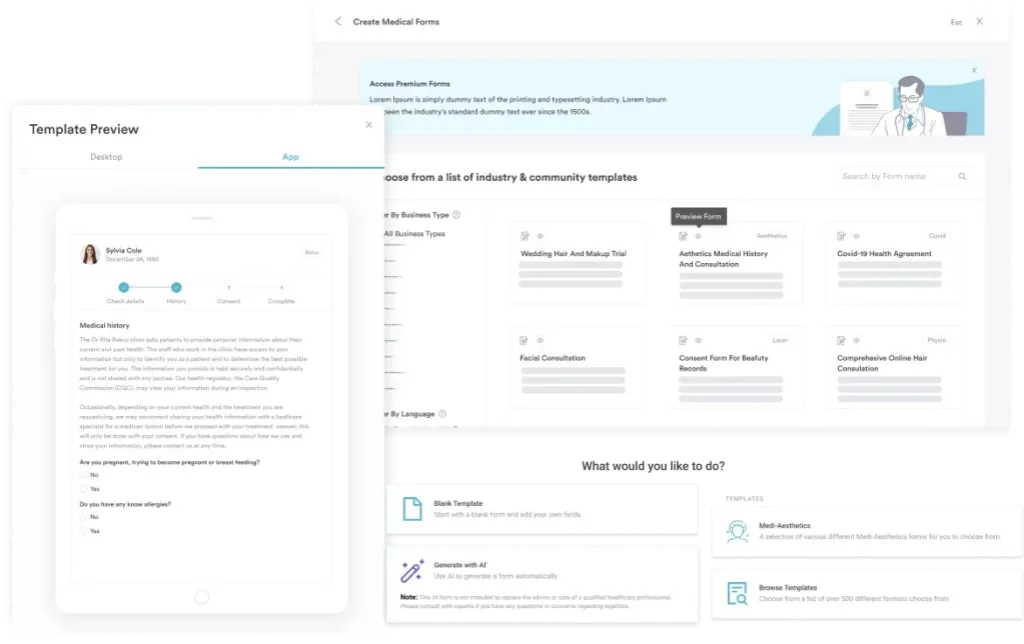

Pabau helps speech-language pathology practices and home health agencies structure clinical notes, track timed service units, and keep plan-of-care and diagnosis documentation organized and audit-ready.

HCPCS Code G0153 requires a supporting ICD-10-CM diagnosis code that establishes medical necessity. The diagnosis must reflect a condition for which SLP services are clinically indicated. The following codes appear most frequently in CMS coverage articles and MAC billing guidance for home health SLP claims.
Use the most specific ICD-10-CM code available. Coding to R13.10 when a swallowing study has already identified the phase is a common under-coding error, and it weakens both medical necessity and PDGM grouping accuracy.
Stroke sequelae codes in the I69.3xx range are particularly important. Using R47.01 alone, without an underlying etiology code, can result in lower PDGM clinical grouping scores than the patient’s actual condition warrants. Pair the functional deficit code with the cerebrovascular etiology code that reflects the underlying cause wherever the clinical record supports it.
G0153 sits within a family of home health therapy G-codes. Each covers a different discipline or service type in the same care setting. Knowing which code applies to which provider prevents claim rejection from misidentified service type. For practices managing both SLP and occupational therapy practice software workflows, the distinction between G0152 and G0153 is particularly relevant.
Each code is discipline-specific. Billing G0152 when a speech-language pathologist delivered the service, or vice versa, results in a claim error tied to provider type mismatch. Review the AAPC HCPCS code reference for full G-code series descriptions. For other therapy procedure codes billed in outpatient or office-based settings, CPT codes apply rather than these home health G-codes.
The same code covers two distinct Medicare benefit categories. Billing G0153 under the home health benefit and billing it under the hospice benefit involve different coverage rules, claim types, and revenue code requirements.
A patient enrolled in the hospice benefit cannot simultaneously receive home health services for the same terminal diagnosis. Billing both benefits for related services on the same patient triggers a duplicate billing flag.
For patients where SLP services address a condition unrelated to the terminal diagnosis, a specific waiver process applies. Keeping a clear hospice admission note on file, documented separately from any home health record, helps practices maintain strict benefit-period separation.
CMS requires the clinician billing G0153 to meet the definition of a “qualified speech-language pathologist.” This means the provider must hold state licensure in the state where services are rendered and meet Medicare enrollment requirements.
The American Speech-Language-Hearing Association (ASHA) Certificate of Clinical Competence in Speech-Language Pathology (CCC-SLP) is widely recognized as meeting the federal qualification standard, though state licensure remains the primary legal requirement.
Clinicians who hold the CCC-SLP credential and maintain current state licensure typically satisfy CMS enrollment criteria. Confirm current qualification requirements against Medicare Benefit Policy Manual Chapter 7 before enrolling new SLP providers in Medicare.
SLP assistants and aides cannot independently bill G0153. Services must be provided by the qualified SLP, not delegated to support staff, for the claim to be valid under this code.
Most G0153 denials trace back to a small set of recurring errors. Recognizing them before submission is far easier than appealing after denial.
Building compliance management workflows that flag missing plan of care certifications and prompt billers to verify provider credentials before submission addresses most of these errors systematically. The CGS Medicare coding verification resource provides additional jurisdiction-specific guidance for home health G-code billing compliance.
Run a pre-submission audit on G0153 claims by checking four items: plan of care signature date is before the first service date, visit notes include start and stop times, at least one ICD-10 code is present and specific, and the provider NPI matches the enrolled SLP in PECOS. Catching these four items catches roughly 80% of denial triggers before the claim leaves your system.
HCPCS Code G0153 is straightforward in structure but precise in its requirements. Clean claims depend on three things working together: a certified plan of care in place before the first visit, accurate timed-unit calculation using the 8-minute rule, and specific ICD-10 diagnosis codes that reflect the patient’s actual condition.
Pabau helps SLP practices and home health agencies keep these pieces organized, with structured clinical notes, timed-service tracking. To see how Pabau supports documentation for therapy-based practices, book a demo.

Billing a heavy duty commode chair? commode chair billing guide covers the modifier and weight documentation that most often causes denials for this DME item.
Billing DME for a female patient? female urinal billing guide covers the jug-type urinal for female patients billed under the DME E-series.
Need to understand physician certification requirements for home health? G0180 covers the initial certification visit a physician must complete before home health services, including SLP, can be billed.
G0153 covers services by a qualified speech-language pathologist in the home health or hospice setting, billed in 15-minute increments. It applies to SLP interventions like dysphagia treatment, aphasia therapy, and motor speech rehabilitation.
G0153 is billed per 15-minute increment. Under the CMS 8-minute rule, 8-22 minutes is one unit, 23-37 minutes two, 38-52 minutes three, and so on. Notes must document actual start and stop times to support the units billed.
Commonly paired ICD-10-CM codes include R13.10-R13.12 (dysphagia by phase), R47.01 (aphasia), R47.1 (dysarthria), and stroke sequelae in the I69.3xx range. Use the most specific code the record supports; phase-specific dysphagia coding is preferred for PDGM grouping accuracy.
G0152 covers occupational therapy and G0153 speech-language pathology, both billed in 15-minute increments in home health or hospice. G0154, the former skilled-nursing code, was discontinued in 2016 and replaced by G0299 (RN) and G0300 (LPN).
Yes. A physician-certified plan of care listing speech-language pathology as a covered discipline must be in place before G0153 is delivered and billed. Claims without one on file are denied, and backdating certification is not permitted.
Yes, but coverage rules, plan-of-care structure, and payment systems differ between the two benefits. A patient in the hospice benefit cannot simultaneously receive home health for the same terminal diagnosis, so clear benefit-period separation in the record is essential.



