CPT Code 62284: Injection procedure for myelography
CPT Code 62284: official descriptor and procedure overview The American Medical ...

Last Updated: Oct 19, 2026
E0144 is the HCPCS Level II code for walker, enclosed, four sided framed, rigid or folding, wheeled with posterior seat.
Modifier KX then confirms that documentation is on file. Selecting the wrong walker code, or submitting the right code without that modifier, is the most common reason E0144 claims get denied.
Let Pabau's smart automation suggest the right codes, reduce claim denials, and keep your practice compliant—effortlessly.
Automate repetitive tasks and focus on what matters most—your patients.
Reduce coding errors and ensure compliance with the latest regulations.
Clean claims, fewer denials, and faster reimbursements.
Powerful insights and reporting to help your practice thrive.
HIPAA compliant SOC 2 certified GDPR-compliant Trusted by 4,000+ clinics worldwide

HCPCS Code E0144 describes a walker that is enclosed, four-sided framed, rigid or folding, wheeled, and includes a posterior (rear) seat for the patient.
Medicare Part B covers E0144 as DME. Coverage requires a documented mobility limitation that significantly impairs one or more mobility-related activities of daily living (MRADLs).
Modifier KX must be appended to E0144 claims to confirm medical necessity documentation is on file. Incorrect modifier selection is a leading cause of claim denial.
Pabau’s claims management software supports DME billing workflows, helping practices track E0144 claims, modifiers, and documentation requirements in one place.
HCPCS Code E0144 is a Level II HCPCS code classified under Durable Medical Equipment (DME). The official descriptor is: Walker, enclosed, four sided framed, rigid or folding, wheeled, with posterior seat.
In plain terms, this code applies to a walker that completely encloses the user on four sides. The frame is rigid or folding, includes wheels for mobility, and is fitted with a rear-facing seat. The posterior seat allows patients to sit briefly during ambulation without a separate transport chair. That combination of features distinguishes E0144 from other walker codes in the E0130-E0149 range. The CARC denial code list is short enough to learn, and most rework traces to a handful of entries.
E0144 is a HCPCS Level II code maintained by the Centers for Medicare and Medicaid Services (CMS). It is part of the annual HCPCS release and code sets. DME suppliers and physical therapy practices billing Medicare Part B use this code when the device supplied matches all elements of the descriptor exactly.
Use the reference table below before submitting any E0144 claim. Each field maps directly to a claim element or documentation requirement.
Medicare Part B covers HCPCS Code E0144 as DME when medical necessity is established. Coverage is not automatic on code selection alone. Three conditions must be satisfied before a claim will be processed.
Physical therapy and sports medicine practices generate most of this documentation. A fracture, joint replacement, or major soft-tissue injury is typically what pushes a patient’s mobility limitation past the coverage threshold.
These criteria derive from CMS Policy Article A52503, which governs walker coverage across all DME MAC jurisdictions. Suppliers and treating physicians should reference this policy article directly when assessing whether a patient qualifies.
Good patient compliance documentation is essential: a well-documented clinical note that maps the patient’s deficits to specific MRADLs reduces the risk of audit-triggered denials significantly.
Only DME suppliers enrolled in Medicare may bill E0144. Treating physicians and physical therapists are not the billing party. They provide the clinical documentation and written order that the enrolled supplier uses to submit the claim.
Equipment orders need follow-through, and patient management software tracks who received what, and when it needs review.
Medicare allowed amounts for E0144 vary by DME MAC jurisdiction. Rates are updated annually through the DMEPOS fee schedule.
Always verify current figures using the CMS Physician Fee Schedule lookup tool before submitting claims. The figures below reflect general guidance and may not match your jurisdiction’s current rate.
Reimbursement for E0144 follows the DMEPOS fee schedule, not the Medicare Physician Fee Schedule. Rates reflect either a purchase amount or a rental payment depending on whether the item is billed as new (NU), rental (RR), or used (UE).
The modifier you append determines the payment calculation Medicare applies. Always confirm which payment classification applies to the specific device being supplied.
Missing or incomplete documentation is the primary reason E0144 claims are denied or recouped during post-payment review. The CGS DME MAC documentation checklist identifies five core requirements that must be in the medical record before the claim is submitted.
A structured intake tool.
Billing teams that assemble E0144 records apply the same documentation discipline to injury sequela claims, including ICD-10 code S72.455S.
Using digital intake forms that capture mobility assessment data at the point of care makes documentation easier to compile. A supplier needs that documentation when processing a DME request. Structured medical forms at your healthcare practice create an audit trail that holds up under DME MAC review.
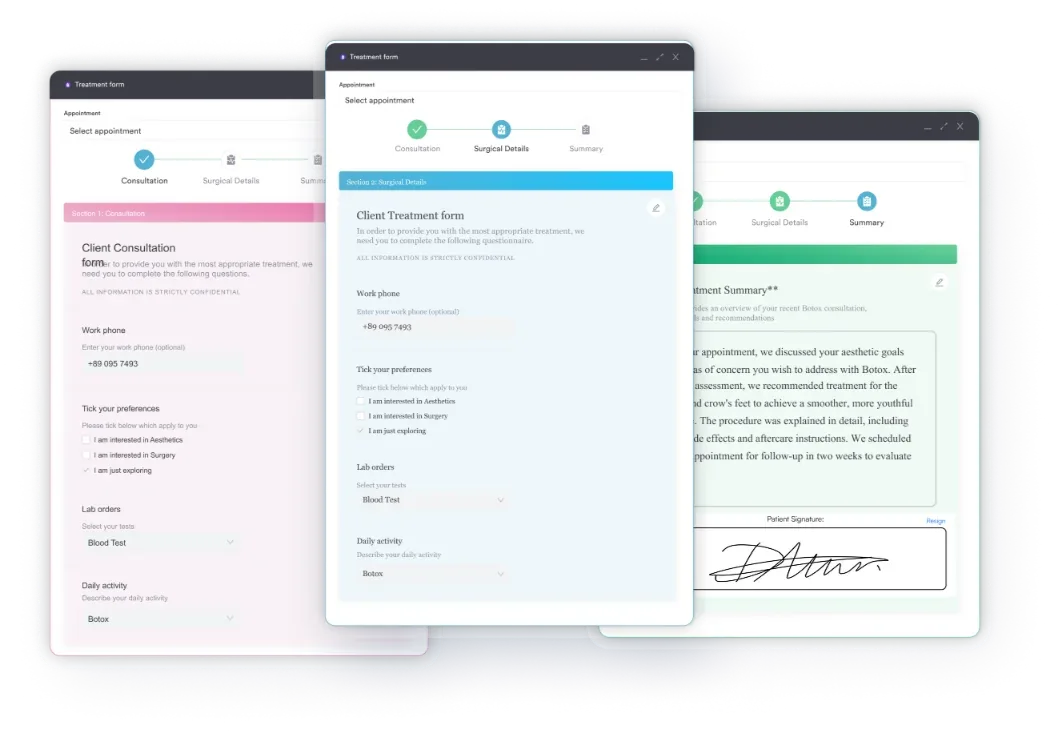
Before delivering any E0144 device, confirm the physician order is in hand and the face-to-face exam is documented. Also confirm the clinical note explicitly ties the patient’s mobility deficit to a named MRADL. Post-delivery claims submitted without these three elements on file are denied at nearly every DME MAC jurisdiction.
Selecting the correct modifier is where most E0144 billing errors occur. Modifier usage signals the payer about medical necessity status, coverage applicability, and payment classification. Appending the wrong modifier can trigger an automated denial even when the documentation is otherwise complete.
KX and GA are mutually exclusive. Appending KX signals the claim meets coverage criteria. GA signals the supplier believes the claim may not meet criteria and the patient has been informed via an Advance Beneficiary Notice (ABN). Submitting both on the same claim line creates a payer adjudication conflict.
To maintain HIPAA-compliant billing workflows, every modifier selection should be documented in the billing record alongside the clinical rationale.
The CGS Medicare coding verification resource offers current transmittals for Jurisdiction C, and coders in other jurisdictions should consult their MAC’s equivalent publication. A searchable HCPCS code reference is also available via the AAPC HCPCS code lookup.
The walker code range (E0130-E0149) contains nine active codes, each describing a specific device configuration. Selecting the wrong code is a common error that results in downcoded reimbursement or outright denial.
Other equipment categories carry their own code sets and modifier logic. Use the table below to confirm E0144 is the correct code for the device supplied.
E0143 and E0144 are the two most frequently confused codes in the walker range. Both describe wheeled, folding walkers. The difference is specific and clinically meaningful.
Upcoding E0143 to E0144 to access the slightly higher reimbursement is an audit risk. The clinical documentation must support the posterior seat as a medically necessary feature, not simply a convenience.
Coders in physical therapy EMR environments often encounter this decision point when a PT evaluation recommends a wheeled walker. Confirming whether a seat is part of that clinical recommendation is a prerequisite to selecting the code.
DME billing creates a documentation and workflow burden that standalone code reference tools cannot solve. Looking up E0144 on a code lookup site gives you the descriptor. It does not check whether the modifier you plan to use is supported by the clinical note in the chart.
Practices using integrated claims management software can link HCPCS code selection to the underlying clinical documentation within the same workflow. When E0144 is selected, the system can flag the modifier requirement and prompt the user to confirm that the KX documentation criteria are met.
It can also attach the claim to the physician order on file. That closed loop between clinical documentation and billing submission removes the opening that DME MAC audits most commonly exploit.
Practices managing patient care documentation across multiple DME orders benefit from centralizing HCPCS code tracking within a practice management platform. That centralization makes it far easier to identify denial patterns.
A practice seeing repeated E0144 denials on missing modifier KX can trace those back to a missing step upstream in the documentation process. That is more useful than treating each denial as an isolated event.
Pabau’s EHR integration for DME billing brings together the clinical record, the billing workflow, and the reporting layer. That connection surfaces patterns before they compound into significant revenue leakage.
That is better than discovering a missing element after a denial arrives.

Pabau’s claims management tools help practices track HCPCS codes, modifiers, and documentation requirements in one place, reducing manual errors and claim denials.

E0144 denials almost always trace back to one of three problems: the wrong walker code was selected, or modifier KX was appended without supporting documentation. A third cause is a face-to-face exam note that fails to map the patient’s deficit to an MRADL. Getting those three elements right before submission is the difference between a clean claim and a costly rework cycle.
Pabau’s claims management software connects clinical documentation to HCPCS code selection and modifier logic. The information needed to support an E0144 claim stays organized at the point of billing, rather than scrambled together during an audit response. To see how Pabau handles DME billing workflows end to end, book a demo with the team.

Billing a different DME category this week? HCPCS Code B4180 walks through parenteral nutrition billing under the same Medicare DME benefit.
Want to see a common walker-qualifying diagnosis coded correctly? ICD-10 Code M16.2 covers bilateral osteoarthritis from hip dysplasia, a frequent mobility-limitation diagnosis.
Need another example of a mobility-limiting diagnosis? ICD-10 Code M06.4 explains inflammatory polyarthropathy coding and documentation.
HCPCS Code E0144 is a Level II HCPCS DME code. It describes a walker that is enclosed, four-sided framed, rigid or folding, wheeled, and fitted with a posterior (rear) seat. It is billed by Medicare-enrolled DME suppliers when the device supplied matches all elements of the official descriptor and medical necessity is established.
Yes, Medicare Part B covers E0144 as DME. The treating physician must document a mobility limitation that significantly impairs one or more mobility-related activities of daily living (MRADLs). That limitation must also be expected to last at least 12 months. Coverage is subject to the requirements in CMS Policy Article A52503.
E0143 is a folding, wheeled walker with an open frame and no seat. E0144 is an enclosed, four-sided framed walker, wheeled, with a posterior seat. Use E0144 only when the clinical recommendation includes a rear seat as a medically necessary feature, not simply as a convenience upgrade from E0143.
An E0144 claim needs a written physician order, a face-to-face examination with supporting documentation, and a clinical note tying the mobility limitation to specific MRADLs. It also needs supporting ICD-10-CM diagnosis codes and proof of delivery, plus supplier enrollment in Medicare through the National Supplier Clearinghouse.
Modifier KX is appended when all medical necessity documentation criteria are met and on file. Modifier GA is used when the supplier has obtained a signed Advance Beneficiary Notice because coverage is uncertain. Modifiers NU (new), RR (rental), and UE (used) determine the payment classification. KX and GA are mutually exclusive on the same claim line.
HCPCS Code E1399 is a miscellaneous DME code used for DME items that do not have a specific HCPCS code assigned. It should not be used when a specific code like E0144 accurately describes the device supplied. Billing E1399 for an item that fits an existing code descriptor invites medical review requests and payment delays.