CPT code 93503: Swan-Ganz catheter billing and modifiers
CPT code 93503: Official descriptor and procedure overview In the AMA CPT code s...

Last Updated: Oct 23, 2026
C1756 is the HCPCS Level II code for catheter, pacing, transesophageal.
Look the code up online, though, and you may meet a different device altogether. Several reference sites describe C1756 as an intravascular catheter with a short-tip design. No such descriptor exists in the CMS HCPCS Level II code set, and a coder who trusts it bills for the wrong thing.
Getting the descriptor right is the first decision, and everything downstream leans on it. The revenue code, the payment status, the modifier, and the documentation all follow from knowing which device you are billing for.
Let Pabau's smart automation suggest the right codes, reduce claim denials, and keep your practice compliant—effortlessly.
Automate repetitive tasks and focus on what matters most—your patients.
Reduce coding errors and ensure compliance with the latest regulations.
Clean claims, fewer denials, and faster reimbursements.
Powerful insights and reporting to help your practice thrive.
HIPAA compliant SOC 2 certified GDPR-compliant Trusted by 4,000+ clinics worldwide

HCPCS code C1756 is defined by CMS as “Catheter, pacing, transesophageal.” It covers an electrode catheter placed in the esophagus to pace the heart temporarily.
Several lookup sites quote C1756 as a short-tip intravascular catheter. That descriptor has never existed in the CMS code set.
C1756 is a C-series code billed on the UB-04 with a matching 027x revenue code. It does not belong on the CMS-1500.
The code took effect on April 1, 2001, so its transitional pass-through window closed years ago. Payment is now packaged into the procedure APC.
Practice management software like Pabau validates the insurer-submission fields a claim needs before it goes out. It does not cover hospital OPPS billing.
The CMS-assigned descriptor for HCPCS code C1756 is: Catheter, pacing, transesophageal. Nothing in it references vascular access, tip length, or angioplasty. The code covers a pacing electrode catheter positioned inside the esophagus, and nothing else.
It is a Level II Healthcare Common Procedure Coding System code, maintained by the Centers for Medicare and Medicaid Services, or CMS. It sits in the C-series, which exists for hospital outpatient department (HOPD) billing under OPPS.
Anatomy is what makes this device work. The esophagus runs directly behind the left atrium, so an electrode sitting at the right depth can capture the atrium through the esophageal wall.
No vessel is punctured and no catheter enters the heart. Ventricular capture by this route is unreliable, so C1756 devices are used for atrial pacing.
That route is also what separates the code from its neighbors. Run the same electrophysiology study through a vein instead, and the device list changes with it.
The steerable intracardiac introducer used on that route has its own code. A catheter threaded into a vessel is never described by C1756, whatever its tip looks like.
Clinicians reach for the esophageal route when they need to pace or study the atrium without vascular access. It is quick to set up, and it avoids the bleeding and infection risk that comes with a transvenous line.
The professional service is usually reported with CPT 93615 or CPT 93616. CPT 93615 covers esophageal recording of the atrial electrogram, and CPT 93616 covers the same recording with pacing. The facility reports the device on its own UB-04 line, separately from the physician claim.
Payment for C1756 is packaged, so the device earns no separate dollar amount of its own. C-series codes were created because Medicare recognized that some new devices deserve a temporary payment adjustment above the standard APC (Ambulatory Payment Classification) rate. That adjustment is called transitional pass-through payment.
C1756 arrived in the first wave of device category codes on April 1, 2001. Pass-through status runs for two to three years, so the window for C1756 closed a long time ago. The catheter now folds into the APC for the procedure it supported.
Hospitals still report the code anyway. That line item gives CMS the device cost data it uses to set future APC rates. It also records what was actually used during the encounter.
So do not budget for a separate C1756 payment on the strength of an old reference. Pull the current-year Addendum B from CMS and read the status indicator for the code before you build the charge.
Check the C1756 status indicator every January, when the new OPPS final rule takes effect for the calendar year. Pull Addendum B from the CMS quarterly addenda page, filter for C1756, and confirm whether payment is still packaged. One annual check prevents a year of misbudgeted device charges.
Report C1756 on the UB-04 institutional claim, paired with a 027x revenue code. That is the only form it belongs on, because the code has no place on the CMS-1500 used by physician offices.
Follow these steps when submitting a claim that includes the device. An EHR billing integration helps here, since the device code and revenue code then populate together before submission.
CMS expects the medical record to support every device code billed, so the note has to name the device and the reason for it. For C1756, the documentation baseline includes the items below.
Missing documentation is the most common reason device code claims come back for more information. A pre-procedure checklist that captures device details at the time of service removes the need for retroactive record searches. Consistent HIPAA-compliant documentation practices also protect the facility during post-payment audits.
Two modifiers matter on a C1756 line, and both describe what the device cost the facility. CMS uses them to adjust device payment when the hospital paid nothing for the catheter, or paid less than the usual price.
Leave one off when it applies and the claim overstates what the facility spent, which is the sort of pattern a post-payment audit looks for. The DMEPOS modifiers you may see elsewhere, such as GK and GL, have no role here. Those sit on Part B supplier claims processed by a DME MAC, not on a hospital OPPS device line.
Here is how one of these claims moves. A patient arrives at the hospital outpatient department with recurrent supraventricular tachycardia. The cardiologist places a transesophageal pacing catheter, records the atrial electrogram, and paces the atrium to break the rhythm.
Two claims come out of that single encounter. The physician bills the professional service on a CMS-1500, usually CPT 93616. The facility bills the UB-04, carrying the procedure line, a 027x revenue code, and C1756 for the catheter itself.
Then the Medicare Administrative Contractor, or MAC, prices the facility claim by APC. Because C1756 is packaged, the remittance shows no separate dollar amount against the device line. That is the expected result rather than a denial, and staff who miss the difference often rebill a line that was paid correctly.
The C1750 to C1760 range groups devices by what they are and where they go, not by tip shape. Most of the neighbors are vascular catheters, which is exactly why C1756 gets selected in error. C1754 is one exception, a catheter placed inside the intervertebral disc, not a vessel. The table below sets the differences out side by side.
When a procedure note references more than one device, each device category may warrant its own C-code line on the claim. Do not consolidate dissimilar devices under a single code. Verify each one against the official CMS HCPCS file, and confirm the descriptor matches the device that was actually used.
C-codes are OPPS instruments, so they only travel on hospital outpatient claims. Every other alpha series in HCPCS Level II serves a different setting, which is where scope errors creep in. Two show up often: reporting a C-code on the wrong claim type, and confusing it with a J-code or an A-code.
Put a C-code on a CMS-1500, or bill one from outside a hospital outpatient setting, and the claim comes back rejected. The same rule applies to every device code in the series.
Device code claims fail more often than procedure-only claims. They depend on three things lining up: the clinical documentation, the revenue code selection, and the OPPS payment rules. These are the errors billing teams hit most often with C1756.
Most of those errors are catchable in about two minutes. Run the claim past five questions before it leaves the building.
Answer all five and the claim is as complete as you can make it before submission. Two minutes of checking is cheaper than the rework a returned claim creates.
Run a quarterly audit of C1756 claims against your current OPPS Addendum B file. Flag any claim where the status indicator has changed since it was billed. Catching a change mid-year lets you correct future submissions before a pattern builds and triggers a MAC review.
C1756 has been in the HCPCS Level II code set since April 1, 2001, and it remains active and billable today. CMS created it in the first wave of device category codes for OPPS pass-through payment.
That fifth row matters more than it looks. Because the descriptor has never been revised, any source quoting C1756 as an intravascular or short-tip catheter is describing a code that has never existed. Check a descriptor against the CMS HCPCS quarterly update before you accept it from a secondary source.
Hospital outpatient device billing runs on the UB-04, and C1756 belongs entirely to that world. Pabau does not serve hospital OPPS billing teams, and it does not track device codes, revenue codes, or OPPS modifiers.
What it does handle is the discipline behind a clean claim on the private practice side.
That discipline matters wherever a practice bills insurers directly. Claims tend to fail on the same few things: a missing membership number, an authorization nobody recorded, a note that does not support the line.
Pabau’s claims management validates the fields an insurer needs before a claim can go out, including membership and authorization numbers. Submission runs through Healthcode, or by email for insurers not connected to Healthcode. The Send button stays locked until the required fields are complete, so an incomplete claim cannot leave the system. Tracking which plans carry an authorization requirement for a service saves the appeal later.
A status dashboard then shows where every claim sits: pending, submitted, processing, paid, or error. You see a rejection on the day it lands, rather than at the end of the month. That timing is usually the difference between a quick correction and a write-off.
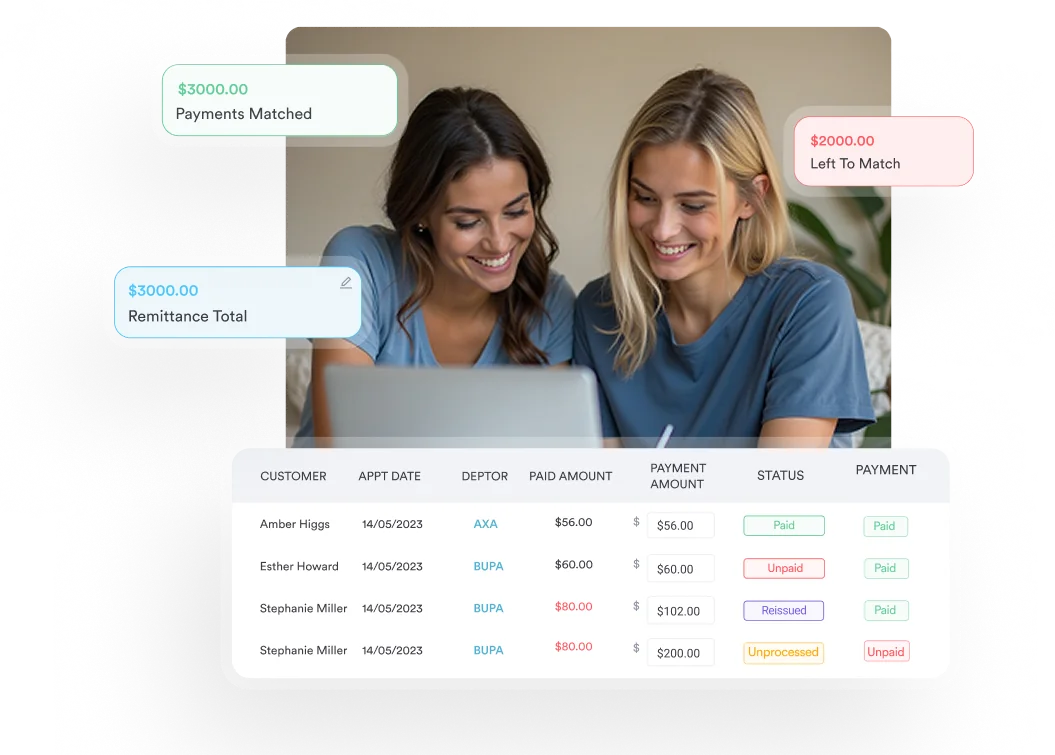

Pabau’s claims management validates the insurer-submission fields each claim needs and holds the Send button until they are filled. One dashboard then tracks every claim through to paid.

The descriptor is the whole job here. Confirm that C1756 means a transesophageal pacing catheter, and the revenue code, the modifier, and the documentation fall into line behind it. Trust a lookup site instead, and every later decision inherits the same mistake.
Payment stays packaged until CMS says otherwise, so treat the C1756 line as cost data rather than revenue. What you get for reporting it accurately is a claim that survives an audit and a device history CMS can price from.
One habit closes most of the loop. Record the device while the patient is still in the room, in the same system that holds the claim. If your practice bills insurers directly, Book a demo to see how Pabau checks a claim before it ever leaves your desk.

Billing another OPPS device code this week? HCPCS code C1727 walks through the same UB-04 and revenue code pairing for a balloon tissue dissector.
Not sure a C-code is still live? HCPCS code C1720 shows what happens when CMS deletes a device code and which replacements to bill instead.
Coding an implanted device instead? HCPCS code C1789 covers documentation and modifier handling for an implantable prosthesis under OPPS.
Coding a non-disposable ear mold? ear mold billing guide covers Medicare exclusions and state Medicaid rules for this non-disposable ear insert code.
Billing miscellaneous hearing aid supplies? hearing aid supplies billing guide explains when to use this catch-all code for hearing aid supplies and accessories.
No. A transesophageal echocardiography probe images the heart with ultrasound. A C1756 catheter carries electrodes and delivers pacing current instead. The two devices sit in the same anatomy, but they are coded separately.
That depends on the rhythm being studied or treated. Common supporting diagnoses include supraventricular tachycardia (I47.1-), typical atrial flutter (I48.3), sick sinus syndrome (I49.5), and bradycardia (R00.1). The diagnosis has to appear in the note, not only on the claim.
No. C-codes belong to the outpatient payment system. An inpatient stay pays under the MS-DRG, and devices are captured through ICD-10-PCS procedure coding instead.
No. Medicare’s prior authorization program for hospital outpatient services covers a set list of procedures, such as vein ablation and facet joint interventions. Device codes are not on that list. Commercial payers can still apply their own rules.
Not on the device line itself. Because payment is packaged, that line generates no separate payment and no separate coinsurance. The patient’s share is calculated on the procedure APC that absorbed the device cost.
Quarterly. CMS publishes HCPCS updates and revised OPPS addenda on a quarterly cycle, with the largest changes landing each January. Check the code and its status indicator at the start of every quarter.