HCPCS code S0145: Pegylated interferon alfa-2a billing guide
HCPCS code S0145: official descriptor, code set, and status HCPCS code S0145 rep...

Last Updated: Oct 5, 2026
A5750 is the CCSD code that UK insurers used for a medial branch block (under X-ray control) covering 1 to 2 levels. A medial branch block numbs the small nerves that supply the spinal facet joints, usually to test whether those joints cause the pain.
The code sat in CCSD Chapter 3, in the paraspinal injections category, and is not listed in Bupa's February 2026 schedule. Medial branch blocks now use A5743, A5744 or A5745 by region, and facet joint injections use A5773, A5774 or A5775.
Let Pabau's smart automation suggest the right codes, reduce claim denials, and keep your practice compliant—effortlessly.
Automate repetitive tasks and focus on what matters most—your patients.
Reduce coding errors and ensure compliance with the latest regulations.
Clean claims, fewer denials, and faster reimbursements.
Powerful insights and reporting to help your practice thrive.
HIPAA compliant SOC 2 certified GDPR-compliant Trusted by 4,000+ clinics worldwide

CCSD code A5750 was a medial branch block code, under X-ray control and covering 1 to 2 levels. It was never a facet joint injection code.
A5750 does not appear in Bupa’s February 2026 schedule, which lists medial branch blocks by spinal region as A5743, A5744 and A5745.
Facet joint injections are billed as A5773 (cervical), A5774 (thoracic) or A5775 (lumbar), codes that took effect on 2 January 2020.
The current descriptors read +/- image guidance (including bilateral), so imaging is optional and a bilateral injection sits inside the same code.
UK insurers expect a WHO ICD-10 diagnosis such as M47.8 or M54.5, not a US ICD-10-CM code such as M47.816.
Pabau stores your CCSD procedure codes in one library and sends private insurer invoices through Healthcode.
CCSD Code A5750 is the code UK private insurers used for a medial branch block (under X-ray control) covering 1 to 2 levels. The schedule is maintained by the Clinical Coding and Schedule Development (CCSD) Group, and every major UK private medical insurer bills against it.
A5750 sat in Chapter 3 of the schedule (spine, spinal cord and peripheral nerves), in the paraspinal injections category. That category holds medial branch blocks, facet joint injections, nerve root blocks, neurolytic blocks, epidurals and sacroiliac joint injections.
The code no longer appears in the current Bupa schedule. The Bupa CCSD reference (February 2026) lists medial branch blocks as three regional codes instead. An invoice that still carries A5750 is using a legacy code, so it is likely to come back for correction.
A5750 is easy to confuse with a facet joint injection code, but it described a medial branch block. A medial branch block and a facet joint injection treat the same joints by different routes, and CCSD codes them separately.
The legacy codes were counted by the levels or joints treated, while the current ones are split by spinal region. The table and diagram below map each legacy code to the current codes that describe the same procedure.
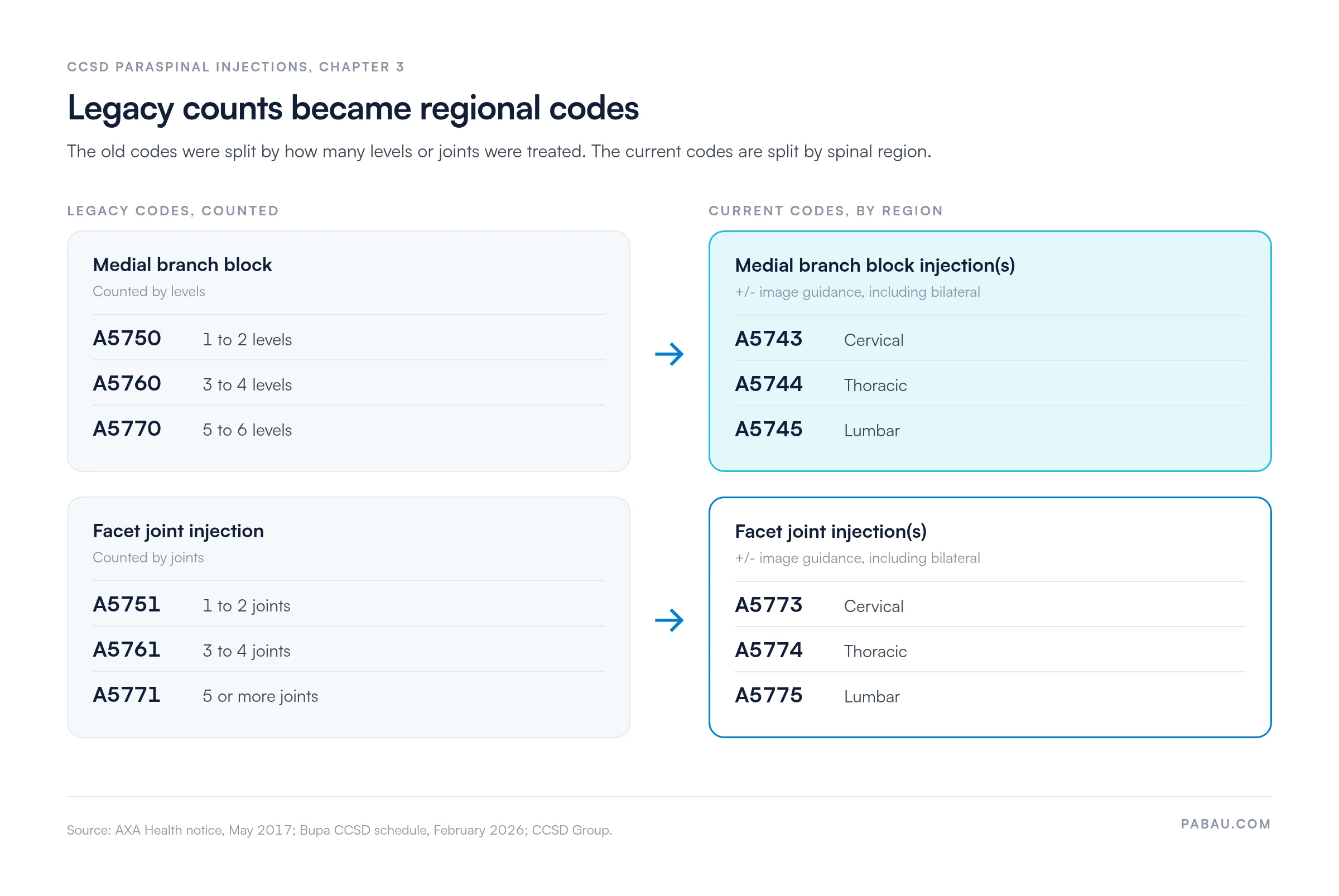
The facet joint codes A5773, A5774 and A5775 took effect on 2 January 2020. The joint-count codes A5751, A5761 and A5771 are no longer in the schedule. Each current code reads “Facet joint injection(s) +/- Image Guidance (including Bilateral)”, followed by the spinal region.
A medial branch block is mainly a diagnostic test. It tells the consultant whether the facet joints are the source of the patient’s neck or back pain.
A positive block often leads to radiofrequency denervation, which CCSD codes separately as a neurolytic root block (A5763 to A5766). NICE guideline NG59 recommends radiofrequency denervation only in people with chronic low back pain after a positive response to a diagnostic medial branch block.
NG59, which covers low back pain, also advises against spinal injections for managing low back pain. Insurers may apply similar thinking when they review an authorisation request, so the clinical case matters as much as the code.
Choose the current code from two facts in the procedure note: what the needle targeted, and which spinal region was treated. The grid below covers the paraspinal injections a pain practice bills most often.
Sacroiliac joint injection under image guidance, including bilateral, has a single code of its own: A5790. It is not split by region.
The current descriptors differ from A5750 in three ways that change how you bill:
Because no joint count is written into the code, confirm the insurer’s approach before you book a multi-region session. Record every region, level and side in the procedure note either way.
Search your saved procedure templates and invoice presets for A5750, A5760, A5770, A5751, A5761 and A5771. Replace each one with the current regional code before the next claim goes out, so a legacy code never reaches an insurer.
The table shows the category and fee Bupa lists for each neighbouring code in its February 2026 schedule. A dash means Bupa lists no category or fee for that code, so check the insurer’s own schedule before quoting a patient.
Fees are Bupa’s published maximums for the consultant and change over time. Other insurers set their own fees against the same CCSD codes. For codes outside the paraspinal injections category, start from our CCSD code library.
UK private insurers use the WHO edition of ICD-10, not the US ICD-10-CM. A US code such as M47.816 has no place on a UK claim, so use the WHO equivalent instead.
Use the most specific code the clinical record supports. A confirmed spondylosis diagnosis is more specific than a pain code, so it usually belongs first on the claim.
UK private medical insurers generally ask members to get authorisation before planned treatment. Each insurer sets its own rules for paraspinal injections, so check the member’s policy before you book.
When you request authorisation, include:
Match the code on the invoice to the code that was authorised. If the plan changes on the day, for example from a medial branch block to a facet joint injection, contact the insurer before you invoice.
For a wider look at how Bupa CCSD procedure codes are structured, see our dedicated reference to the Bupa schedule.
The procedure note is what an insurer checks when it queries a paraspinal injection claim. It should let a reviewer confirm the code without asking the consultant.
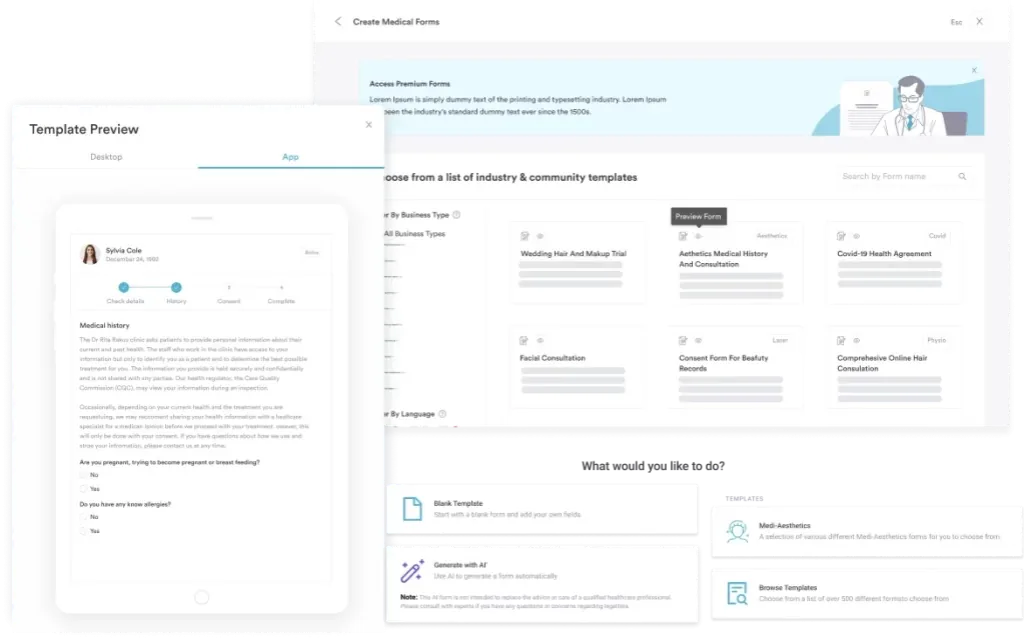
Digital forms in Pabau, the practice software we build, let you set fixed fields for region, level and side. A missing detail is then obvious before the note is signed.
Most problems with A5750 come from old templates and copied invoices rather than clinical errors. Each cause below has a simple fix.
Many pain practices still carry A5750 in an old spreadsheet, a letter template or a saved invoice. Each copy has to be found and corrected by hand, and one missed copy is enough to send a claim back.
Pabau keeps CCSD codes in a single procedure library instead. Update A5743 to A5745 and A5773 to A5775 there once, and each new invoice picks up the current code.
Pabau’s claims management software then sends invoices to UK private insurers through Healthcode and tracks each claim’s status. For pain and musculoskeletal practices, that means less time chasing rejected spinal injection claims.
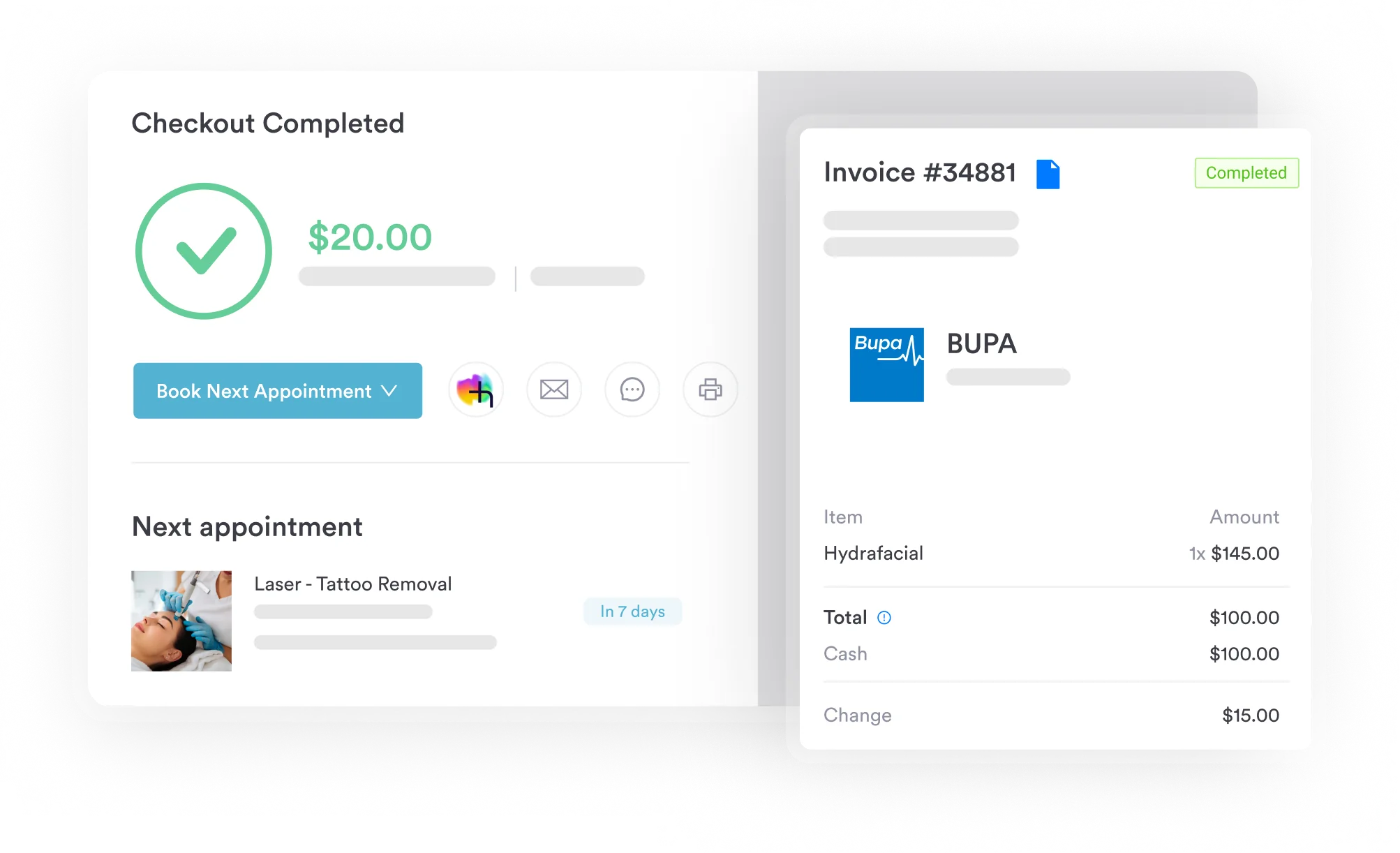

Pabau keeps your CCSD procedure codes in one library, adds them to invoices and sends claims to UK private insurers through Healthcode.

A5750 belongs to an older version of the CCSD schedule, and it described a medial branch block rather than a facet joint injection. Treat any appearance of it on a claim as a prompt to recode.
The fix takes two questions: what the needle targeted, and which region it reached. Those answers point to a single current code, and the procedure note should state both.
Clearing legacy codes out of your templates once saves repeated corrections later. Book a demo to see how Pabau keeps CCSD codes current across every invoice your practice sends.

Need a complete Bupa coding reference for your practice? Bupa CCSD codes guide covers the full Bupa procedure schedule, fee structure, and invoicing rules for UK private practice.
Looking for end-to-end invoice and claim tracking software? Pabau claims management software automates invoice submission and tracks claim status across UK private insurers.
Looking up another UK procedure code? CCSD code library collects our guides to individual CCSD codes, with descriptors and the current codes to bill.
CCSD code A5750 was the code for a medial branch block (under X-ray control) covering 1 to 2 levels. It sat in Chapter 3 of the schedule, in the paraspinal injections category. It does not appear in Bupa’s February 2026 schedule.
No. A5750 described a medial branch block, which targets the nerves supplying the facet joints rather than the joint itself. Facet joint injections are billed as A5773 (cervical), A5774 (thoracic) or A5775 (lumbar).
For a medial branch block, use A5743 for the cervical spine, A5744 for the thoracic spine or A5745 for the lumbar spine. Choose the code from the region recorded in the procedure note.
No. The descriptors for A5773, A5774 and A5775 read +/- image guidance, so the codes apply with or without imaging. Record in the procedure note whether imaging was used and which modality.
Yes. The current medial branch block and facet joint descriptors include bilateral work, so both sides at the same region sit inside one code. How an insurer pays for several regions in one session depends on its own policy.
UK insurers use WHO ICD-10, so M47.8 (other spondylosis) or M54.5 (low back pain) is a common choice. M47.2 fits where there are nerve root symptoms. The US code M47.816 does not belong on a UK claim.