

HCPCS code E0198: Water pressure pad billing guide
HCPCS code E0198 is a water pad for a standard mattress HCPCS code E0198 is the ...

Last Updated: Oct 13, 2026
A4327 is the HCPCS Level II code for female external urinary collection device; meatal cup, each.
Two errors cause most A4327 denials: a missing KX modifier and thin medical necessity notes. Both are process failures rather than coverage decisions.
Let Pabau's smart automation suggest the right codes, reduce claim denials, and keep your practice compliant—effortlessly.
Automate repetitive tasks and focus on what matters most—your patients.
Reduce coding errors and ensure compliance with the latest regulations.
Clean claims, fewer denials, and faster reimbursements.
Powerful insights and reporting to help your practice thrive.
HIPAA compliant SOC 2 certified GDPR-compliant Trusted by 4,000+ clinics worldwide

HCPCS Code A4327 covers a female external urinary collection device, meatal cup, billed per unit under Medicare’s durable medical equipment benefit
Medicare coverage needs documented medical necessity, a valid physician order, and a qualifying ICD-10 diagnosis, and quantity limits apply per billing period
The KX modifier is required once documentation on file supports medical necessity, and omitting it is the leading cause of denial
A4327 and A4328 split on device design: A4327 is the meatal cup and A4328 is the pouch
Practice management software like Pabau links the clinical record to the claim, then submits it and tracks its status
HCPCS Code A4327 has a single, precise official descriptor: Female external urinary collection device, meatal cup, each. It is a Level II HCPCS code maintained by the Centers for Medicare and Medicaid Services (CMS). It is billed to Medicare under the DME benefit, and each unit of the device is billed separately.
A meatal cup is a non-invasive, external urinary collection device for female patients. It fits over the urethral meatus and collects urine without catheterization. That makes it suitable for patients with urinary incontinence who cannot use an indwelling catheter, or prefer not to. It differs from male external catheters and from intermittent catheter codes such as A4351 in both device design and clinical indication. The CARC denial code list is short enough to learn, and most rework traces to a handful of entries.
The table below summarizes the key attributes of HCPCS Code A4327 for quick reference during claim preparation or a payer audit.
Medicare covers HCPCS Code A4327 under the DME benefit when the claim meets the medical necessity criteria in CMS Policy Article A52521. Coverage is never automatic. The DME MAC, or Durable Medical Equipment Medicare Administrative Contractor, reviews the claim against the applicable Local Coverage Determination (LCD) for urological supplies.
Coverage requires all of the following conditions to be met:
Neurogenic bladder conditions are among the most consistently covered diagnoses. That includes bladder dysfunction arising from spinal cord injury, multiple sclerosis, spina bifida, and stroke.
Stress urinary incontinence on its own can face more scrutiny, and how much depends on the DME MAC jurisdiction. Some LCDs want documentation that conservative management was tried first.
With built-in inventory tracking, every dressing or catheter billed under these codes matches recorded stock movement.
The ICD-10 diagnosis codes below are commonly paired with A4327 claims, because they align with the medical necessity criteria in CMS Policy Article A52521. Listing a diagnosis from this table does not guarantee coverage. The diagnosis must reflect the patient’s condition and be supported by clinical documentation.
Specificity is worth the extra minute in the note. If the record says only that the patient is incontinent, the honest code is R32. It supports medical necessity far less convincingly than a typed diagnosis does.
Medicare allowable amounts for A4327 are set annually by CMS and vary by DME MAC jurisdiction. A4327 is priced from the DMEPOS fee schedule rather than the physician fee schedule. The physician lookup tool will not return a rate for it.
Verify current allowables in the CMS DMEPOS fee schedule or your DME MAC’s published rate table before you submit. Jurisdiction-specific adjustments and rural rate differentials may apply.
Allowable amounts for urological supply codes are modest on a per-unit basis. Because quantity limits apply, what actually reaches the practice depends on monthly volume and on whether the KX modifier is on the line. Without KX, Medicare denies the claim.
Modifier selection is where most A4327 claim errors happen. The modifier tells Medicare three things:
The table below covers each applicable modifier and the condition it signals.
The KX and GA modifiers are mutually exclusive on a single claim line. Apply KX when documentation supports medical necessity. Apply GA when it does not, and when an Advance Beneficiary Notice (ABN) has been obtained.
Applying KX when documentation is insufficient exposes the supplier to audit liability. Only attest that documentation is on file when it genuinely meets the applicable LCD criteria.
Before appending the KX modifier to any A4327 claim, review the supporting documentation against your DME MAC’s LCD for urological supplies. Check for three elements: a signed physician order, a qualifying ICD-10 diagnosis in the clinical record, and notes that establish the device is medically appropriate. If any element is missing, obtain it before submitting rather than attesting with KX and risking a post-payment audit.
Documentation failure is the root cause of most A4327 denials that are not modifier errors. Per Noridian DME MAC policy, the medical record must support medical necessity at the time of supply. The original order on its own is not enough. Good medical intake forms capture that information at the first encounter.
Required documentation for A4327 claims includes:
That same three-part check travels across DME supply billing. An enteral pump billed under B9002 lives or dies on the order, the diagnosis, and the delivery record. So does a sterile syringe billed under A4207.
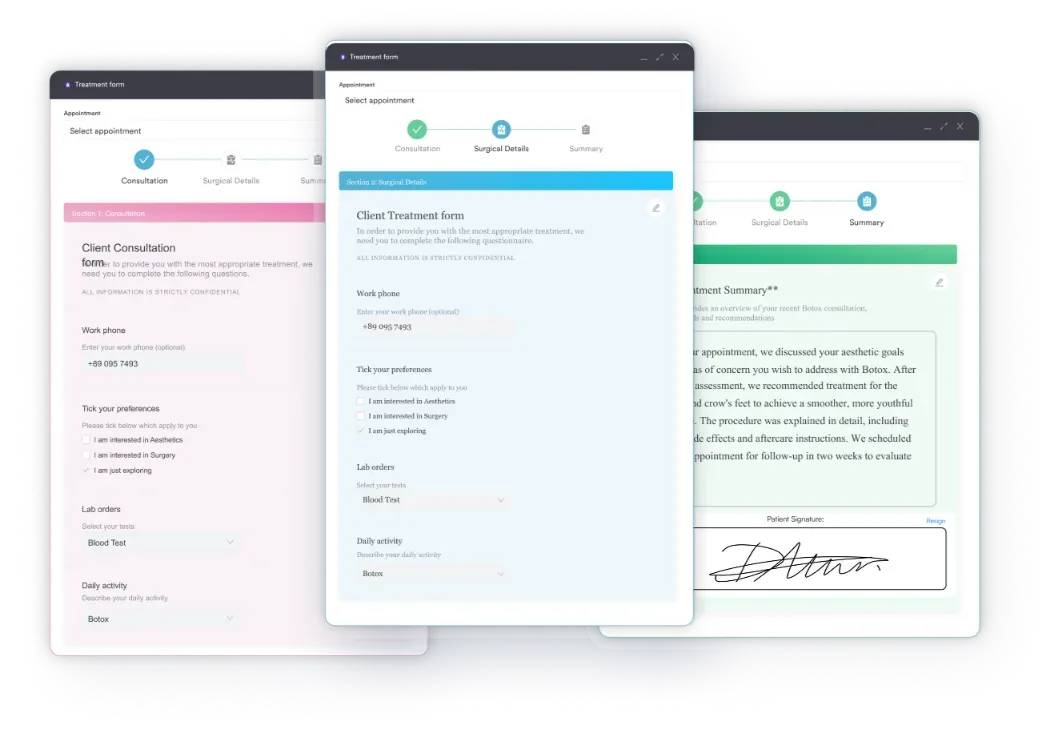
Practices using digital intake forms can standardize this capture at the point of order, rather than chasing paper records at submission.
Medicare and the DME MACs apply per-period quantity limits to A4327 to prevent overuse. Those limits are diagnosis-dependent and contractor-specific. The figures below reflect commonly published limits from Noridian DME MAC policy for urological supplies. Confirm them with your own DME MAC before billing quantities that approach these thresholds.
Billing above the LCD limit without justification on file is a common denial trigger. When a patient genuinely needs more units than the standard limit, document the reason. The physician’s notes should say why the standard quantity falls short for this patient’s daily management.
Per Noridian DME MAC published guidance, most A4327 denials fall into a small number of recurring categories. Each one is preventable with the right pre-submission workflow.
Run a quarterly audit of your A4327 denials grouped by remittance reason code. CARC 4 means the procedure code and the modifier do not agree, or that a required modifier is missing. On A4327 that usually points at how your KX step is applied rather than at the documentation itself. Fix that one step and the pattern stops across future claims.
A4327 sits within a family of urological supply codes that includes drainage bag code A4358. Picking the wrong code from this group is a common billing error, because each one has a distinct device definition and patient population. Use the AAPC HCPCS code lookup or the NLM HCPCS Level II API to verify current descriptors before coding.
A4327 and A4328 are the most frequently confused pair, and the split between them is the device itself. A4327 is the meatal cup design. A4328 is the pouch design. Neither one is a catch-all, so match the code to the device the patient actually received.
If the manufacturer’s labeling leaves the design ambiguous, check the product’s PDAC verification status before you bill. PDAC stands for Pricing, Data Analysis and Coding, and it is the contractor that confirms which HCPCS code a specific product maps to.
In most practices that bill DME, the physician order sits in one place, the clinical note in another, and the claim in a third system. A biller checking whether documentation supports KX has to open all three, and every extra window is a chance to submit on an assumption.
Practice management software like Pabau keeps the order, the note, and the diagnosis on one patient record. Its claims management tools pull that stored information into a pre-filled claim, then submit it electronically and track its status through to remittance.
So the biller confirms the order and the diagnosis on the same screen as the claim.
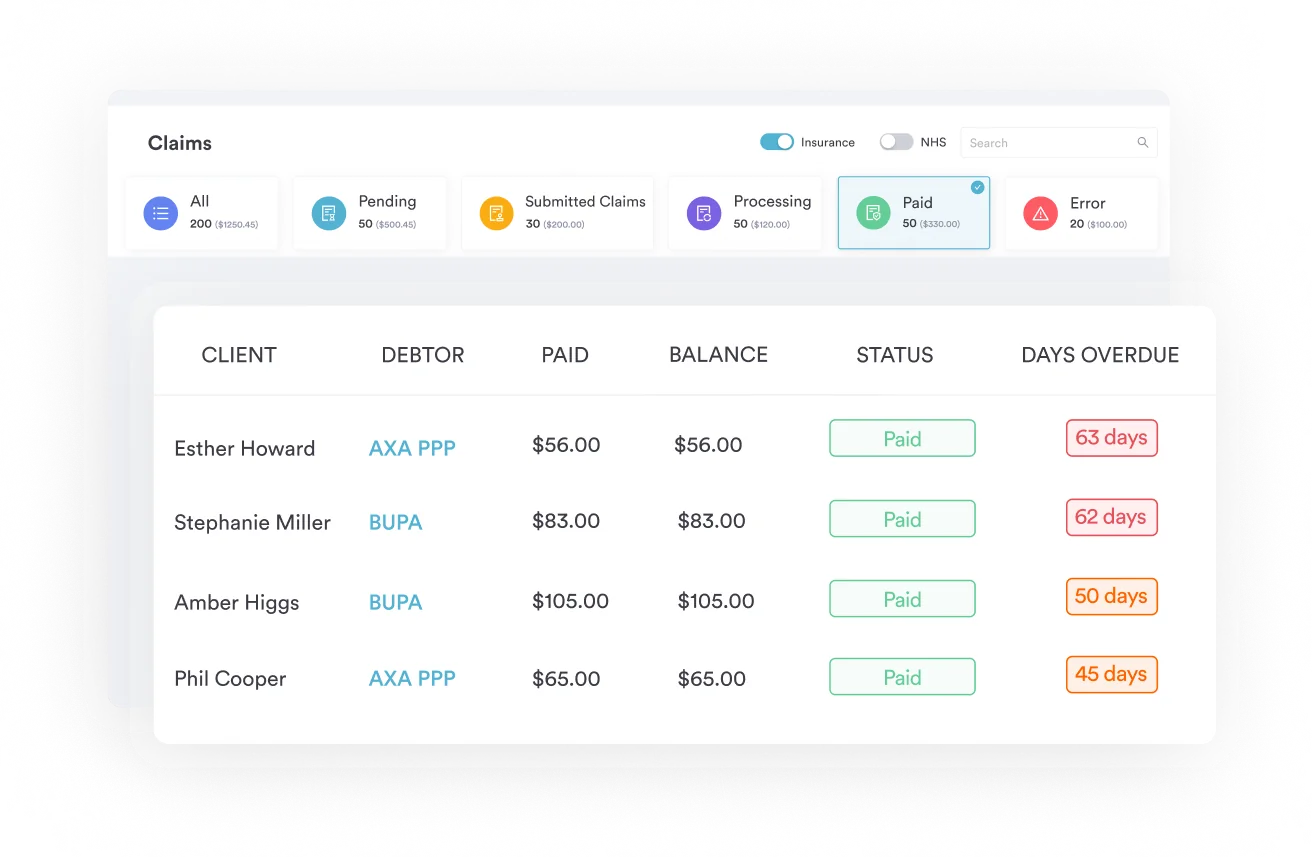
Reporting is the other lever. From there you can see which A4327 lines came back unpaid, and what they had in common. Fix that step once, and the pattern stops repeating.

Pabau keeps the physician order, the clinical note, and the diagnosis on one patient record. It pulls that stored information into a pre-filled claim and tracks it through to remittance. Your billing team can see what a denial had in common before the filing window closes.

A4327 rewards process over research. The descriptor is short and the coverage rules are stable, so the money is lost where documentation and modifiers meet.
That makes the work front-loaded. Get the order, the qualifying diagnosis, and the delivery confirmation on file before the claim goes out. The KX attestation then looks after itself, and the appeal queue stays short.
The trade-off is spending the time at the point of order rather than at appeal, which is the cheaper place to spend it. Book a demo to see how Pabau keeps urological supply documentation and claim tracking in one record.

Billing drainage supplies as well? A4911 covers the documentation and billing rules that apply to drain bags and bottles.
Supplying reusable incontinence garments? A4520 explains how those claims differ from an external collection device claim.
Handling replacement equipment accessories? A4601 walks through the order and delivery documentation a replacement battery claim needs.
Billing methadone through an opioid treatment program? Methadone billing and fee schedule covers H0020’s modifiers and fee schedule, and why Medicare doesn’t use the code.
Billing behavioral health outreach services? Behavioral health outreach billing covers H0023 and the missing outreach plan that most often causes a claim to fail.
HCPCS Code A4327 is a Level II HCPCS code for a female external urinary collection device, meatal cup, each. It is billed per unit under the Medicare durable medical equipment benefit. It covers non-invasive external devices for female patients managing urinary incontinence or neurogenic bladder conditions.
Commonly linked ICD-10 codes include N39.3, N39.41, and N39.46 for stress, urge, and mixed incontinence. N31.9 covers neuromuscular dysfunction of the bladder, while Q05.9 and G35 cover spina bifida and multiple sclerosis. The diagnosis must reflect the patient’s condition and be supported by clinical documentation. Inclusion on this list does not guarantee coverage.
A4327 and A4328 both cover female external urinary collection devices, and the difference is the device design. A4327 is the meatal cup. A4328 is the pouch. Bill the code that matches what the patient received, and check the product’s PDAC verification status if the labeling is unclear.
The most common denial reasons are a missing KX modifier, a non-covered ICD-10 diagnosis, and a missing or incomplete physician order. Quantities above the LCD limit without justification and missing proof of delivery account for most of the rest. Each one is preventable with pre-submission checks that run before the claim leaves the billing system.



