HCPCS Code Q4185: Cellesta flowable amnion billing guide
HCPCS Code Q4185: definition and official descriptor HCPCS Code Q4185 is the Lev...

Last Updated: Nov 20, 2026
Billable Code Specific Code
96164 is the CPT code for a face-to-face health behavior intervention with a group of two or more patients, covering the initial 30 minutes. It is a primary code, billable on its own, and each additional 15 minutes is reported with add-on code +96165.
The group targets the behavioral, emotional and social factors that complicate a physical health condition, so each patient needs a primary medical diagnosis. The code is not reported for less than 16 minutes. Individual sessions use 96158, and family sessions use 96167 or 96170.
Let Pabau's smart automation suggest the right codes, reduce claim denials, and keep your practice compliant—effortlessly.
Automate repetitive tasks and focus on what matters most—your patients.
Reduce coding errors and ensure compliance with the latest regulations.
Clean claims, fewer denials, and faster reimbursements.
Powerful insights and reporting to help your practice thrive.
HIPAA compliant SOC 2 certified GDPR-compliant Trusted by 4,000+ clinics worldwide

CPT code 96164 reports the first 30 minutes of a face-to-face health behavior intervention with a group of two or more patients.
It is a primary code that is billable on its own, and add-on code +96165 reports each additional 15 minutes.
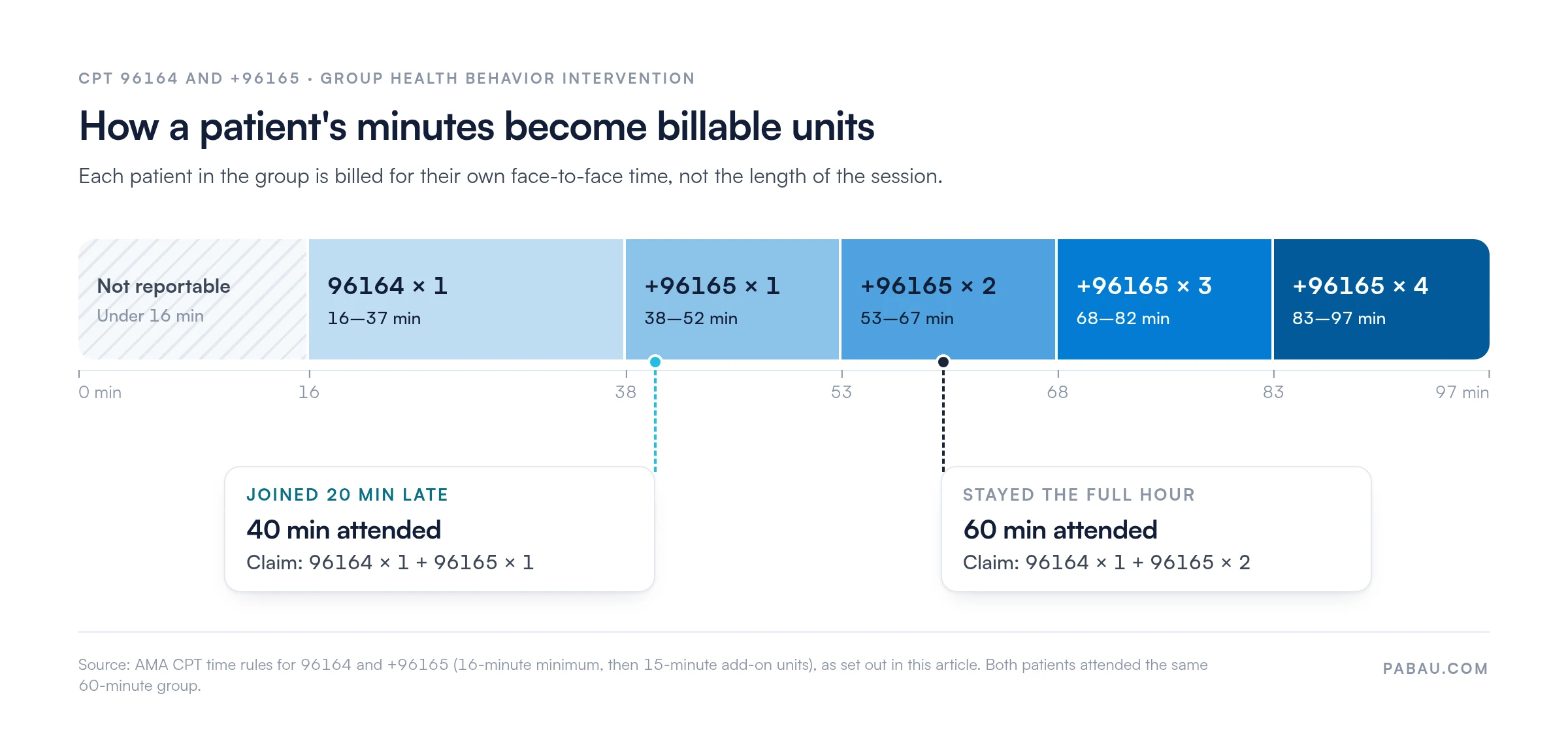
Do not report 96164 for less than 16 minutes, and add the first unit of 96165 only once the session reaches 38 minutes.
Each patient in the group needs a primary physical health diagnosis, because health behavior codes address factors that complicate a medical condition.
In Pabau’s billing software, session times and attendance sit next to each patient’s claim, so the units billed match the documented minutes.
CPT code 96164 reports the first 30 minutes of a face-to-face health behavior intervention with a group of two or more patients. Montana Medicaid’s health behavior billing codes notice lists it as “Health behavior intervention, group, initial 30 minutes,” with 96165 for each additional 15 minutes. The code is billable on its own. Time beyond the first 30 minutes goes on add-on code +96165, never on a second unit of 96164.
The American Medical Association (AMA), which publishes the CPT code set, defines the code as follows:
The intervention addresses the psychological, behavioral, emotional, cognitive and social factors that affect how patients manage a physical illness. Typical groups cover diabetes self-management, chronic pain coping, cardiac rehabilitation adherence, weight management and cancer survivorship. The focus stays on the medical condition, and that focus is what separates 96164 from group psychotherapy.
CPT code 96164 does not cover:
Since 2020, the health behavior family has used one assessment code and four intervention pairs. Each pair has a primary code for the initial 30 minutes and an add-on for each additional 15 minutes. The pairs differ only by who is in the room.
Two neighboring codes often get pulled into this family by mistake. CPT 96160 and CPT 96161 report the administration of a standardized health risk assessment instrument. The first is patient-focused, and the second is caregiver-focused. Both are scored instruments, not interventions, so neither one substitutes for 96164.
Codes 96162 and 96163 do not exist in CPT. A claim or charge sheet that pairs 96164 with either number will reject as an invalid code. Remove them from any billing template or cheat sheet that still lists them.
Before 2020, group health behavior work was reported with 96153, billed in 15-minute units. The AMA deleted 96150 through 96155 for 2020 and replaced them with the current set.
The unit structure is what changed most. A 45-minute group used to be three units of 96153. It is now one unit of 96164 plus one unit of 96165. A charge sheet still built on 15-minute units will miscount both codes.
CPT code 96164 is time-based, and the time counted is face-to-face time with the group. CPT guidance says not to report 96164 for less than 16 minutes, the midpoint of its 30-minute block. Add-on units of 96165 follow the same midpoint logic.
Each patient who attends is billed on their own claim, for the time they were present. A patient who joined 20 minutes late to a 60-minute group supports 40 minutes, not 60. On the scale below, that patient’s claim carries one fewer unit of 96165 than the claim for a patient who stayed the full hour.
Some payers cap units per day or per year, so check the plan before scheduling a long group series.
CPT 96164 is billed by qualified health care professionals who provide health behavior services within their scope of practice. Beyond that, eligibility depends on the payer:
CPT guidance points physicians and other practitioners who can report evaluation and management (E/M) services toward E/M or preventive medicine codes for this work. Confirm with each payer before a physician or nurse practitioner bills 96164.
Every patient billed for 96164 needs a primary physical health diagnosis. The group addresses the behavioral factors that complicate that condition, so a mental health diagnosis cannot sit in the primary position. Patients in one group do not need the same diagnosis, but each claim needs its own. Check code validity in the CMS ICD-10 code files.
A secondary mental health diagnosis, such as depression, can still be listed where it affects how the patient manages the illness. It cannot replace the medical diagnosis as the reason for the claim.
A 96164 note has to show that a group took place and that the patient attended for the minutes billed. It also has to tie the work to a medical condition. Each patient’s note should include:
Write one shared summary for the group session, then add two or three lines per patient on participation and progress. A group note cloned word for word across every attendee shows no service specific to any one patient. That is what payers question on review.
Medicare covers CPT 96164 under Part B and pays it on the Medicare Physician Fee Schedule (MPFS), per patient in the group. Rates change every year and vary by locality. Check the CMS Physician Fee Schedule lookup for the current rate in your area.
Telehealth delivery of 96164 may be covered with place of service 02 or 10, plus modifier 95 where the payer requires it. Medicare telehealth rules for behavioral services have changed several times since 2020. Confirm current CMS guidance and the plan’s policy before billing a virtual group.
Most 96164 denials trace back to the code’s structure, its time threshold, or outdated billing templates. Each one below is preventable before submission. When one slips through, the remittance carries a denial code naming the reason, and denial management in healthcare covers the follow-up.
Work through these steps for every patient in the group before the claims go out:
Group sessions are where billing errors multiply. One 60-minute session with eight patients produces eight claims, each with its own diagnosis, attendance time and unit count. Rebuilding those from a paper sign-in sheet is how minutes and units drift apart.
Pabau’s claims management software works from the clinical record instead. Session times, attendance and diagnoses sit in structured fields. The coder sees each patient’s minutes next to the 96164 and 96165 units before the claim goes out.
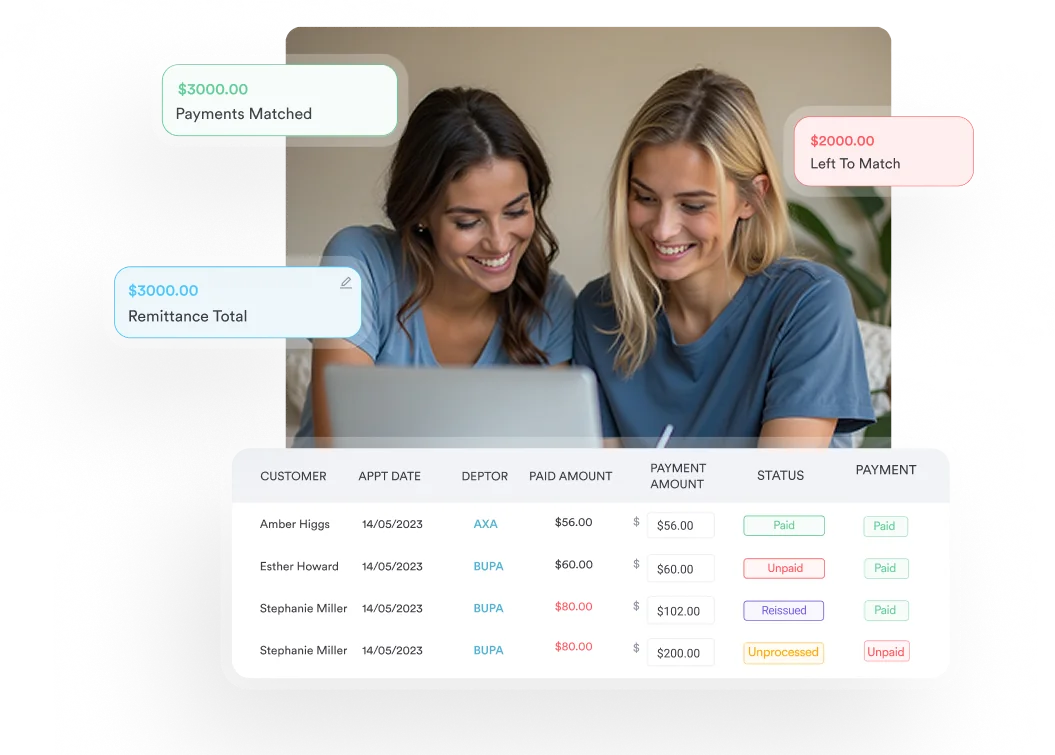
Pabau’s digital forms can hold a group note template with a shared summary and a section for each patient. The documentation a payer asks for is then written at the point of care. Claims go out through Pabau’s Claim.MD integration, with eligibility checks before the session and ERA remittance after it.
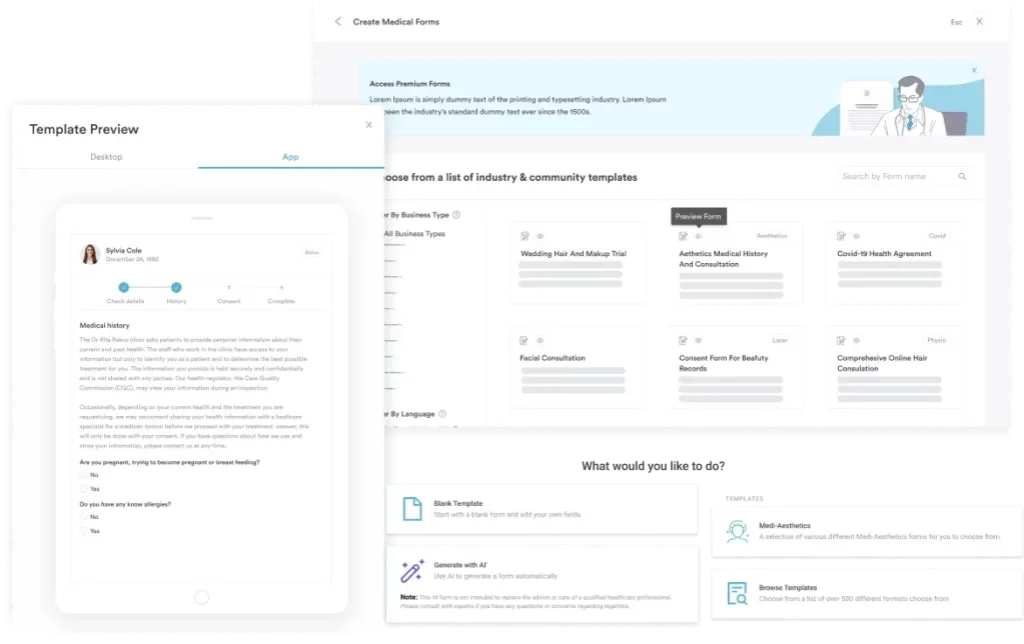

Pabau ties group session notes, attendance times and diagnoses to each patient’s claim. Your coders see the 96164 and 96165 units next to the documented minutes before submission.

Treat CPT 96164 as a primary code with a 30-minute anchor. Bill it once per patient per group session, from 16 minutes up, and let +96165 carry each additional 15 minutes.
The costly errors on this code mostly come from older material. Watch for the 15-minute units of 96153, the nonexistent 96162 and 96163, and group notes copied across every attendee. Clear those out of your charge sheets and templates, and group claims hold up on review.
Book a demo to see how Pabau links group session notes to each patient’s claim, so the units you bill match the minutes you documented.

Need a denial prevention framework for behavioral health codes? Denial codes in medical billing covers the most common CARC denial codes and resolution steps for outpatient claims.
Billing behavioral health claims through a clearinghouse? How the Claim.MD clearinghouse works explains the 837P submission process, real-time eligibility, and ERA handling for US practices.
Looking for revenue cycle management guidance? What is revenue cycle management walks through the end-to-end process from eligibility verification to payment posting.
CPT code 96164 reports the first 30 minutes of a face-to-face health behavior intervention with a group of two or more patients. It is a primary code, billable on its own. Each additional 15 minutes is reported with add-on code +96165.
No. CPT 96164 is a primary code and can be billed without another service on the claim. Its add-on is +96165, which reports each additional 15 minutes and must be billed with 96164.
CPT guidance says not to report 96164 for less than 16 minutes of face-to-face time. From 16 to 37 minutes, report one unit of 96164. Add one unit of 96165 at 38 minutes, and another for each further 15 minutes.
Both report the first 30 minutes of a health behavior intervention. CPT 96158 is for one patient, and 96164 is for a group of two or more patients. Their add-on codes are 96159 and 96165.
CPT 96153, the old group health behavior code billed in 15-minute units, was deleted for 2020. Group interventions are now reported with 96164 for the first 30 minutes and +96165 for each additional 15 minutes.
Clinical psychologists bill 96164 to Medicare. Since January 1, 2024, clinical social workers, marriage and family therapists, and mental health counselors can bill it too. State Medicaid programs and commercial plans set their own lists, so confirm eligibility with each payer.
Many payers cover 96164 by telehealth with place of service 02 or 10, plus modifier 95 where required. Rules have changed several times since 2020. Check current CMS guidance and each plan’s policy before billing a virtual group.