

HCPCS code E0198: Water pressure pad billing guide
HCPCS code E0198 is a water pad for a standard mattress HCPCS code E0198 is the ...

Last Updated: Oct 13, 2026
90840 is the CPT code for crisis psychotherapy, each additional 30 minutes (List separately in addition to code for primary procedure).
Most denials on 90840 claims trace back to three mistakes. Coders bill it without 90839 on the same date, leave total session time undocumented, or submit the wrong number of units. Knowing where coders go wrong on this code protects reimbursement and keeps audits from turning into costly takebacks.
Let Pabau's smart automation suggest the right codes, reduce claim denials, and keep your practice compliant—effortlessly.
Automate repetitive tasks and focus on what matters most—your patients.
Reduce coding errors and ensure compliance with the latest regulations.
Clean claims, fewer denials, and faster reimbursements.
Powerful insights and reporting to help your practice thrive.
HIPAA compliant SOC 2 certified GDPR-compliant Trusted by 4,000+ clinics worldwide

90840 is an add-on to 90839 only – it cannot be billed as a standalone service on any claim
One unit covers each additional 30 minutes beyond the first 74 minutes of crisis psychotherapy
Document total session time in the progress note – missing this is the top denial trigger for 90840 claims
Pabau’s claims management software tracks time-based add-on codes and flags missing documentation before submission
The American Medical Association (AMA) defines CPT code 90840 as “Crisis psychotherapy, each additional 30 minutes (List separately in addition to code for primary procedure).” That parenthetical is the operative phrase: 90840 has no clinical meaning without 90839 on the same claim.
CPT code 90840 covers the clinical work performed during crisis psychotherapy beyond the 74-minute threshold of 90839. Think of a psychiatric emergency that runs long. The clinician has already delivered the first 30 to 74 minutes of crisis intervention under 90839, and the patient still needs continued intervention. Each subsequent 30-minute block is billed with one unit of 90840.
Qualifying providers include psychiatrists, psychologists, licensed clinical social workers (LCSWs), licensed professional counselors (LPCs), and other mental health clinicians. Each one needs the scope to bill psychiatric crisis services under state law and payer credentialing. Practices running behavioral health programs should verify credentialing requirements through a mental health EMR that tracks provider-level billing privileges.
The most expensive billing error with 90840 is treating it as a standalone code. Payers process it as an add-on and will automatically deny any claim where 90839 is absent from the same date of service.
CPT code 90839 covers the first 30 to 74 minutes of crisis psychotherapy and is the required base code. The AMA descriptor makes the relationship explicit: 90839 is the primary service; 90840 is listed in addition to it.
CPT code 90840 belongs to a different clinical category than the standard psychotherapy codes in the 90832-90837 range. The core distinction is crisis versus routine: 90839 and 90840 are reserved for psychiatric emergencies, not regular therapy sessions.
The AMA defines 90839 as covering the first 30 to 74 minutes of a crisis session. CPT code 90840 triggers only when total session time exceeds 74 minutes. From that point, each completed 30-minute increment earns one unit of 90840.
Payers do not universally publish a per-session unit cap for 90840. Some commercial payers apply claim-level edits that cap units based on their own Medically Unlikely Edit (MUE) tables. Verify limits with each payer before submitting multi-unit claims. Check current RVU and reimbursement values using the FastRVU 2026 RVU lookup.
Document start and end times for every crisis session, not just total duration. Some payers audit time-based claims by requesting progress notes that show clock times. A note that says ’90 minutes of crisis psychotherapy’ without timestamps is harder to defend than one that says ‘2:15 PM to 3:45 PM.’
Strong medical billing documentation for 90840 must establish three things: the crisis nature of the problem, the total session time, and the concurrent 90839 service. Any claim missing one of these elements is a denial waiting to happen.
Producing a clean claim submission for 90840 depends on the progress note being written completely before the claim goes out the door. Practices that batch-submit crisis claims at week’s end often discover documentation gaps after the clinician’s recall of the session has faded.
Medicare Part B reimburses CPT code 90840 under the CMS Physician Fee Schedule. Exact dollar rates change annually and differ between facility (place of service 21, 22, 23) and non-facility (office, POS 11) settings. Always pull the current-year rate directly from the CMS fee schedule lookup rather than relying on a published figure that may be out of date.
Medicare Part B generally does not require prior authorization for 90840 crisis services. Commercial payer and Medicaid requirements, however, vary significantly by state and plan. Blanket statements about prior auth are unreliable. Verify each payer’s policy before the session, particularly for Medicaid managed care plans, which handle crisis billing differently across states.
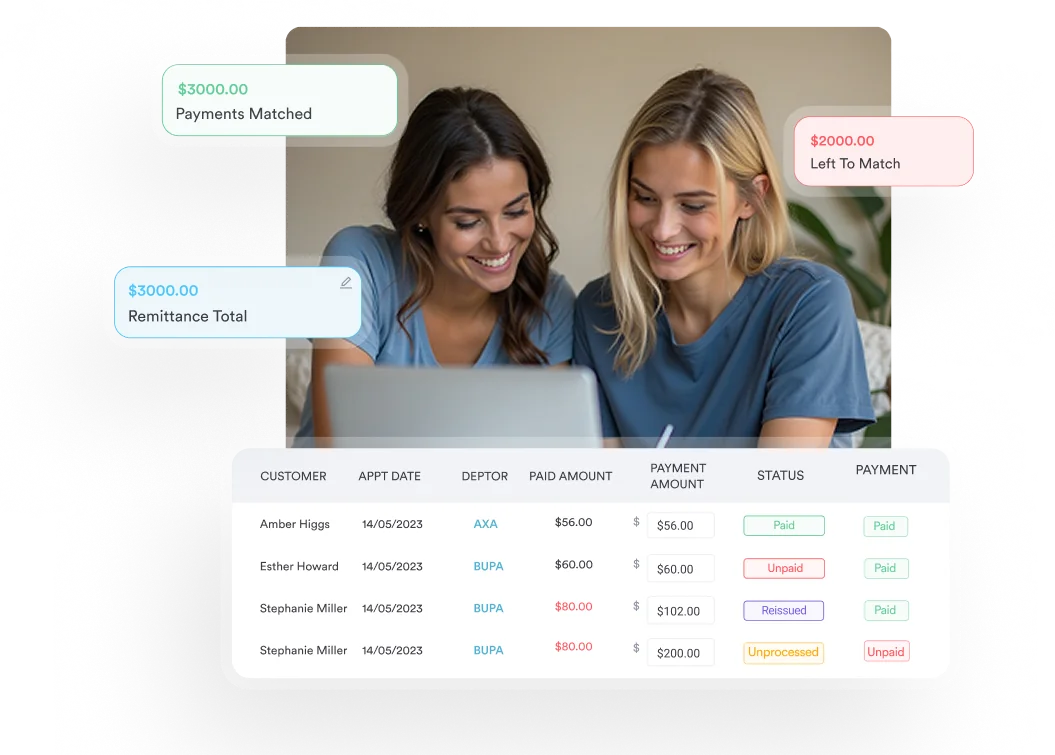
Practices billing 90840 across multiple payers benefit from integrating claims management software that validates payer rules at the time of claim preparation, not after submission. Pabau’s clearinghouse integration handles electronic claims submission via Claim.MD with real-time eligibility verification across thousands of US payers. That check catches mismatched payer rules before a claim goes out.
Post-COVID telehealth flexibilities changed which services Medicare covers via audio-visual platforms. CMS currently extends telehealth coverage to mental health services, including crisis codes. Those rules are reviewed every year. Confirm current telehealth eligibility for 90839 and 90840 on the CMS telehealth services list before billing remote crisis sessions. Audio-only billing rules also differ from audio-visual ones.
Reimbursement rates for CPT code 90840 change with each CMS annual update. As a general benchmark, non-facility rates for add-on crisis codes have historically tracked between $60 and $90 per unit, while facility rates are lower. These figures are illustrative only. Always check the current-year AAPC CPT code lookup or the CMS Physician Fee Schedule for your location and place of service. Medicare Part B pays 80% of the allowed amount for 90840, and the patient or a secondary payer covers the 20% coinsurance.

Pabau connects clinical documentation, payer verification, and claims submission in one platform. Mental health practices spend less time chasing denials and more time with patients.

Most denials on 90840 follow predictable patterns. Effective denial management workflows for mental health practices start by ranking which denial codes appear most often. They then add upstream checks that keep the same error from recurring.
A denied 90840 claim is recoverable in most cases. Understanding the denial codes in medical billing on the remittance advice tells you which appeal argument to build.
Request a copy of the payer’s medical necessity criteria for crisis psychotherapy before you appeal. Quote the payer’s own language in the appeal letter and show how the documented presentation meets their criteria. That approach tends to overturn more denials than an appeal that only cites the AMA descriptor.
Behavioral health practices billing crisis codes face more scrutiny than those billing routine psychotherapy. Time-based rules, add-on code mechanics, and the clinical urgency of crisis sessions all create documentation pressure. Practice managers need a systematic way to handle it.
Proactive medical billing compliance for 90839 and 90840 starts with regular internal audits that compare submitted units to documented session times. It also covers provider education on time documentation and payer-specific policy reviews at least once a year. Payers update their crisis code policies alongside CMS annual updates, and a rule that applied last year may not apply today.
CPT code 90840 is one of the more straightforward add-on codes in the behavioral health billing toolkit once the base-code dependency is understood. Bill it without 90839 and the claim fails automatically. Document total time in the progress note and the unit count follows directly from the time-to-unit table above.
Pabau’s integrated claims workflow connects clinical notes to claim submission. The total session time captured in the encounter record flows straight into the billing queue, with no manual rekeying. To see how Pabau handles crisis code billing end-to-end, book a demo.

Need guidance on managing behavioral health claim denials? Denial management in healthcare covers the workflows that reduce denial rates across mental health billing.
Looking for a complete reference on denial codes? Denial codes in medical billing explains CARC and RARC codes and how to respond to each.
Want to understand the clearinghouse that processes 90840 claims? Claim.MD clearinghouse explains how electronic remittance and eligibility verification work for behavioral health practices.
CPT code 90840 is the add-on code for crisis psychotherapy, billed per 30-minute block beyond the first 74 minutes covered by base code 90839. It is used when a psychiatric crisis session extends beyond that initial threshold and requires continued face-to-face intervention.
No. CPT code 90840 is an add-on code and requires 90839 on the same date of service. Any claim submitting 90840 without 90839 will be automatically denied by payer edits. There are no exceptions to this requirement.
One unit of 90840 is billed for each completed 30-minute increment beyond 74 minutes of crisis psychotherapy. A 90-minute session earns 1 unit; a 120-minute session earns 2 units. The AMA does not set a per-session unit maximum, but individual payers may apply their own Medically Unlikely Edit limits.
CPT 90839 is the standalone base code covering the first 30 to 74 minutes of crisis psychotherapy. CPT 90840 is the add-on code billed for each additional 30-minute block beyond that threshold. 90839 can be billed alone; 90840 cannot.
The progress note must document the crisis nature of the presentation and the total session time, ideally as clock-in and clock-out times. It also needs the rendering clinician’s credentials and an ICD-10-CM diagnosis code consistent with psychiatric crisis severity. Payers may request records on audit, so complete documentation on the day of service is essential.
Medicare reimbursement for CPT code 90840 varies by year and place of service. Non-facility rates have historically been higher than facility rates. Always verify the current-year rate using the CMS Physician Fee Schedule lookup rather than relying on published estimates, as rates are updated annually.
Yes, under current CMS telehealth extensions for mental health services, 90840 may be billed for audio-visual crisis psychotherapy sessions. Audio-only billing rules differ. Telehealth eligibility for crisis codes is subject to annual CMS review, so confirm current policy before billing remote crisis sessions.



