



HCPCS code E0198: Water pressure pad billing guide
HCPCS code E0198 is a water pad for a standard mattress HCPCS code E0198 is the ...

Last Updated: Oct 13, 2026

CPT code 27130 describes arthroplasty, acetabular and proximal femoral prosthetic replacement (total hip arthroplasty)
Medicare reimburses CPT 27130 in both hospital outpatient and ASC settings. Verify current rates via the CMS Physician Fee Schedule each calendar year
Always append laterality modifiers LT or RT. Missing a modifier is one of the most common denial triggers for this code
Pabau’s claims management software flags incomplete modifier and ICD-10 pairings before submission, reducing first-pass denials for high-complexity surgical codes like 27130
CPT code 27130 is one of the highest-value codes in orthopedic billing, and payer scrutiny matches that value. Incomplete documentation, missing laterality modifiers, and ICD-10 codes that don’t match the payer’s current coverage criteria drive most claim denials for this procedure.
This guide covers the official code description, current Medicare reimbursement data, applicable modifiers, covered ICD-10-CM diagnosis codes, documentation requirements, and the related codes billing teams need to know.
Orthopedic practices billing CPT 27130 face a dual challenge: satisfying Medicare’s medical necessity criteria while simultaneously meeting commercial payer pre-authorization requirements. Both demand the same underlying documentation, but the specific covered diagnosis codes and utilization guidelines can differ by payer and by MAC jurisdiction.
Getting the claim right the first time starts with understanding exactly what this code covers and what each payer needs to see.
CPT code 27130 is the standard billing code for total hip arthroplasty (THA), one of the most commonly performed major orthopedic procedures in the United States. According to the American Medical Association’s CPT code set, the official descriptor for this code is:
The procedure replaces both the acetabulum (socket) and the proximal femoral head (ball) with prosthetic components. It includes primary THA performed with or without bone grafting from the patient (autograft) or a donor source (allograft). A separate CPT code applies if only the femoral component is replaced (see CPT 27125 in the Related Codes section below).
Relative Value Units (RVUs) determine Medicare reimbursement for CPT 27130 under the Medicare Physician Fee Schedule (MPFS). CMS updates these values annually. The figures below reflect the CY2026 Medicare Physician Fee Schedule. Verify the current year values using the CMS Physician Fee Schedule lookup tool.
RVU values are multiplied by the annual CMS conversion factor to produce the Medicare allowable payment. Geographic practice cost indices (GPCIs) adjust the PE and MP components by location. Practices billing in high-cost metropolitan areas typically see higher allowables than rural settings for the same code.
Medicare and most commercial payers cover CPT 27130 when specific clinical criteria are met. Coverage criteria are defined in Local Coverage Determinations (LCDs) issued by each Medicare Administrative Contractor (MAC). Always check the applicable LCD for your jurisdiction before submitting. Common indications include:
Medical necessity criteria vary by MAC and commercial payer. Never assume universal coverage based on diagnosis alone. Verify the specific LCD applicable to your MAC jurisdiction and confirm commercial payer clinical policy bulletins (such as Aetna CPB 0287) before billing.
Document the failure of conservative treatment in the medical record with specific dates, treatment modalities attempted, and the patient’s functional limitation score before submitting a prior authorization request for CPT 27130. Payers routinely deny claims where conservative treatment failure is stated but not evidenced.
CPT 27130 is reimbursed in both hospital outpatient (HOPD) and ambulatory surgical center (ASC) settings under Medicare. CMS removed total hip arthroplasty from the Inpatient-Only (IPO) list in the CY2020 OPPS/ASC Final Rule (CMS-1717-FC), then separately added it to the ASC Covered Procedures List effective January 1, 2021, via the CY2021 OPPS/ASC Payment System Final Rule (CMS-1736-FC). Payment for this code arrives with a remittance advice that explains any adjustment line by line.
Rates below are approximate CY2026 national averages, unadjusted for geographic locality. Actual payments vary by MAC jurisdiction and are updated annually.
Physician professional fees are billed separately from facility fees. The surgeon bills CPT 27130 against the MPFS facility rate regardless of whether the procedure is performed at a hospital or ASC.
The facility (hospital or ASC) bills the facility fee under OPPS or the ASC payment system, respectively. Implant costs are typically bundled into the facility payment and are not separately billable by the surgeon.
Facility payment figures reflect CY2026 OPPS Addendum B (HOPD, Comprehensive APC 5115) and ASC Addendum AA/BB national rates. Confirm current amounts against the applicable CMS addendum before estimating reimbursement, since these update annually and vary by geographic wage index.
For orthopedic practices tracking revenue cycle performance. This is especially valuable for high-value surgical codes like 27130, where a single denial can hold up thousands of dollars in reimbursement.

Modifier selection is one of the most denial-sensitive aspects of billing CPT 27130. Laterality modifiers are required for every claim. Applying the wrong modifier, or omitting it entirely, will result in an automatic denial from most payers.
For left-side procedures, use the left total hip arthroplasty CPT code pairing: 27130-LT. For right-side procedures, use 27130-RT. Bilateral modifier 50 rules vary significantly by payer.
Medicare generally processes bilateral procedures billed with modifier 50 at 150% of the single-procedure rate. The first side pays 100% and the second pays 50%. Confirm this with the applicable MAC before billing.
Pairing CPT 27130 with a supported ICD-10-CM diagnosis code is essential for establishing medical necessity. The table below lists the most commonly used covered diagnosis codes, based on CMS Article A57683.
The full covered code list is maintained in MAC-specific LCDs. Always consult the current published version for your jurisdiction. Use the AAPC Codify CPT lookup or a crosswalk tool to verify ICD-10 pairings before submission.
Hip arthroplasty ICD-10 code selection must be laterality-specific wherever the code set offers side-specific options. Using an unspecified code (e.g., M16.10) when a laterality-specific code exists may trigger an edit or denial, particularly under MAC-issued LCD policies.
Incomplete documentation is the second most common denial reason for CPT 27130, after modifier errors. CMS Article A57683 and most MAC LCDs specify the minimum documentation elements required to support a claim. Practice administrators managing medical forms should pre-configure surgical note templates to capture all required fields before the operative date.
Pre-authorization is required by most major commercial payers for CPT 27130. Requirements vary by payer and plan. Confirm authorization requirements directly with each commercial payer before scheduling the procedure. Medicare does not require prior authorization for CPT 27130, but documentation must still meet LCD medical necessity criteria for the claim to pay.
Build a CPT 27130 documentation checklist into your pre-surgical workflow. Review imaging dates, conservative treatment records, and functional outcome scores at least two weeks before the scheduled procedure. Identifying missing documentation at this stage, rather than post-operatively, prevents last-minute claim delays and reduces the risk of retrospective denials during audit.
Selecting the correct CPT code for hip arthroplasty depends on the type of procedure performed:
Billing 27130 for a procedure that should be coded as a revision or partial replacement will result in a denial. The table below covers the core hip arthroplasty code family, including CPT 27447 for cross-reference to the analogous total knee arthroplasty procedure.
Prior hardware is what separates the conversion row from the primary one. When the hip already carries a hemiarthroplasty, a dynamic hip screw, or an intramedullary nail, the operation belongs on 27132.
For practices billing both hip and knee arthroplasty, 27447 follows similar documentation and modifier principles to 27130. Orthopedic billing teams should be familiar with all codes in the 27125-27138 range to avoid miscoding between primary, conversion, and revision procedures.
Total hip arthroplasty billing is high-dollar and high-scrutiny. Payers apply multiple claim edits to this code specifically because of its reimbursement value. The most preventable denials fall into four categories.
Submitting 27130 without LT or RT is the single most common denial trigger. Most clearinghouses will reject the claim before it reaches the payer. Build modifier LT/RT as a required field in your practice management system for this code. A claim for left total hip arthroplasty CPT code billing must always include the LT modifier.
Billing CPT 27130 with a diagnosis code not on the payer’s covered list will trigger a medical necessity denial. This is most common when coders use unspecified osteoarthritis codes (M16.10) instead of laterality-specific codes, or when the diagnosis code doesn’t match the operative side.
Following the same HIPAA compliance documentation standards used elsewhere in the practice helps ensure the operative record, diagnosis, and claim all align.
Billing 27130 for a procedure that involved revision of a previously placed implant will result in a claim edit or denial. Review operative notes carefully.
If the surgeon documents removal and replacement of an existing prosthetic component, the revision codes (27134, 27137, or 27138) apply, not 27130. A revision prompted by hardware failure is often coded with a bone continuity disorder such as M84.9 as a secondary diagnosis, alongside the revision procedure code.
The same operative-note test applies on the knee side. When the femoral and entire tibial components are both removed and replaced, the revision code is 27487, not primary code 27447.
Commercial payer authorizations for CPT 27130 are typically valid for a defined window (often 90-180 days). Performing the surgery after the authorization expiration date results in a denial even when all clinical criteria are met. Tracking authorization expiration dates is a critical administrative function for orthopedic practices.
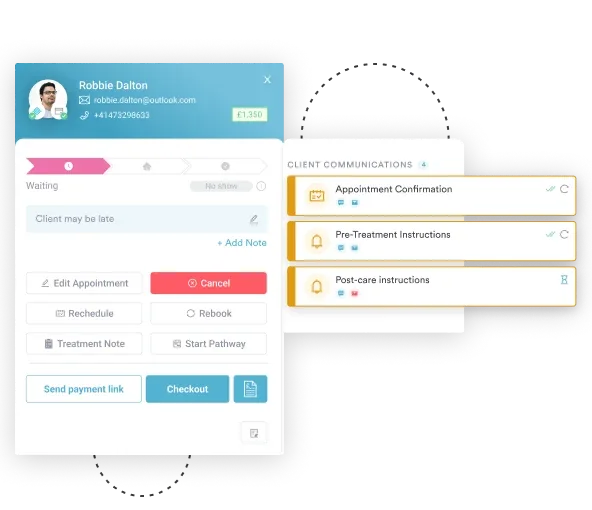
Standalone coding reference sites can tell you what a code means. They cannot prevent the errors that generate denials. Submitting a clean claim for CPT 27130 requires:
Pabau’s claims management software connects these steps, flagging issues before a claim reaches the clearinghouse rather than after it returns as a denial.
For orthopedic and sports medicine practices, the specific value is in pre-submission scrubbing. When a claim for CPT 27130 is assembled, the system can check that a laterality modifier is present, that the linked ICD-10 code is on the payer’s covered list, and that required documentation fields are populated.

Practices managing both Medicare and commercial payer billing can also use practice management software to track per-payer authorization requirements and expiration dates, reducing the risk of billing outside an authorized window.
For multi-provider orthopedic groups.

Pabau’s claims management tools flag missing modifiers, unsupported ICD-10 pairings, and missing documentation before your CPT 27130 claims reach the payer. See how it works in your workflow.

For practices billing total hip arthroplasty regularly, these requirements are manageable only when the documentation and billing workflow are integrated.
Pabau’s claims management software brings together clinical documentation, coding validation, and claim scrubbing in a single platform, so the checks happen before submission, not after a denial. To see how it handles complex surgical codes like CPT 27130, book a demo and walk through the workflow with your billing context in mind.

Coding a related musculoskeletal diagnosis? ICD-10 code M92.9 covers documentation and billing considerations for juvenile osteochondrosis.
Billing for spine-adjacent conditions? ICD-10 code M53.9 explains how unspecified dorsopathy is coded and supported for claims.
Need guidance on inflammatory bone conditions? ICD-10 code M88.1 covers documentation requirements for osteitis deformans of the vertebrae.
Looking for broader connective tissue diagnosis coding? ICD-10 code M36.8 covers classification and billing for systemic connective tissue disorders.
CPT code 27130 is arthroplasty, acetabular and proximal femoral prosthetic replacement, the billing descriptor for primary total hip arthroplasty (THA) in which both the acetabular socket and femoral head components are replaced with prosthetic implants. It covers procedures performed with or without autograft or allograft bone grafting. Partial replacement of the femoral component only is reported separately under CPT 27125.
The Medicare physician professional fee for CPT 27130 is approximately $1,162 at the facility rate under the CY2026 Medicare Physician Fee Schedule. Facility fees are billed separately: approximately $13,100 for hospital outpatient (HOPD) and $9,600 for ambulatory surgical centers (ASC), per CY2026 OPPS/ASC national averages. Exact rates vary by geographic locality and are updated annually, so verify current rates using the CMS Physician Fee Schedule lookup tool before billing.
Laterality modifiers LT (left) or RT (right) are required on every CPT 27130 claim. Modifier 50 applies for bilateral total hip arthroplasty performed in the same operative session, but payer-specific rules govern how bilateral procedures are processed and paid. Modifier 22 is appropriate when the procedure is substantially more complex than usual, and modifier 62 applies when two surgeons each perform a distinct portion of the procedure.
The most commonly used ICD-10-CM codes supporting medical necessity for CPT 27130 include M16.11 and M16.12 (primary osteoarthritis, right and left hip), M87.051 and M87.052 (avascular necrosis of the femur), M05.651 and M05.652 (rheumatoid arthritis of the hip), and S72.001A (displaced femoral neck fracture, initial encounter). Always verify the covered diagnosis code list in the applicable MAC LCD, as covered codes can change with each fiscal year update.
CPT 27130 is total hip arthroplasty (hip joint), while CPT 27447 is total knee arthroplasty (knee joint). They are anatomically distinct procedures with separate RVU values, fee schedules, and ICD-10 pairing requirements. Both codes follow similar billing principles, including laterality modifiers and conservative treatment failure documentation requirements, but they cannot be substituted for each other.
Yes. CMS removed total hip arthroplasty from the Medicare Inpatient-Only list in the CY2020 OPPS/ASC Final Rule, then added it to the Medicare ASC Covered Procedures List effective January 1, 2021, via the CY2021 OPPS/ASC Payment System Final Rule. ASC facility payments for CPT 27130 are governed by the ASC payment system and are typically lower than hospital outpatient facility fees. Patient selection criteria for ASC-based THA apply, and commercial payer ASC coverage may differ from Medicare.
There is no separate CPT code for left versus right total hip arthroplasty. The single code CPT 27130 is used for both sides, with laterality indicated by appending modifier LT for the left hip or RT for the right hip. Always include the laterality modifier. Submitting CPT 27130 without LT or RT is a common cause of automatic claim denials.



