



HCPCS code E0198: Water pressure pad billing guide
HCPCS code E0198 is a water pad for a standard mattress HCPCS code E0198 is the ...

Last Updated: Oct 13, 2026

CPT code 21720 covers open division of the sternocleidomastoid for torticollis, with no cast applied in the same session
The code sits in the Neck (Soft Tissue) and Thorax subsection of the CPT Musculoskeletal System section
21720 carries a 90-day global surgery period, so routine post-op visits inside that window are bundled into the base payment
Modifier -50 covers a bilateral release, and -LT or -RT identifies the side when only one muscle is divided
Practice management software like Pabau validates modifiers and scrubs claims before a surgical code like 21720 goes out
CPT code 21720 is the billable code for open division of the sternocleidomastoid muscle to correct torticollis, without cast application. Its official descriptor reads: Division of sternocleidomastoid for torticollis, open operation, without cast application. The code sits in the Musculoskeletal System section of AMA’s CPT code set, under the Neck (Soft Tissue) and Thorax subsection.
That subsection covers 21501 through 21899, the same range as CPT 21552 and CPT 21750. Coders working from the neck heading rather than the head codes land on the right family first, as AAPC’s listing for 21720 confirms. Prior authorization is also common on this code, so check the payer’s list before the case is booked.
The code belongs to a two-code family, and one phrase separates them. “Without cast application” is what distinguishes 21720 from CPT 21725. That code covers the identical open division, with a cast applied during the same session. Pick the wrong one and the claim stops matching the operative report, which is what invites payer scrutiny.
The sternocleidomastoid (SCM) muscle runs from the mastoid process of the skull down to the clavicle and sternum. In muscular torticollis, fibrosis or contracture inside the muscle tilts the head toward the affected side and rotates it away. Surgical division is indicated when physical therapy and stretching fail to resolve the deformity.
During the open procedure, the surgeon incises over the SCM and identifies the affected muscle heads. One or both heads are divided at the clavicular or sternal insertion, then the wound is closed. No cast is applied in that session, which is what makes 21720 the correct code. If a cast goes on before the patient leaves the operating room, bill 21725 instead.
Medical necessity is the gating criterion for every surgical claim. For teams billing SCM procedures inside a plastic surgery EMR, the documentation has to link the diagnosis to a recognized indication. Payers adjudicate these claims against LCD policies, not general clinical opinion.
Documentation should specify the duration of conservative treatment attempted, the functional limitations the deformity causes, and the operative plan. Much of that history sits with the referring therapy team, so request it from their physical therapy EMR before submitting. Vague clinical notes are the leading cause of medical necessity denials on this code.
CPT 21720 pairs with specific ICD-10-CM diagnosis codes on the claim, and the primary diagnosis must justify the surgical approach. An unspecified or loosely mapped code can trigger an automatic downcode or a denial.
M43.6 is the most frequently used primary diagnosis with 21720. Q68.0 is the more precise code for congenital cases, and pediatric payers increasingly prefer it. Plagiocephaly is common alongside congenital muscular torticollis, so Q67.3 often appears as a secondary diagnosis. Check payer LCD policies before defaulting to M43.6 everywhere, because some require Q68.0 to confirm congenital etiology. Claim accuracy is cheaper to build at entry than to repair in an appeal. An itemized superbill keeps the required fields in one place: dates, codes, charges and provider identifiers.
The distinction is simple in theory and frequently wrong in practice. Both codes describe the same open division of the sternocleidomastoid for torticollis. The single differentiating factor is whether a cast is applied during the same operative session.
The practical rule is to read the operative note before selecting the code. If the surgeon applied a cast before closing, use 21725. If the patient went to recovery without one, use 21720, even when a cast is planned for a later date. Billing 21725 with no cast in the session inflates the claim and creates audit risk.
Modifier selection for 21720 depends on whether the release is bilateral, who performed it, and whether anything unusual happened in the case. Those rules follow National Correct Coding Initiative (NCCI) edits and payer policy, which sometimes diverges from CMS guidance.
Bilateral SCM division happens less often than unilateral release. When it does, modifier -50 appends to 21720 on a single line item. Medicare typically reimburses bilateral procedures at 150% of the unilateral allowed amount, though commercial contracts vary.
Some payers want the code listed twice instead, once with -LT and once with -RT. Confirm the payer’s billing manual first, because the wrong format denies regardless of clinical appropriateness.
Before billing modifier -50, pull the payer’s surgical billing manual. Medicare pays 150% for bilateral procedures, but several commercial payers require two separate line items with -LT and -RT. Submitting in the wrong format delays payment by weeks and starts a second denial cycle.
Medicare payment rates for CPT code 21720 vary by locality and update annually through the Medicare Physician Fee Schedule (MPFS). The rates below reflect national average estimates from publicly available CMS data. Verify your own locality’s figures with the CMS fee schedule lookup before billing. Rates also shift with budget neutrality adjustments.
Because this is an open surgical procedure, CPT code 21720 is almost always performed in a facility setting. The hospital or ambulatory surgical center bills separately for facility fees. Use the FastRVU lookup to pull current work, practice expense, and malpractice RVU components for locality-adjusted math.
Medicare pays the summed work, practice expense, and malpractice RVUs, adjusted by the Geographic Practice Cost Index (GPCI) and the annual conversion factor. For surgical codes, the work RVU component dominates. Verify current values against the CMS MPFS data files, because RVUs are adjusted every year.
CPT code 21720 carries a 90-day global surgery period under CMS rules. The surgical payment covers all related post-operative care from the day before surgery through day 90. Billing a routine post-op visit inside that window generates an automatic denial. The clock starts on the day of surgery, not the discharge date.
A common error looks like this. A practice schedules a 6-week post-op check and bills it as an office visit. Without modifier -24 and documentation of an unrelated diagnosis, the claim will deny. The same trap catches bundled add-on services, so confirm the global status of a code like CPT 15851 before you bill it separately.
Documentation for any global-period visit must state the purpose of the encounter. If you bill separately, it must also confirm the visit is unrelated to the torticollis surgery.
Orthopedic and pediatric surgical billing teams see a short list of predictable errors on this code. Catching them before submission saves denial management time and protects cash flow.
HIPAA compliance rules apply to the paper trail as well. The operative note and post-op records must stay accessible for payer audit requests within the required timeframe.
Surgical code billing fails at three predictable points.
Each one sends the claim back for rework and pushes payment out by weeks. Claims management software that validates modifiers inside the billing workflow catches all three before the claim leaves the practice.
Practice management software like Pabau connects clinical documentation to the billing queue. When a surgeon closes an encounter note, the procedure and diagnosis codes flow straight into the claim draft.
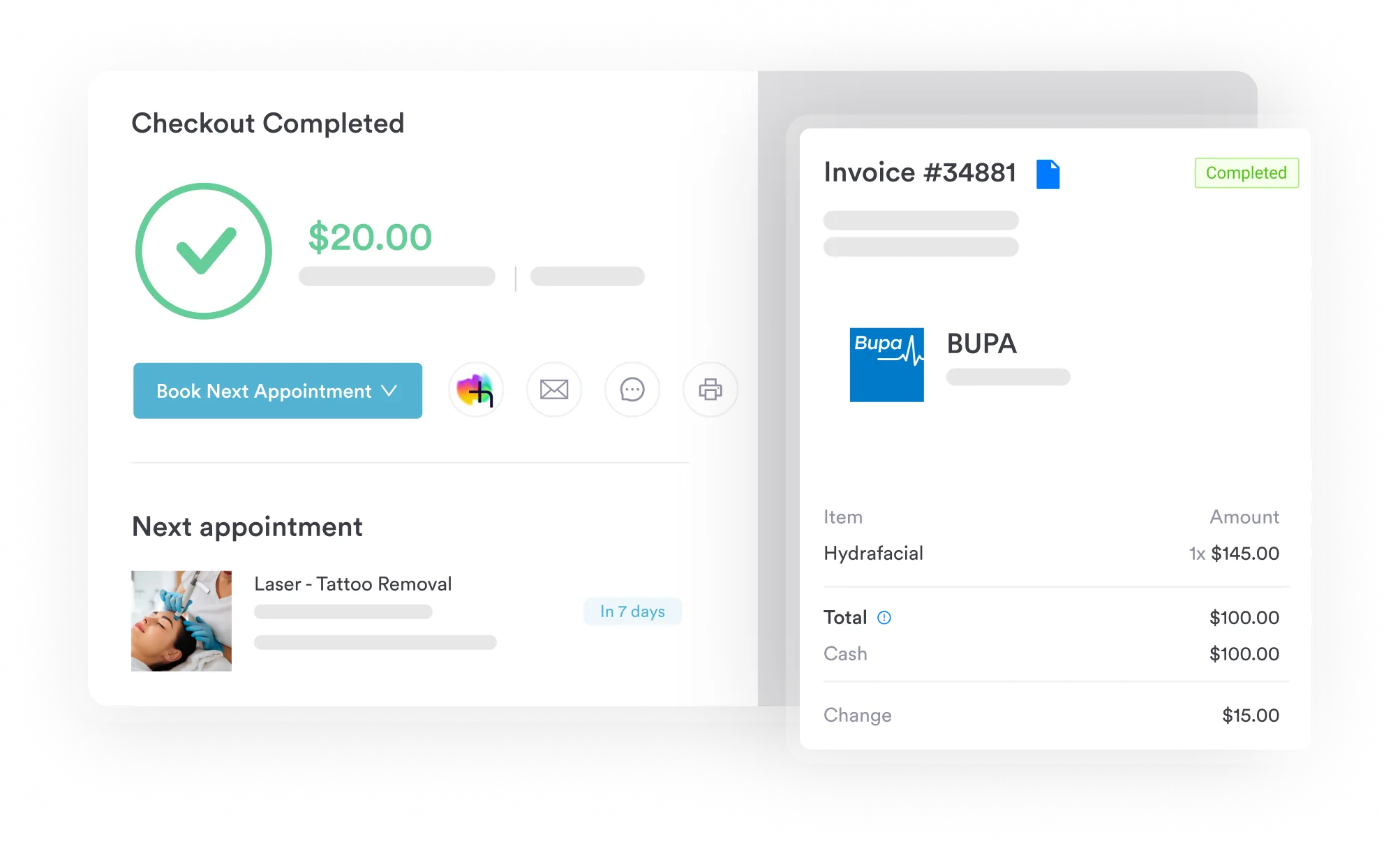
The system flags modifier combinations that conflict with NCCI edits. It also surfaces the global period end date on every surgical claim. Billing staff resolve both inside one workflow, instead of switching between a code lookup tool and a separate billing system.
For practices using automated billing workflows, the global period tracking does the calendar math. The system marks post-op encounters against the open global period and alerts staff before a routine visit becomes an erroneous claim.
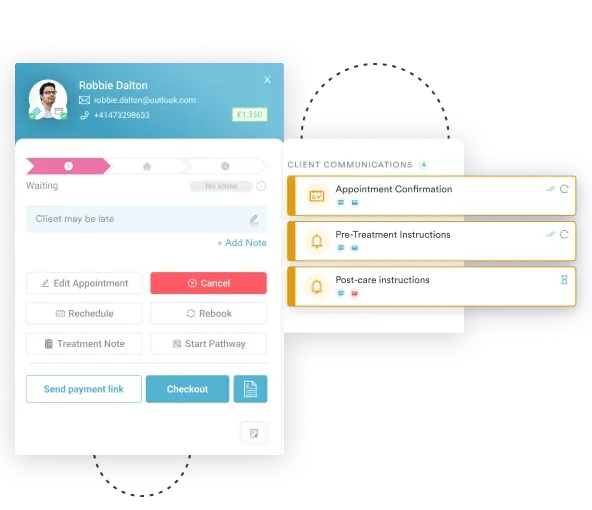
Practice management software that holds the chart, the code, and the claim removes one copy step. Nobody retypes a code from a lookup tool into a separate billing screen.
Set up a global period alert for every surgical claim. For CPT 21720, flag the 91st day after the procedure date as the point where the global window closes. That stops billing staff generating claims for routine post-op encounters without the -24 modifier.

Pabau’s claims tools track modifier requirements and global periods for surgical codes like CPT 21720. See how it fits your practice’s billing workflow.

The whole billing risk on this code sits in three places. Read the operative note for the cast, watch the 90-day global window, and match the modifier to your payer’s bilateral format. Get those right and 21720 pays on first submission.
Practices that leave the checks to memory pay for it later in denial work. That stings most on a code that comes through the door a few times a year. Building the checks into the billing workflow is the cheaper habit.
Pabau’s claims management software keeps modifier logic, global period dates, and diagnosis pairing on the same screen as the claim. Book a demo to see how it handles surgical coding for your practice.

Billing another code in the same neck and thorax range? CPT 21925 walks through deep soft tissue biopsy of the back or flank, with the same modifier and documentation checks.
Need the modifier and reimbursement rules for a neighboring code? CPT 21497 covers interdental wiring, including how payers handle unusual complexity.
Working out how to sequence a secondary diagnosis? S33.8XXS sets out sequencing order and the denial patterns that follow a weak primary code.
Chasing pre-authorization before an elective surgery? Our prior authorization form gives you the fields payers ask for, ready to send with the clinical notes.
Coding a corrosion injury by body surface? Corrosion body surface code depends on two documented percentages: how much surface was reached, and how deep.
CPT code 21720 bills the open division of the sternocleidomastoid muscle to treat torticollis, with no cast applied in the same session. It sits in the Neck (Soft Tissue) and Thorax subsection of the CPT Musculoskeletal System section. Orthopedic and pediatric surgeons perform it most often, usually on children whose congenital muscular torticollis has not responded to stretching.
The only difference is whether a cast is applied during the same operative session. Use 21720 when no cast is placed. Use 21725 when a cast goes on before the patient leaves the operating room. Both codes describe an open division of the sternocleidomastoid for torticollis. Your selection must match the operative report, because billing 21725 with no cast inflates the claim.
Modifier -50 covers a bilateral release, where both sternocleidomastoid muscles are divided in the same session. Modifiers -LT and -RT document laterality on a unilateral case. Modifier -62 applies when two surgeons of different specialties each perform a distinct part of the procedure. Modifier -22 covers substantially increased operative complexity. Check your payer’s billing manual before applying -50, because some commercial payers want two line items instead.
CPT code 21720 carries a 90-day global surgery period. The global window begins on the day of surgery and covers all routine pre-operative and post-operative care through day 90. Routine post-op visits billed inside the global period without modifier -24 will deny. Care for a completely unrelated diagnosis, an unplanned return to the operating room, and treatment of major complications can all be billed separately.
The primary ICD-10 diagnosis code is M43.6, which covers acquired and muscular torticollis broadly. For congenital muscular torticollis in pediatric patients, Q68.0 is the more precise and increasingly preferred code. G24.3 applies only when a dystonic component is clinically documented. Plagiocephaly often accompanies congenital cases, so Q67.3 can be reported as a secondary diagnosis. Always verify against the payer’s LCD policy first.
CPT 21720 can be performed bilaterally when both sternocleidomastoid muscles need dividing in the same session, though unilateral release is more common. Bilateral cases carry modifier -50, or two line items with -LT and -RT where the payer prefers that format. Medicare typically reimburses a bilateral procedure at about 150% of the unilateral rate. Confirm the policy with each payer first, because commercial rules vary.



