CPT code 93503: Swan-Ganz catheter billing and modifiers
CPT code 93503: Official descriptor and procedure overview In the AMA CPT code s...

Last Updated: Oct 23, 2026

CPT Code 12046 covers intermediate repair of wounds on the neck, hands, feet, and/or external genitalia measuring 20.1 to 30.0 cm
Intermediate repair requires layered closure of subcutaneous tissue and/or non-muscle fascia, not just a single-layer skin closure
Medicare reimbursement rates and RVU values change annually – always verify against the current CMS Physician Fee Schedule before submitting claims
Pabau’s claims management software supports layered closure charting, modifier selection, and CPT code documentation for wound repair billing
CPT Code 12046 covers intermediate repair of wounds on the neck, hands, feet, and/or external genitalia measuring 20.1 to 30.0 cm, where the closure involves subcutaneous tissue and/or non-muscle fascia in addition to the skin.
This guide covers the code definition, reimbursement rates, applicable modifiers, ICD-10 crosswalk, and the billing guidelines that prevent denials.
Accurate procedure code documentation starts with selecting the correct code from the right series.
For intermediate wound repair specifically, that means understanding the anatomical site restrictions and wound length thresholds before charting or submitting.
CPT Code 12046 is the American Medical Association’s assigned procedure code for intermediate repair of wounds of the neck, hands, feet, and/or external genitalia when the total wound length falls between 20.1 and 30.0 cm.
It belongs to the 12041-12047 intermediate repair series, which covers the same anatomical sites at different length thresholds.
Under AMA CPT guidelines, “intermediate” repair requires at least one layer of closure beyond the skin: the repair must involve subcutaneous tissue and/or non-muscle fascia, in addition to the final skin closure.
A single-layer closure, regardless of wound length, maps to a simple repair code, not 12046.
The table below summarizes the key reference data for 12046 CPT code. Verify RVU values and reimbursement figures against the CMS Physician Fee Schedule for the current calendar year, as values are updated annually.
Always confirm the global period for CPT 12046 against the current CMS Medicare Physician Fee Schedule. Wound repair codes in this series historically carry a 10-day global period, but CMS updates assignments annually. Billing follow-up visits during the global period without a modifier can result in claim denial or recoupment.
Choosing between simple, intermediate, and complex repair codes is the most consequential decision in wound repair billing. Upcoding a simple wound to 12046 is one of the most common audit triggers in this code family, according to ACEP’s wound repair guidelines.
The practical test: if the wound required anything beyond layered closure, such as undermining of tissue margins or placement of retention sutures, it may qualify as complex repair. The documentation must describe the exact technique used, not simply assert the repair was “intermediate.”
Excisional procedures that remove tissue rather than close a wound fall under a separate code family entirely.
Inside software built for dermatology, each excision or biopsy code links to its site, size, and pathology report.
CPT 12046 applies only when two conditions are simultaneously met: the wound is on a qualifying anatomical site, and the measured length falls within the 20.1 to 30.0 cm range. Missing either condition means a different code applies.
Qualifying anatomical sites: neck, hands, feet, and/or external genitalia. Wounds on the scalp, trunk, or extremities other than hands and feet fall under a different intermediate repair code range (12031-12037).
Wounds on the face, ears, eyelids, nose, lips, and/or mucous membranes fall under a separate intermediate repair series (12051-12057) with its own length tiers.
How to measure wound length: Measure the wound at its longest dimension before closure. Do not include skin edges that were simply cleaned or trimmed without closure. The length recorded in the operative note must match the length used to select the CPT code.
Multiple wounds of the same complexity and same anatomical site group: When multiple wounds on the same site group (e.g., two lacerations on the hand) are repaired at the same encounter with the same complexity level, the lengths are added together. A single code is reported for the combined length. Do not report each wound separately.
Medicare reimbursement for CPT Code 12046 is calculated using relative value units (RVUs) multiplied by the CMS conversion factor for that calendar year. Rates vary by place of service: non-facility rates (office setting) are typically higher than facility rates (hospital or ED), because practice expenses in non-facility settings are not separately reimbursed by the facility.
The figures below represent approximate Medicare reimbursement benchmarks based on published fee schedule data. Verify current-year rates using the FastRVU RVU lookup tool or the CMS Physician Fee Schedule directly, as the conversion factor and RVU values are updated each January.
Private payer reimbursement typically exceeds Medicare rates and is negotiated through individual payer contracts. Use the CMS data as a floor, not a ceiling, for commercial payer negotiations.
Modifier use for CPT Code 12046 follows standard wound repair coding rules enforced through the National Correct Coding Initiative (NCCI). The most common modifiers and their clinical contexts are listed below.
Modifier 59 and its X-subset modifiers (XS, XE, XP, XU) should be applied only when NCCI edits would otherwise bundle the claim incorrectly. Applying 59 routinely without a clear NCCI edit rationale is itself an audit flag.
A claim for 12046 intermediate repair stands or falls on the documentation in the operative or procedure note. The operative report must contain each of the following elements for the claim to survive payer review.
Managing this documentation inside clinical documentation workflows that mirror the billing requirements reduces the risk of missing elements at the point of care. Well-designed digital intake forms that capture wound site, size, and closure method during the encounter feed directly into billing without a separate transcription step.

These are the four most frequent compliance failures for intermediate wound repair claims, based on NCCI editing patterns and ACEP audit guidance.
Practices that maintain HIPAA compliance in their claim workflows should also apply that same structured review to wound repair documentation. A pre-submission checklist that flags missing depth notation or unsigned notes catches these errors before claim adjudication. Implementing clinical compliance workflows consistently across encounters reduces denial rates without additional coder workload. Electronic claims leave the practice as an 837 file, so a coding error becomes a rejection at the clearinghouse. Where a code carries an evaluation and management component, documented complexity sets the level billed.
Medical necessity for CPT 12046 is established through the linked ICD-10-CM diagnosis codes. The diagnosis code must match the anatomical site covered by 12046, which is limited to neck, hands, feet, and external genitalia. Cross-referencing CPT and ICD-10-CM codes is a standard step in pre-submission claim review.
ICD-10-CM assigns an entirely different site-specific code to open wounds elsewhere on the body, such as S21.252A for the thorax.
Use the most specific ICD-10-CM code available for the wound site and laterality. Verify all diagnosis codes against the current edition of ICD-10-CM, updated annually on October 1 by the CDC/NCHS. The AAPC Codify lookup tool includes CPT-to-ICD-10 crosswalk functionality that maps 12046 to commonly accepted diagnosis code pairings.
ICD-11 has no standing on a US claim, since CMS has not mandated it for claims submission. ICD-11 code 6A71 shows why the two systems are not interchangeable, replacing decimal subcodes with separate post-coordination qualifiers for severity and remission.
CPT 12046 is one of six codes in the 12041-12047 series, all covering intermediate repair of wounds on the neck, hands, feet, and external genitalia at different wound lengths. Coders confirm the site group first, then select the code matching the measured wound length. The table below shows the full series.
Note: every code in the 12041-12047 series is a standalone code, not an add-on code. Each one reports a single wound-length tier for the same site group (neck, hands, feet, external genitalia), and only one code from the series is reported per claim. The series intentionally skips the number 12043.
Do not confuse this series with CPT 12051-12057, the intermediate repair codes for face, ears, eyelids, nose, lips, and mucous membranes. That is a different anatomical site group with its own length tiers.
Run a quarterly audit of all 12041-12047 claims. Sort by code, then pull 10 random records for each. Check that each claim has a documented wound measurement in centimeters and a description of the layers closed. This is the fastest way to identify systematic documentation weaknesses before a payer audit does.
Wound repair billing errors usually start at documentation, not at the billing desk. When the procedure note fails to capture wound measurement, tissue depth, or suture layers, the coder has no defensible basis for selecting CPT 12046 over a simpler code.
Pabau’s claims management software connects the clinical encounter record directly to the billing workflow. Clinicians document wound depth, closure layers.
For practices managing wound repair across a skin clinic.
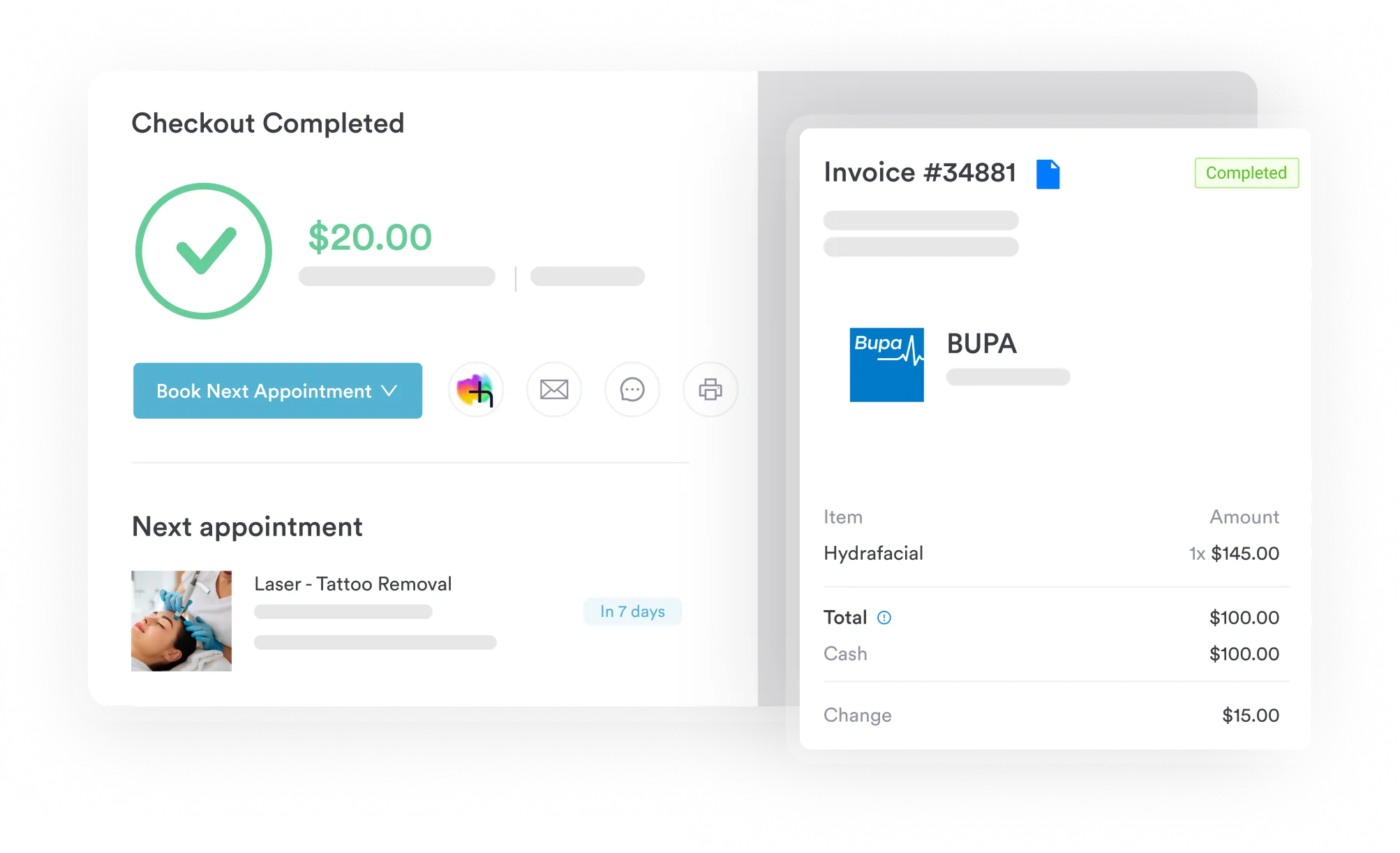
The platform also supports modifier tracking. When a 12046 claim requires modifier 22 or 59 due to unusual complexity or a concurrent service, the modifier is applied at the encounter level and carries through to the submitted claim.
This EHR integration for billing means coders spend less time reconstructing the clinical picture from incomplete notes and more time on accurate code selection. Practices tightening their HIPAA-compliant claim documentation workflows will find the structured encounter record reduces variability across providers.

Pabau’s claims management module lets billers document layered closure details, apply modifiers, and submit CPT 12046 claims without switching between systems. See how it works for your practice.

The trade-off with CPT 12046 comes down to when the documentation work happens: at the point of care, or after the fact when a denial forces someone to reconstruct it. Coders can only select 12046 correctly if the operative note names the closed layers and the exact wound length before the claim goes out.
Practices that build this documentation into the clinical workflow, rather than leaving billers to chase missing detail after submission, see fewer misclassified simple-versus-intermediate repairs and fewer incorrectly aggregated wound lengths. Book a demo to see how Pabau connects wound repair documentation to claim submission for your practice.

Need the billing guide for the adjacent intermediate repair series? CPT Code 12037 covers the same repair type for scalp, trunk, and extremity wounds.
Billing for a facial wound of the same length instead? CPT code 12056 covers intermediate facial repairs in the 20.1-30.0 cm range.
Need a hand ICD-10 code for a subsequent encounter? ICD-10 code S61.122D covers a left thumb laceration with foreign body on a follow-up visit.
CPT Code 12046 covers intermediate repair of wounds on the neck, hands, feet, and/or external genitalia measuring 20.1 to 30.0 cm. The repair must involve layered closure of subcutaneous tissue and/or non-muscle fascia in addition to skin closure. Single-layer skin closures, regardless of wound length, do not qualify and should be coded under simple repair (12001-12007).
Medicare reimbursement for CPT 12046 is approximately $270-$290 in non-facility settings and $200-$220 in facility settings, calculated from RVU values multiplied by the annual CMS conversion factor. These figures change each January when CMS updates the Medicare Physician Fee Schedule. Verify current rates using the CMS Physician Fee Schedule lookup tool or the FastRVU calculator before quoting reimbursement amounts.
The most commonly applicable modifiers are: modifier 25 (significant E/M service on the same date, appended to the E/M code); modifier 51 (multiple procedures at the same session); modifier 59 or XS (distinct or separate procedural service, used only when NCCI edits apply); LT/RT (laterality for hands or feet); and modifier 22 (increased procedural services when documentation supports substantially greater work than typical).
When multiple wounds on the same site group (neck, hands, feet, and/or external genitalia) are repaired at the same encounter with the same complexity, add the wound lengths together and report a single code for the combined measurement. Two hand lacerations of 12.4 cm and 9.8 cm total 22.2 cm, which falls within the 12046 range (20.1-30.0 cm). Do not report each wound as a separate CPT code. Wounds on different site groups must be coded separately using the applicable code for each group.
Common ICD-10-CM codes paired with CPT 12046 include S61.419A (laceration without foreign body of the hand, initial encounter), S91.319A (laceration without foreign body of the foot, initial encounter), S11.91XA (open wound of neck, initial encounter), and S31.502A (open wound of external genitalia, initial encounter). Use the most specific code available for the anatomical site and laterality. Verify codes against the current-year ICD-10-CM edition, updated October 1 annually.
CPT 12046 carries a 10-day global period under Medicare, meaning follow-up visits related to the wound repair within 10 days of the procedure are included in the original reimbursement and should not be billed separately. Confirm the current global period assignment in the CMS Physician Fee Schedule before billing post-operative visits, as CMS can update global period designations in annual fee schedule updates.