



CCSD code G5100: Bypass of duodenum billing guide
CCSD code G5100 bills a bypass that leaves the duodenum in place CCSD code G5100...

Last Updated: Oct 16, 2026

CPT Code 11441 covers excision of a benign lesion on the face, ears, eyelids, nose, lips, or mucous membrane with an excised diameter of 0.6 to 1.0 cm, including simple closure.
The excised diameter is measured as the lesion plus the narrowest margin, not the visible surface size; using the wrong measurement is the most common upcoding error with this code.
Simple closure is bundled into CPT Code 11441 and must not be billed separately; intermediate or complex repair requires an additional code and clear documentation.
Pabau’s claims management software helps dermatology and plastic surgery practices document excised diameter, attach correct ICD-10 codes, and submit clean claims for CPT 11441.
Claim denials for benign skin lesion excisions often trace back to one avoidable error: the biller used the visible lesion size rather than the excised specimen diameter. For CPT Code 11441, that distinction determines whether the claim is paid at all. The code covers facial-site excisions in the 0.6 to 1.0 cm excised diameter range, and payers audit that measurement against operative documentation. Practices using dermatology EMR software with structured procedure notes catch this before the claim goes out. This guide covers everything coders and practice managers need to submit CPT 11441 accurately: the official descriptor, site scope, 2026 Medicare rates, modifiers, ICD-10 crosswalk, documentation checklist, and the most common billing mistakes.
CPT Code 11441 sits within the AMA’s Integumentary System section and is specifically designed for benign lesion excisions on high-complexity facial and perioral sites. It is distinct from the 11400 and 11420 series, which cover different anatomic regions. Getting the site and the diameter right on the first submission keeps revenue flowing and keeps your practice off payer audit lists.
CPT Code 11441 is defined by the American Medical Association (AMA) as the excision of a benign lesion, including margins, located on the face, ears, eyelids, nose, lips, or mucous membrane, with an excised diameter of 0.6 to 1.0 cm. Simple closure is included in the code and must not be reported separately.
The phrase “including margins” is load-bearing. The excised diameter encompasses the lesion itself plus the narrowest surgical margin, measured on the excised specimen. This is not the same as the lesion’s pre-operative visible size, which is almost always smaller. Documentation must record both the lesion size and the margin width so the total excised diameter can be audited.
Site specificity is what separates CPT 11441 from the rest of the benign lesion excision family. The code applies only when the excision occurs on one of the following locations.
The scalp is not included in this code family. Excisions on the scalp, neck, hands, or feet use the 11420 series. The trunk, arms, and legs use the 11400 series. Assigning the wrong anatomic series is a consistent denial trigger, particularly in plastic surgery and general dermatology practices where providers frequently excise lesions from multiple body regions on the same visit.
Medicare reimburses CPT Code 11441 under the 2026 Medicare Physician Fee Schedule (MPFS), with separate allowed amounts for non-facility (physician office) and facility (hospital outpatient or ambulatory surgical center) settings. Rates below are 2026 MPFS estimates; actual payment varies by geographic locality. Always verify current rates using the CMS Physician Fee Schedule lookup tool. These rates reflect Medicare and commercial payer compliance requirements that practices must follow when submitting claims.
Place of service (POS) code must match the setting where the procedure was performed. Billing with POS 11 (office) when the procedure occurred in a hospital outpatient department (POS 22) inflates the allowed amount and triggers recoupment. Commercial payers typically reimburse CPT 11441 at 100 to 120 percent of the applicable Medicare locality rate, though this varies significantly by contract. Confirm rates with the FastRVU 2026 RVU lookup tool before finalizing fee schedules.
Modifier selection for CPT 11441 depends on clinical circumstances and payer policy. The National Correct Coding Initiative (NCCI), maintained by CMS, governs which modifier combinations are permitted. Verify all modifier rules against individual payer policies before submission. Where a code carries an evaluation and management component, documented complexity sets the level billed.
Modifier -59 requires particular care. CMS prefers the X-modifier subset (XS, XE, XP, XU) when payers accept them, as they provide more precise clinical context than the broad -59 descriptor. Using -59 without supporting documentation that the service was genuinely distinct invites audit scrutiny.
When billing multiple benign lesion excisions on the same day, list the highest-value code first and append modifier -51 to subsequent codes. Some payers auto-apply the multiple procedure reduction regardless of modifier order, but correct sequencing protects reimbursement if the claim is manually reviewed.
Every claim for CPT 11441 must include an ICD-10-CM diagnosis code that supports medical necessity. Payers match the diagnosis against Local Coverage Determinations (LCDs), including CMS LCD articles A57113 and A57482, which govern covered indications for benign skin lesion removal. Cosmetic excisions without a qualifying diagnosis will be denied. For practices handling mole mapping and skin lesion documentation, pairing the correct ICD-10 code at the point of documentation prevents retrospective claim corrections.
The selected ICD-10 code must be supported by documented pre-operative diagnosis. If the pathology report returns a malignant result, the claim may require amendment with a malignant neoplasm code and rebilling. Verify crosswalk accuracy using the AAPC CPT-to-ICD-10 crosswalk tool.
Incomplete documentation is the second most common reason CPT 11441 claims are denied or recouped on audit. Every element below must appear in the operative note or procedure record before the claim is submitted. Structured client record management systems that include procedure-specific templates reduce the risk of missing fields. HIPAA-compliant documentation practices.
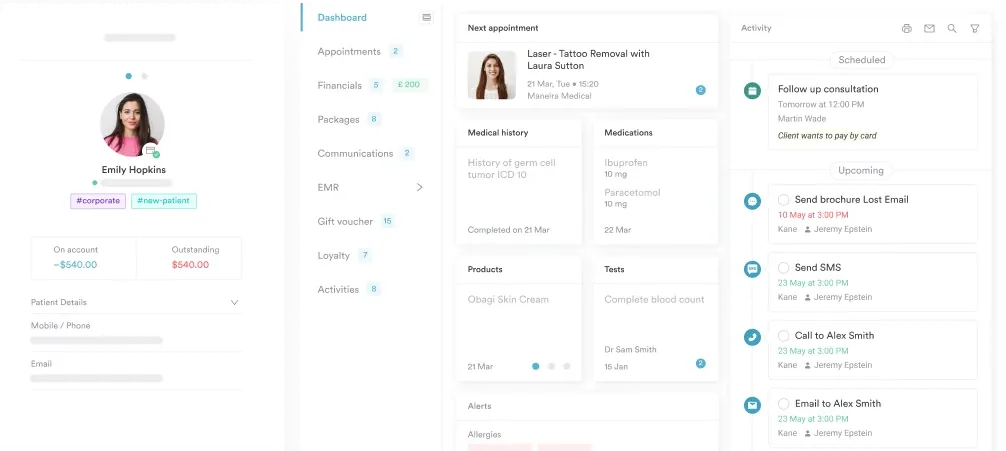
When using digital intake forms and structured procedure templates, practices can build these required fields directly into the pre-operative workflow. The form prompts the provider to record each element before the patient leaves, rather than relying on retrospective chart completion.
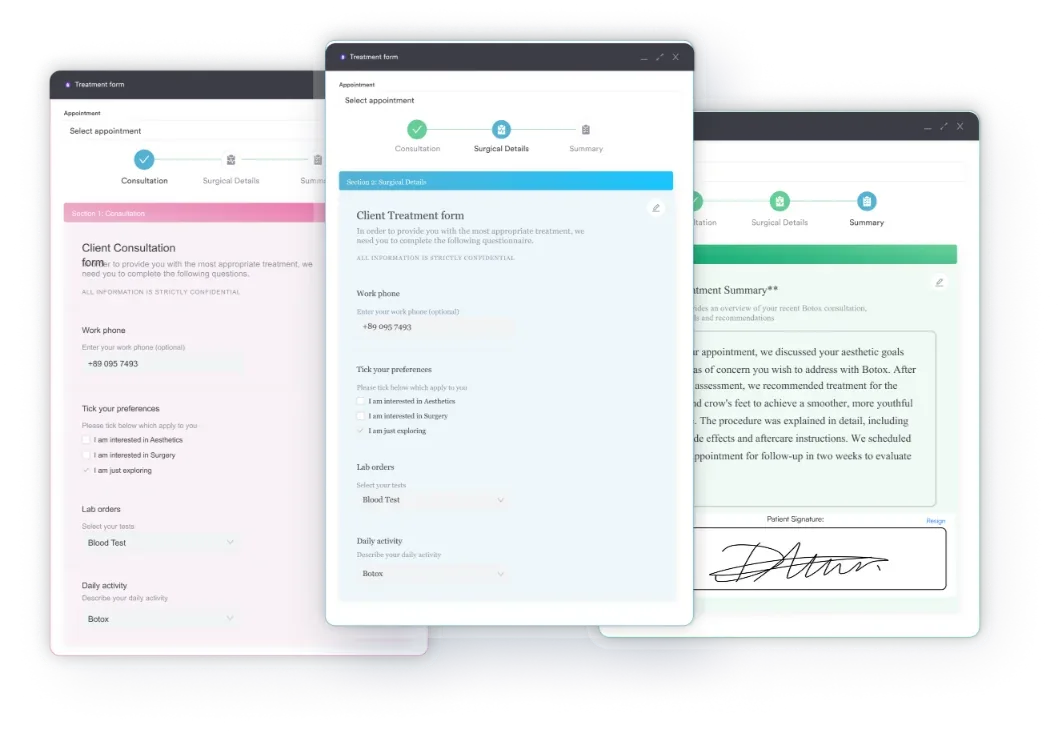

Pabau’s procedure templates and claims management tools help dermatology and skin clinic teams record excised diameter, close notes before the patient leaves, and submit clean claims the first time.

CPT Code 11441 is one of six codes in the facial-site benign lesion excision family. Selecting the right code depends entirely on the excised diameter, which must be measured on the specimen. Coders who are unfamiliar with other CPT procedure code families sometimes treat adjacent codes as interchangeable; in this family, each code maps to a non-overlapping diameter range.
The boundary between 11440 and CPT Code 11441 is 0.5 cm. A lesion excised with a total specimen diameter of exactly 0.5 cm maps to 11440; anything from 0.6 cm up to 1.0 cm maps to 11441. Providers who estimate rather than measure the excised specimen will consistently misassign codes in this boundary zone. The AMA’s CPT guidelines for integumentary excision codes require that the measurement is taken on the excised specimen, not on the patient’s skin pre-operatively.
The upper boundary of CPT Code 11441 is 1.0 cm. An excised diameter of 1.1 cm or more moves the claim to 11442. This boundary is the most common site of upcoding errors in facial benign lesion excision billing. Payers and CMS auditors cross-reference the documented diameter in the operative note against the code submitted. When the note records 0.9 cm and the claim bills 11442, the mismatch triggers automatic review.
The 11400 series covers excisions on the trunk, arms, and legs. The 11420 series covers the scalp, neck, hands, feet, and genitalia. CPT Code 11441 and its siblings (11440 to 11446) cover exclusively facial and perioral sites. The reimbursement difference between the families reflects the higher complexity of facial excisions, where cosmetic outcome and proximity to critical structures demand greater surgical precision. Using 11400-family codes for a facial excision undercodes the procedure and reduces legitimate reimbursement.
Most CPT 11441 denials are preventable. The errors below recur across dermatology, plastic surgery, and general practice billing teams. Reviewing these against your own claim denial reports is the fastest way to find revenue leaks. A structured medical spa compliance checklist approach, applied to procedure documentation, catches most of these before submission. A pre-authorization number has to reach the claim, and a missing reference is a common avoidable denial.
The documentation errors that cause CPT 11441 denials all share one root cause: information captured in the treatment room is not structured at the point of care. Providers measure the excised specimen but do not record the measurement in a dedicated field. The ICD-10 code is added by a biller days later from memory. The laterality modifier is an afterthought. Pabau’s claims management software addresses this by embedding the documentation requirements into the procedure workflow itself.
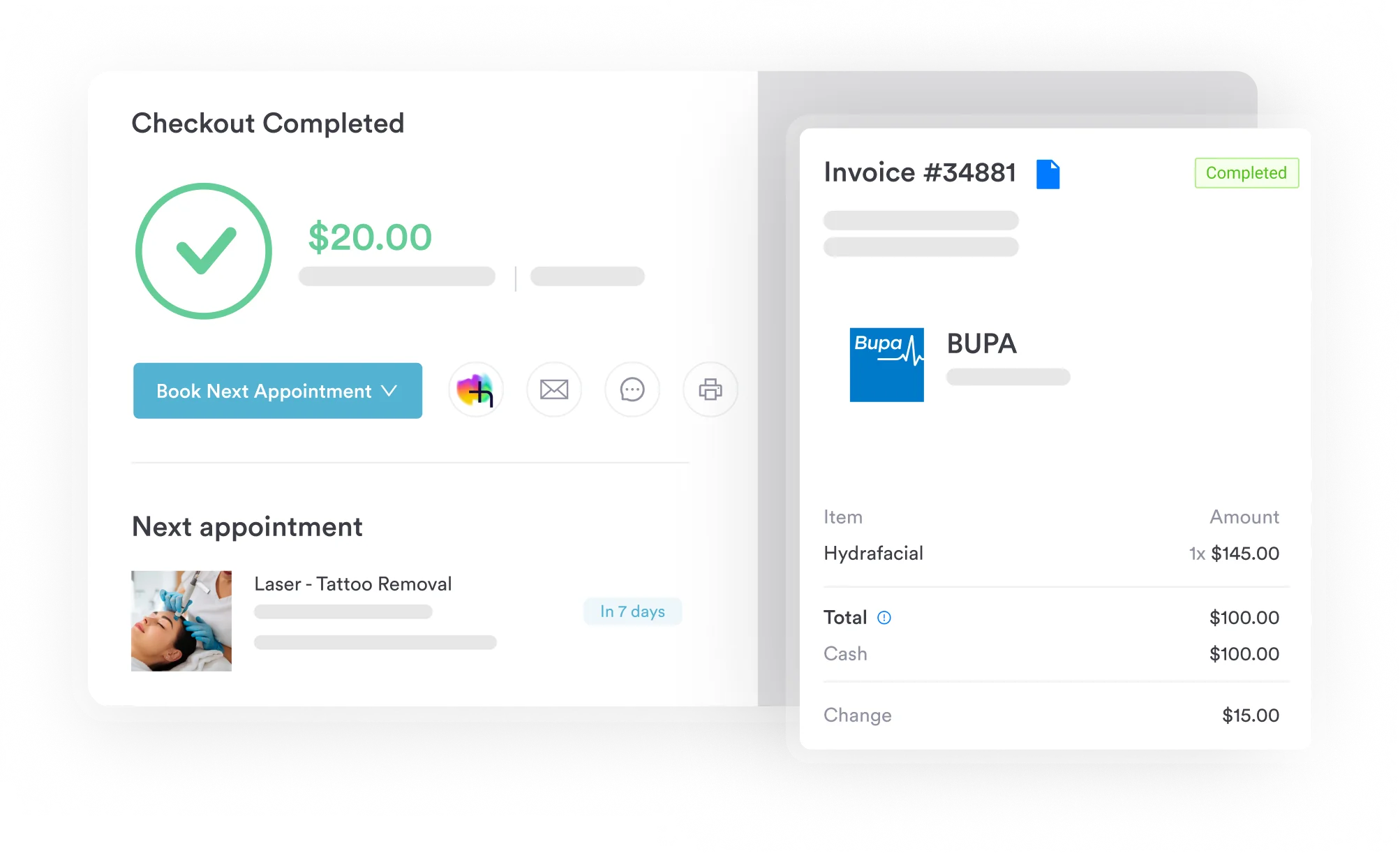
For dermatology and skin clinic practices, Pabau’s procedure templates can be configured to prompt for excised diameter, anatomic site, closure type, and ICD-10 pairing before the note is signed. The lesion measurement tracking capability captures specimen dimensions as a structured field, not a free-text note, making the value auditable and directly mappable to the CPT code range. For practices operating across multiple sites. Claim submission through Pabau then carries the correctly captured data forward, reducing the manual re-entry that introduces transcription errors between the clinical record and the claim.
Audit your last 90 days of CPT 11441 claims: filter for denials with reason code CO-4 (incorrect procedure or modifier) or CO-11 (diagnosis inconsistent with procedure). Both typically trace to documentation mismatches that structured procedure templates can prevent at the point of care.
CPT Code 11441 is one of the most straightforward codes in the integumentary system, but the errors that cause denials are consistent and well-documented. Excised diameter measured correctly, simple closure not billed separately, the right anatomic family selected, and an ICD-10 code that matches the documented diagnosis: get those four things right and the claim pays clean.
Pabau’s procedure documentation and plastic surgery EMR capabilities help practices embed these requirements into the clinical workflow rather than relying on retrospective chart review. To see how Pabau handles billing documentation for skin excision and other integumentary procedures, book a demo.

Coding an autistic disorder diagnosis? ICD-10 code for autistic disorder covers the correct code F84.0, related autism spectrum codes, and documentation tips for billing.
Coding a primary rectal cancer diagnosis? ICD-10 code C20 guide covers rectal cancer coding, including adenocarcinoma, lymphoma, and sarcoma, when the rectum is the primary site.
Coding a gallbladder cancer diagnosis? ICD-10 code C23 guide covers the billable code for gallbladder cancer, diagnosed in roughly 5,000 Americans each year.
CPT Code 11441 is used to bill the excision of a benign lesion, including margins, on the face, ears, eyelids, nose, lips, or mucous membrane when the excised diameter is 0.6 to 1.0 cm. Simple closure is included in the code and must not be billed separately. It is commonly used in dermatology, plastic surgery, and general practice for procedures such as nevus excision, epidermal cyst removal, and seborrheic keratosis removal on facial sites.
The excised diameter is the measurement of the removed specimen, including the lesion and the narrowest surgical margin, not the visible lesion size on the patient’s skin. Per AMA CPT guidelines, the measurement is taken on the excised specimen after removal. Using the pre-operative visible lesion size routinely underestimates the true excised diameter and leads to systematic downcoding or miscoded claims.
The most commonly applied modifiers are -25 (significant, separately identifiable E&M on the same day), -59 or its X-subset equivalents (distinct procedural service to bypass NCCI bundle edits), -51 (multiple procedures), -LT/-RT (laterality on paired structures such as eyelids or ears), and -79 (unrelated procedure during a postoperative period). Modifier rules vary by payer; verify each combination against individual payer policies and NCCI edit tables before submission.
CPT 11441 covers excised diameters of 0.6 to 1.0 cm; CPT 11442 covers 1.1 to 2.0 cm. Both apply to the same facial anatomic sites and both include simple closure. The only differentiator is the excised specimen measurement. Billing 11442 when the documented diameter is 1.0 cm or less is an upcoding error that auditors identify by comparing the operative note measurement against the submitted code.
Yes, CPT Code 11441 is covered by Medicare when the procedure meets medical necessity criteria under applicable Local Coverage Determinations, including LCD articles A57113 and A57482. Cosmetic excisions performed solely for appearance without a qualifying diagnosis will be denied. Documentation must support the pre-operative diagnosis, and the ICD-10 code submitted must reflect a covered benign lesion indication, not a cosmetic intent.
CPT Code 11441 and the 11440 to 11446 series cover excisions on the face, ears, eyelids, nose, lips, and mucous membrane. The 11400 family covers the trunk, arms, and legs. The 11420 family covers the scalp, neck, hands, feet, and genitalia. Code selection is site-specific; using the wrong anatomic family for a facial excision is a billing error that results in either underpayment or denial.



