CPT code 93503: Swan-Ganz catheter billing and modifiers
CPT code 93503: Official descriptor and procedure overview In the AMA CPT code s...

Last Updated: Oct 23, 2026

CPT code 10011 describes fine needle aspiration biopsy with MRI guidance for the first lesion, introduced as part of the 2019 FNA code restructuring.
MRI guidance is bundled into CPT 10011 and cannot be billed separately. Reporting it as an add-on code will trigger a claim denial.
Additional lesions biopsied under MRI guidance require CPT 10012, not a second unit of 10011. Each guidance modality has its own code pair.
Practice management software like Pabau validates the fields a CPT 10011 claim needs and tracks its status. A biller still confirms the code, modifier, and lesion count.
CPT code 10011 describes a fine needle aspiration biopsy performed with MRI guidance, billed for the first lesion in a session. The American Medical Association (AMA) created the code in 2019. That year, it split the old FNA biopsy family into ten codes, organized by imaging modality and lesion order.
Most CPT 10011 denials don’t start with the wrong code. They start when a biller adds a separate MRI guidance code that’s already bundled in, or miscounts which lesion counts as the first one. Either slip triggers an unbundling flag, and the rework often takes longer than the biopsy itself.
CPT code 10011 is defined by the AMA as: Fine needle aspiration biopsy, with imaging guidance; first lesion, magnetic resonance imaging. The short descriptor used on remittance advice and clearinghouse transmissions reads: FNA bx w/image guide; 1st lesion MRI.
This code covers one complete FNA encounter in which MRI is used to locate and target the lesion. The procedure involves advancing a thin-gauge needle into the target tissue under real-time MRI visualization and aspirating cellular material for pathologic analysis.
The pathologist’s cytology reading of that aspirate is billed separately. The final interpretation and report fall under CPT 88173, which is reported once per anatomic site.
Because MRI guidance is explicitly named in the descriptor, it is bundled into the code. You cannot add a separate radiology guidance code alongside it.
This code applies to the first lesion only. If a second lesion is biopsied under MRI guidance in the same session, CPT 10012 applies to it instead. Commonly biopsied sites include thyroid nodules, breast lesions, lymph nodes, and soft-tissue masses, though CPT 10011 itself isn’t site-specific.
Before 2019, the FNA code set consisted of two codes: 10021 (without imaging guidance) and 10022 (with imaging guidance). Imaging guidance was reported separately from the biopsy procedure, which created persistent unbundling confusion and inconsistent payer adjudication.
According to AAPC’s CPT code guidance, the 2019 AMA restructuring replaced this two-code system with a family of ten codes. Each code combines guidance modality and lesion order.
CPT 10005 through 10012 now cover image-guided FNA procedures. Each code encodes both the imaging modality and whether the lesion is the first one or an additional one in the same session. CPT 10021 stayed in place as the no-imaging-guidance code for a first lesion, and CPT 10004 was added as its additional-lesion pair.
Billers still working from pre-2019 documentation checklists risk adding obsolete separate-guidance codes. Payers will deny the add-on as unbundled, and the reconsideration process typically requires the operative note and a written unbundling justification.
Check your EHR’s procedure code library annually. Many systems retain retired codes alongside active ones without flagging them as inactive. A coder who selects the old guidance add-on code out of habit will not see an error message until the claim comes back denied.
The full FNA code family organizes by two axes: imaging guidance type and lesion sequence. Getting the lesion count wrong is one of the most common denial triggers for same-session, multi-lesion procedures.
When a radiologist biopsies two separate lesions under MRI guidance in one session, report 10011 for the first lesion. Report 10012 for the second lesion instead. Reporting two units of 10011 will trigger a duplicate-service denial, since payers allow only one “first lesion” per session.
An EMR designed for plastic surgery keeps consents, operative notes, and staged repair timelines in one record.
Medicare reimbursement for CPT code 10011 is set annually through the CMS Medicare Physician Fee Schedule (MPFS). Payment amounts vary based on place of service and geographic location.
Rates change every January 1, so always verify the current-year figures in the CMS MPFS Look-Up Tool. Do this before quoting expected reimbursement to a patient or practice administrator.
Two rate categories apply to CPT 10011: facility and non-facility.
The non-facility rate (office, practice) is typically higher because it includes a practice expense component for maintaining imaging equipment and technical staff on-site. The facility rate (hospital outpatient, ambulatory surgery center) is lower because the facility separately bills a technical component.
Geographic adjustment factors (Geographic Practice Cost Indices, or GPCIs) modify national payment amounts for local area differences in practice costs. A practice in Manhattan will receive a different payment than one in rural Montana for the same CPT code 10011 claim.
Use the FastRVU 2026 RVU lookup to check current work, practice expense, and malpractice RVU components and apply your locality’s GPCI.
Every CPT 10011 claim requires a supporting ICD-10-CM diagnosis code that establishes medical necessity. Payers cross-reference the diagnosis against their local coverage determinations (LCDs) to confirm the procedure was indicated.
Mismatched or overly unspecified diagnosis codes are a leading cause of denials for FNA biopsy claims. These diagnoses often start in primary care.
Code to the highest level of specificity available in the documentation. Using R59.9 (unspecified enlarged lymph nodes) when the operative note specifies a right cervical node, for example, invites an LCD mismatch denial that R59.0 would have avoided.
That same discipline applies across every ICD-10 pairing on this list: specificity is what keeps a claim out of manual review.
Modifiers clarify circumstances that affect how a claim is adjudicated. For CPT code 10011, the most frequently applicable modifiers are:
Never append modifier 26 (Professional Component) or TC (Technical Component) to CPT 10011. Because imaging guidance is fully bundled into the code, there is no technical component to split out separately. Doing so will generate an edit and denial.
Clean documentation is the foundation of a defensible CPT 10011 claim. The same standard matters even more for medico-legal practices, where documentation has to hold up outside routine payer review too.
Payers and MAC contractors audit these elements specifically when reviewing FNA biopsy claims. Consistent use of digital intake and procedure forms that prompt for each required field dramatically reduces incomplete-documentation denials.

The operative or procedure note for CPT code 10011 must include all of the following:
Maintaining HIPAA-compliant documentation practices across all procedure notes protects the practice during payer audits and any compliance review. Clinical documentation for procedure-based codes always rewards specificity. Generic statements that could apply to any FNA encounter are audit red flags.
Build a CPT 10011 documentation template in your EHR or procedure form library. Include a mandatory field for imaging modality (MRI / CT / Ultrasound / None) and a lesion counter. Forcing the biller to select the guidance type at charting time eliminates the downstream disconnect between the clinical note and the code selected.
Most CPT 10011 denials cluster around four recurring errors. Billers who know these patterns can build pre-submission edits that catch them before the claim reaches the payer.
Medicare coverage for CPT code 10011 is governed by Local Coverage Determinations (LCDs) issued by Medicare Administrative Contractors (MACs).
The specific indications covered, the diagnosis codes accepted as evidence of medical necessity, and documentation requirements may vary between MAC jurisdictions. Check the CMS Medicare Coverage Database and your regional MAC’s LCD policy before billing.
Commercial payers (Aetna, UnitedHealthcare, Blue Cross Blue Shield plans) maintain their own coverage policies that may differ from Medicare. Common commercial-payer variations include:
Always verify individual payer policies for CPT code 10011 before the procedure date when possible. Prior authorization denials after the fact are far more difficult to reverse than upfront authorization requests.
Standalone CPT code lookup tools can tell you what a code means. They can’t tell you whether a specific claim has the right modifier, diagnosis, lesion count, and setting attached before it reaches the payer. That disconnect is where most denials start. A clean claim carries the code, the modifiers, and the diagnosis in agreement, and needs no rework before payment.
Practice management software like Pabau does a narrower job. It checks that a claim carries the fields a payer requires before it goes out. When a procedure note documents “MRI-guided FNA, first lesion, right thyroid nodule, CPT 10011,” Pabau’s claims management tools confirm the modifier, diagnosis, and required fields are present.
If something’s missing, the claim gets flagged before it’s submitted. The biller still confirms the code and lesion count, but the claim doesn’t go out missing a field the payer would reject.
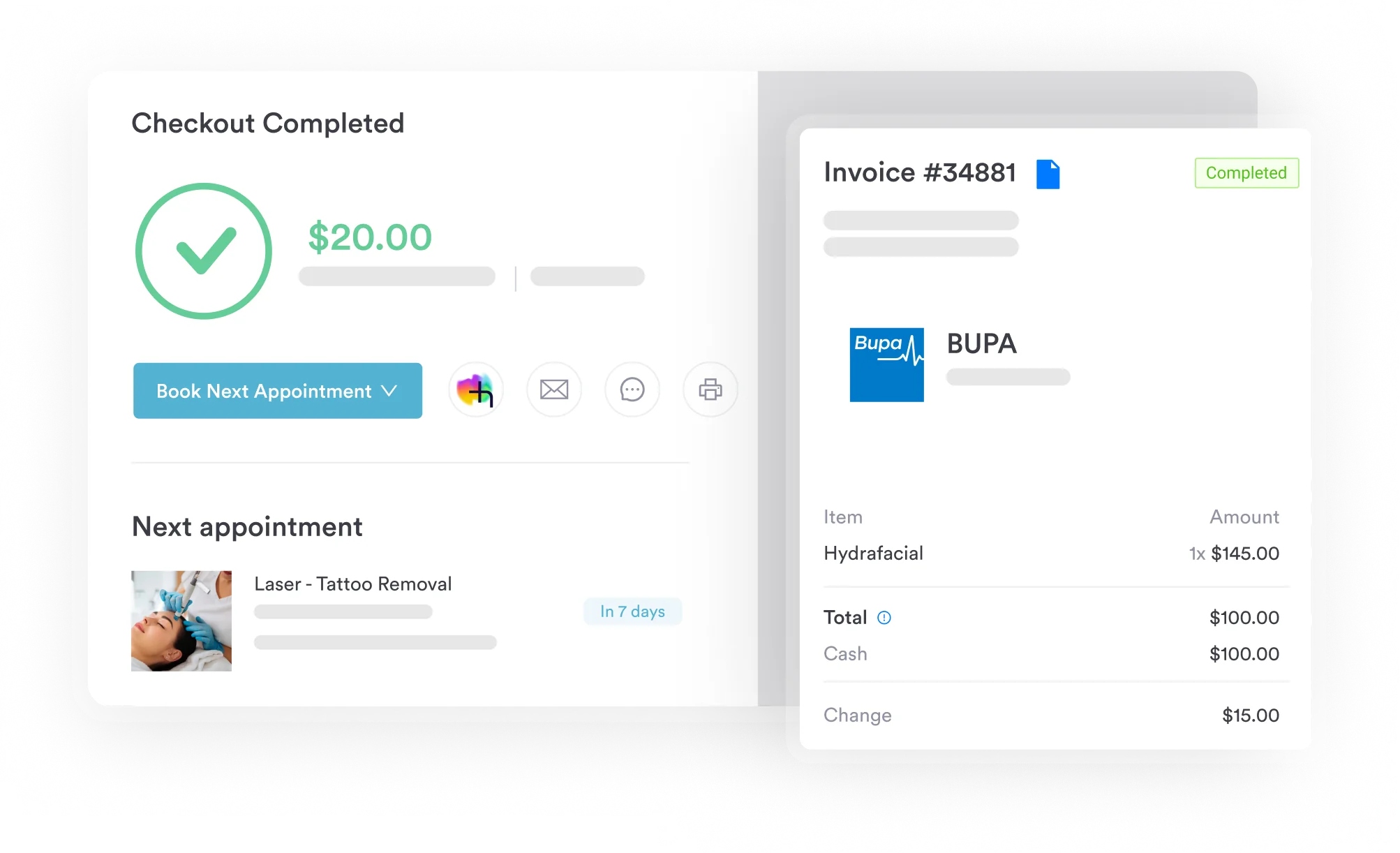
Pabau’s practice management software lets practices build procedure-specific templates that prompt clinicians for the documentation elements payers audit. For CPT code 10011, that means a structured field for imaging modality, lesion order, and anatomical site.
The note already contains what the claim needs before a biller touches it. Fewer manual handoffs between clinical and billing staff means fewer documentation-related denials to chase down after the fact. Insights
Plus. That will let coding managers catch a recurring CPT 10011 issue early.

Practice management software like Pabau validates the fields payers require on a CPT 10011 claim and tracks its status from submission to response. That catches missing documentation before it becomes a denial.

CPT code 10011 isn’t hard to define, but it’s easy to bill wrong in ways that surface weeks later on a remittance advice. Treat MRI guidance as bundled from the start. Confirm lesion order before the claim goes out. Give the diagnosis code genuine specificity instead of a default, unspecified option.
Practices that build those three checks into their workflow catch most 10011 errors before a payer ever sees them. Book a demo to see how Pabau supports documentation-first billing for image-guided procedures.

Billing a continuous infusion pump for PAH therapy? Infusion pump billing guide covers the DME rules for pulmonary arterial hypertension patients on prostacyclin therapy.
Still billing a CGM supply code that was discontinued? K0553 CGM billing guide explains which replacement codes cover continuous glucose monitor supplies now.
Billing a drug injection alongside another procedure this week? HCPCS code J3360 walks through the same bundling and NCCI-edit logic that trips up FNA claims, applied to diazepam injection billing.
Keeping a reference library of billing guides handy? HCPCS code A4620 covers variable concentration mask billing, with the same documentation-first approach to avoiding denials.
Yes, if the visit is a significant, separately identifiable service from the biopsy. Append modifier 25 to the E/M code and document decision-making beyond what the procedure itself required. Practices that review E/M notes each month catch documentation level drift before a payer flags it.
No. CPT 10011 covers only the biopsy and the MRI guidance used to perform it. The cytopathology interpretation is billed separately, usually under CPT 88172 or 88173.
Interventional radiologists bill it most often, since MRI-guided access requires specialized imaging equipment. Some breast and endocrine surgeons bill it too, when their practice has in-office MRI.
Medicare does not require prior authorization for this code. Many commercial payers do, especially for MRI-guided procedures, so confirm the plan’s policy before scheduling rather than after.
Yes. CPT 10011 describes the procedure performed, not the pathology outcome, so specimen adequacy does not change the code. If the physician repeats the biopsy on the same lesion that day, use modifier 76 instead of a second unit.