



HCPCS code E0198: Water pressure pad billing guide
HCPCS code E0198 is a water pad for a standard mattress HCPCS code E0198 is the ...

Last Updated: Oct 13, 2026

CPT Code 01230 describes anesthesia for open procedures involving the upper two-thirds of the femur, not otherwise specified. Femoral osteotomy is a common example.
This code carries 6 base units. Reimbursement is calculated using the formula: (Base Units + Time Units + Modifying Units) x Anesthesia Conversion Factor.
Modifier selection is a top compliance risk: AA, QZ, QX, QY, and AD each signal a different provider-type scenario, and mixing them up triggers claim denials.
Pabau’s claims management software helps anesthesia billing teams track modifier usage, document time units, and reduce claim errors across the full reimbursement workflow.
CPT Code 01230 covers anesthesia for open procedures involving the upper two-thirds of the femur (the thigh bone), not otherwise specified.
Femoral osteotomy is the most common procedure billed under this code. However, it also covers other open upper-leg procedures that aren’t described more specifically elsewhere in the CPT anesthesia section.
Specifically, most denials on this code trace back to a single input: the wrong modifier for the provider type.
Getting the base units right is straightforward. By contrast, getting the modifier, time units, and locality conversion factor right is where billing teams routinely lose money. In practice, all three have to line up in the correct combination, not just individually correct.
This reference guide covers the complete billing picture for CPT 01230. Specifically, it walks through the code description, base units, and the full reimbursement formula with a worked example. In addition, it details applicable modifiers by provider type, Medicare rates, and ICD-10 diagnosis crosswalk codes. Finally, it covers documentation requirements and the most common compliance pitfalls coders encounter with this code family.
CPT Code 01230 has this official AMA description: Anesthesia for open procedures involving upper two-thirds of femur; not otherwise specified. The code falls within the CPT Anesthesia section, specifically the subsection covering procedures on the upper leg (codes 01200-01274).
It applies whenever an anesthesiologist or CRNA gives anesthesia for an open procedure on the upper two-thirds of the femur. The anesthesia can be general, regional, or monitored care. In practice, this applies as long as the procedure isn’t already described more specifically by a neighboring code.
Femoral osteotomy is the most common procedure billed under CPT 01230. It’s a surgical reshaping or realignment of the femur, performed to correct deformity, leg-length discrepancy, or hip dysplasia sequelae. In addition, the “not otherwise specified” wording means it also covers other open upper-leg procedures without a dedicated code.
One distinction worth noting at the outset: CPT 01230 is exclusively for open upper-leg procedures. Arthroscopic or percutaneous interventions on the femur may route to a different anesthesia code. That’s because the correct code depends on the surgical approach documented in the operative report. So, always confirm the procedure description before coding.
Base units are the fixed value assigned to a CPT anesthesia code. The American Society of Anesthesiologists (ASA) sets this value in its Relative Value Guide. So, for CPT Code 01230, the base unit value is 6. This figure reflects the inherent complexity of anesthesia for open upper-leg surgery. Specifically, it accounts for patient positioning, expected blood loss, and typical procedure duration, before time units are added.
Base units are not negotiable at the claim level. In addition, they are a fixed input into the reimbursement formula. Time units, by contrast, accumulate as the case progresses.
Anesthesia billing professionals sometimes need to verify base unit assignments for the full upper-leg code family, or cross-reference adjacent codes. For example, they can use the AAPC Codify CPT lookup or the FastRVU RVU lookup. Both reflect current published values.
Anesthesia reimbursement does not follow the standard resource-based relative value scale (RBRVS) used for most surgical CPT codes. Instead, it uses a distinct formula that most payers, including Medicare, apply consistently. In practice, understanding this formula is the foundation of accurate billing for CPT Code 01230.
The formula: (Base Units + Time Units + Modifying Units) x Anesthesia Conversion Factor = Reimbursement
A P2 patient (no modifying units) undergoes an 85-minute femoral osteotomy at a hospital. In this locality, the Medicare anesthesia conversion factor is $22.50 per unit.
Commercial payers may apply a different conversion factor, a different rounding convention, or a negotiated rate entirely distinct from Medicare. In practice, the formula structure is consistent; the inputs vary by payer contract.
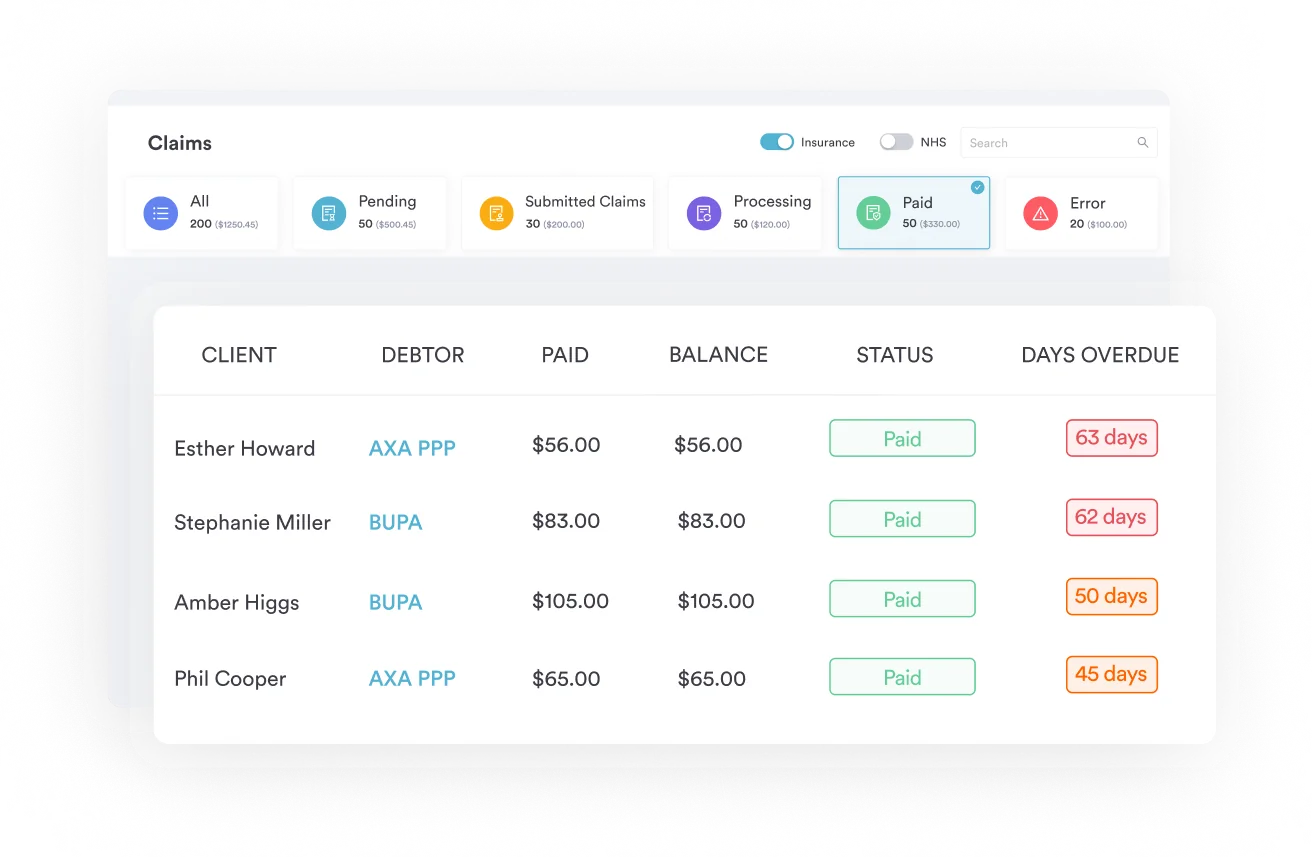
Billers who handle high anesthesia volume can track these variables more reliably using dedicated claims management software. This kind of tool logs case time, modifier selection, and payer-specific conversion factors in a single workflow.
The anesthesia conversion factor itself may differ between facility and non-facility settings for Medicare. When the procedure is performed in a hospital or ASC (facility setting), CMS applies the facility rate.
Non-facility rates apply to office-based procedures, which are uncommon for open upper-leg surgery but can occur in select ambulatory contexts. For most CPT 01230 billing scenarios, the facility conversion factor is the relevant figure.
Comparing practice management systems for medical teams is worth the effort before anesthesia time-unit billing becomes a spreadsheet job.
Medicare calculates anesthesia payment through the formula described above. It uses locality-specific conversion factors published annually in the Medicare Physician Fee Schedule (MPFS). These figures update each January 1 and can shift meaningfully year to year. That’s why billing teams should pull the current conversion factor for their MAC jurisdiction directly from CMS. Relying on prior-year data can lead to inaccurate estimates.
Two Medicare-specific rules are worth noting for CPT 01230 billing:
Practices that bill Medicare for anesthesia at scale will find that HIPAA-compliant documentation workflows are tightly linked to reimbursement accuracy. That’s because Medicare audits frequently focus on time records and modifier eligibility documentation. Building those records correctly at the point of care is more efficient than reconstructing them at audit.

Pabau’s claims management tools help billing teams track modifier usage, document time units accurately, and reduce claim errors, so anesthesia reimbursement reaches its full potential.

Modifier selection is the single most compliance-sensitive element of anesthesia billing. For CPT Code 01230, the applicable modifiers fall into two groups. First, provider-type modifiers identify who provided the anesthesia. Next, physical status modifiers capture patient risk level. Both groups affect the claim’s payability and, in some cases, the reimbursement amount.
Physical status modifiers classify patient risk at the time of the procedure. In practice, they follow the ASA Physical Status Classification and can add modifying units to the reimbursement calculation. P1 (healthy patient) and P2 (mild systemic disease) add 0 units. P3 adds 1 unit, P4 adds 2, and P5 adds 3. P6 (brain-dead organ donor) is a special category. Risk of complications carries more weight than volume of notes when the visit level is questioned.
Physical status modifiers are a documented compliance risk area. Specifically, the ASA requires that the physical status assigned in the anesthesia record match the modifier billed on the claim. In practice, billing P3 for a patient documented as P2 in the anesthesia record is a common audit trigger.
For guidance on the ASA classification framework and its billing implications, the AMA’s CPT coding resources provide updated reference material.
CPT 01230 must be paired with an ICD-10-CM diagnosis code that supports the medical necessity of the anesthesia service. For example, the following ICD-10-CM codes are commonly crosswalked with this CPT code, reflecting the upper-leg procedures it covers. So, coders should confirm current validity of each code for the billing year in question.
This is not an exhaustive list. In practice, the operative report and attending surgeon’s documentation govern which ICD-10-CM code is most specific and appropriate.
Osteoporosis is a frequent comorbidity in femur fracture cases and can factor into the ASA physical status assigned before anesthesia. Specifically.
For femur fracture presentations that don’t fit the codes above.
CPT 01230 sits within a family of upper-leg anesthesia codes. Choosing the wrong code within this family is a common cause of claim edits. In addition, the table below maps the key codes, their descriptions, and base unit values to help coders select accurately. The neighboring pelvic region follows the same base-unit logic; 01120 shows how the formula applies one region over.
The most common miscoding error in this family is using 01230 for procedures that belong elsewhere. Specifically, this happens when the procedure instead qualifies as a hip joint procedure (01210 or 01214). If the operative note describes acetabular work, femoral head procedures, or total hip arthroplasty, coding routes to the 01210 family. It does not route to 01230.
In practice, the distinction turns on anatomical location, not just the word “femur” in the report. Bone-level work billed outside the anesthesia section entirely. As a result, it shouldn’t be confused with anesthesia base units.
Surgical-section codes answer to their own correct-coding edits. CPT code 22850 triggers a CO-97 denial alongside a same-day primary spinal procedure, unless modifier 59 or XS separates the removal.
Anesthesia claims are among the most documentation-intensive in surgical billing, and CPT 01230 is no exception. In addition, the anesthesia record has to support the code selection and the time units claimed. It also has to support whichever modifier ends up on the claim. Missing documentation is the leading driver of post-payment audits for this code range.
The anesthesia record for an open upper-leg procedure billed under CPT 01230 should include:
Physical status documentation deserves its own line item because it’s a frequent audit trigger. Specifically, the P-modifier billed on the claim must match the ASA classification in the anesthesia record. That classification has to be written at the time of the procedure. It shouldn’t be assigned after the fact just to justify a modifier that was already chosen.
When an anesthesiologist bills QK (or QY) and a CRNA bills QX for the same case, Medicare applies documentation rules. Specifically, it requires the anesthesiologist to document seven specific activities in the anesthesia record. Missing any one of them can make the QK claim non-payable, even if the CRNA’s QX claim is otherwise clean. The anesthesiologist must:
Specifically. These forms prompt for each of these seven items before a claim is submitted. So this beats relying on a provider to recall all seven under time pressure.
Post-anesthesia evaluation notes also feed downstream care. That’s why they reference the same anesthesia record for functional-status context.
Specifically, this section covers the billing mistakes that appear most often in anesthesia claims for upper-leg procedures. These errors show up especially in sports medicine and orthopedic surgical settings, where femur procedures are common. Most CPT 01230 references stop at the code description. So these are the pitfalls that quietly cost billing teams money on otherwise clean claims.
So, practices running high anesthesia billing volume benefit from structured compliance workflows. Maintaining documented compliance frameworks for anesthesia services helps. In addition. Doing so reduces the rework burden substantially.
Teams that reconstruct anesthesia records after the fact, instead of capturing them during the case, consistently run into trouble. As a result, they see higher denial and audit rates. Denial management works backwards from the remittance to the step that caused it.
Audit your last 30 anesthesia claims for CPT 01230. Check that the modifier on the claim matches the provider-type scenario documented in the anesthesia record, that time was reported in minutes (not units) for Medicare claims, and that the physical status modifier matches the ASA classification in the chart note. These three checks catch the majority of CPT 01230 billing errors before they become denials or audit findings.
CPT Code 01230 is a straightforward anesthesia code by description but a complex one in practice. The 6 base units are fixed. What varies, and what drives both reimbursement accuracy and compliance exposure, is the combination of variables applied to each claim. Specifically, that combination includes time units, physical status modifiers, provider-type modifiers, and locality conversion factors.
In practice, billing teams benefit from structuring their workflows around clean documentation at the point of care. That structure should include clear modifier decision rules and verified locality factors. As a result, these practices lead to fewer denials and fewer audit findings on this code. That structure is what turns a correct code into a paid claim, so reimbursement reaches its full potential.
To see how practice management software like Pabau handles anesthesia and procedure-code billing in practice, book a demo.

Billing anesthesia for a different body region? 00942 walks through the same base-unit and modifier logic for vaginal procedure anesthesia.
Coding a bone-level procedure outside the anesthesia section? 11012 covers debridement of skin, muscle, and bone, billed separately from anesthesia base units.
Need a quick reference for musculoskeletal billing? The chiropractic billing cheat sheet maps the CPT and ICD-10 codes billing teams reach for most often.
CPT Code 01230 is used to bill anesthesia for open procedures involving the upper two-thirds of the femur, not otherwise specified, with femoral osteotomy being the most common procedure covered. It is reported by anesthesiologists, CRNAs, and anesthesiologist assistants and carries 6 base units in the ASA Relative Value Guide.
CPT 01230 has 6 base units. These are fixed and do not change based on patient factors or case duration. Time units (1 per 15 minutes) and, for non-Medicare payers that recognize them, any modifying units from physical status modifiers are added to the base units before multiplying by the anesthesia conversion factor.
The applicable modifiers include AA (anesthesiologist personally performing), QZ (CRNA without medical direction), QX (CRNA with medical direction), QY (anesthesiologist directing one CRNA), QK (anesthesiologist directing 2-4 CRNAs), AD (supervision of 5+ cases), and physical status modifiers P1 through P6. The correct modifier depends on who provided the anesthesia and the supervision arrangement in place.
Medicare reimbursement for CPT 01230 is calculated using the formula (Base Units + Time Units + Modifying Units) multiplied by the locality-specific anesthesia conversion factor. The conversion factor varies by Medicare Administrative Contractor jurisdiction and updates annually. Use the CMS Physician Fee Schedule lookup to find the current rate for your locality.
Yes, a CRNA can bill CPT 01230. If performing without physician medical direction, the CRNA appends modifier QZ and bills at 100% of the allowed amount. If performing under physician medical direction, the CRNA appends modifier QX and bills at 50% of the AA rate, while the directing anesthesiologist bills with modifier QK (or QY for a single CRNA) also at 50%.
Common ICD-10-CM codes paired with CPT 01230 include codes for femoral fractures (S72.001A), leg-length discrepancy (M21.751, M21.752), congenital hip deformities requiring femoral correction (Q65.89), and pathological femoral fractures (M84.552A). The operative report and surgeon documentation determine the most specific ICD-10-CM code for each case.
CPT 01230 is the not-otherwise-specified code for open procedures on the upper two-thirds of the femur and carries 6 base units. CPT 01232 covers femoral amputation specifically, at the same anatomical level, and carries 5 base units. Use 01232 when the operative note documents an amputation of the femur; use 01230 for any other open upper-leg procedure that isn’t described by a more specific code.



