

CCSD Code D1010: Radical mastoidectomy including meatoplasty
CCSD Code D1010: Definition and clinical scope CCSD Code D1010 is the UK private...

Last Updated: Nov 25, 2026
V4000 is the CCSD code for combined anterior and posterior correction and instrumentation, +/– fusion of idiopathic juvenile scoliosis (including spinal monitoring). UK private insurers use it when the surgeon corrects the curve through both an anterior and a posterior approach.
AXA Health reserves V4000 for idiopathic adolescent scoliosis and never for a degenerative curve. A posterior-only correction takes V4100, and an anterior-only correction takes V4120. Spinal monitoring sits inside the fee, so the surgeon bills no separate monitoring line.
Let Pabau's smart automation suggest the right codes, reduce claim denials, and keep your practice compliant—effortlessly.
Automate repetitive tasks and focus on what matters most—your patients.
Reduce coding errors and ensure compliance with the latest regulations.
Clean claims, fewer denials, and faster reimbursements.
Powerful insights and reporting to help your practice thrive.
HIPAA compliant SOC 2 certified GDPR-compliant Trusted by 4,000+ clinics worldwide

CCSD Code V4000 covers combined anterior and posterior correction and instrumentation of idiopathic scoliosis, with or without fusion, in one operative episode.
Spinal monitoring is written into the descriptor. The surgeon’s V4000 fee already covers it, so no separate monitoring code goes on the surgeon’s invoice.
AXA Health reserves V4000, V4100 and V4120 for idiopathic adolescent scoliosis. Adult, degenerative and single-approach corrections take other codes.
Pabau’s claims management software keeps the insurer’s authorisation code, the operative note and the Healthcode claim in one patient record for UK specialist practices.
CCSD Code V4000 is the CCSD procedure code for combined anterior and posterior correction and instrumentation, +/- fusion, of idiopathic juvenile scoliosis, including spinal monitoring. AXA Health’s spinal code list prints that descriptor in full and places V4000 in its Complex band.
CCSD stands for Clinical Coding & Schedule Development. The CCSD schedule is the shared procedure coding language of UK private healthcare. It is maintained by the CCSD Group, whose members are Aviva, AXA Health, Bupa and VitalityHealth.
V4000 sits in Chapter 3 (Spine, spinal cord and peripheral nerves), under the section for scoliosis, kyphosis, fractures, tumours and infections. The descriptor sets four conditions, and the claim has to meet each one:
Specialists and their secretaries quote the code to the insurer for pre-authorisation, then put it on the invoice. Claims usually reach the insurer electronically through Healthcode, the UK clearing service for private medical bills.
Neighbouring spinal procedures have their own entries in our CCSD codes library. Posterior fusion of one or two cervical levels, for example, is billed as V3720.
The combined approach corrects a scoliotic curve by operating on the front and the back of the spinal column. The anterior stage usually reaches the spine through the chest wall, by thoracotomy or thoracoscopy. The surgeon releases the disc spaces and can place anterior instrumentation to start the correction.
The posterior stage follows, often under the same anaesthetic. Pedicle screws, rods, hooks or hybrid constructs are placed to complete the correction and hold it. Surgeons choose a combined approach for large or stiff curves, where a posterior-only correction may fall short.
The “+/-” in the descriptor means fusion is optional. V4000 applies whether or not the surgeon fused the instrumented levels, so the operative note must say which. AXA Health’s chapter notes add that spinal fusion includes bone grafting, so a graft is not charged separately.
The descriptor says “idiopathic juvenile scoliosis”, but insurers read it more widely. AXA Health’s Chapter 3 code list states that V4100, V4120 and V4000 are for idiopathic adolescent scoliosis. They are not for any other purpose, and specifically not for correcting degenerative scoliosis.
The WHO ICD-10 classification draws the same line. Its code for juvenile idiopathic scoliosis, M41.1, includes adolescent scoliosis. For coding, two facts settle it, whatever the patient’s exact age: the curve is idiopathic, and the spine is still a child’s or teenager’s.
V4000 is the wrong code in these cases:
Knowing what the code bundles avoids two errors. One is leaving off a fee the insurer pays separately. The other is charging for something the descriptor already covers.
The words “(including spinal monitoring)” make monitoring part of the V4000 procedure fee. A surgeon who adds a separate monitoring line duplicates a charge, and the insurer will remove it. Record the monitoring in the operative note as performed, with its baseline and any alerts.
Where a separate clinical neurophysiologist runs the monitoring, check how the insurer pays that service before the operation. Arrangements differ between insurers, so do not assume a fee is payable.
V4000 sits in a family of scoliosis and kyphosis codes. The table lists the ones most often confused with it, with their descriptors summarised from the CCSD schedule.
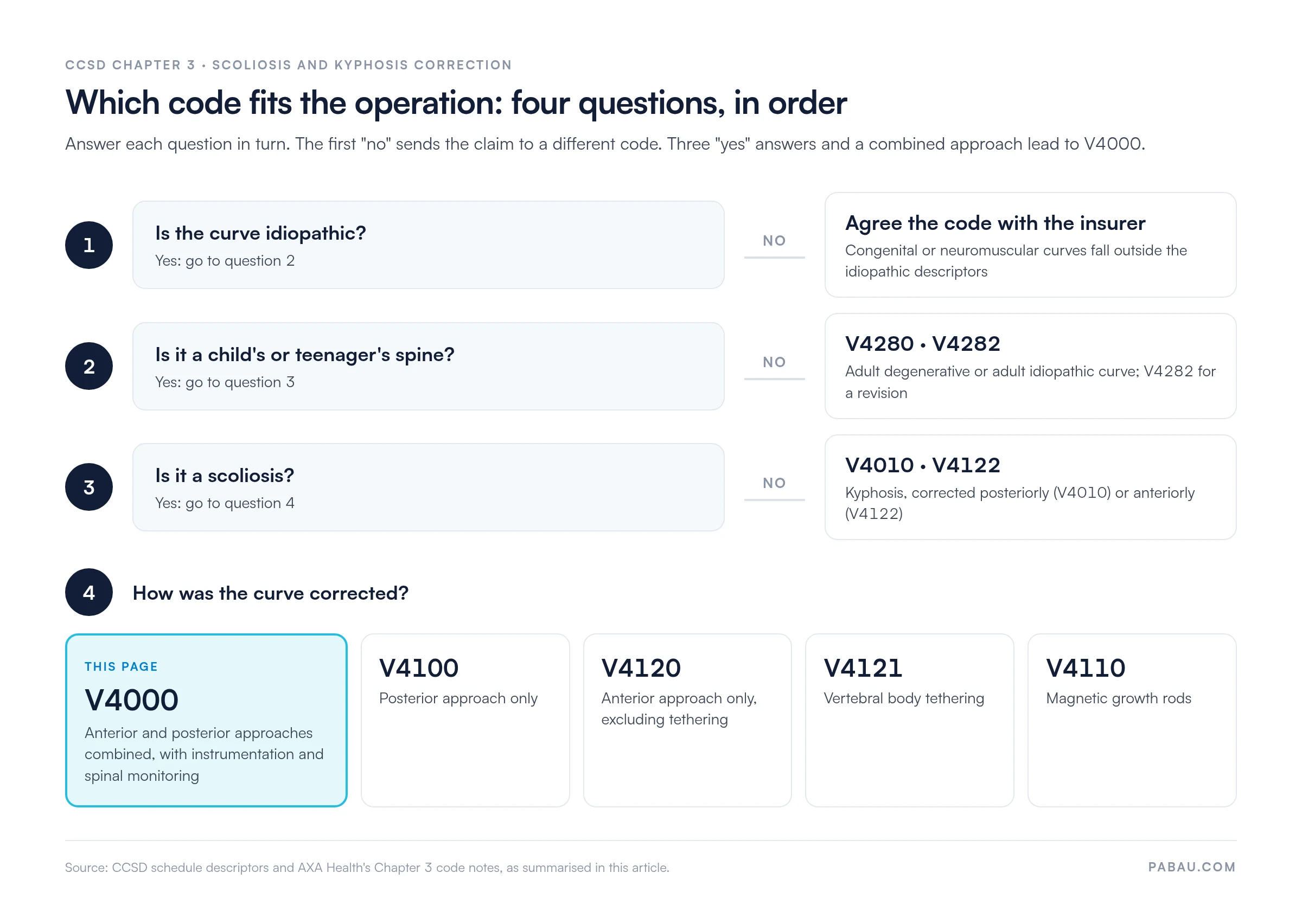
Read as a decision, the choice comes down to four questions asked in order, and the first “no” points to a different code.
AXA Health lists V4100, V4120, V4122 and V4280 among the codes that cannot be claimed alongside V4000. The same list bars a posterior costoplasty for chest wall deformity under T0212, along with lumbar fusion codes such as V3362. A combined anterior and posterior lumbar fusion that is not a scoliosis correction takes its own code, V3350.
If more than one procedure was done, check the insurer’s combination rules before the claim goes out. Later surgery to remove the implants is billed on its own, as our guide to CCSD code V4142 explains.
UK private claims use the WHO edition of ICD-10, not the US ICD-10-CM. Scoliosis sits in category M41 of the WHO ICD-10 browser. M41.1, juvenile idiopathic scoliosis, is the diagnosis that matches V4000.
WHO ICD-10 offers an optional fifth character for the spinal site, such as 4 for thoracic. Use it only where the insurer or the coding system accepts it. Whatever the format, the diagnosis on the claim must match the curve described in the imaging report and the operative note.
Each insurer sets its own fee and complexity band for V4000. AXA Health lists V4000 in its “Complex” hospital band, with a £2,500 procedure fee and a £1,429 general anaesthesia fee. Bupa bands it CMO 5 at £2,172, according to our Bupa CCSD codes reference.
These figures change with each schedule update, so check them before you quote a fee to the patient. Where the surgeon charges more than the insurer pays, the patient must agree the shortfall in writing before surgery. Our Bupa procedure fee schedule guide explains how Bupa sets its limits.
UK private medical insurers require pre-authorisation for major spinal surgery, and scoliosis correction falls squarely in that group. The patient usually calls the insurer with the CCSD code and the consultant’s details. The insurer then issues an authorisation number for the planned procedure.
A claim for surgery done without authorisation is usually refused, however accurate the coding. Start the process well before the theatre date, because insurers may ask for clinical information first. A typical request covers the following:
Each insurer runs its own process, and the policy wording decides what is covered. Confirm the current rules with the insurer before booking theatre, and keep the authorisation number with the booking.
An operative note that cannot be checked against the descriptor is the most common reason a V4000 claim is queried. The note must show that each part of the descriptor was done. A structured operative note template, with a field for each element, helps make sure no element is left out.
The operative note should contain each of the following:
In England, the Care Quality Commission expects registered providers to keep complete and accurate patient records. For a V4000 case, that includes the operative note, imaging reports and anaesthetic record.
Because each part of the V4000 descriptor is specific, one mismatch between the claim, the record and the insurer’s rules can stop payment. The table maps the usual problems to their fixes.
Before a V4000 claim goes out, check three things in the operative note. Does it name both approaches? Does it say whether fusion was performed? Does it confirm spinal monitoring? If any answer is no, ask the surgeon for an addendum first.
A V4000 claim passes through several hands before it is paid. The authorisation request comes first, then the operative note, the invoice and the claim. At each step, the authorisation number or a detail from the operative note can go missing.
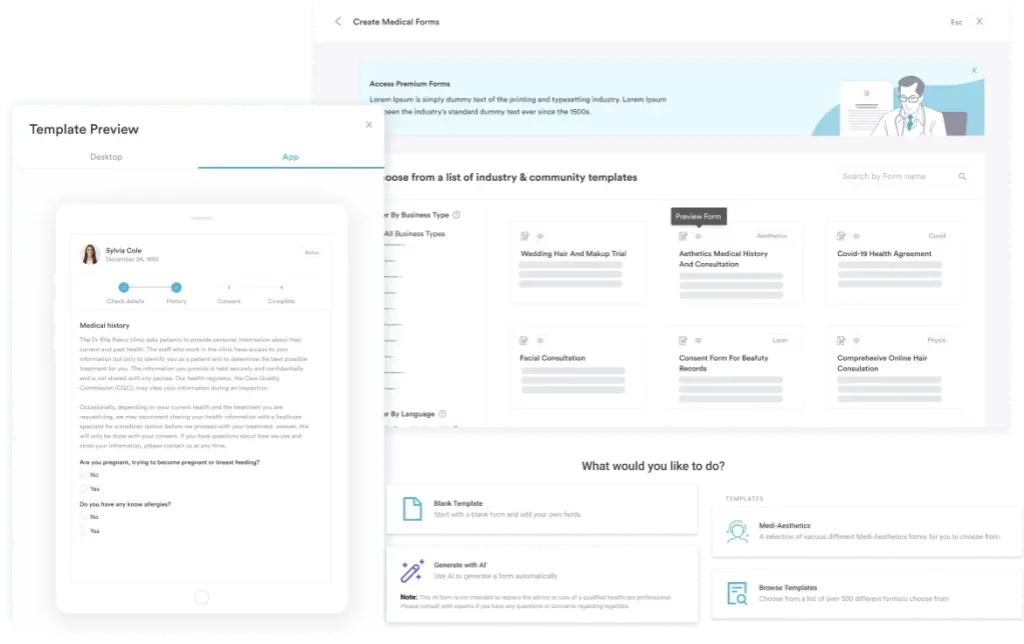
Pabau, a practice management platform with built-in insurance billing, keeps that chain in one patient record. The practice records the insurer’s authorisation code against the patient’s policy, so it is ready when the invoice is raised. Consent forms and the operative note sit in the same file the billing team works from.
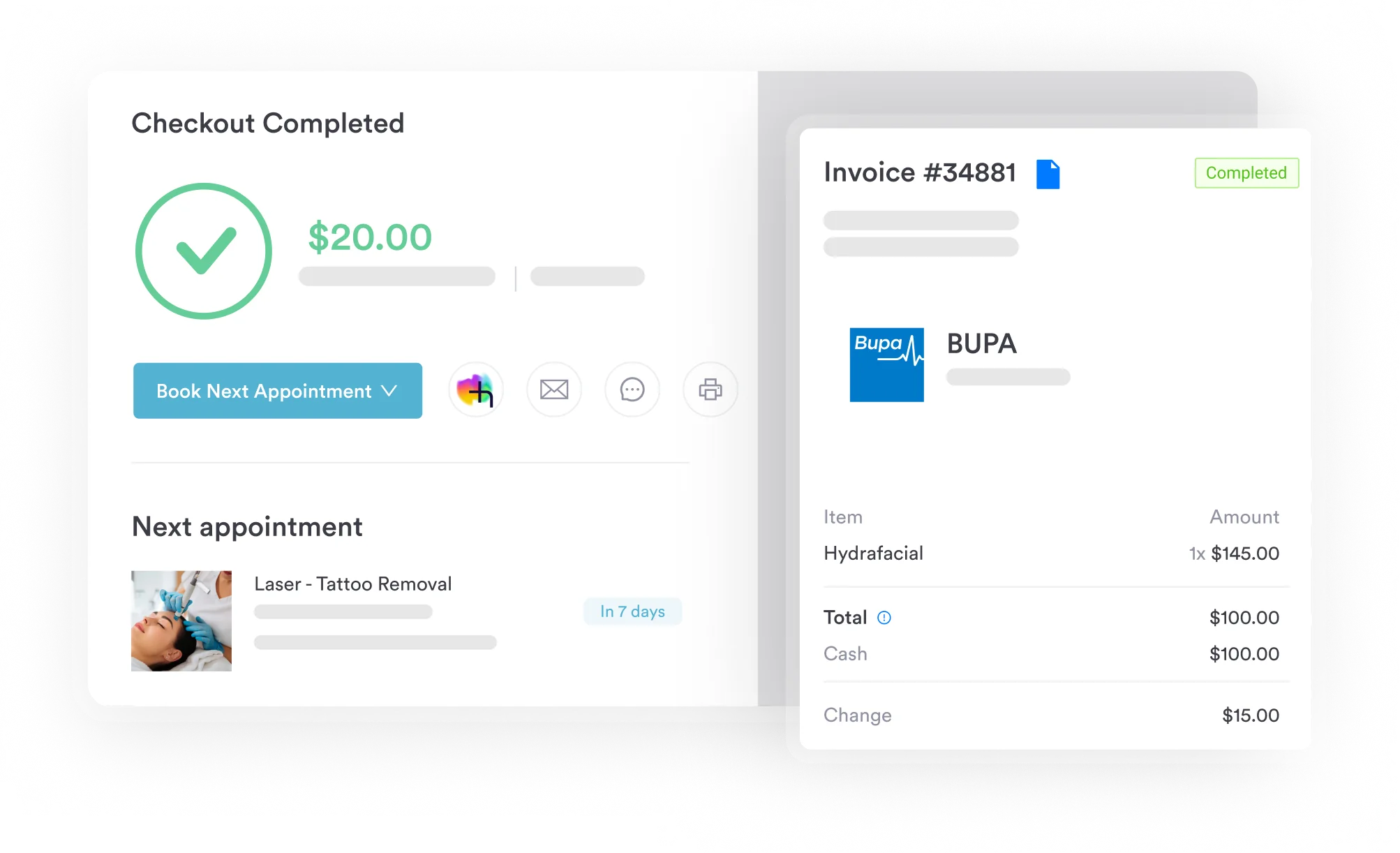
UK claims go out through Healthcode and Bupa from Pabau’s claims management software. The billing team sees each claim’s progress by insurer. A query about the approach or the fusion can then be answered while the case is fresh.

Pabau keeps authorisation codes, operative notes and Healthcode claims in one patient record for UK specialist practices. See how it handles complex spinal surgery billing.

V4000 rests on three facts the descriptor cannot prove by itself. The curve is idiopathic, both approaches were used, and spinal monitoring ran throughout. The operative note has to state all three, along with whether fusion was performed. A coder who checks them keeps the claim off the insurer’s query list.
Pre-authorisation is the one step that cannot be fixed afterwards, so secure it before the theatre date. Book a demo to see how Pabau keeps authorisation codes, operative notes and insurer claims together for UK spinal practices.

Need a broader CCSD coding reference? Pabau’s CCSD codes library lists the procedure codes used across UK private healthcare.
Removing a different spinal implant? CCSD code V4140 explains the code for removal of a posterior spinal implant.
CCSD Code V4000 is the UK private healthcare code for combined anterior and posterior correction and instrumentation of idiopathic juvenile scoliosis. Fusion is optional, and spinal monitoring is included in the descriptor. AXA Health applies the code to idiopathic adolescent scoliosis, and both approaches must be used.
Spinal monitoring is included. The descriptor says “(including spinal monitoring)”, so it is part of the surgeon’s V4000 fee. The surgeon should not add a separate monitoring line. If a separate neurophysiologist runs the monitoring, check how the insurer pays that service before surgery.
V4000 covers a correction that uses both anterior and posterior approaches. A posterior-only correction of idiopathic scoliosis is V4100, and an anterior-only correction is V4120. AXA Health lists both as codes that cannot be claimed alongside V4000.
Insurers usually need the CCSD code, a consultant’s letter confirming the idiopathic diagnosis and planned combined approach, and recent whole-spine imaging with the Cobb angle. They also need the hospital and operating consultant. The patient normally requests authorisation and passes the number to the practice.
No. The “+/-” in the descriptor means V4000 applies whether or not fusion was performed. AXA Health’s notes state that spinal fusion includes bone grafting, so graft is not charged separately. The operative note must record whether fusion was done and at which levels.
Common reasons are missing pre-authorisation and using V4000 for an adult, degenerative or single-approach correction. Others are a separate monitoring charge, a barred code combination, or a diagnosis other than M41.1. A thin operative note also causes queries.




