HCPCS Code V5095: Semi-implantable middle ear hearing prosthesis
HCPCS Code V5095: Definition and clinical descriptor HCPCS Code V5095 is the Lev...

Last Updated: Nov 25, 2026
V2120 is the CCSD code for reduction of dislocation of temporomandibular joint. It covers putting a dislocated jaw back in its socket, usually by manual pressure without an incision. UK private medical insurers such as Bupa, AXA Health, Aviva and Vitality use it to assess consultants' invoices.
AXA Health lists examination of a joint under anaesthetic, joint injection and TMJ arthroscopy as unacceptable combinations with V2120. Surgery on the joint itself, such as arthroplasty or meniscectomy, takes its own code.
Let Pabau's smart automation suggest the right codes, reduce claim denials, and keep your practice compliant—effortlessly.
Automate repetitive tasks and focus on what matters most—your patients.
Reduce coding errors and ensure compliance with the latest regulations.
Clean claims, fewer denials, and faster reimbursements.
Powerful insights and reporting to help your practice thrive.
HIPAA compliant SOC 2 certified GDPR-compliant Trusted by 4,000+ clinics worldwide

CCSD code V2120 covers reduction of a dislocated temporomandibular joint (TMJ). UK private medical insurers such as Bupa, AXA Health, Aviva and Vitality use it to pay for the procedure.
AXA Health lists 19 codes as unacceptable combinations with V2120, including TMJ arthroscopy, joint injection and examination of a joint under anaesthetic.
Pair V2120 with the WHO ICD-10 code S03.0 Dislocation of jaw. UK insurers use WHO ICD-10, so US ICD-10-CM codes such as M26.6x do not apply.
Many TMJ dislocations are reduced as emergencies, so tell the insurer as soon as possible and quote the authorisation reference on the Healthcode invoice.
CCSD code V2120 is the UK private-healthcare procedure code for reduction of a dislocated temporomandibular joint, the jaw joint. AXA Health’s specialist code schedule lists its descriptor as Reduction of dislocation of temporomandibular joint. Consultants and anaesthetists use it to invoice private medical insurers for putting the jaw back in place.
CCSD stands for Clinical Coding and Schedule Development. The CCSD Group is made up of Bupa, AXA Health, Aviva and Vitality, and it maintains the schedule. Other UK insurers, such as WPA and The Exeter, recognise CCSD codes too. Our Bupa CCSD codes guide explains how the schedule works with insurer fees.
V2120 sits in chapter 6 of the schedule, Face, mouth, salivary and thyroid, under section 6.1, Face and jaws. It is the only code in that section for reducing a TMJ dislocation. Other TMJ codes cover surgery on the joint itself, such as meniscectomy, arthroplasty, arthrocentesis and arthroscopy.
A TMJ dislocation happens when the condyle of the mandible slides forward past the articular eminence and cannot return to its socket. The patient presents with the mouth locked open, unable to close, and in pain. Muscle spasm around the joint then holds the condyle in its displaced position.
Common triggers include a wide yawn, a long dental procedure, intubation for anaesthesia, and trauma. Patients with lax joints or a shallow articular eminence dislocate more easily. The operative note should record which type of presentation applied:
Each episode that needs a reduction is a current dislocation, even in a patient who has dislocated before. That matters for the diagnosis code, covered below.
Most dislocations are reduced closed, by manual pressure without an incision. The descriptor for V2120 does not name a technique, so the code covers the reduction whichever method the clinician uses. The usual steps are:
Extraoral methods keep the clinician’s hands outside the mouth and reduce the risk of a bite injury. A reduction done under general anaesthetic is still a V2120 procedure, not an examination of the joint under anaesthetic.
V2120 is the consultant’s code for the reduction itself. AXA Health’s schedule also lists the codes it will not pay alongside V2120. The table shows how the common add-ons are handled.
Each insurer applies its own rules to combined procedures. Check the CCSD technical guide and the insurer’s schedule before you add a second code to a V2120 invoice.
The most common coding error is picking a TMJ surgery code, or a joint examination code, for what was a reduction. The operative note settles it, because each outcome below maps to one code.
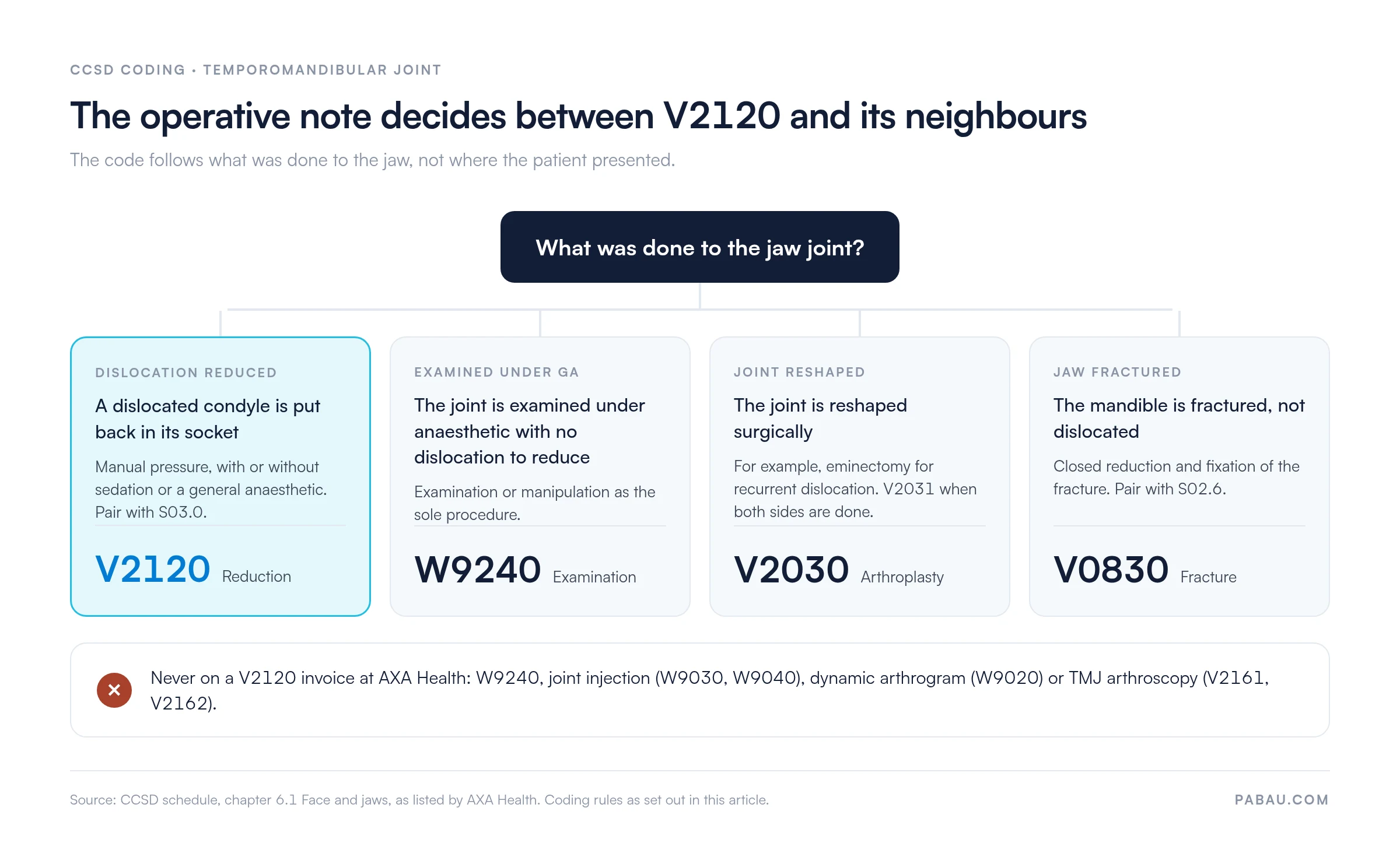
The table lists the neighbouring codes in section 6.1 with their descriptors as AXA Health publishes them.
A code missing from AXA Health’s list is not automatically payable alongside V2120. Bupa and other insurers keep their own rules, so confirm in each insurer’s schedule or the Bupa code search before you invoice. Our CCSD code guides cover other codes in the schedule, such as CCSD V1423 for mandible excision with disarticulation.
CCSD sets the codes, and each insurer sets its own fees against them. Bupa, AXA Health, Aviva, Vitality, WPA and The Exeter all publish separate schedules and benefit limits. The same V2120 reduction can therefore pay a different amount, in pounds sterling, from one insurer to the next.
At the time of writing, AXA Health’s schedule lists V2120 at £200 for the procedure and £213 for general anaesthesia. Fees change, so check the current figure before you quote a patient. A consultant who charges more than the insurer pays leaves the patient with a shortfall, which should be explained in writing first.
Look up the V2120 fee in each insurer’s current schedule before you quote the patient. One insurer’s figure is not another’s, so record the shortfall conversation before you charge above the insurer’s rate.
UK private medical insurers expect pre-authorisation before treatment. A TMJ dislocation, though, is often reduced the same day the patient presents. Insurers each set their own rules for emergency treatment, so contact the insurer as soon as you can.
When you request authorisation, before or after an urgent reduction, have the following ready:
Record the authorisation reference in the patient’s file and quote it on the invoice. A new episode of dislocation needs its own authorisation, even for the same patient and insurer.
Every V2120 invoice needs a diagnosis code that matches the documented dislocation. UK insurers use the WHO ICD-10 classification, not the US ICD-10-CM edition. The ICD-10 5th edition places a current jaw dislocation at S03.0, which includes the temporomandibular joint.
M26.6x appears on some US coding sites, but it is an ICD-10-CM code that WHO ICD-10 does not contain. In WHO ICD-10, K07.6 holds temporomandibular joint disorders and sends a current dislocation back to S03.0. WHO ICD-10 has no left or right sides at this level, so record the side in the clinical note.
UK insurers expect a consistent set of clinical documents before they pay a V2120 invoice. Capture them at the time of treatment, not afterwards. A missing document can be enough for the claim to be held.
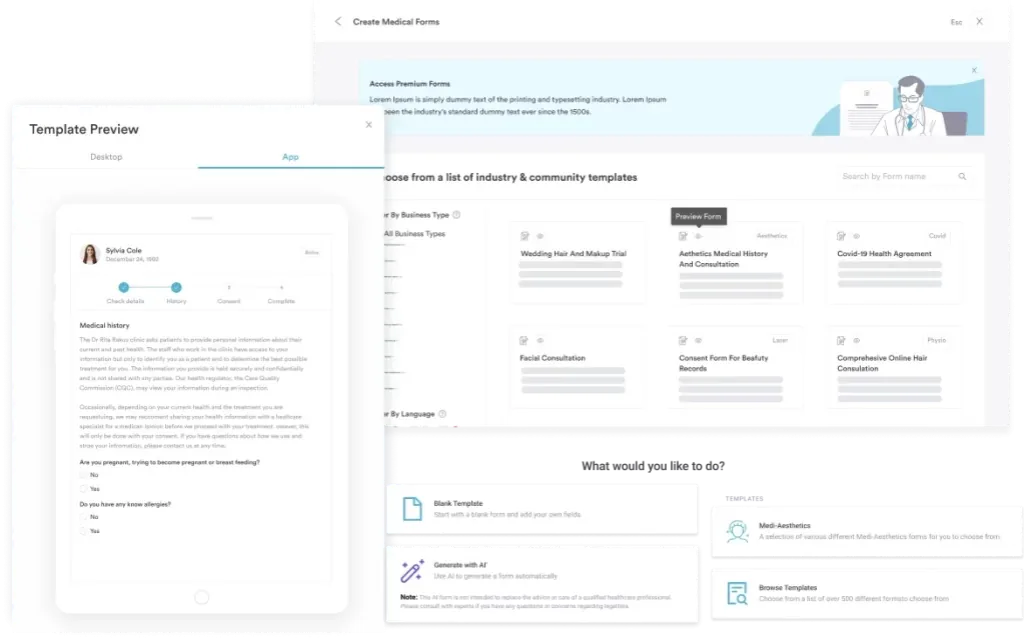
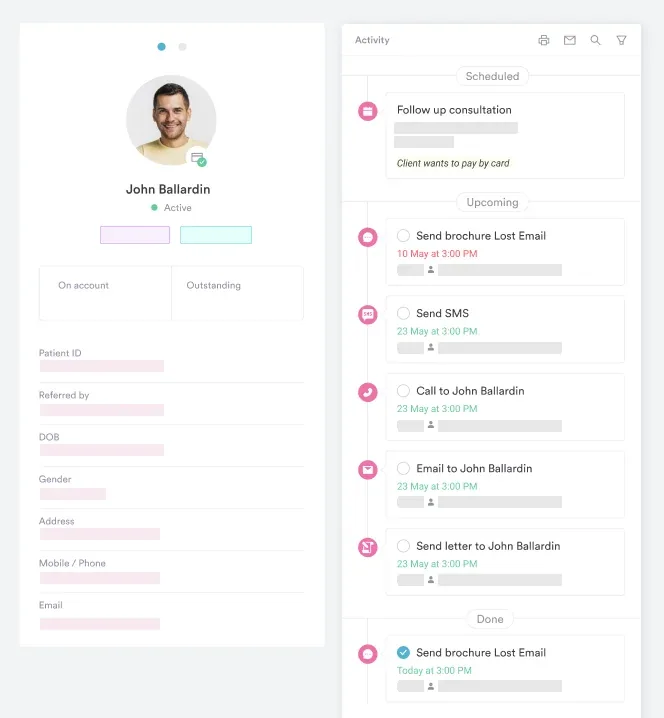
Pabau, a practice management platform, holds these notes, the diagnosis and the insurer details on one patient record. The invoice can then be raised from a complete file.
V2120 claims are rejected for a predictable set of reasons. Most are preventable with a check before the invoice goes out.
A rejected V2120 claim is often recoverable. Start by finding out exactly why the insurer turned it down.
If the insurer declines to pay the patient’s claim, the patient can complain to the insurer. If that complaint is not resolved, the patient can take it to the Financial Ombudsman Service.
Run a V2120 check before every invoice. Confirm the note describes a reduction, the diagnosis is S03.0, and no W9240, injection or arthroscopy code sits on the same invoice.
Billing errors on a code like V2120 usually start before the invoice. The reduction happens in a hurry, the authorisation is requested by phone, and the diagnosis is chosen at billing time.
Pabau keeps all three on the patient record. Its claims management for insurers holds the CCSD code, the ICD-10 diagnosis and the authorisation reference against the appointment. Its digital forms capture consent and the clinical history at the point of care.
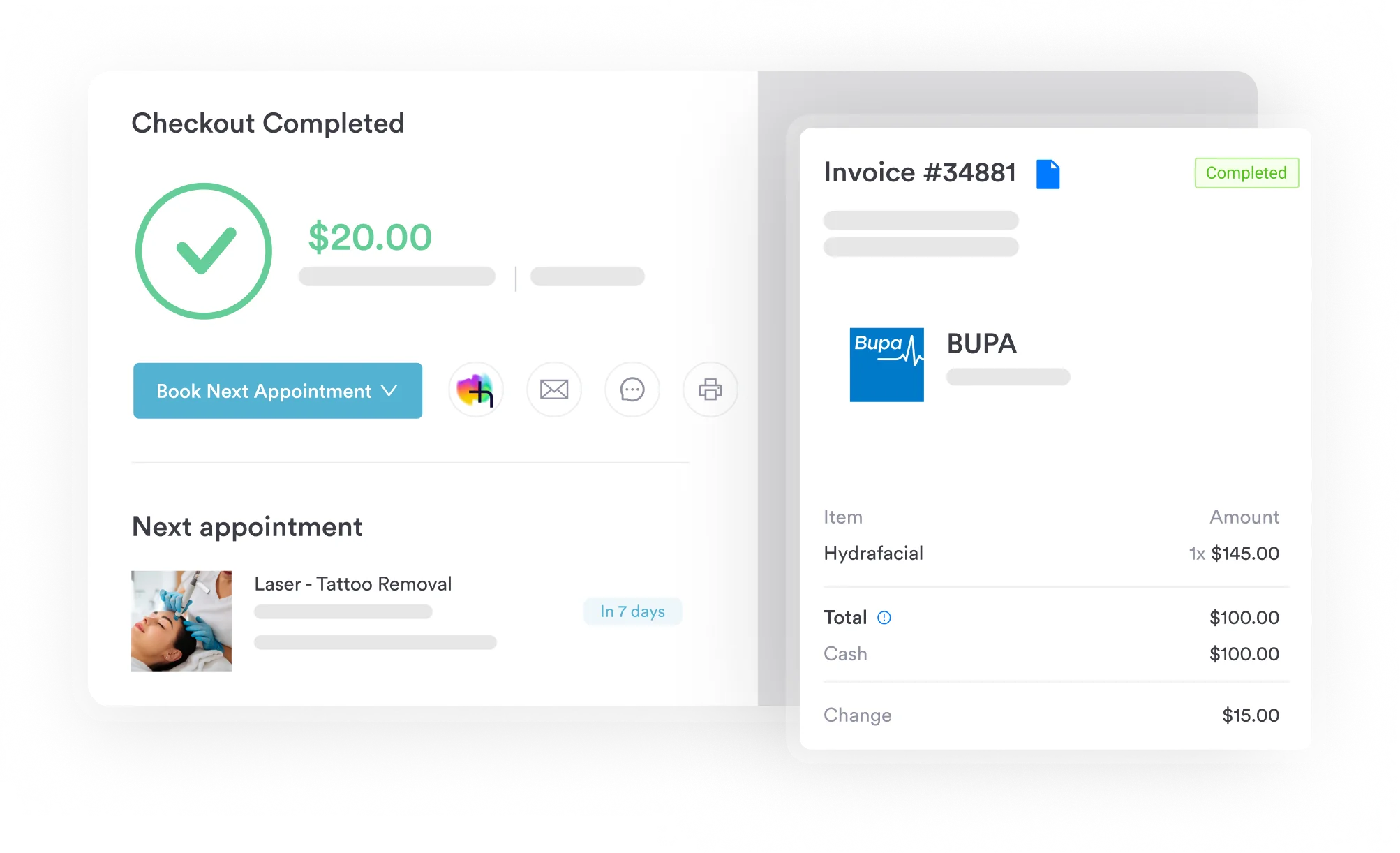
Invoices go to UK insurers electronically through Healthcode. The claims dashboard then shows which are pending, paid or rejected, so a stalled V2120 claim is visible early.

Pabau lets maxillofacial practices attach CCSD codes, ICD-10 diagnoses and authorisation references to the patient record. Every insurer invoice then goes out through Healthcode complete.

V2120 is a short procedure with a narrow code. It pays for putting the jaw back in place, while any other work on the joint at that session is coded separately or not paid. Pair it with S03.0, keep W9240 and joint injections off the invoice, and tell the insurer about an emergency reduction straight away.
Practices that settle those three points at the time of treatment spend less time on insurer queries and get paid sooner. To see how Pabau keeps clinical records and insurer billing in one workflow, book a demo.

Need a broader CCSD billing reference? Bupa CCSD codes overview explains how the CCSD schedule works and how codes match insurer fee schedules.
Coding a cheekbone fracture instead? CCSD code V0980 covers open reduction of a zygomatic complex fracture and its closed-reduction sibling.
Comparing billing platforms for a UK private practice? The best medical billing software in the UK reviews the leading options for insurer invoicing.
Coding jaw surgery rather than a reduction? CCSD code V1423 covers excision of the mandible with disarticulation of the joint.
CCSD code V2120 is the UK private-healthcare procedure code for reduction of dislocation of the temporomandibular joint. It covers putting a dislocated jaw back in its socket, usually without an incision. UK private medical insurers use it to pay consultants and anaesthetists.
The CCSD Group insurers, Bupa, AXA Health, Aviva and Vitality, recognise V2120. WPA and The Exeter use CCSD codes too. Each insurer sets its own fee and authorisation rules against the code.
UK insurers use WHO ICD-10. The usual pairing is S03.0 Dislocation of jaw, which includes the temporomandibular joint. Add K07.6 only when an underlying joint disorder is also documented. M26.6x is a US ICD-10-CM code and does not apply.
Not on an AXA Health invoice. AXA Health lists W9240, examination or manipulation of a joint under general anaesthetic, as an unacceptable combination with V2120. Joint injections and TMJ arthroscopy are on the same list.
UK private medical insurers expect authorisation before treatment. Many TMJ dislocations are reduced as emergencies, so contact the insurer as soon as you can afterwards. Quote the authorisation reference on the invoice.
The usual reasons are an unacceptable code combination, a missing authorisation reference, and a diagnosis that does not match the dislocation. A check before each invoice prevents most of them.